Explore the Stone Enclosures of Great Zimbabwe
Welcome to ArchaeologyHub.org’s deep dive into African Sites: Great Zimbabwe - Stone Enclosures, a subcategory that unlocks the architectural brilliance and cultural complexity of one of sub-Saharan Africa’s most iconic medieval cities. Here, we dissect the granite walls, conical towers, and valley complexes that have puzzled historians for over a century. Expect rich timelines, artifact analyses, and interpretive narratives that connect this UNESCO World Heritage Site to broader trade networks and social hierarchies. This page is your scholarly gateway to understanding how dry-stone masonry shaped an empire’s identity and legacy.
🏛️ The Great Enclosure: Anatomy of a Monumental Structure
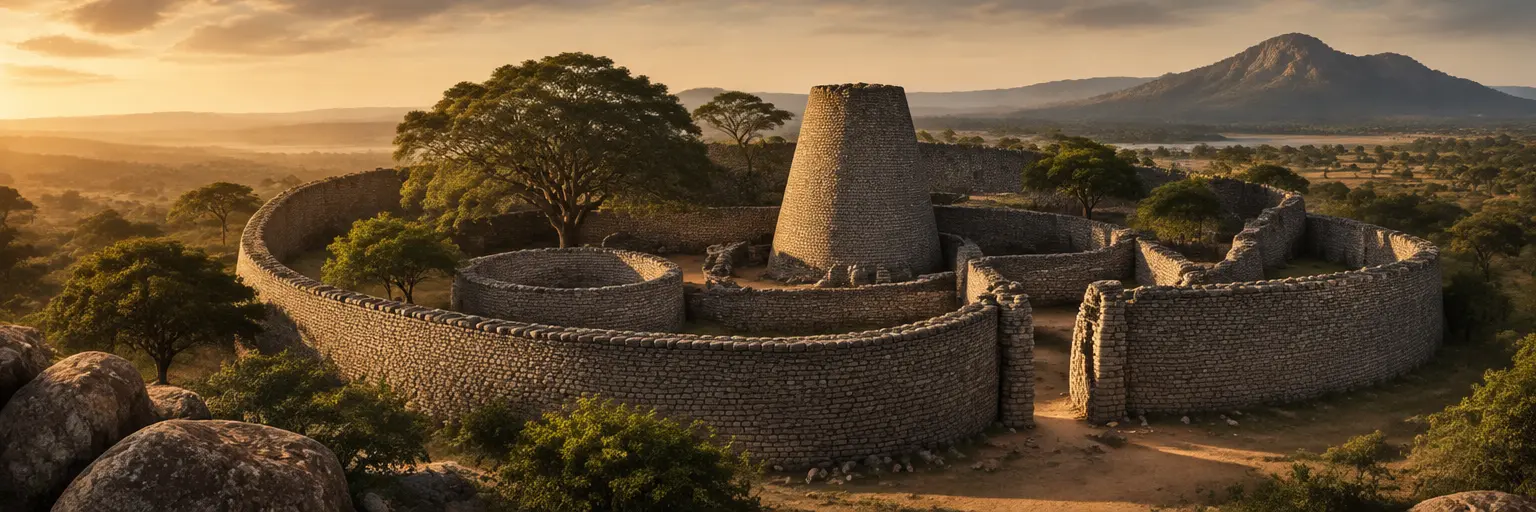
Dive into the Great Enclosure, the largest single ancient structure in sub-Saharan Africa, featuring 11-meter-high walls and a distinctive conical tower whose purpose remains debated. We break down the enclosure’s inner and outer passageways, the chevron and herringbone patterns, and the estimated 15,000 tonnes of granite blocks fitted without mortar. You’ll discover how spatial layout likely segregated royal, ritual, and domestic activities, supported by recent geophysical surveys and artifact scatters. This section emphasizes construction techniques—from quarrying to coursing—and the symbolic importance of the tower, which may represent grain storage or ancestral fertility.
Expect detailed diagrams and comparative analysis with other dry-stone sites like Mapungubwe, highlighting both unique and shared traits. We also discuss the enclosure’s post-1450 decline and later colonial interpretations that erroneously attributed its origin to non-African builders. By merging excavation reports with oral traditions, you’ll grasp how the Great Enclosure functioned as a political theater, a residential palace, and a sacred space, all within one integrated complex. This is archaeology as much about power as it is about stone.
🗿 Valley Complexes: Everyday Life and Craft Production
Shift focus to the Upper and Lower Valley complexes, where daga (earth) wall remnants reveal bustling communities of elites, artisans, and laborers. Here, you’ll find evidence of iron smelting, gold wire drawing, and soapstone carving—items that fueled Great Zimbabwe’s prosperity. We analyze domestic pottery typologies, imported glass beads, and Chinese celadon shards that prove links to Indian Ocean trade. This subcategory emphasizes household archaeology, with pit dwellings, hearth features, and cattle kraals showing stratified social organization beyond the monumental core.
Learn how recent digs have uncovered ivory working, copper ingots, and spindle whorls, indicating gender-specific tasks and controlled craft specialization. We also challenge outdated narratives by presenting zimbabwe bird carvings—eight soapstone sculptures—as emblems of royal authority and totemic religion. Through faunal remains and botanical analysis, you’ll see how valley residents managed herds, agriculture, and water resources, sustaining a population of up to 18,000. This section humanizes the stone giants, placing ordinary lives at the heart of extraordinary stonemasonry.
🌍 Trade Networks and Global Connections
Uncover how Great Zimbabwe’s stone enclosures were not isolated fortresses but hubs in a sprawling Indian Ocean commercial system. We trace gold and ivory exports from the interior to Swahili coastal cities like Kilwa and Sofala, exchanging for cotton textiles, Persian ceramics, and Venetian glass. Through chemical fingerprinting of artifacts and historical documents like the Kilwa Chronicle, we reconstruct trading expeditions and diplomatic ties. This subcategory also debunks the myth of Arab or Phoenician builders, proving via radiocarbon dating that Bantu-speaking communities shaped these stones between the 11th and 15th centuries.
Expect an interactive timeline showing how climate shifts, cattle wealth, and gold demand intertwined, driving the rise and eventual resource depletion. We analyze the standardization of stone blocks and layout as evidence of centralized planning, likely directed by a king whose power rested on controlling trade routes. Comparisons with contemporary sites like Thulamela and Ingombe Ilede reveal shared exchange practices. By the end, you’ll see Great Zimbabwe as a dynamic node in a global system, whose enclosures were both fortresses and storehouses of prestige goods.
🔍 Conservation Challenges and Modern Interpretations
Address the fragile state of these granite ruins, threatened by vegetation growth, water erosion, and tourism pressure. We detail current UNESCO-backed stabilization projects, including laser scanning and mortar repair, alongside community-led initiatives that employ local guides. This section examines site management ethics, balancing archaeological research with cultural heritage needs of modern Zimbabweans. You’ll learn about controversial restorations in the 1980s that altered original masonry, sparking debates over authenticity versus preservation.
We also explore postcolonial reinterpretations, where Great Zimbabwe symbolizes African sovereignty and anti-colonial resistance. Public archaeology programs now incorporate oral histories from Shona elders, reshaping narratives around the enclosures’ spiritual significance. Insights from climate modeling suggest dry spells around 1450 led to abandonment, but new studies question this, proposing political fragmentation instead. Through interviews with conservators and digital reconstructions, this subcategory prepares you for future fieldwork, emphasizing sustainable tourism and digitization as keys to longevity.
📜 Artifact Spotlight: Soapstone Birds and Ceramic Plates
Zoom into iconic finds from the enclosures, starting with the soapstone Zimbabwe birds—crowned with a mortar-like pedestal, these eight sculptures likely represented royal ancestors or totemic animals. We describe their discovery, current global distribution (including one at a South African museum), and symbolic iconography linking human and avian traits. Alongside, examine ceramic plates (bowls with incised patterns) used for grain grinding or ritual offerings, analyzed through residue and wear studies to infer daily diets and ceremonial feasts. This spotlight condenses years of excavation data into digestible profiles.
We also feature iron gongs and bronze spearheads that denote ceremonial roles, plus imported glass beads from India and Arabia that signified status. High-resolution photos and 3D models allow you to inspect tool marks and repair traces, revealing production sequences and symbolic reuse. By linking these objects to specific enclosures—Great Enclosure versus Valley—we show spatial patterns in artifact distribution. These items aren’t relics; they’re keys to understanding political economy, religious beliefs, and aesthetic expression within the stone walls.
Frequently Asked Questions
Why were the Great Zimbabwe walls built without mortar?
Dry-stone construction relied on carefully shaped granite blocks that interlocked under gravity, a technique that ensured durability in a seismic region. This method also allowed for subtle coursing patterns that added aesthetic value and structural stability. Builders likely selected specific rock types and shaped them via hammerstones, creating walls that could withstand centuries of pressure without collapse.
What was the conical tower’s purpose inside the Great Enclosure?
Its exact function remains speculative, but theories include a grain storehouse, a phallic symbol of fertility, or a platform for ritual display. No internal chambers exist, so it was likely solid, perhaps used for viewing ceremonies. Excavations found no artifacts inside, suggesting it had a symbolic, not practical, role tied to royal ancestors.
Did Great Zimbabwe have a written language or written records?
No indigenous writing system has been found, so our knowledge comes from archaeology, oral traditions, and external accounts like Portuguese documents. The absence of writing challenges early colonial scholars, but it doesn’t diminish the civilization’s complexity; instead, it emphasizes alternative record-keeping, such as oral genealogy and craft symbols.
How did trade with coastal merchants affect Great Zimbabwe’s stone architecture?
Increased gold and ivory exports brought wealth, enabling elite patrons to fund monumental construction and import luxury items. Trade also introduced new materials like glass beads, which appear in elite burials, but it did not change basic stone techniques. Demand likely intensified labor organization and territorial expansion to control resources.
Is Great Zimbabwe still considered a sacred site today?
Yes, many local Shona communities regard it as a spiritual center for ancestral worship, and ceremonies are conducted near the enclosures. Modern guardians, including tribal elders, work with archaeologists to protect these rituals. This continues a centuries-old connection, though some sites are restricted to preserve both sanctity and archaeological integrity.