
The Dynastic Sequence of Tikal: Rulers, Power, and Legacy

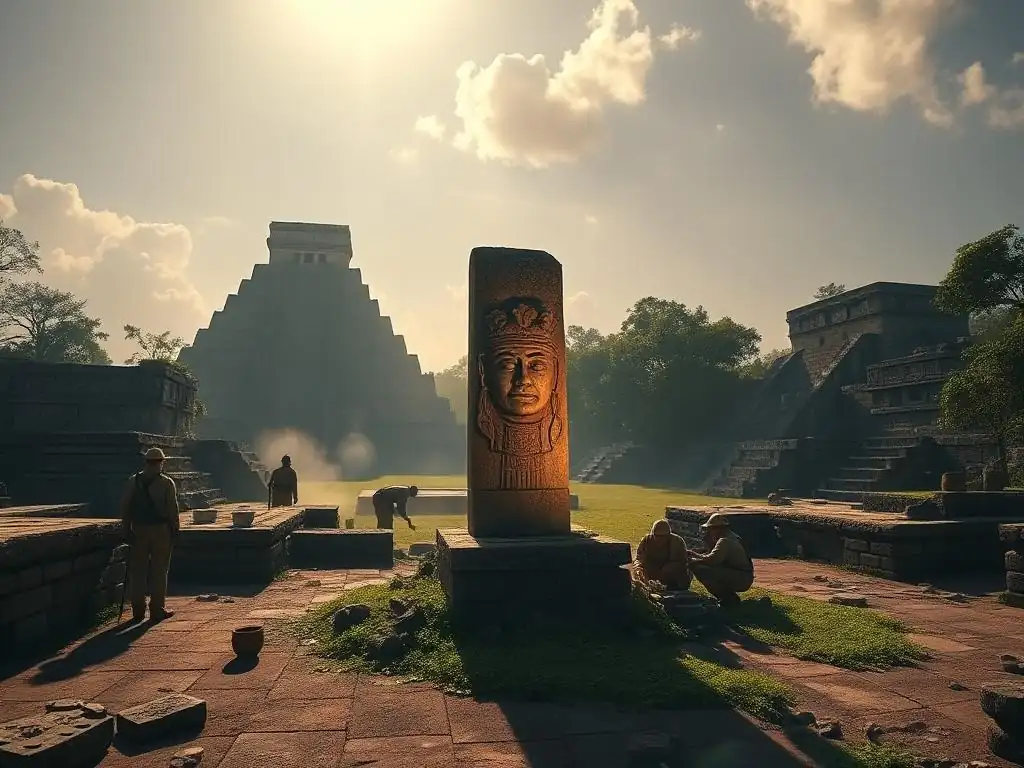
Welcome to ArchaeologyHub.org!
Unravel the mysteries of the past and embark on a journey through time. Delve into the heart of the Maya world as we explore the Dynastic Sequence of Tikal: Rulers, Power, and Legacy. What secrets lie hidden within the reign of each king, and how did their decisions shape one of the most influential cities of the ancient Americas? Continue reading to discover a comprehensive Tikal Dynasty Timeline Rulers and unlock the captivating story of this powerful civilization.
- ArchaeologyHub.org: Unveiling Tikal's Royal Lineage
- Introduction to Tikal's Dynastic History
- The Early Dynastic Period of Tikal (Pre-Classic)
- The Classic Period: Ascendancy and Power of Tikal Rulers
- The Late Classic Period: Decline and Transformations in Tikal
- Tikal Dynasty: Power Dynamics and Royal Authority
- The Archaeological Legacy of Tikal's Rulers
- Tikal Dynasty Timeline: A Summary of Rulers and Key Events
- Conclusion: The Enduring Legacy of Tikal's Royal Dynasty
- Further Reading on Tikal and Maya Dynastic History
-
Frequently Asked Questions
- ### What is the significance of the Tikal Dynasty in Mayan history?
- ### Can you provide a brief Tikal Dynasty Timeline of key rulers?
- ### Where can I find more detailed information about specific Tikal rulers?
- ### What were the primary sources of power for the Tikal Dynasty?
- ### How did the Tikal Dynasty eventually decline?
- Final Reflection: Echoes of Tikal's Reign
- Unearth Your Inner Explorer: Delve Deeper into Tikal!
ArchaeologyHub.org: Unveiling Tikal's Royal Lineage
ArchaeologyHub.org is dedicated to providing comprehensive insights into the world's most significant archaeological discoveries and historical sites. Among these, the ancient Maya city of Tikal stands as a monumental testament to a sophisticated civilization, offering a rich tapestry of political intrigue, architectural prowess, and spiritual depth. Our exploration of Tikal delves deep into its remarkable history, particularly focusing on the intricate Tikal Dynasty Timeline Rulers who shaped its destiny.
This article aims to meticulously unravel the dynastic sequence of Tikal, presenting the key rulers, their strategic decisions, monumental achievements, and the enduring legacy they left behind. By tracing the lineage of these powerful individuals, we gain an unparalleled understanding of Tikal's rise to prominence, its periods of conflict and resurgence, and its eventual transformation, providing a crucial lens through which to view the broader narrative of Maya civilization.
Introduction to Tikal's Dynastic History
Tikal: A Jewel of the Maya Civilization
Nestled within the dense rainforests of the Petén Basin in northern Guatemala, Tikal emerged as one of the largest and most powerful polities of the Classic Maya period. Its strategic location, commanding vital trade routes and agricultural lands, allowed it to flourish for over a millennium, from approximately 600 BC to 900 AD. Today, Tikal is a UNESCO World Heritage site, renowned for its towering temple-pyramids, elaborate palaces, and numerous carved stelae that chronicle its rich history.
The city's monumental architecture, including the iconic Temple I (Temple of the Great Jaguar) and Temple IV (Temple of the Double-Headed Serpent), stands as a testament to the advanced engineering and artistic capabilities of the Maya. These structures, along with extensive residential areas and sophisticated water management systems, paint a vivid picture of a bustling metropolis that once housed an estimated population of up to 90,000 people at its zenith, making it a true jewel of ancient Mesoamerica.
The Significance of Royal Dynasties in Maya Society
Royal dynasties formed the bedrock of Classic Maya society, providing both political stability and spiritual legitimacy. The k'uhul ajaw, or divine lord, was not merely a political leader but also a sacred intermediary between the human realm and the cosmos, responsible for ensuring the well-being of the community through elaborate rituals and ceremonies. Lineage was paramount, with power typically passing down through patrilineal lines, reinforced by strategic marital alliances with other powerful polities.
The study of these royal lineages, including the Tikal Dynasty Timeline Rulers, is fundamental to understanding the complex sociopolitical landscape of the Classic Maya. Dynastic records, meticulously carved into stone monuments, offer insights into patterns of succession, inter-city warfare, diplomatic relations, and the ideological foundations of Maya governance. Without these detailed dynastic histories, our comprehension of Maya civilization would be significantly diminished.
Understanding the Tikal Dynasty Timeline
Reconstructing the Tikal Dynasty Timeline Rulers has been a monumental task, primarily accomplished through the painstaking decipherment of hieroglyphic inscriptions found on stelae, altars, temple lintels, and ceramic vessels across the site. These texts provide precise calendrical dates, names of rulers, their parentage, and descriptions of key events such as accessions, marriages, military victories, and ritual performances. The earliest known inscribed date from Tikal is 292 AD on Stela 29, marking a significant point in understanding its early dynastic history.
While epigraphic evidence forms the backbone of the Tikal dynastic sequence, archaeological excavations provide crucial corroborating data through royal burials, architectural phases, and artifact assemblages. The ongoing discovery and interpretation of these records continue to refine our understanding of this ancient metropolis's political trajectory, revealing the intricacies of power, succession, and the enduring legacy of Tikal's powerful kings.
The Early Dynastic Period of Tikal (Pre-Classic)
Yax Ehb' Xook: Founder of the Tikal Dynasty
The earliest known ruler in the Tikal Dynasty Timeline Rulers is Yax Ehb' Xook, whose name translates to "First Step Shark" or "First Stair Shark." While precise dates for his reign are debated, epigraphic evidence, particularly from Tikal Stela 29 (dated to 292 AD but referring to earlier events) and Altar 19, suggests he lived around 90 AD. He is explicitly identified as the founder of Tikal's royal lineage, establishing the dynastic traditions that would persist for centuries.
His significance lies not in monumental constructions, which were characteristic of later periods, but in laying the foundational political and ideological framework for Tikal's future ascendancy. Yax Ehb' Xook's establishment of the ruling house provided the legitimacy and continuity necessary for Tikal to evolve from a burgeoning settlement into a regional superpower, a testament to the long-term vision initiated by this foundational figure of the Tikal Dynasty Timeline Rulers.
Early Rulers and the Consolidation of Power in Tikal
Following Yax Ehb' Xook, the early dynastic period of Tikal, spanning from approximately 100 AD to 378 AD, saw a succession of rulers who worked to consolidate power and expand the city's influence. While information on many of these early kings is sparse, archaeological evidence points to a gradual but steady increase in Tikal's urban footprint and its regional dominance. This era was characterized by the initial development of monumental architecture, particularly around the North Acropolis, which would later become a sacred funerary precinct for many Tikal Dynasty Timeline Rulers.
During this time, Tikal began to establish itself as a major center in the Petén Basin, likely forming alliances or engaging in minor conflicts with neighboring polities to secure resources and trade routes. The consolidation of power under these early rulers laid the groundwork for the city's explosive growth and its ability to withstand the dramatic shifts that would characterize the Classic Period, including the arrival of foreign influences and major geopolitical rivalries.
Burial 85 and Early Dynastic Power
A pivotal archaeological discovery that sheds light on the early dynastic power of Tikal is Burial 85, located beneath Structure 5D-33-2nd in the North Acropolis. This elaborate tomb, dating to approximately 370 AD, is believed to belong to an early ruler, possibly Chak Tok Ich'aak I or an immediate predecessor. The individual was interred with a wealth of grave goods, including over 200 ceramic vessels, numerous jade artifacts, spondylus shells, and a mosaic mask, indicating immense wealth and ritual significance.
The richness of Burial 85 provides concrete evidence of the sophisticated funerary practices and the high status enjoyed by the early Tikal Dynasty Timeline Rulers. The presence of such valuable offerings suggests a well-established elite capable of mobilizing significant resources and labor for royal burials, underscoring the centralized authority and developed belief systems that were already firmly in place centuries before Tikal reached its peak.
The Classic Period: Ascendancy and Power of Tikal Rulers
Chak Tok Ich'aak I: The "Great Paw"
Chak Tok Ich'aak I, whose name translates to "Great Paw" or "Jaguar Paw," ruled Tikal in the late 4th century AD and is a figure of immense significance in the Tikal Dynasty Timeline Rulers. His reign is particularly notable for the dramatic events of January 16, 378 AD, a date recorded on numerous Maya monuments. On this day, Chak Tok Ich'aak I died, coinciding with the arrival of Siyaj K'ak' (Fire Is Born), a powerful foreign general from Teotihuacan, a dominant city in central Mexico.
The circumstances surrounding Chak Tok Ich'aak I's death and Siyaj K'ak's arrival have long been debated, with theories ranging from a peaceful diplomatic takeover to a military conquest. Regardless of the exact nature of the event, it undeniably marked a profound turning point in Tikal's history, introducing significant Teotihuacan influence into the city's political, architectural, and artistic spheres, forever altering the trajectory of the Tikal Dynasty Timeline Rulers.
Siyaj Chan K'awiil II: The Arrival of Teotihuacan Influence
Following the pivotal events of 378 AD, Siyaj Chan K'awiil II, known as "Stormy Sky," ascended to the throne of Tikal. Although he was the son of Chak Tok Ich'aak I, his accession in 379 AD appears to have been orchestrated by Siyaj K'ak', who remained a powerful figure in Tikal, possibly acting as a regent or military governor. Siyaj Chan K'awiil II's long reign (379-457 AD) saw the profound integration of Teotihuacan cultural elements into Tikal, evident in new architectural styles and iconographic motifs.
Under Siyaj Chan K'awiil II, Tikal's North Acropolis underwent significant renovation, incorporating talud-tablero architecture characteristic of Teotihuacan. Stela 31, a monumental carving depicting Siyaj Chan K'awiil II flanked by his Teotihuacan-influenced father, provides crucial epigraphic and iconographic evidence of this foreign impact on the Tikal Dynasty Timeline Rulers. This period solidified Tikal's position as a major regional power, now with a distinct Mesoamerican cosmopolitan flavor.
Yik'in Chan K'awiil: Expansion and Architectural Achievements
Yik'in Chan K'awiil, whose name translates to "Dark Sky" or "Weathered Sky," reigned from approximately 734 to 746 AD and represents one of the most powerful and prolific Tikal Dynasty Timeline Rulers. His reign marked a period of renewed expansion and unprecedented architectural achievement following the significant victory over Calakmul by his predecessor. Yik'in Chan K'awiil solidified Tikal's dominance, engaging in successful military campaigns against rival cities like El Peru and Naranjo, further extending Tikal's political and economic reach.
His most enduring legacy is the construction of some of Tikal's most iconic structures, including the magnificent Temple IV, also known as the Temple of the Double-Headed Serpent. Standing over 65 meters (213 feet) tall, Temple IV was the tallest pre-Columbian structure in the Americas and served as Yik'in Chan K'awiil's funerary pyramid. The scale and grandeur of these constructions powerfully symbolize Tikal's resurgent power and its peak as a regional hegemon under this visionary king.
Jasaw Chan K'awiil I: Victory over Calakmul and Royal Revival
Jasaw Chan K'awiil I, also known as "Ruler A" or "Ah Cacao," reigned from 682 to 734 AD and is arguably the most celebrated figure in the Tikal Dynasty Timeline Rulers. His accession marked a critical turning point for Tikal, as the city had endured a period of decline and political subjugation following a devastating defeat by its arch-rival, Calakmul, in 562 AD. Jasaw Chan K'awiil I embarked on a mission to restore Tikal's former glory and reassert its dominance in the Maya Lowlands.
His reign culminated in the decisive defeat of Calakmul on August 5, 695 AD, an event proudly commemorated on Tikal Stela 16 and Altar 5. This monumental victory not only avenged Tikal's earlier defeat but also shattered Calakmul's hegemonic ambitions, ushering in a new era of prosperity and monumental construction for Tikal. Jasaw Chan K'awiil I's triumph is a testament to his military prowess and his determination to revive Tikal's royal power.
The Tikal-Calakmul Wars: A Turning Point in Maya History
The rivalry between Tikal and Calakmul constituted one of the most significant geopolitical struggles in Classic Maya history, often referred to as the "Superpower Struggle." For over a century, these two great cities vied for control of the Maya Lowlands, forming extensive networks of alliances and proxy states. Calakmul had inflicted a major defeat on Tikal in 562 AD, initiating a period known as the "Hiatus," during which Tikal produced very few dated monuments.
Jasaw Chan K'awiil I's victory in 695 AD irrevocably shifted the balance of power. It marked the decline of Calakmul's influence and the resurgence of Tikal as the dominant force in the central Maya region. This conflict and its resolution profoundly shaped the political map of the Classic Maya period, demonstrating the high stakes involved in the competition between these powerful Tikal Dynasty Timeline Rulers and their rivals.
Temple I: Jasaw Chan K'awiil's Monumental Legacy
One of Jasaw Chan K'awiil I's most enduring legacies is Temple I, also known as the Temple of the Great Jaguar, which dominates Tikal's Great Plaza. This majestic pyramid, standing approximately 47 meters (154 feet) tall, served as the funerary monument for Jasaw Chan K'awiil I himself. Its steep stairway ascends to a temple structure adorned with intricate roof combs, symbolizing the ruler's connection to the heavens and his divine authority.
In 1962, archaeologists discovered Burial 116 within the base of Temple I, confirming it as the tomb of Jasaw Chan K'awiil I. The burial contained an astonishing array of grave goods, including thousands of pieces of jade, shell mosaics, exquisite ceramic vessels, and carved bones, including one depicting a canoe journey to the underworld. This rich assemblage provides invaluable insights into the wealth, artistic sophistication, and profound spiritual beliefs associated with this revered Tikal Dynasty Timeline Rulers.
Nuun Ujol Chaak: The Last Great King
Nuun Ujol Chaak, whose name translates to "Shield Skull," was another significant ruler in the late 8th century, continuing the monumental building programs that characterized Tikal's golden age. While less widely known than Jasaw Chan K'awiil I or Yik'in Chan K'awiil, his reign saw the completion of impressive structures, including Temple III, also known as the Temple of the Jaguar Priest. This temple, with its well-preserved wooden lintel, demonstrates the continuing vitality of Tikal's architectural tradition even as the Classic Maya world began to face increasing challenges.
Nuun Ujol Chaak's reign represents the final peak of Tikal's dynastic power before the onset of the Classic Maya collapse. Despite the ongoing construction and apparent prosperity, his era likely coincided with growing environmental pressures, increased regional competition, and the subtle signs of the societal changes that would eventually lead to the abandonment of Tikal and the end of its long-standing Tikal Dynasty Timeline Rulers.
The Late Classic Period: Decline and Transformations in Tikal
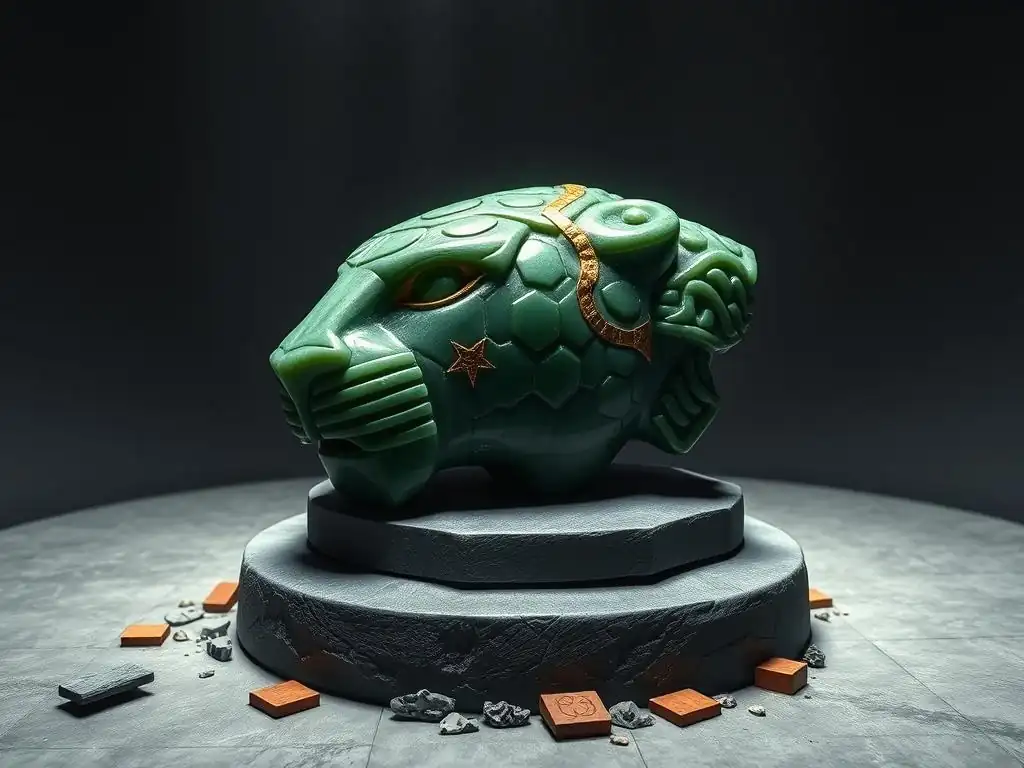
As the 9th century dawned, the Tikal Dynasty Timeline Rulers entered a period of gradual decline, a phenomenon mirrored across much of the southern Maya Lowlands. Rulers like Jasaw Chan K'awiil II (reigned c. 869 AD) and Nuun Ujol K'inich are recorded, but the scale of their monumental constructions diminished significantly, and the frequency of dated inscriptions decreased. This suggests a weakening of central authority and a reduction in the resources available for large-scale royal projects.
These final rulers faced mounting challenges, including increasing regional competition from emerging centers, potential internal strife, and severe environmental pressures. The once-dominant Tikal Dynasty Timeline Rulers found themselves navigating a landscape of fragmentation and instability, a stark contrast to the hegemonic power enjoyed by their predecessors.
Evidence of Decline: Deforestation and Resource Depletion
Archaeological and paleoenvironmental studies provide compelling evidence for significant ecological degradation around Tikal during the Late Classic period, contributing to its decline. Pollen analysis from lake sediments indicates widespread deforestation, likely due to intensive agriculture and the demand for timber for construction and fuel. This extensive clearing of land led to increased soil erosion, reduced agricultural productivity, and a diminished capacity for the environment to support a large population.
Furthermore, Tikal's reliance on a complex system of reservoirs for its water supply made it particularly vulnerable to prolonged droughts or changes in rainfall patterns. Evidence suggests that severe droughts in the late 9th century exacerbated agricultural failures and water shortages, placing immense stress on the population and the ability of the Tikal Dynasty Timeline Rulers to maintain control and provide for their populace.
Political Fragmentation and Regional Power Shifts
The decline of Tikal was part of a larger pattern known as the Classic Maya collapse, which saw the abandonment of many major urban centers in the southern lowlands. As Tikal's power waned, smaller, regional centers gained prominence, leading to a more fragmented political landscape. Long-distance trade networks, once vital for the elite economy, also appear to have disrupted, further impacting the wealth and influence of the Tikal Dynasty Timeline Rulers.
By the early 10th century, Tikal's monumental core was largely abandoned, with its last dated monument erected in 869 AD (Stela 11). While some populations likely remained in the periphery, the grand dynastic traditions ceased, and the city's role as a major political and economic power came to an end. This marked the close of a remarkable era for the Tikal Dynasty Timeline Rulers and the beginning of the Postclassic period in Maya history.
Royal Succession Practices in Tikal
Royal succession in Tikal, as in most Classic Maya polities, was primarily patrilineal, with power typically passing from father to son. This practice aimed to ensure continuity and legitimacy within the Tikal Dynasty Timeline Rulers. The eldest son was generally the preferred heir, but exceptions occurred, such as when a designated heir died prematurely or when political circumstances necessitated a different arrangement. In some rare cases, a queen might hold power as a regent for a young heir.
Upon accession, new rulers underwent elaborate rituals, often culminating in the dedication of new stelae and altars that publicly proclaimed their reign and linked them genealogically to their powerful ancestors. These ceremonies served to legitimize the new ajaw and reinforce the divine mandate of the Tikal Dynasty Timeline Rulers in the eyes of the populace and rival polities.
Divine Kingship and Ritual Practices
The concept of k'uhul ajaw (divine lord) was central to the authority of the Tikal Dynasty Timeline Rulers. Rulers were believed to possess a sacred connection to the gods and ancestors, acting as intermediaries between the human and supernatural worlds. This divine mandate was reinforced through a complex array of ritual practices, including bloodletting, offerings of precious goods, and participation in calendrical ceremonies that marked significant cosmic events.
These rituals, often depicted on carved monuments and painted ceramics, were not merely symbolic; they were seen as essential for maintaining cosmic order, ensuring agricultural fertility, and securing military success. The elaborate public performances of these rituals, often conducted in the Great Plaza, served to awe the populace and solidify the ruler's power, making the Tikal Dynasty Timeline Rulers figures of immense spiritual and political authority.
The Role of the Royal Court in Tikal's Governance
The royal court of Tikal was the nerve center of governance, administration, and cultural life. It comprised a complex hierarchy of nobles, scribes, warriors, priests, and other functionaries who assisted the ajaw in managing the vast polity. The Central Acropolis, a sprawling complex of palaces and courtyards adjacent to the Great Plaza, served as the primary residence and administrative hub for the Tikal Dynasty Timeline Rulers and their retinue.
Members of the court played crucial roles in collecting tribute, organizing labor for monumental construction, leading military campaigns, conducting diplomatic missions, and overseeing religious ceremonies. The intricate interactions within the royal court, as documented in hieroglyphic texts, highlight the sophisticated bureaucratic and political organization that underpinned the long-term success and influence of the Tikal Dynasty Timeline Rulers.
The Archaeological Legacy of Tikal's Rulers
Tikal's Monumental Architecture: A Reflection of Royal Power
The majestic monumental architecture of Tikal stands as the most visible and enduring legacy of its powerful rulers. Structures like Temple I, II, IV, and V, along with the sprawling North Acropolis and Central Acropolis, were not merely buildings; they were profound statements of royal power, piety, and wealth. The sheer scale of these constructions, involving thousands of laborers and vast quantities of materials, reflects the immense organizational capacity and centralized authority of the Tikal Dynasty Timeline Rulers.
Each temple-pyramid served multiple functions, often acting as funerary monuments for specific kings, sites for elaborate rituals, and cosmic mountains connecting the earthly realm to the heavens. The evolving architectural styles and the strategic placement of these structures within the urban core demonstrate the changing political ideologies and the continuous efforts of the Tikal Dynasty Timeline Rulers to visually manifest their dominance and spiritual legitimacy.
Hieroglyphic Inscriptions: Deciphering Royal Histories
Hieroglyphic inscriptions are the primary historical documents that allow us to reconstruct the precise Tikal Dynasty Timeline Rulers and understand their reigns. Carved onto stelae, altars, lintels, and other monuments, these intricate texts provide a wealth of information, including precise calendrical dates (often in the Maya Long Count system), the names and titles of kings, their parentage, accession dates, military victories, ritual performances, and even their deaths.
Key examples include Stela 29, which records some of Tikal's earliest dynastic history, and Stela 31, a crucial monument detailing the arrival of Teotihuacan influence and the reign of Siyaj Chan K'awiil II. The wooden lintels of Temple I and Temple IV also bear invaluable inscriptions, commemorating the achievements of Jasaw Chan K'awiil I and Yik'in Chan K'awiil, respectively. The ongoing decipherment of these texts continues to unveil new layers of Tikal's complex royal history.
Artifacts and Royal Burials: Insights into Royal Life and Beliefs
Royal burials at Tikal provide a tangible link to the lives and beliefs of the Tikal Dynasty Timeline Rulers. Discoveries such as Burial 116 (Jasaw Chan K'awiil I) in Temple I and Burial 85 (an early ruler) in the North Acropolis have yielded extraordinary assemblages of grave goods. These include exquisite jade masks, intricate shell mosaics, finely painted ceramic vessels, obsidian blades, and carved bone artifacts.
These artifacts offer unparalleled insights into the material culture, artistic traditions, trade networks, and complex belief systems surrounding death and the afterlife among the Tikal elite. For instance, the jade mosaic mask found in Burial 116 likely covered the ruler's face, symbolizing transformation and rebirth. The sheer quantity and preciousness of these offerings underscore the immense power, wealth, and spiritual significance attributed to the Tikal Dynasty Timeline Rulers.
Tikal Dynasty Timeline: A Summary of Rulers and Key Events
Chart: Tikal Rulers in Chronological Order
The following summary provides a concise Tikal Dynasty Timeline Rulers, highlighting some of the most prominent kings and their approximate periods of influence, based on current epigraphic and archaeological understanding:
- Yax Ehb' Xook (c. 90 AD): Founder of the Tikal dynasty.
- Chak Tok Ich'aak I (d. 378 AD): Ruler during the arrival of Siyaj K'ak' from Teotihuacan.
- Siyaj Chan K'awiil II (reigned 379-457 AD): "Stormy Sky," son of Chak Tok Ich'aak I, installed under Teotihuacan influence. Began major architectural programs.
- Kan Chitam (reigned 593-628 AD): An important ruler during the "Hiatus" period, who began the slow recovery of Tikal.
- Jasaw Chan K'awiil I (reigned 682-734 AD): "Ah Cacao," defeated Calakmul in 695 AD, commissioned Temple I.
- Yik'in Chan K'awiil (reigned c. 734-746 AD): "Dark Sky," commissioned Temple IV, expanded Tikal's influence.
- Nuun Ujol Chaak (Late 8th century): Commissioned Temple III, one of the last major builders before decline.
- Jasaw Chan K'awiil II (reigned c. 869 AD): One of the last recorded rulers of the Classic period, marking the final documented date for Tikal's dynastic sequence.
Key Battles and Political Alliances
The Tikal Dynasty Timeline Rulers were deeply intertwined with a complex web of political alliances and fierce rivalries that shaped the Classic Maya world. A defining moment was the event of 378 AD, when Siyaj K'ak' arrived, leading to a profound reorientation of Tikal's political and cultural identity under the influence of Teotihuacan. This event initiated a period of increased militarism and expansion for Tikal, cementing its status as a regional superpower.
However, the most protracted and impactful conflict was the century-long struggle with Calakmul, which culminated in Jasaw Chan K'awiil I's decisive victory in 695 AD. This triumph not only restored Tikal's hegemony but also demonstrated the strategic importance of military prowess in maintaining royal authority. Throughout its history, the Tikal Dynasty Timeline Rulers engaged in fluctuating alliances with other polities, such as Naranjo and Dos Pilas (which later became a rival), constantly navigating a dynamic geopolitical landscape to secure their power and prosperity.
Conclusion: The Enduring Legacy of Tikal's Royal Dynasty
Tikal's Contribution to Maya Civilization
Tikal's contribution to Maya civilization is immeasurable, serving as a beacon of cultural, political, and economic innovation for centuries. Its sophisticated urban planning, monumental architecture, and advanced calendrical and writing systems stand as enduring testaments to the ingenuity of the Classic Maya. The city's extensive trade networks, agricultural innovations, and complex social hierarchy underscore its role as a leading force in the development of Mesoamerican civilization.
The long and intricate Tikal Dynasty Timeline Rulers propelled the city to unparalleled heights, fostering periods of artistic flourishing, military expansion, and intellectual advancement. The legacy of Tikal extends beyond its physical remains, offering profound insights into the organizational capabilities and cultural achievements of one of the ancient world's most fascinating societies.
The Importance of Studying Tikal's Rulers for Understanding Maya History
Studying the Tikal Dynasty Timeline Rulers is absolutely essential for a comprehensive understanding of Classic Maya history. Their reigns provide a chronological backbone, allowing researchers to contextualize major political shifts, artistic developments, and societal transformations. The rise and fall of these powerful kings reflect the broader patterns of growth, conflict, and eventual decline that characterized many Maya polities.
By analyzing the actions, alliances, and monumental legacies of individual rulers, scholars can piece together the intricate narrative of ancient statecraft, the dynamics of inter-city warfare, and the complex interplay between divine authority and political power. The detailed records left by the Tikal Dynasty Timeline Rulers offer a unique window into the lives and decisions of the individuals who shaped a remarkable civilization.
Future Research Directions on Tikal's Dynasty
Despite centuries of archaeological work and epigraphic decipherment, the Tikal Dynasty Timeline Rulers continues to be a fertile ground for future research. Advances in remote sensing technologies, such as LiDAR, are revealing previously unknown structures and settlement patterns, potentially uncovering new dynastic residences or ceremonial complexes. Ongoing excavation efforts may also unearth new hieroglyphic texts or royal burials, further refining our understanding of the succession and achievements of Tikal's kings.
Future research will likely focus on more nuanced interpretations of the socio-environmental factors contributing to Tikal's decline, examining the interplay between climate change, resource management, and political instability. Furthermore, comparative studies with other Maya dynasties will continue to shed light on regional variations in governance and the long-term resilience of ancient societies, deepening our appreciation for the enduring legacy of the Tikal Dynasty Timeline Rulers.
Further Reading on Tikal and Maya Dynastic History
Frequently Asked Questions
### What is the significance of the Tikal Dynasty in Mayan history?
The Tikal Dynasty was a major power in the Maya world, influencing politics, trade, and culture for centuries. Their long reign and monumental architecture are testaments to their influence. They are also known for their complex hieroglyphic writing system.
### Can you provide a brief Tikal Dynasty Timeline of key rulers?
While a comprehensive timeline is extensive, some key rulers include Yax Ehb' Xook (founder), Chak Tok Ich'aak I (early king), and Jasaw Chan K'awiil I who oversaw the construction of Temple I. The timeline spans from the Preclassic to the Terminal Classic periods.
### Where can I find more detailed information about specific Tikal rulers?
ArchaeologyHub.org offers detailed profiles of many Tikal rulers, including their birth dates, reign lengths, and significant achievements. Search for individual rulers within the "Tikal" section of the website.
### What were the primary sources of power for the Tikal Dynasty?
The Tikal Dynasty's power stemmed from several sources: its control over strategic trade routes, its military prowess, and its religious authority. They also maintained power through strategic alliances and marriage.
### How did the Tikal Dynasty eventually decline?
The decline of the Tikal Dynasty was a complex process, likely due to factors such as overpopulation, environmental degradation, and warfare with rival city-states like Calakmul. Evidence suggests a period of political instability and resource scarcity.
Okay, here's a final reflection designed to close your article "The Dynastic Sequence of Tikal: Rulers, Power, and Legacy," optimized for the keyword "Tikal Dynasty Timeline Rulers," and following the structure you provided:
Final Reflection: Echoes of Tikal's Reign
The intricate tapestry of Tikal's dynastic sequence, meticulously detailed in this exploration, resonates profoundly even today. The rise and fall of its rulers, the ebb and flow of their power, and the enduring legacy they carved into the very stones of the rainforest, serve as a potent reminder of the cyclical nature of civilizations. Understanding the Tikal Dynasty Timeline Rulers is not merely an exercise in historical cataloging; it's an opportunity to glean insights into the complexities of leadership, the fragility of empires, and the enduring power of human ambition.
The story of Tikal, with its powerful kings and queens, its periods of prosperity and decline, continues to shape our understanding of the ancient Maya world. It reminds us that even the most formidable empires are ultimately subject to the forces of time and change. The lessons embedded within the Tikal Dynasty Timeline Rulers are not confined to the past; they offer valuable perspectives on the challenges and opportunities facing societies today. The past is never dead. It's not even past.
- William Faulkner. This quote encapsulates the enduring relevance of Tikal's story, urging us to recognize the echoes of its triumphs and failures in our own world.
As you reflect on the Tikal Dynasty Timeline Rulers and the legacy they left behind, consider the power of your own actions to shape the future. What kind of mark will you leave on the world? What stories will be told about your contributions? Let the rise and fall of Tikal's dynasty inspire you to strive for meaningful leadership, to build lasting legacies, and to contribute to a future where wisdom and understanding prevail.
Unearth Your Inner Explorer: Delve Deeper into Tikal!
Thank you for joining us on this journey through the fascinating dynastic history of Tikal. We hope you've gained a new appreciation for the rulers, power struggles, and enduring legacy of this magnificent Mayan city. Now, it's time to take your exploration further!
Here are some ways you can continue your adventure:
- Embark on a virtual tour of Tikal! Use online resources to explore the temples and plazas from the comfort of your home.
- Research and compare Tikal's dynasty with those of other major Mayan cities, like Palenque or Calakmul.
- Share this article with fellow archaeology enthusiasts and spark a conversation about the mysteries of the Mayan world.
What aspects of Tikal's dynastic sequence intrigued you the most, and what other questions do you have about the city's past?