African Rock Art Sites: San Paintings & Engravings – A Window into Humanity's First Masterpieces
Delve into the profound legacy of the San people, whose vibrant rock paintings and intricate engravings across southern Africa represent one of the world's oldest continuous artistic traditions. These sites, spanning from the Drakensberg mountains to the Kalahari desert, are not mere decorations but complex spiritual archives. Here, you'll uncover the archaeology, symbolism, and preservation challenges of these ancient galleries, offering an immersive journey into the cognitive and cultural evolution of early hunter-gatherers.
🖌️ The Artistic Techniques of San Rock Paintings
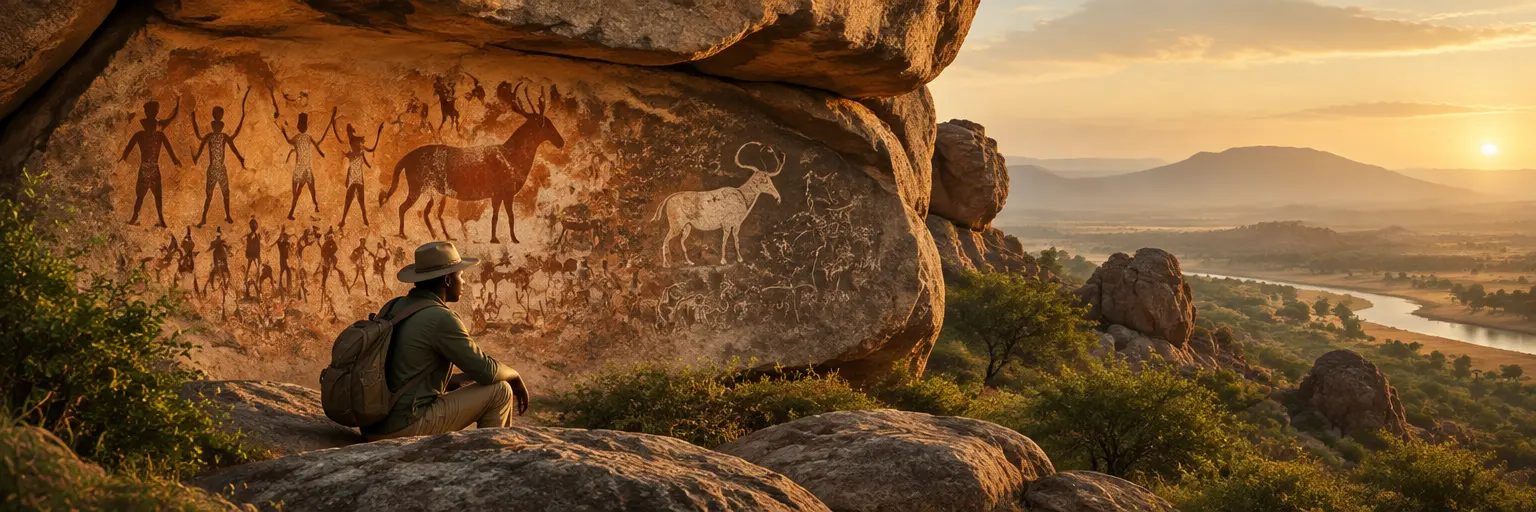
San painters utilized natural ochre pigments, charcoal, and binders like animal fat or plant sap, applying them with fingers, brushes made of animal hair, or even blow-pipes for fine spray effects. Their mastery of perspective, shading, and motion—often using the rock's natural contours to give depth—set them apart from other prehistoric art globally. Sites like the Drakensberg's Giant's Castle showcase polychrome eland and human figures, with some paintings dating back over 4,000 years.
Engravings (petroglyphs), typically found on exposed dolerite or sandstone, were created through incising with harder stones, pecking, or scratching. These techniques produced images of animals, footprints, and geometric patterns, often on rock faces smoothed by millennia of wind and water. Understanding these methods reveals the San's deep knowledge of material science, as they selected pigments that would survive harsh UV exposure for millennia, a testament to their empirical observation and artistic intention.
🐾 Symbolism and Spiritual Significance in San Art
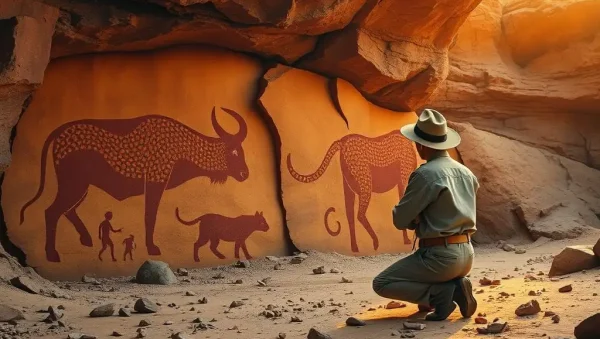
The imagery is far from literal; it encodes religious visions, shamanic trance states, and the fluid boundary between human and animal worlds. Eland antelope dominate many scenes, symbolizing potency and rain-making, while therianthropes (half-human, half-animal figures) depict shamans undergoing transformation during ritual. Rock surfaces themselves were considered a veil between the physical and spirit realms, where paintings acted as portals or records of supernatural encounters.
Clinical studies by archaeologists like David Lewis-Williams have linked specific motifs—such as bending figures, nasal bleeds, and geometric entoptics—to trance-induced neurological states. This interpretive framework has revolutionized understanding, showing that the art is a sophisticated cognitive map of altered consciousness, social hierarchy, and ecological knowledge. For visitors, this means reading a site is not just seeing animals but decoding a complex cosmological doctrine that governed San life, healing, and governance.
🏞️ Major San Rock Art Sites to Explore
Notable locations include the uKhahlamba-Drakensberg Park in South Africa (a UNESCO World Heritage Site) with over 35,000 painted images, the Tsodilo Hills in Botswana dubbed the "Louvre of the Desert," and the Matobo Hills in Zimbabwe containing both paintings and engravings. Each site offers unique characteristics: Drakensberg for its vivid polychrome friezes, Tsodilo for its white-painted rhinos and deep cave shelters, and Matobo for its layered engravings etched into granite inselbergs.
Other essential sites include the Cederberg Wilderness in South Africa, renowned for its "dead eland" panels and finger-painted motifs, and the Twyfelfontein engravings in Namibia, which hold over 2,500 rock carvings depicting rhinos, giraffes, and human footprints. Exploring these sites provides a comparative view of regional styles and climatic adaptations, revealing how San communities shared a common spiritual lexicon yet localized their artistic expression based on available materials and specific ecological stressors.
🔍 Excavation, Dating, and Modern Research Methods
Modern archaeology employs non-invasive techniques like X-ray fluorescence (XRF) to source pigments, and Accelerator Mass Spectrometry (AMS) radiocarbon dating on organic binders or wasp nests overlying paintings to establish chronology. Optically Stimulated Luminescence (OSL) helps date sediment layers in shelters, while 3D photogrammetry creates high-resolution digital replicas for analysis without touching fragile surfaces. Recent studies have even used drone-based multispectral imaging to reveal faded or overpainted motifs invisible to the naked eye.
Research has overturned earlier assumptions that the art was static, revealing that San artists revisited and repainted panels over centuries, sometimes ritually "retouching" an eland to renew its power. Private collections and looted artifacts have also been traced via geochemical fingerprinting, aiding in repatriation efforts. For the enthusiast, this means the field is not static; each publication adds new layers, and you can follow live excavation blogs through ArchaeologyHub.org to see discoveries as they unfold, from new engravings in Botswana to pigment residue analyses in South Africa.
🛡️ Preservation Challenges and Ethical Tourism
Climate change, acid rain, and biological growth such as lichens are accelerating pigment degradation. Vandalism and graffiti remain critical threats, as do unregulated tourist footfall causing dust abrasion and moisture retention. Conservation efforts involve controlled micro-environment sealing, community-based guardianship programs, and restrictive site access (only some caves are open). Ethical tourism guidelines emphasize staying on designated paths, never touching art, and hiring certified local guides who serve as cultural brokers.
However, the greatest modern challenge is the tension between public access and preservation. Many sites now operate with limited daily quotas and require advanced bookings. ArchaeologyHub.org recommends supporting local San descendants who are increasingly involved in co-management decisions, ensuring that revenue from tourism directly funds site maintenance and cultural education. By understanding the fragility, you become an advocate rather than a passive onlooker, contributing to the long-term survival of these irreplaceable records of human creativity.
Frequently Asked Questions
How old are the San rock paintings and engravings?
The oldest dated San art is around 30,000 years old, though most surviving paintings are from the last 4,000 to 6,000 years. Engravings at Twyfelfontein date back to 6,000 years ago. Carbon dating on binders and overlaying wasp nests helps establish age ranges, with some sites continuously painted into the 19th century.
Can I visit San rock art sites safely and legally?
Yes, many UNESCO-listed and national park sites are open to the public with licensed guides. Always book through official park channels, stick to marked trails, and avoid touching surfaces. Certain caves are off-limits or have restricted viewing to protect fragile pigments, so always check local regulations before visiting.
What tools did the San use to create engravings?
They used harder stones like quartzite or dolerite to peck or incise softer rock faces. Some engravings were made by repeated hammering (pecking) to create pitted outlines, while others used a single sharp edge to scratch fine lines. Fire-hardened wooden tools may have been used for finishing details.
Why are eland antelope so prominent in San art?
Eland were not only a primary food source but held spiritual potency, symbolizing rain, fertility, and trance power in San cosmology. Shamans would sometimes paint an eland over their own healing scenes, believing the animal's essence could transfer strength and bridge the spirit world, making it the most frequently depicted mammal.
Are there any new San rock art sites being discovered today?
Yes, remote sensing and community reports lead to annual discoveries, especially in Botswana’s Tsodilo Hills and Angola’s Iona National Park. Since 2020, several new engraving panels and painted shelters were found in the Cederberg, and ongoing lidar scans are identifying hidden caves in the Drakensberg foothills. Follow ArchaeologyHub.org's research news for updates.