Aegean Sites: Mycenae & Bronze Age Citadels of Greece
Step into the heroic world of the Late Bronze Age, where massive cyclopean walls, beehive tombs, and golden death masks define an era of legendary kings. This subcategory of ArchaeologyHub.org offers a comprehensive digital trove focused exclusively on the Mycenaean civilization and the fortified citadels of the Aegean. From the Lion Gate of Mycenae to the palace complex of Tiryns, you will explore the architectural marvels, military strategies, and ritual practices that shaped the pre-classical Greek world. Perfect for students, travelers, and history enthusiasts, this section bridges archaeological evidence with Homeric myth, providing an authoritative resource on the power centers that dominated the Aegean between 1600 and 1100 BCE.
🏛️ The Magnificent Citadel of Mycenae: The Heart of the Heroic Age
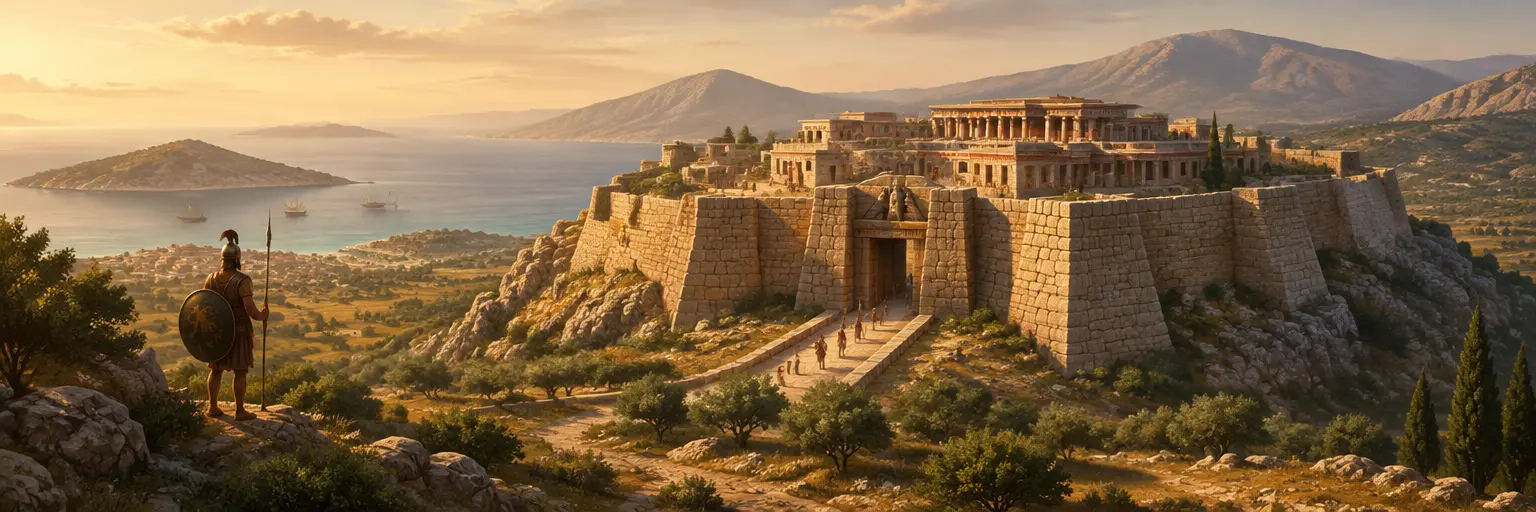
Mycenae, the legendary home of Agamemnon, stands as the quintessential Bronze Age fortress and the namesake of an entire civilization. Here, you will discover the intricate construction of the Cyclopean walls, so named for the mythical giants believed to have placed the massive limestone blocks. The famous Lion Gate, with its heraldic guardians, served as both a defensive barrier and a powerful symbol of royal authority, while the underground cistern and postern gate reveal advanced engineering for siege survival.
Expect detailed virtual reconstructions of the palace megaron, throne room, and courtyard, along with high-resolution imagery of the grave circles A and B. Learn how Heinrich Schliemann’s 1876 excavations unearthed the gold funeral masks and weapons that transformed our understanding of pre-Homeric Greece. We also delve into the complex administrative system evidenced by Linear B tablets, showing Mycenae not merely as a mythic backdrop but as a thriving, bureaucratic hub of trade, tribute, and territorial control across the Peloponnese.
⚔️ Tiryns & Midea: Fortified Neighbors and Strategic Strongholds
Just a few kilometers from Mycenae lie the imposing citadels of Tiryns and Midea, which together formed a defensive network that protected the Argolid plain. Tiryns, nicknamed “mighty-walled” by Homer, showcases some of the best-preserved Cyclopean masonry in Greece, with galleries and corbel-vaulted passageways that allowed defenders to move unseen. This subcategory provides a comparative analysis of these fortresses, highlighting their unique gateways, bastions, and settlement layouts that differed subtly from their more famous counterpart.
Our interpretive guides explain the strategic logic behind their placement on rocky outcrops, offering panoramic views of the surrounding farmland and sea routes. You will also find excavation reports from recent campaigns at Midea, which have revealed extensive burnt destruction layers tied to the collapse around 1200 BCE. By examining pottery sequences, imported artifacts, and defensive architecture, we help you understand how these secondary citadels functioned as elite residences, storage centers, and last-resort refuges for the local population during times of external threat.
🏺 Cyclopean Engineering & Construction Techniques
One of the most awe-inspiring aspects of Mycenaean architecture is the sheer scale and precision of its dry-stone construction. This section unpacks the engineering secrets behind the so-called Cyclopean walls, which used massive limestone boulders weighing several tons, fitted without mortar and tapered to resist seismic activity. You will explore the corbelled galleries of Tiryns, the beehive-shaped tholos tombs like the Treasury of Atreus, and the sophisticated drainage systems that protected these hilltop settlements from water damage.
Interactive diagrams and 3D models will help visualize the construction sequence, from quarrying and transport to the final placement of blocks, likely using earthen ramps and wooden levers. We also discuss the labor organization implied by these mega-projects, suggesting a powerful centralized authority capable of mobilizing hundreds of workers. By comparing techniques across sites, we trace the evolution from the earlier shaft graves to the later fortified palatial complexes, offering a clear narrative of technological innovation that laid the groundwork for later Greek monumental architecture.
👑 Social Hierarchy, Burial Customs, and the Warrior Elite
Burial practices in Mycenaean Greece offer an intimate glimpse into the status, wealth, and ideology of the ruling class. This subcategory explores the rich funerary landscapes, from the deep shaft graves of Grave Circle A, filled with golden masks, diadems, and bronze weaponry, to the monumental tholos tombs that replaced them for royal interments. You will learn about the rituals of feasting, animal sacrifice, and libations that accompanied burials, as evidenced by the broken pottery and ash deposits at tomb entrances.
Analyze the material culture of power through detailed catalogues of weapons, ivory carvings, and exotic amber and faience imports that signal wide-ranging trade networks. We also examine isotopic and osteological studies of skeletal remains, revealing diets rich in protein and evidence of healed battle trauma, supporting the image of a warrior aristocracy. The gradual transition to simpler cist tombs after the palatial collapse is documented, illustrating how burial customs mirrored political transformations and the eventual fragmentation of Bronze Age society.
🤴 Linear B Tablets, Trade Networks, and Daily Palatial Life
Beyond the imposing walls and gold, the Mycenaean civilization thrived on a complex economic system recorded in Linear B script. This section deciphers the administrative tablets found at Pylos, Knossos, and Thebes to reconstruct the organizational genius of the palaces. You will encounter lists of workers, flocks of sheep, allotments of land, and offerings to deities, all recorded on clay tablets that survived the fires that destroyed these centers. These documents reveal a remarkably centralized economy, where palaces controlled everything from bronze-smithing to chariot production and textile manufacture.
Trace the import and export routes connecting the Aegean to the Levant, Egypt, and Italy, using evidence from shipwrecks like Uluburun and ceramic trade markers. We also explore the role of the wanax (king) and the lawagetas (military leader), alongside officials like the damos and the basileus, to understand social stratification. Daily life inside the citadel is illuminated through frescoes depicting processions, hunting scenes, and female figures, alongside cooking wares, loom weights, and local cult objects, giving you a vivid picture of a bustling, interconnected Bronze Age world.
Frequently Asked Questions
What exactly qualifies as a “Mycenaean citadel”?
A Mycenaean citadel is a fortified hilltop settlement from the Late Bronze Age (c. 1600–1100 BCE) in mainland Greece, typically surrounded by massive Cyclopean stone walls. Key examples include Mycenae, Tiryns, Midea, and Pylos. These sites functioned as royal residences, administrative centers, and military strongholds, often featuring a palace megaron, storage rooms, and defensive gates.
Why are the walls called “Cyclopean” and how were they built?
Ancient Greeks believed that only the mythical Cyclopes could have lifted such enormous stones, hence the name. The blocks, often weighing several tons, were roughly shaped and fitted without mortar, with smaller stones filling gaps. Likely construction methods involved ramps, wooden levers, and coordinated labor forces, though exact techniques remain debated among archaeologists.
What was the purpose of tholos tombs like the Treasury of Atreus?
Tholos tombs were monumental beehive-shaped burial chambers for elite members of society, often used for multiple generations. The Treasury of Atreus at Mycenae is the finest example, with a massive corbelled dome and a 36-meter-long entrance passage. They served to display wealth, legitimize power, and house elaborate funerary rituals, including offerings and feasts.
How do Linear B tablets help us understand Mycenaean society?
Linear B tablets are clay records written in an early form of Greek, preserving administrative details about personnel, livestock, land tenure, and religious offerings. They reveal a highly centralized palatial economy, highlighting social hierarchies, specialized crafts, tribute systems, and even names of gods like Poseidon and Zeus, offering a rare textual complement to archaeological evidence.
Why did these citadels collapse around 1200 BCE?
The collapse of the Mycenaean palatial system around 1200 BCE remains a major mystery. Leading theories suggest a combination of internal rebellion, external invasions by “Sea Peoples,” widespread drought or famine, and disruptions in long-distance trade. The destruction layers at most sites show burning and abandonment, but no single cause explains all evidence, making it a vibrant area of ongoing research.