Explore the Ancient Kingdom of Aksum: Stelae and Palaces in Ethiopia
Welcome to ArchaeologyHub.org’s deep dive into the subcategory of African Sites: Aksum - Stelae & Palaces in Ethiopia. This page is your gateway to understanding one of Africa’s most powerful ancient civilizations—the Kingdom of Aksum—which flourished from the 1st to the 8th century CE. Here, you’ll discover the engineering marvels of towering granite stelae, the architectural grandeur of royal palaces like Dungur, and the cultural, religious, and trade significance of this UNESCO World Heritage site. Optimized for history enthusiasts, students, and travelers, this guide covers excavation insights, artifact context, and historical timelines, ensuring you gain a comprehensive view of Aksum’s global impact.
🏛️ The Great Stelae of Aksum: Monolithic Tombs and Royal Markers
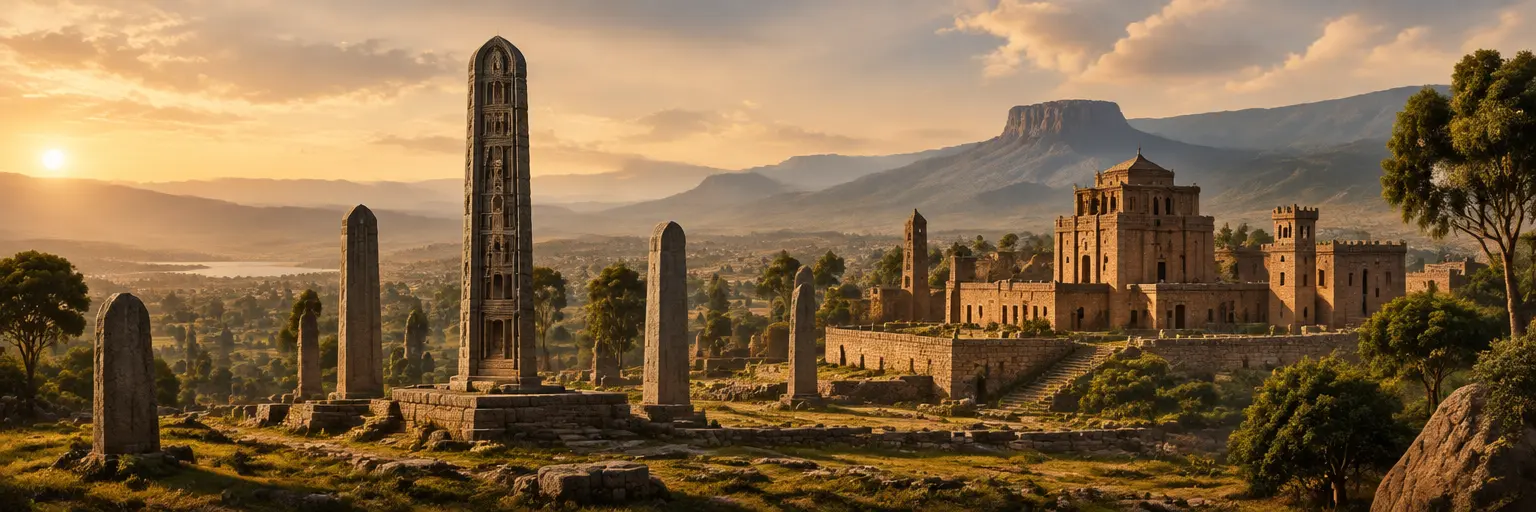
Dive into the iconic giant stelae—single pieces of solid granite weighing up to 160 tons—that served as funerary markers for Aksumite royals. The largest standing stelae, such as the Great Stela (33 meters) and the Obelisk of Axum (24 meters, returned from Italy in 2005), are carved with false doors and window-like details mimicking Aksumite architecture. Excavations reveal that these monuments marked underground burial chambers, often containing rich grave goods like gold coins, pottery, and iron tools. Our coverage explains how these stelae were quarried, transported, and erected using ramps, wooden scaffolding, and thousands of laborers—a feat of ancient engineering still studied today.
Beyond their technical brilliance, the stelae symbolize Aksum’s political and religious hierarchy, linking rulers to the divine. Recent archaeological research uses 3D scanning to document erosion and structural risks, while aerial photography helps map the necropolis layout. You’ll learn how each stela’s size and carving complexity reflected social rank, and how later Christianization transformed some monuments into church markers, blending pagan and new faith traditions. For visitors, this subcategory provides practical tips on how to identify the oldest stelae versus later imitations, enriching your on-site appreciation.
👑 Royal Palaces of Aksum: Dungur and Ta’akha Maryam
Step inside the fortress-like palaces that housed Aksum’s elite, with Dungur (often called the “Palace of the Queen of Sheba”) being the most famous. Excavated in the 1960s by the Ethiopian Institute of Archaeology, Dungur features a complex layout of 50+ rooms, central courtyards, and advanced drainage systems. This residence offers a window into Aksumite domestic life and royal administration, with artifacts including ivory tusks, imported glass vessel fragments, and carved stone furniture bases. We analyze the construction technique of alternating stone and timber layers, known as “timber-laced” masonry, which provided earthquake resilience—a hallmark of Aksumite architecture.
Nearby, the older Ta’akha Maryam palace (dated to the 4th century CE) reveals a massive podium and columned halls, suggesting ceremonial functions. Comparative studies between these palaces and elite houses in Matara (Eritrea) show a standardized building code across the kingdom. The subcategory also covers recent geoarchaeological work on water cisterns and terracing, proving sophisticated urban planning. For deeper insight, our timeline links the palaces to specific kings like Ezana, who converted to Christianity around 330 CE, and shows how palace art shifted from pagan motifs to crosses and biblical scenes.
🪙 Trade, Religion, and Cross-Cultural Connections in Aksum
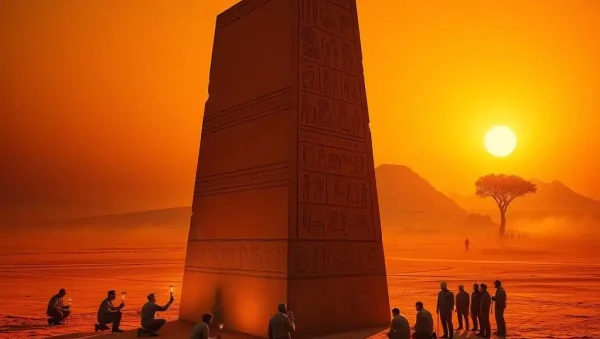
Aksum was a commercial powerhouse connecting the Roman Empire, Arabia, India, and beyond. This section highlights finds like Aksumite gold and silver coins—bearing Greek and Ge’ez inscriptions—that circulated along the Red Sea and Indian Ocean routes. You’ll trace how stelae and palace architecture reflected Aksum’s dual identity as a pagan and later Christian state, with inscriptions at sites like Endubis and Ezana documenting royal titles and military victories. The famous Aksumite obelisk inscriptions also reference the Sabaean god Almaqah, proving early cultural blending with southern Arabia.
Excavations of harbor sites like Adulis, about 50 km from Aksum, uncovered imported Roman amphorae, Indian beads, and Chinese silk fragments, demonstrating long-distance exchange networks. Our interpretive articles explain how trade wealth funded monumental construction, while Christianity introduced new burial practices—some stelae were reused as Christian tombstones. For travelers and researchers, we clarify how to distinguish authentic Aksumite artifacts from later copies and provide a bibliography of key academic sources, from David Phillipson’s “Ancient Ethiopia” to ongoing field reports from the Aksum Archaeological Project.
🗿 Excavation Techniques and Preservation Challenges at Aksum
Learn about the methods archaeologists use to uncover Aksumite history without damaging fragile relics. Traditional trenches and grid systems have been augmented with ground-penetrating radar to detect buried stelae bases and palace walls before digging. This subcategory details the careful lifting and stabilization of the fallen Great Stela and the rebuilding of the Obelisk of Axum, offering a case study in international cooperation (Italy’s return of the obelisk). Soil sampling and micromorphology help date occupation layers via pottery seriation and radiocarbon dating of charcoal and bone fragments.
Preservation is now a priority, as modern urbanization, tourism, and climate change threaten Aksum’s structures. We discuss the use of consolidants on weathered granite, drainage improvements, and community-based heritage management programs that train locals as site guardians. The contract for this section also includes virtual reconstruction models, letting you see how a stela field looked at its zenith. Ethical issues, such as repatriation claims and the balance between public access and conservation, are addressed with balanced perspectives.
📜 The Aksumite Kingdom in World History and Modern Ethiopia
Finally, position Aksum within the broader narrative of ancient African empires, comparing it with Egypt, Meroë, and later Zagwe and Solomonic dynasties. Aksum was one of the first states to mint its own coins and one of the earliest to adopt Christianity as a state religion, influencing Ethiopian Orthodox traditions to this day. The Late Aksumite period (7th–8th centuries) saw decline due to climate shifts, trade route changes, and Islamic expansion, but the site’s legacy persists in the Ethiopian national identity—the Ark of the Covenant is traditionally housed in the Church of St. Mary of Zion, near the ancient stelae.
Contemporary archaeology combines archival work, oral histories, and satellite imagery to reassess Aksum’s rural hinterlands, including ancient agricultural terraces and water reservoirs. Our subcategory emphasizes how modern Ethiopians view Aksum as a source of pride and continuity, with annual celebrations and international visitors. For students, we link to virtual tours and museum collections at the National Museum of Ethiopia, while educators can download lesson plans on African urbanism and trade. This holistic view ensures your understanding of Aksum goes beyond mere monuments, capturing its living relevance.
Frequently Asked Questions
What are the most famous stelae in Aksum, and why are they important?
The most famous are the Great Stela (now fallen, originally 33m tall) and the Obelisk of Axum (24m, erected in 2008 after repatriation). They are carved from single blocks of granite, weighing up to 160 tons, and represented elite burials. Their importance lies in demonstrating Aksumite engineering, royal power, and trade connections. The false doors and windows symbolize palace facades, linking rulership to divine authority.
How did Aksumite engineers erect such tall stone stelae?
They likely used ramps of packed earth and wood, along with wooden levers and sledges. For the tallest stelae, thousands of workers pulled ropes to drag stones from quarries up to 4 km away. Then, using sand ramps and counterweights, they tilted the monoliths upright into prepared foundation pits. Recent experiments and historical accounts suggest this process could take weeks, requiring precise coordination and massive labor forces.
Can visitors enter the palaces of Aksum, and what should they expect?
Yes, the Dungur palace site is open to visitors. Expect to see exposed stone walls, room divisions, courtyards, and explanatory panels. The site is partly reconstructed, so you can imagine the original timber-laced masonry. Wear sturdy shoes as ground can be uneven. Guides are often available at the entrance, and visits typically last 1–2 hours. Combine with the nearby stelae field for a full historical experience.
What is the connection between Aksum and the Ark of the Covenant?
Ethiopian Orthodox tradition holds that the Ark was brought to Aksum by Menelik I, son of the Queen of Sheba and Solomon, and is kept in the Chapel of the Tablet at the Church of St. Mary of Zion. However, no outsider is allowed to see it, and the claim is based on faith, not archaeology. This legend highlights Aksum’s religious significance, though the chapel is from the 20th century, while the church’s foundations date to the 4th century CE.
Why did the Aksumite civilization decline, and what happened to its stelae?
Decline began around the 7th century due to multiple factors: a shift in Red Sea trade to Muslim-controlled ports, repeated droughts and soil erosion, and political fragmentation. The stelae were not destroyed but gradually collapsed from earthquakes or were toppled in wars. Later, some were broken for reuse in churches or homes, but many remained in place. After centuries, the fallen Great Stela and others were left as they fell; the Italian forces removed the Obelisk in 1937, but it was repatriated in 2005 to its original location, now without re-erection to avoid further damage.