Tetitla Compound Murals: Art and Ideology in an Elite Teotihuacan Residence
🌟 Explore the intricate Teotihuacan elite mural analysis within Tetitla Compound, revealing how art and ideology intertwined to reflect and reinforce social…
Read article
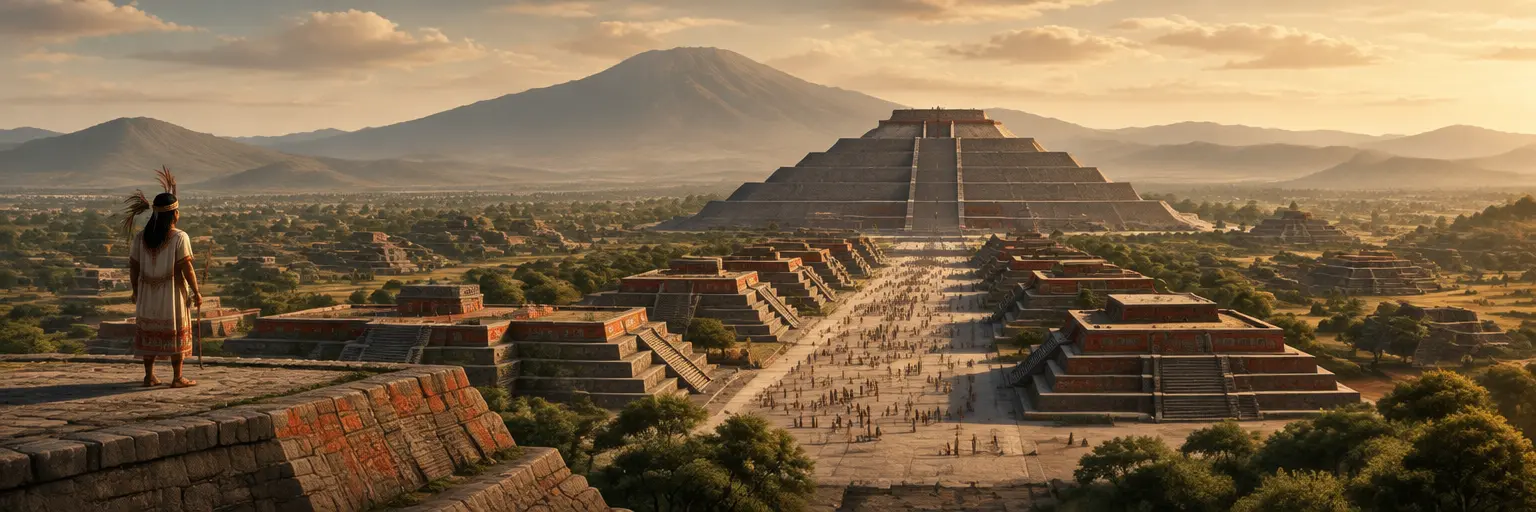
Step back in time and ascend the Avenue of the Dead to Teotihuacan, the legendary “City of the Gods” and one of the most awe-inspiring Mesoamerican archaeological sites on Earth. This ancient metropolis, which flourished between 100 BCE and 550 CE, once boasted a population of over 125,000, making it one of the largest and most sophisticated urban centers of the ancient world. Marvel at the colossal Pyramid of the Sun and the Pyramid of the Moon, climb the majestic Temple of the Feathered Serpent (Quetzalcoatl), and wander the vibrant Palace of the Jaguars with its intricate murals. As a cornerstone of global archaeological heritage, Teotihuacan offers a unique window into pre-Columbian engineering, astronomy, and religious life, a true testament to human ingenuity. This digital encyclopedia entry unpacks the latest excavation techniques, artifact profiles, and interpretive analyses, connecting you to the mystery and majesty of a civilization whose influence rippled across ancient Mexico. Perfect for history enthusiasts, students, and virtual travelers, exploring Teotihuacan in depth reveals why this UNESCO World Heritage Site remains an enduring icon of human achievement.
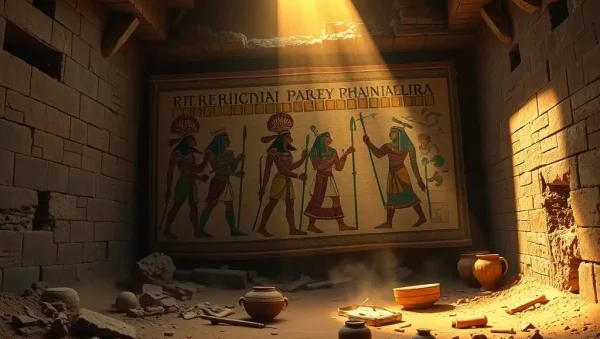
🌟 Explore the intricate Teotihuacan elite mural analysis within Tetitla Compound, revealing how art and ideology intertwined to reflect and reinforce social…
Read article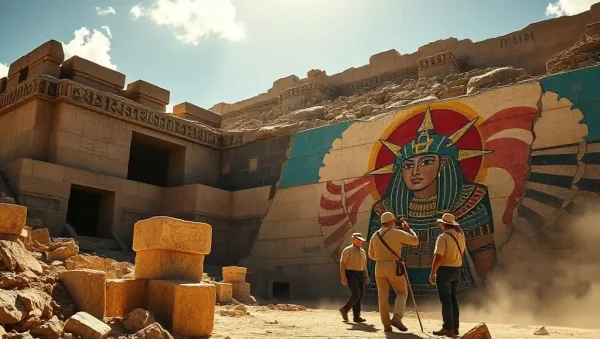
🌟 Explore the vibrant world of Teotihuacan mural color symbolism, revealing how color choices in murals and architecture reflect social, religious, and…
Read articleWelcome to ArchaeologyHub.org’s deep dive into Mesoamerican Sites: Teotihuacan – City of the Gods, a cornerstone of our global archaeological encyclopedia. This subcategory unravels the mysteries of one of the ancient world’s most influential urban centers, located in the highlands of modern Mexico. Here, you’ll discover its monumental pyramids, complex urban planning, vibrant murals, and the enigmatic civilization that built it, all contextualized within broader Mesoamerican timelines and excavation techniques. From the Avenue of the Dead to the Temple of the Feathered Serpent, this resource is designed for students, researchers, and history enthusiasts seeking authoritative, SEO-rich content on one of humanity’s greatest architectural and cultural achievements.
Expect an in-depth exploration of the colossal Pyramid of the Sun, the third-largest pyramid in the ancient world, and the Pyramid of the Moon, which anchors the northern end of the city. We highlight excavation findings, construction phases, and the astronomical alignments that guided their placement. Learn how these structures served not only as religious temples but as political statements of power, with recent tunnel discoveries beneath the Pyramid of the Sun revealing ceremonial offerings and possible royal tombs. This section emphasizes the engineering ingenuity of Teotihuacan’s builders, using volcanic stone and lime plaster to create enduring monuments.
Beyond sheer scale, our content deciphers the symbolic meaning of each pyramid’s orientation, tied to solar cycles and the sacred landscape. You’ll find detailed artifact profiles—obsidian blades, ceramic vessels, and greenstone masks—uncovered during modern excavations. We also compare these pyramids to other Mesoamerican structures, such as those at Cholula and Monte Albán, to position Teotihuacan within regional architectural evolution. Practical visitor tips and virtual reconstructions enrich your understanding, making this a key resource for archaeology students and virtual travelers alike.
Dive into the vibrant polychrome murals that adorned residential compounds and temples, revealing a complex pantheon of deities, processions, and mythological scenes. This section profiles the famous feathered serpent (Quetzalcoatl) imagery, Tlaloc-like rain gods, and intricate geometric patterns, offering interpretive analyses that challenge earlier scholarly assumptions. We explain the pigments used—derived from minerals like cinnabar and hematite—and the fresco-like technique that preserved these colors for a millennium. Expect high-resolution descriptions of key murals from sites such as the Tepantitla compound, often dubbed the “Paradise of Tlaloc.”
Our coverage extends to how mural art functioned as a civic language, reinforcing social hierarchy and religious ideology across neighborhoods. You’ll learn about the role of scribes and artists, inferred from tool marks and workshop debris. We also address controversies, such as possible iconographic links to Mayan sites, supported by trade evidence. By connecting murals to historical timelines, this subcategory helps you grasp Teotihuacan’s cultural influence, which radiated across Mesoamerica, from the Gulf Coast to the Maya lowlands, making it essential for comparative art history studies.
This section reconstructs daily existence within this grid-planned metropolis, once home to over 100,000 residents. We dissect the orthogonal layout, featuring the 4.8-kilometer Avenue of the Dead, which oriented civic and religious life. You’ll explore residential compounds—such as the Zapotec enclave and the Craft Workshop Complex—revealing ethnic diversity and labor specialization. Ceramic vessel typologies, obsidian workshop debris, and faunal remains are interpreted to illustrate diet, trade networks, and social stratification. We provide timeline overlays showing the city’s growth from 150 BCE to its peak around 600 CE.
Expect insights into water management, sanitation, and agrarian practices, including chinampas-like wetland fields that supported mass populations. Our content also addresses the puzzling lack of royal burials, suggesting a corporate governance model, a theory now supported by recent geophysical surveys. Comparative analysis with contemporaneous cities like Tikal contextualizes Teotihuacan’s unique political structure. Practical archaeology techniques—including lidar mapping and stratigraphic excavation—are explained, showing how modern science unravels ancient urban life. This section is a goldmine for urban historians and Mesoamerican specialists.
Uncover the evidence behind Teotihuacan’s dramatic collapse around 550-600 CE, including signs of fire, deliberate destruction, and possible internal revolt. We critically evaluate older theories—like invasion by external groups—versus newer data on climate stress and resource depletion. This analysis draws on burned artifact assemblages, fragmented sculptures, and isotopic studies of human remains, revealing signs of malnutrition and violence. The subcategory also traces how the site retained ritual significance after abandonment, becoming a pilgrimage destination for the Aztecs, who named its structures as we know them today.
Beyond decline, we explore Teotihuacan’s enduring legacy across Mesoamerica, influencing Maya dynasties at Tikal and Copán. Our feature on modern conservation efforts details stabilization of pyramids, drainage systems, and visitor management strategies to prevent erosion. Discover how UNESCO World Heritage status has shaped preservation policies. By integrating historical and contemporary contexts, this section offers a balanced narrative, perfect for lectures or personal research. It underscores how deciphering collapse provides insights for sustainable urban futures, a theme that resonates with modern readers.
Learn the cutting-edge techniques transforming our knowledge of this ancient city, from non-invasive ground-penetrating radar to 3D photogrammetry that creates virtual models of unexcavated zones. This section details recent discoveries, such as the 2013 tunnel beneath the Temple of the Feathered Serpent, where thousands of artifacts—including liquid mercury and pyrite spheres—were found. We explain stratigraphic dating, ceramic seriation, and obsidian hydration dating used to refine site chronologies. Ethical excavation practices and community engagement with modern Mexican towns are also highlighted.
You’ll access case studies on how remote sensing identified unseen structural anomalies, guiding selective digs. We profile key archaeologists and their contributions, from Manuel Gamio to Rubén Cabrera, referencing landmark publications. Additionally, we cover crowd-sourced photogrammetry projects that allow global audiences to explore Teotihuacan virtually. For educators, we offer classroom-ready summaries of excavation workflows. This technical deep dive bridges general interest and specialist study, ensuring ArchaeologyHub.org remains a premier digital resource for fieldwork methodologies.
The name comes from the Nahuatl phrase often translated as “place where gods were created,” given by later Aztecs. They believed the city was a sacred site where the sun and moon were born, inspired by its monumental architecture and aura of ancient divinity. Modern scholarship views it as a self-proclaimed divine center.
Evidence points to a combination of internal unrest and environmental strain. Widespread fires in elite compounds suggest a revolt, while paleoclimate data indicates prolonged droughts post-550 CE. Resource overexploitation may have weakened resilience. The decline was gradual, not a single event, with population declining over decades.
This pyramid is unique for its iconography, featuring feathered serpents and Tlaloc imagery, symbolizing agricultural fertility and military power. Recent tunnel excavations unveiled rich offerings, including shells and jaguar remains, indicating it was a primary ritual center, possibly used for dynastic burials or coronation ceremonies.
Through extensive trade and diplomatic missions, Teotihuacan distributed obsidian, ceramics, and styles across regions. Maya cities adopted architectural elements like talud-tablero, while iconographic motifs spread. Rulers at Tikal may have forged alliances, as seen in stelae referencing Teotihuacan warriors, illustrating strong politico-cultural exchange.
Yes, the site remains open daily except minor holidays, with guided tours available. Expect rigorous climbs and sun protection. Be mindful of conservation zones, respecting barriers. Visit early to avoid crowds. Combined tickets include entrance and access to museums featuring original artifacts.







