
The Chromatic Palette of Teotihuacan: Color Symbolism in Murals and Architecture

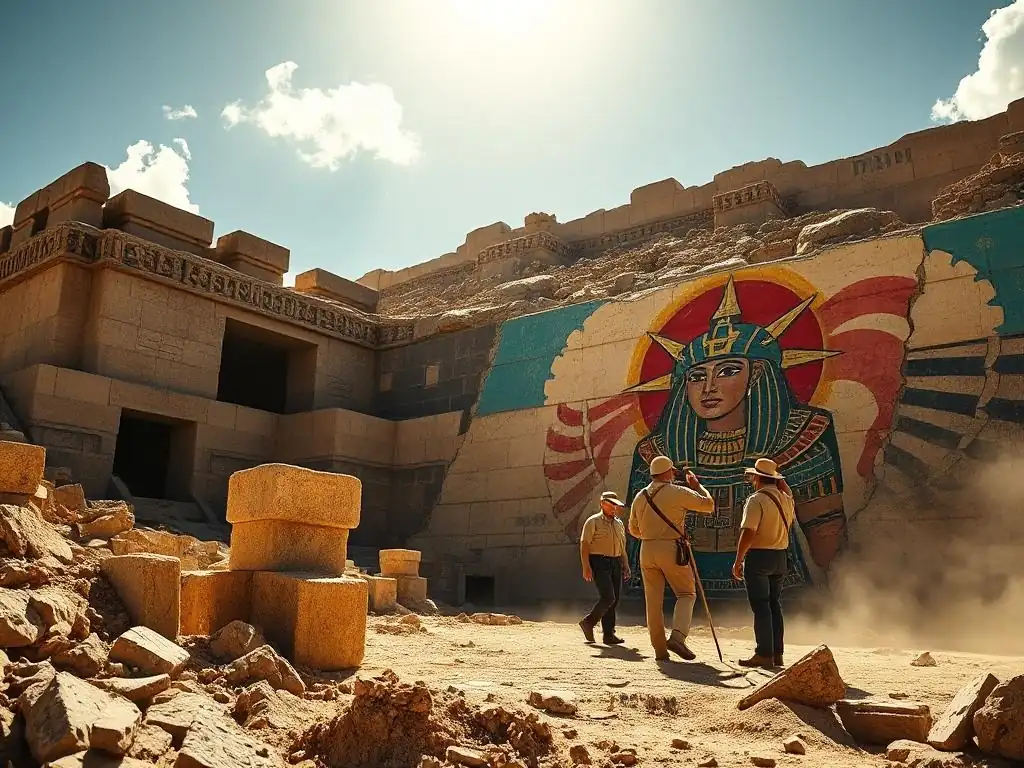
Welcome to ArchaeologyHub.org, your gateway to uncovering the secrets of the past! Ever wondered what the vibrant hues adorning the walls of ancient Teotihuacan truly meant? Our in-depth exploration into the Teotihuacan mural color symbolism unveils a fascinating world of meaning embedded within the city's chromatic palette. Prepare to delve into the colors that shaped a civilization, and discover how their artistry speaks volumes about their beliefs and society. Intrigued? Read on to unlock the secrets hidden within the pigments!
-
Introduction: Unveiling the Significance of Color in Teotihuacan
- Red: Blood, Sacrifice, and Royal Authority in Teotihuacan Art
- Yellow: Maize, Sun, and Fertility Depictions in Teotihuacan Murals
- Blue and Green: Water, Life, and the Underworld in Teotihuacan Iconography
- Black: Death, Regeneration, and the Night Sky in Teotihuacan Visual Culture
- White: Purity, Ritual, and Spiritual Significance in Teotihuacan Paintings
- Pigment Sourcing and Preparation in Ancient Teotihuacan
- Color and Architecture: Integrating Color into the Urban Landscape of Teotihuacan
- Interpreting Teotihuacan Mural Color Symbolism: Context and Meaning
- Comparisons with Other Mesoamerican Cultures: Color Symbolism Beyond Teotihuacan
- Preservation and Study: Protecting the Legacy of Teotihuacan's Colorful Past
- Conclusion: The Enduring Legacy of Color in Teotihuacan's Cultural Identity
-
Frequently Asked Questions
- What were the primary colors used in Teotihuacan murals, and what did they generally symbolize?
- How did the use of specific colors in Teotihuacan murals contribute to the overall narrative or message being conveyed?
- Can the color symbolism found in Teotihuacan murals be linked to other Mesoamerican cultures?
- What materials were used to create the vibrant colors found in Teotihuacan murals, and how durable were they?
- How does understanding Teotihuacan mural color symbolism enhance our understanding of their society and beliefs?
- Final Reflection: Echoes of Color, Whispers of Time
- Unveil the Secrets: Add Your Colors to the Teotihuacan Legacy!
Introduction: Unveiling the Significance of Color in Teotihuacan
Red was a profoundly significant color in Teotihuacan mural color symbolism, often derived from hematite or cinnabar, a mercury sulfide mineral. Its pervasive presence across various contexts underscores its multifaceted meanings, primarily associated with life force, sacrifice, and the divine or royal authority. Archaeological evidence from sites like the Palace of Quetzalpapalotl and the Pyramid of the Feathered Serpent reveals extensive use of red in architectural elements and sculptural reliefs, signifying the power and vitality of the city's elite and its ruling class.
Furthermore, red's association with blood made it a potent symbol of ritual sacrifice, a central practice in Mesoamerican religion. Murals at Teotihuacan, such as those found in the Tetitla and Atetelco compounds, frequently depict figures engaged in auto-sacrifice or offerings, with stylized representations of blood rendered in vibrant red. This Teotihuacan mural color symbolism extended to warrior imagery, where red could denote ferocity, courage, and the shedding of blood in battle, reinforcing the city's military might and the authority of its leaders.
Yellow: Maize, Sun, and Fertility Depictions in Teotihuacan Murals
Yellow, typically sourced from ochre (limonite), held deep symbolic meaning in Teotihuacan, primarily linked to sustenance, the sun, and agricultural fertility. Its presence in murals often highlights themes of abundance and the cycle of life, reflecting the vital importance of maize in the Mesoamerican diet and economy. Excavations have shown yellow used in scenes depicting ripe crops, offerings, and figures associated with agricultural prosperity, reinforcing the Teotihuacan mural color symbolism of nourishment and growth.
In the famous "Paradise of Tlaloc" mural at Tepantitla, while blue and green dominate, elements of yellow can be observed in the depictions of maize fields or prosperous landscapes, subtly emphasizing the bounty of the earth. This color also connected to the sun, a life-giving force revered by the Teotihuacanos, suggesting warmth, light, and the cyclical renewal of nature. The use of yellow in Teotihuacan art thus encapsulated a profound appreciation for the natural world and the divine forces that ensured human survival and flourishing.
Blue and Green: Water, Life, and the Underworld in Teotihuacan Iconography
Blue and green, often derived from minerals like malachite (green) and azurite (blue), or possibly a form of "Teotihuacan blue" from palygorskite clay, were intrinsically linked to water, fertility, and the sacred. This dual color combination, sometimes appearing as a single turquoiselike hue, was deeply significant in Teotihuacan mural color symbolism, representing preciousness, life-giving rain, and the aquatic underworld. The widespread depiction of water deities, most notably Tlaloc, often features these colors prominently, such as in the "Tlalocan" mural at Tepantitla, where blue and green dominate the vibrant scenes of aquatic paradise.
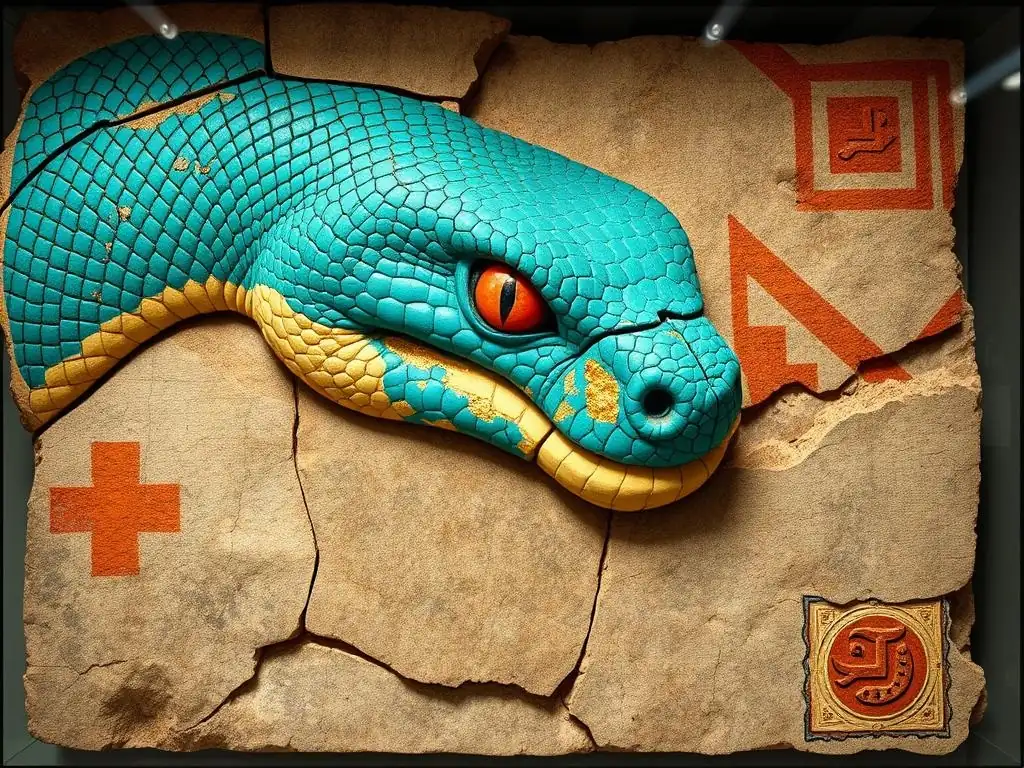
These colors also symbolized vegetation, growth, and the preciousness of jade, a highly valued material across Mesoamerica. The Feathered Serpent, a prominent deity in Teotihuacan, is frequently depicted with scales of blue and green, associating it with both water and the earth's bounty. The prevalence of this specific Teotihuacan mural color symbolism in sacred spaces and elite residences underscores its importance in conveying concepts of prosperity, divine benevolence, and the cyclical nature of life and death, particularly in relation to the essential resource of water.
Black: Death, Regeneration, and the Night Sky in Teotihuacan Visual Culture
Black, typically obtained from charcoal or manganese oxides, carried complex meanings in Teotihuacan visual culture, representing the night sky, the underworld, death, and paradoxically, regeneration. It was frequently used for outlines, backgrounds, and to delineate ritualistic or nocturnal scenes, providing a stark contrast to the vibrant reds, yellows, blues, and greens. The use of black in Teotihuacan mural color symbolism often conveyed a sense of profundity and mystery, connecting the earthly realm with the cosmic and subterranean dimensions.
In particular, black was associated with priestly figures, obsidian (a sacred volcanic glass), and deities linked to the nocturnal realm or the transformative processes of death and rebirth. Murals sometimes depict figures with black body paint or wearing dark garments, signifying their connection to ritual purity, divination, or the powers of the underworld. This specific Teotihuacan mural color symbolism highlights the dualistic worldview of the Teotihuacanos, where death was not merely an end but a crucial part of a continuous cycle of existence and renewal.
White: Purity, Ritual, and Spiritual Significance in Teotihuacan Paintings
White, primarily derived from calcite or gypsum, served multiple fundamental purposes in Teotihuacan paintings, acting as a base layer (gesso) for murals and as a significant symbolic color in its own right. As a foundational layer, it provided a bright, smooth surface for the application of vibrant pigments, allowing the intricate Teotihuacan mural color symbolism to truly stand out. Beyond its practical application, white held strong associations with purity, ritual, bones, and the spiritual realm.
In iconographic contexts, white could symbolize clouds, the skeletal aspects of deities or ancestors, or the sacredness of specific ritual acts. Its presence often highlighted elements of cleanliness, new beginnings, or the ethereal. For instance, some figures might be depicted with white garments or accessories to emphasize their ritual status or spiritual connection. This aspect of Teotihuacan mural color symbolism underscores the importance of ceremonial purity and the reverence for ancestral or divine presences within their belief system.
Pigment Sourcing and Preparation in Ancient Teotihuacan
The Origins of Teotihuacan Mural Pigments: A Material Analysis
The vibrant palette of Teotihuacan murals was a testament to the city's sophisticated understanding of mineral resources and trade networks. Pigments were primarily derived from naturally occurring minerals, meticulously processed to achieve the desired hues. Red, a dominant color, was often sourced from hematite (iron oxide) and cinnabar (mercury sulfide). While hematite was locally available, cinnabar, a highly prized and toxic pigment, likely originated from distant mines, possibly in areas like Sierra Gorda in Querétaro, indicating extensive trade routes that supplied Teotihuacan with exotic materials.
Yellow pigments were typically obtained from limonite (hydrated iron oxide), a type of ochre widely available in the region. Green and blue hues were derived from minerals such as malachite (copper carbonate) for greens and azurite (copper carbonate) for blues, with some evidence suggesting the use of palygorskite clay for a distinct "Teotihuacan blue," similar in composition to Maya Blue but with variations.
Black was commonly produced from carbon soot, derived from burning organic materials, or from manganese oxides, while white was obtained from calcite or gypsum, both readily available in the Teotihuacan valley. This sophisticated sourcing highlights the city's technological prowess and its ability to mobilize resources for its impressive artistic output, further enhancing the impact of Teotihuacan mural color symbolism.
Techniques for Preparing and Applying Colors in Teotihuacan Art
The preparation and application of pigments in Teotihuacan involved sophisticated techniques that ensured the longevity and vibrancy of the murals, contributing significantly to the enduring impact of Teotihuacan mural color symbolism. Raw mineral pigments were meticulously ground into fine powders using stone mortars and pestles, a labor-intensive process. These powders were then mixed with binding agents to create workable paints. Common binders included plant extracts, such as nopal cactus juice (prickly pear), which provided excellent adhesion and a degree of water resistance, or possibly animal glues and plant gums.
The application method primarily involved fresco secco, where pigments were applied to dry plaster, allowing for greater detail and slower working times compared to true fresco. However, some sections may have utilized a modified fresco technique, where pigments were applied while the plaster was still damp, resulting in a more durable bond.
Artists used brushes likely made from plant fibers or animal hair, applying colors in distinct fields or with fine lines for intricate details. The layering of colors, often beginning with a white gesso base, allowed for brilliant hues and the creation of the complex visual narratives that define Teotihuacan art, making the Teotihuacan mural color symbolism palpable to the viewer.
Color and Architecture: Integrating Color into the Urban Landscape of Teotihuacan
The Role of Color in Teotihuacan's Pyramid Decoration
The monumental pyramids of Teotihuacan, including the Pyramids of the Sun and Moon and the Temple of the Feathered Serpent, were not originally the somber stone structures seen today; they were once vibrant canvases of color. Archaeological evidence, including remnants of plaster and pigment found on their surfaces, indicates that these massive structures were extensively painted, transforming them into awe-inspiring spectacles.
The Pyramid of the Sun, for example, is believed to have been predominantly painted red, a color linked to fire, the sun, and possibly sacrificial offerings, thereby enhancing its sacred and powerful presence within the urban landscape and reinforcing the city's dominant Teotihuacan mural color symbolism.
The Temple of the Feathered Serpent (Quetzalcoatl) at the Ciudadela complex provides a more explicit example of architectural color integration. Its elaborate sculptural facades, featuring alternating heads of the Feathered Serpent and the Rain God Tlaloc, were once vividly painted.
The Feathered Serpent heads would have gleamed with green and blue pigments, symbolizing water and preciousness, while Tlaloc's eyes and water motifs would have been rendered in similar hues, contrasting with the red and yellow elements. This extensive use of Teotihuacan mural color symbolism on monumental architecture served not only aesthetic purposes but also communicated profound cosmological and religious messages to the city's inhabitants and visitors, solidifying the city's identity as a sacred center.
Residential Complexes: Color as a Marker of Status and Function
Within the vast residential complexes of Teotihuacan, color played a crucial role in differentiating spaces, indicating social status, and delineating the function of various rooms. The elite apartment compounds, such as Tetitla, Atetelco, and Tepantitla, are renowned for their extensively painted murals that adorned courtyards, porticos, and individual rooms. The richness and complexity of the color palette, along with the elaborate iconography, often correlated with the status of the residents. More affluent households could afford the labor and exotic pigments required for intricate and colorful decorations, making the Teotihuacan mural color symbolism a visible marker of social hierarchy.
For example, the "Paradise of Tlaloc" mural at Tepantitla, with its exuberant use of blue, green, and red, depicts a vibrant communal scene, likely a gathering place for a specific lineage or social group. In contrast, simpler residential structures might have utilized more monochromatic schemes or less detailed designs, yet still incorporated basic color applications for aesthetic and perhaps protective purposes. The systematic application of Teotihuacan mural color symbolism within these domestic spaces transformed them from mere dwellings into living canvases that reflected the inhabitants' beliefs, social standing, and daily rituals, providing a continuous visual narrative of their lives.
Color in Teotihuacan Ritual Spaces: The Great Goddess Compound
The Great Goddess Compound, an informal designation often referring to the complex where the "Paradise of Tlaloc" mural (Tepantitla) is located, exemplifies the profound integration of color into Teotihuacan ritual spaces. While "Great Goddess" is a modern interpretive term, the deity depicted in the compound is a central figure, often associated with water, fertility, and the earth. The murals within this compound, particularly the large-scale "Tlalocan" mural, are a prime example of how Teotihuacan mural color symbolism was employed to create immersive and spiritually charged environments.
The vibrant blues and greens, symbolizing water and vegetation, dominate the "Tlalocan" mural, depicting a joyful realm of abundance and renewal. Red, yellow, and black accents provide contrasts and highlight specific figures or elements. This deliberate chromatic choice was not merely decorative; it was integral to the ritual experience, designed to transport participants into a sacred landscape that mirrored the divine realm. The sophisticated use of Teotihuacan mural color symbolism in such ritual spaces aimed to evoke specific emotions, reinforce religious doctrines, and facilitate communion with the deities, making the spiritual beliefs tangible and visually compelling.
Interpreting Teotihuacan Mural Color Symbolism: Context and Meaning
Deciphering the Language of Color: Contextual Clues in Teotihuacan Art
Deciphering the intricate language of Teotihuacan mural color symbolism requires a meticulous examination of contextual clues within the broader artistic and archaeological record. Colors rarely held isolated meanings; their significance was often amplified or nuanced by the figures they adorned, the objects they colored, and their placement within a larger narrative scene. For instance, while red generally symbolized blood or power, a red plumed serpent might specifically evoke a fiery, powerful deity, distinct from a red human figure representing a warrior.
Archaeologists and art historians analyze the recurring patterns of color use in conjunction with specific iconographic motifs, architectural settings, and associated artifacts. The consistent depiction of blue and green with water-related imagery, such as Tlaloc or aquatic animals, firmly establishes their association with fertility and life-giving rain. Similarly, the frequent pairing of yellow with maize or agricultural scenes solidifies its connection to sustenance. This holistic approach, considering the interplay of image, location, and Teotihuacan mural color symbolism, is crucial for unlocking the deeper layers of meaning embedded in the city's visual culture.
Color Associations with Deities and Supernatural Beings in Teotihuacan
The Teotihuacan mural color symbolism was deeply intertwined with the representation and attributes of the city's pantheon of deities and supernatural beings. Specific colors were consistently associated with particular divine entities, serving as visual cues to their powers, domains, and characteristics. The Rain God Tlaloc, a paramount deity, is almost invariably depicted with prominent blue and green hues, reflecting his dominion over water, rain, and agricultural fertility. His goggle eyes, often rendered in blue, and his aquatic surroundings painted in various shades of green and blue, are hallmark features.
The Feathered Serpent, another central deity often identified with Quetzalcoatl, frequently appears with scales and plumes painted in vibrant greens and blues, symbolizing preciousness, water, and perhaps the sky. Red, on the other hand, was often associated with fire deities, warrior gods, or the powerful Great Goddess figure, especially when she is depicted in her more fierce or life-giving aspects, sometimes adorned with red elements. This consistent application of Teotihuacan mural color symbolism to divine representations helped reinforce religious doctrines and provided a visual shorthand for understanding the complex relationships between the gods and the natural world.
Beyond its religious and cosmological significance, Teotihuacan mural color symbolism also possessed important social and political dimensions, reflecting and reinforcing the city's hierarchical structure and power dynamics. The availability and lavish use of certain pigments, particularly those derived from rare or distant sources like cinnabar, could signify wealth and elite status. Only the most powerful and influential families or institutions would have had the resources to commission murals rich in these expensive colors, making their residential compounds or public buildings stand out.
Furthermore, the specific choice of colors in public spaces, such as on the monumental pyramids or in grand plazas, conveyed messages about the city's collective identity, its ruling ideology, and its military might. For instance, the widespread use of red on the Pyramid of the Sun might have symbolized the unified power of the Teotihuacan state and its connection to a solar cult.
The deliberate deployment of Teotihuacan mural color symbolism in both private and public spheres thus served as a powerful tool for social control, political legitimization, and the articulation of collective identity within the complex urban fabric of Teotihuacan.
Comparisons with Other Mesoamerican Cultures: Color Symbolism Beyond Teotihuacan
Contrasting Color Palettes: Teotihuacan vs. Mayan Color Use
While sharing some broad conceptual similarities, the specific application and emphasis of Teotihuacan mural color symbolism exhibit distinct characteristics when contrasted with Mayan color use, particularly in their respective mural traditions. Teotihuacan murals, exemplified by sites like Tepantitla, often employ a vibrant yet somewhat limited palette, favoring strong fields of red, yellow, blue, green, black, and white, with less emphasis on subtle gradations or extensive mixing. The colors are bold and often used to delineate figures and scenes with clear boundaries, contributing to a monumental and often abstract feel.
In contrast, Mayan mural painting, such as seen at Bonampak or San Bartolo, often displays a more expansive palette and a greater sophistication in blending and shading. While they also used reds, blues, and greens, Mayan artists frequently incorporated purples, oranges, and a wider range of earth tones, creating more naturalistic or nuanced depictions.
The famous "Maya Blue," a highly durable synthetic pigment, was also a defining feature of Mayan art, chemically distinct from the "Teotihuacan blue" variations. These differences highlight divergent artistic traditions and perhaps varying access to or preference for specific pigments, even as both cultures used color to convey profound meaning.
Despite their unique artistic styles and specific chromatic emphases, Teotihuacan and other Mesoamerican cultures, including the Maya, Zapotec, and Mixtec, shared several fundamental principles in their color symbolism. The association of green with preciousness, water, and fertility was nearly universal, stemming from the reverence for jade and the vital importance of rain and vegetation for agriculture. Similarly, red consistently symbolized blood, sacrifice, and vitality across many cultures, reflecting shared cosmological beliefs about life force and ritual.
Blue and green were often intertwined with water deities and the concept of aquatic underworlds, as seen in both Teotihuacan's Tlaloc iconography and Mayan rain god Chac's associations. Black frequently represented the night, the underworld, and obsidian, a sacred material, while white was linked to bones, purity, and the ethereal. These shared meanings underscore a broader Mesoamerican worldview where colors were not merely decorative but deeply embedded with cosmological, religious, and social significance, forming a coherent visual language that transcended individual cultural expressions, even as the specific nuances of Teotihuacan mural color symbolism remained distinct.
Preservation and Study: Protecting the Legacy of Teotihuacan's Colorful Past
Challenges in Preserving Teotihuacan Mural Colors
The preservation of Teotihuacan mural colors faces numerous formidable challenges, threatening the survival of these invaluable historical and artistic records. The primary issue stems from their very nature: most Teotihuacan murals were executed in fresco secco or a similar technique on perishable lime plaster, making them highly susceptible to environmental degradation. Exposure to natural elements like sunlight, rain, humidity fluctuations, and wind causes pigments to fade, plaster to crack, and entire sections to detach. The "Paradise of Tlaloc" mural, though protected, still shows signs of natural aging and pigment loss.
Human activity also poses significant threats. Early archaeological practices, often lacking modern conservation techniques, sometimes inadvertently damaged murals during excavation. Looting and vandalism have further contributed to their destruction. Furthermore, biological growth, such as mold and algae, can colonize the painted surfaces, causing discoloration and physical damage. The delicate balance required to maintain stable microclimates for these fragile artworks, coupled with the sheer scale of the archaeological site, makes the long-term preservation of Teotihuacan mural color symbolism an ongoing and complex endeavor for archaeologists and conservators.
Ongoing Research: New Discoveries and Interpretations of Teotihuacan Color Symbolism
Despite the challenges, ongoing research continues to yield new discoveries and refine our interpretations of Teotihuacan mural color symbolism. Advances in analytical techniques, such as X-ray fluorescence (XRF), Raman spectroscopy, and scanning electron microscopy (SEM), allow researchers to non-invasively identify the precise mineral composition of pigments, even in minute traces.
This scientific approach provides crucial insights into pigment sourcing, trade networks, and the technical mastery of Teotihuacan artists. For example, recent analyses have helped confirm the use of specific iron oxides for reds and yellows, and copper-based pigments for blues and greens, offering a more precise understanding of their palette.
Beyond material analysis, interdisciplinary studies combining archaeology, art history, and ethnohistory are continually re-evaluating the broader cultural context of Teotihuacan mural color symbolism. New excavations at previously unexplored residential compounds or ritual spaces occasionally uncover previously unknown mural fragments, adding to the corpus of available data. These ongoing efforts not only contribute to the physical preservation of Teotihuacan's colorful legacy but also deepen our understanding of how color permeated every aspect of life, belief, and power in this ancient Mesoamerican metropolis, ensuring that the vibrant narratives of Teotihuacan continue to be told.
Conclusion: The Enduring Legacy of Color in Teotihuacan's Cultural Identity
Frequently Asked Questions
What were the primary colors used in Teotihuacan murals, and what did they generally symbolize?
The primary colors were red, yellow, blue, black, and white. Red often symbolized blood and life, while blue was associated with water and the underworld. Yellow might represent fertility and abundance.
How did the use of specific colors in Teotihuacan murals contribute to the overall narrative or message being conveyed?
Colors were carefully chosen to reinforce the intended message of the artwork. They acted as a visual language, adding layers of meaning to the depicted scenes and figures. The specific combination of colors was crucial.
Can the color symbolism found in Teotihuacan murals be linked to other Mesoamerican cultures?
Yes, there are similarities in color symbolism with other Mesoamerican cultures, like the Maya. However, Teotihuacan had its unique nuances and a specific regional interpretation of these colors.
What materials were used to create the vibrant colors found in Teotihuacan murals, and how durable were they?
Pigments were derived from natural sources such as minerals, plants, and insects. Some of these pigments proved remarkably durable, allowing the colors to survive for centuries.
How does understanding Teotihuacan mural color symbolism enhance our understanding of their society and beliefs?
Decoding the color symbolism provides insights into their religious beliefs, social hierarchy, and cosmology. It unveils a deeper understanding of their world view and cultural values.
Final Reflection: Echoes of Color, Whispers of Time
The vibrant hues that once adorned the walls of Teotihuacan, meticulously analyzed throughout this article, are not merely pigments of the past; they are living testaments to a sophisticated worldview that continues to resonate with us today. The enduring power of color to communicate complex ideas, to define social structures, and to connect humanity with the divine is undeniably evident in these ancient murals, reminding us that art transcends time and culture.
The study of Teotihuacan mural color symbolism offers a profound glimpse into the minds of its creators, revealing a society deeply attuned to the natural world and the spiritual realm. The deliberate use of red, blue, yellow, and other colors wasn't arbitrary; it was a language, a carefully constructed narrative woven into the very fabric of their city. Color is a power which directly influences the soul.
- Wassily Kandinsky. This quote perfectly encapsulates the enduring impact of color, not just in Teotihuacan, but in art and culture across the globe.
As we conclude this exploration of Teotihuacan's chromatic palette, I invite you to consider the colors that shape your own world. What meanings do they hold for you? How do they influence your perceptions, your emotions, your very being? Let the echoes of Teotihuacan's vibrant past inspire you to appreciate the power of color, to understand its symbolism, and to create a more colorful and meaningful future for yourself and for generations to come.
Unveil the Secrets: Add Your Colors to the Teotihuacan Legacy!
Thank you for exploring the vibrant world of Teotihuacan with us. We hope you've enjoyed delving into the meaning behind the colors that adorned this ancient city and that you gained a better understanding of its rich cultural tapestry. Now, it's your turn to keep the story alive.
Here are a few ways you can continue your journey:
- Visit a museum or archaeological site with Mesoamerican art and share your observations about the colors and their possible meanings with others.
- Dive deeper by researching contemporary interpretations of Teotihuacan's art and engage in discussions with fellow enthusiasts online.
- Consider creating your own artwork inspired by Teotihuacan's color palette, and share your piece on social media with the hashtag #TeotihuacanColors to inspire others!
What will your next step be in unraveling the mysteries of Teotihuacan?