Discover the Imperial Heart of Qin: Xianyang and Its Monumental Legacy
Welcome to ArchaeologyHub.org’s dedicated exploration of East Asian Sites: Xianyang & Qin Imperial Centers—a cornerstone of our global archaeological taxonomy. This subcategory delves into the political, ritual, and funerary landscapes of the Qin dynasty (221–206 BCE), focusing on the capital city of Xianyang, the sprawling mausoleum complex of Qin Shi Huang, and the lesser-known imperial palaces, armories, and administrative hubs that defined China’s first unified empire. Here, you’ll find timelines, excavation reports, artifact analyses, and interpretive essays that illuminate how Qin centralization transformed East Asian urban planning, metallurgy, and mortuary practice.
🏛️ The Urban Fabric of Xianyang: Capital Planning and Royal Palaces
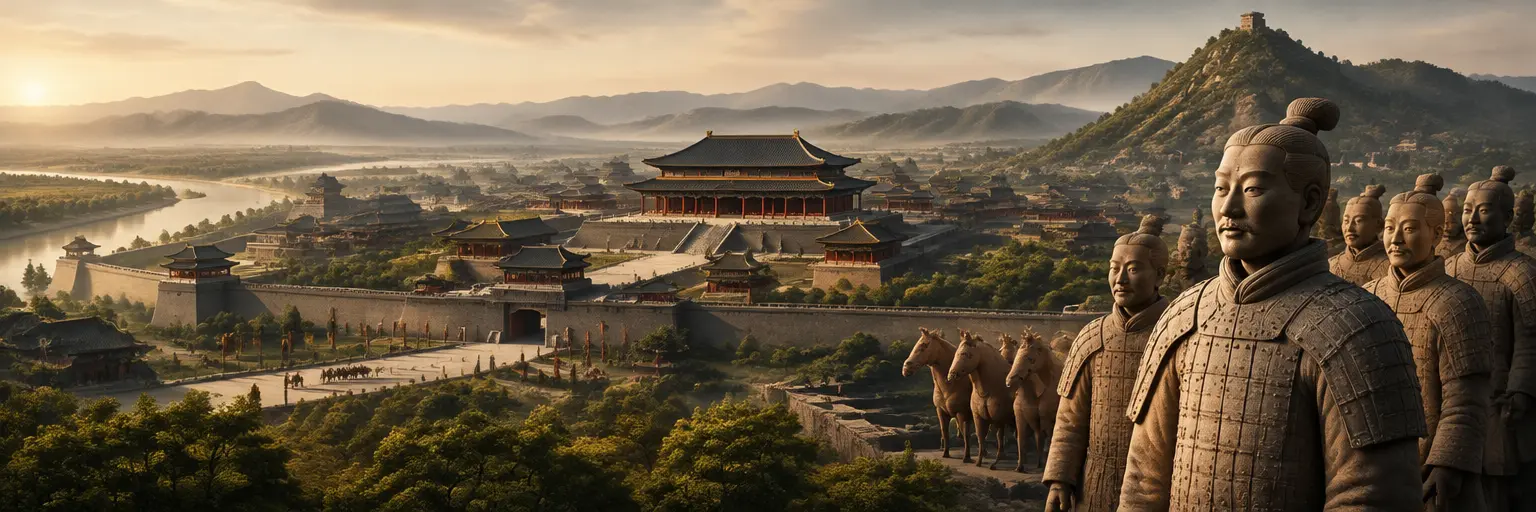
Xianyang, situated on the north bank of the Wei River, was not merely a political capital but a purpose-built imperial showpiece. Archaeological surveys since the 1970s have revealed a grid-like urban layout, with rammed-earth palace platforms—such as the No. 1 Palace—featuring multi-story halls, drainage systems, and painted wall murals. These structures exemplify Qin’s standardized modular construction, using prefabricated components to accelerate building. The city’s Xianyang Palace Complex also included administrative workshops for bronze casting and pottery, which supplied the court and army.
For visitors and researchers, this section offers stratigraphic profiles of over 20 excavation trenches, digital reconstructions of palace facades, and comparative analyses of Qin versus earlier Zhou capitals. You’ll discover how the relocation of aristocratic clans into Xianyang under Qin Shi Huang was a deliberate strategy to break old power bases, a fact confirmed by the distribution of elite burial plots within the urban perimeter. This content is ideal for students of ancient city planning and for travelers planning a virtual tour of the Wei River valley.
⚱️ The Mausoleum of Qin Shi Huang: Beyond the Terracotta Army
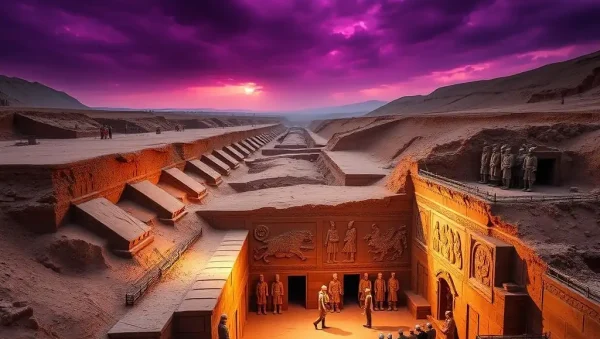
The Qin Shi Huang Mausoleum (Lintong District) is the most famous feature of this subcategory, but our coverage goes far beyond the 8,000 terracotta warriors. Excavations have uncovered bronze chariots, acrobat figurines, officials, and a burial mound that remains unopened due to mercury contamination risks. Remote sensing (magnetometry and ground-penetrating radar) has mapped an inner and outer wall, a subterranean palace complex, and dozens of attendant pits. This page synthesizes those findings, including the debated “river of mercury” model based on high mercury concentrations in the mound’s soil.
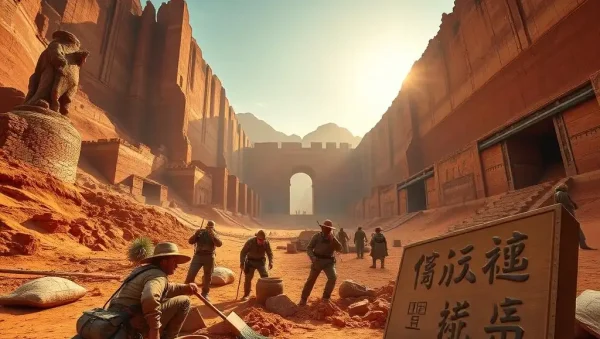
Readers will find artifact galleries with high-resolution photos of bronze crossbow triggers, jade armor plaques, and bronze cranes—each with contextual descriptions linking them to Qin’s legalist ideology and beliefs in an afterlife army. We also explore the labor logistics: over 700,000 conscripts worked for 38 years, and we detail the workforce’s burial pits, tool marks, and isotopic evidence for their geographic origins. This section is essential for anyone researching early imperial mortuary archaeology or the Qin state’s organizational capacity.
🏯 Secondary Imperial Centers: Yong, Xianyang’s Predecessor, and Palace Networks
While Xianyang became the Qin capital from 350 BCE, earlier imperial centers such as Yong (Fengxiang) served as ceremonial and ancestral sites. The Yong complex contains the Qin Gong Grand Tomb, with an unprecedented 186 human sacrificial burials and hundreds of bronze ritual vessels. This subcategory compares Yong’s layout with Xianyang’s, showing a transition from clan-based ritual space to a more bureaucratic, defensive capital. Additionally, we cover the Epang Palace—unfinished at Qin’s fall—whose massive rammed-earth foundation platforms (120 meters long) still amaze modern engineers.
Other imperial centers include Lishan (the mausoleum area), Jinghe river terrace workshops, and Yueyang, a temporary capital used during the early unification wars. Our content provides GIS maps showing the transport network (straight roads, canal systems) that connected these centers to frontier garrisons. For scholars, we publish excavation reports from the 2010–2020 period, including neutron activation analysis of pottery assemblages tracing production centers. This section helps contextualize how Qin’s multi-centric rule was both a logistical triumph and a vulnerability.
🗿 Material Culture and Craft Specialization: Bronze, Iron, and Ceramics
Qin’s imperial centers were industrial powerhouses. This subcategory highlights bronze workshop sites in Xianyang’s western district, where state-controlled foundries produced standardized weapons (arrows, spears, swords) with precise metallurgical control. We detail the lost-wax casting technique used for the famous bronze chariots, and we compare Qin bronze alloys to those of conquered states (e.g., Chu, Qi) using X-ray fluorescence data. Ceramic workshops near the mausoleum produced the terracotta warriors using a modular assembly-line method—limbs, torsos, and heads were separately molded and then fired.
Iron production also thrived, with evidence of blast furnaces in the Jinghe area that enabled mass production of agricultural tools and armor. Our artifact profiles include in situ photographs, weight-to-size standards, and machinability tests. For enthusiasts, we explain the “Qin weight system” inscribed on bronze weights found across the empire, demonstrating central oversight. This section is perfect for experimental archaeologists and metallurgists seeking quantitative datasets, as well as for general readers curious about ancient “factory” operations.
🌏 Global Context and Comparative Studies: Qin in the Ancient World
This subcategory situates Xianyang and Qin imperial centers within a global framework, comparing them with contemporary monumental projects—e.g., Persepolis, Rome’s Aurelian Walls, and Han dynasty Chang’an. We examine how Qin’s standardized measurements, road networks, and legal codes (preserved in bamboo slips at Shuihudi) influenced later East Asian statecraft. Special emphasis is placed on cross-cultural exchange: distant Roman glass beads and Scythian-style gold artifacts found in Qin tombs suggest proto-Silk Road connections. Our interpretive essays analyze the ideology of “universal rule” (tianxia) versus Persian or Macedonian imperial rhetoric.
For educators, we provide comparative timelines and a downloadable PDF chart showing the contemporaneous construction of the Qin Great Wall and the Roman fortifications. We also address modern heritage debates: UNESCO’s recognition of the mausoleum, tourism impact, and Chinese state-led preservation policies. This angle ensures that while the primary focus is archaeological, we integrate political history, museum studies, and sustainability concerns. Whether you are a researcher or a lifelong learner, this section offers a holistic understanding of why Qin’s urban and mortuary centers remain pivotal to world history.
Frequently Asked Questions
What is the difference between the Xianyang city site and the Qin Shi Huang Mausoleum?
Xianyang was the political capital, a large urban area with palaces, workshops, and residential districts, occupied from 350–206 BCE. The mausoleum, located 40 km east near Lintong, is a separate, purpose-built funerary complex for the First Emperor, containing his tomb mound, pits with terracotta warriors, and attendant burials. Both sites are crucial but functionally distinct—one for daily governance, the other for afterlife imperium.
Why has the central tomb chamber of Qin Shi Huang never been excavated?
Chinese authorities have refrained from opening the central chamber due to preservation risks. Excavating the tomb could damage fragile artifacts (like silk manuscripts) that may decay upon exposure. Elevated mercury levels in mound soils suggest the historian Sima Qian’s account of rivers of mercury may be true, posing a toxic hazard. Additionally, modern technology lacks non-destructive methods to fully map and conserve the interior without irreversible loss.
Are the terracotta warriors individually unique?
Yes, no two warriors are identical. While produced using a modular assembly process with premade arms, torsos, and heads, artisans added unique facial features—different brows, mustaches, hairstyles, and even expressions—by hand-applying clay details before firing. Height and armor variations correspond to rank and military role. This blend of mass production and individualized finishing was a Qin innovation for monumental art.
What can visitors see today at Xianyang and the mausoleum site?
At the Xianyang city site, visitors can view excavated palace foundations, reconstructed rammed-earth platforms, and a museum with bronze artifacts. The mausoleum site offers the famous Terracotta Army Museum (Pits 1–3), bronze chariots, and the massive burial mound you may only view from a distance—climbing is forbidden. Nearby, the Yong site’s museum displays the Qin Gong Grand Tomb’s findings. Virtual tours are available on our site.
How do we know the layout of the Xianyang palace complex if much is destroyed?
Archaeologists use a combination of textual records (like Sima Qian’s Shiji), aerial photography, satellite imagery, and systematic coring and ground-penetrating radar surveys. The Wei River’s shifting course has buried portions, but rammed-earth platforms and wall foundations remain. Excavated drainage pipes, tiled roofs, and wall paintings confirm architectural details. Digital reconstruction models, informed by these data, allow researchers to visualize the original grandeur.