
Comparing Qin Shi Huang's Mausoleum with Han Dynasty Imperial Tombs: Continuity and Change

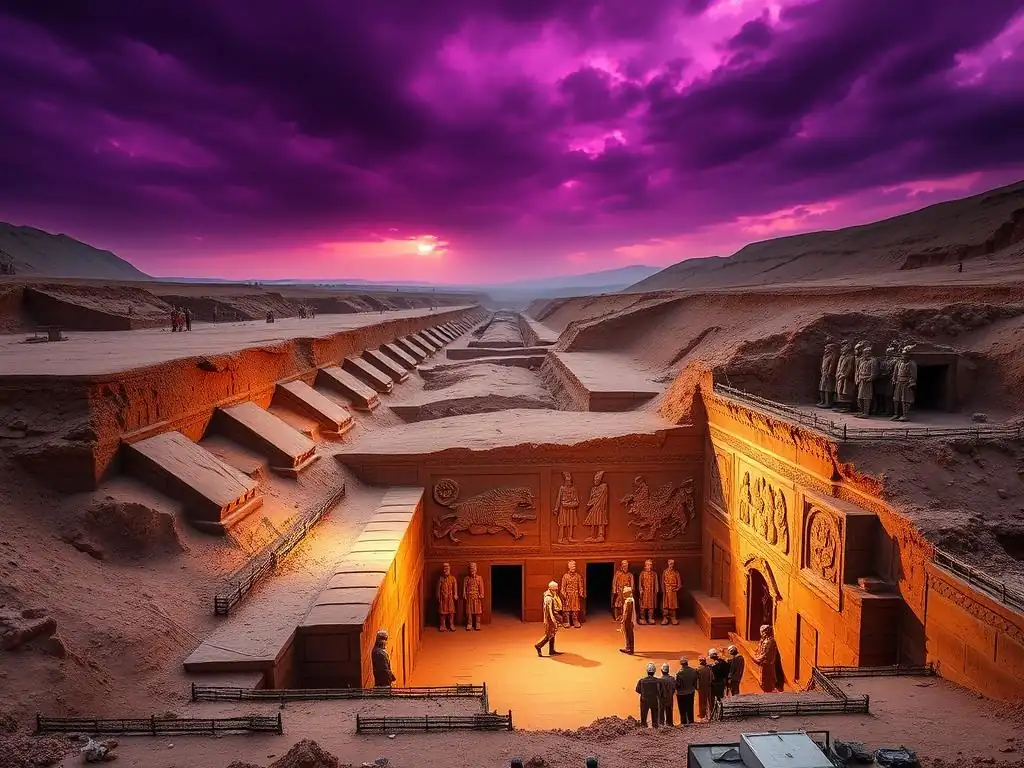
Welcome to ArchaeologyHub.org, your gateway to unlocking the secrets of the past! Ever wondered how empires evolve, leaving behind clues in the earth? Our latest exploration delves into the fascinating world of imperial tombs, specifically Comparing Qin Shi Huang's Mausoleum with Han Dynasty Imperial Tombs, revealing both remarkable continuity and dramatic shifts in burial practices. Prepare to journey through time as we unearth the stories buried beneath these monumental structures... and discover what they tell us about the rise and fall of ancient China.
- Introduction: Qin Shi Huang and the Legacy of Imperial Tombs in China
- Architectural Layout and Design: A Comparative Analysis
- Burial Goods and Ritual Practices: Reflecting Changing Beliefs
- Funerary Art and Decoration: Depicting the Afterlife
- The Scale and Scope of Imperial Construction: A Question of Resources
- Comparing Mortuary Rituals: Evolution and Adaptation
- Conclusion: Continuity and Change in Chinese Imperial Burial Practices
-
Frequently Asked Questions
- How does Qin Shi Huang's mausoleum differ from later Han Dynasty imperial tombs in terms of scale and construction?
- What similarities exist between Qin Shi Huang's mausoleum and Han Dynasty imperial tombs regarding burial goods and their symbolic significance?
- What innovations in tomb construction or design are evident in Han Dynasty tombs compared to the Qin Dynasty mausoleum?
- How did the political and social context of the Qin and Han Dynasties influence the design and content of their respective imperial tombs?
- What can the archaeological study of Qin Shi Huang's mausoleum and Han Dynasty tombs tell us about the beliefs and practices surrounding death and the afterlife in ancient China?
- Final Reflection: Echoes of Emperors, Whispers of Time
- Unearth Your Inner Archaeologist: Start Exploring Now!
Introduction: Qin Shi Huang and the Legacy of Imperial Tombs in China
The Significance of Imperial Tombs in Understanding Ancient Chinese Dynasties
Imperial tombs in ancient China are far more than mere burial sites; they are profound archaeological archives that offer unparalleled insights into the political structures, religious beliefs, technological prowess, and economic conditions of their respective eras. The scale, design, and contents of these grand funerary complexes provide a tangible connection to the past, revealing the aspirations, anxieties, and worldview of the ruling elite in ways that written records alone cannot fully convey. They stand as monumental testaments to dynastic power and the elaborate preparations for the afterlife.
These magnificent structures illuminate the evolution of statecraft, from the centralized authority of the Qin to the more integrated philosophical approaches of the Han. Through their meticulous study, archaeologists and historians can reconstruct aspects of daily life, understand advancements in engineering and art, and trace the subtle shifts in imperial ideology that underpinned centuries of Chinese history. The information gleaned from these sites is crucial for a holistic understanding of ancient Chinese civilization.
Defining Qin Shi Huang's Mausoleum: A Monumental Beginning
Qin Shi Huang's mausoleum, located near Xi'an in Shaanxi province, represents an unprecedented undertaking in ancient Chinese history, commencing shortly after his ascension to the throne in 246 BCE. This colossal complex, with an estimated area of 56 square kilometers, was conceived as a subterranean replica of his empire, designed to accompany the First Emperor into the afterlife and ensure his eternal dominion. Historical accounts suggest that over 700,000 laborers were conscripted for its construction over a period of nearly 40 years.
The discovery of the Terracotta Army in 1974, approximately 1.5 kilometers east of the main burial mound, instantly propelled Qin Shi Huang's mausoleum onto the global stage as one of the most significant archaeological finds ever made. This monumental collection of life-sized warriors, chariots, and horses established a new benchmark for imperial burial practices and underscored the Qin Dynasty's immense power and organizational capabilities.
The Han Dynasty Tombs: Building Upon and Diverging from the Qin Precedent
The Han Dynasty, which succeeded the short-lived Qin, inherited many imperial traditions, including the practice of constructing grand funerary complexes for its emperors. Ruling for over four centuries (206 BCE – 220 CE), the Han emperors continued the tradition of elaborate burials, but with significant modifications that reflected their own distinct philosophical, political, and cultural shifts. These Qin Shi Huang Han tombs offer a unique comparative study.
While maintaining the ambition for eternal grandeur, Han imperial tombs diverged from the Qin precedent in several key aspects. There was a notable shift towards more prominent above-ground burial mounds, a deeper integration of Confucian ideals into funerary art and ritual, and a broader representation of daily life within the grave goods, moving away from the Qin's singular militaristic focus. This evolution highlights a dynamic interplay of continuity and change in early imperial China's mortuary practices.
Architectural Layout and Design: A Comparative Analysis
Qin Shi Huang's Mausoleum: A Microcosm of Imperial Power
The architectural layout of Qin Shi Huang's mausoleum is a deliberate subterranean microcosm of his imperial power, designed to mirror his earthly capital, Xianyang, and the vast domain he unified. The central, unexcavated burial mound is surrounded by an intricate network of pits and satellite tombs, all systematically arranged. This comprehensive design emphasizes a centralized, absolute monarchy, where the emperor's authority extends even into the afterlife, commanding a replica of his living world.
The complex is enclosed by inner and outer walls, reminiscent of city fortifications, further reinforcing the idea of an underground imperial city. The entire mausoleum is meticulously oriented to the cardinal directions, reflecting the Qin's understanding of cosmic order and the emperor's role as the Son of Heaven. This meticulous planning and monumental scale underscore Qin Shi Huang's ambition to preserve his supreme authority and control for eternity.
The Terracotta Army: Protecting the Emperor in the Afterlife
Located approximately 1.5 kilometers east of the main burial mound, the Terracotta Army serves as the primary protective force for Qin Shi Huang in the afterlife. Comprising thousands of life-sized warriors, chariots, and horses, the army is arranged in precise battle formations within massive pits, representing the actual imperial guard ready for eternal deployment. Pit 1 alone, the largest of the three main pits, is estimated to contain over 8,000 soldiers, 130 chariots, and 520 horses.
The sheer scale and realistic depiction of these figures are astonishing. Despite their mass production, each warrior possesses unique facial features, hairstyles, and expressions, showcasing remarkable craftsmanship. Their strategic positioning and formidable numbers vividly convey the emperor's desire for an invincible army to defend him against any threats in the spiritual realm, ensuring his continued dominion.
The Mausoleum's Underground Palace: Recreating the Imperial Capital
Historical accounts, notably from Sima Qian's Records of the Grand Historian, describe the central burial chamber as a magnificent underground palace, a direct replica of the Qin empire. It is said to feature rivers of mercury representing the empire's waterways and constellations depicted by pearls on the ceiling. While the central burial chamber remains unexcavated, geophysical surveys have indicated a vast, deep structure consistent with these historical descriptions.
This elaborate design reflects Qin Shi Huang's profound desire to perpetuate his terrestrial power and dominion into the afterlife. The underground palace was conceived as his eternal court, complete with all the trappings of his earthly rule, from administrative structures to natural landscapes, ensuring that his imperial lifestyle continued uninterrupted in the spiritual world.
Han Dynasty Imperial Tombs: Evolving Architectural Styles and Concepts
In contrast to the predominantly subterranean design of the Qin mausoleum, Han Dynasty imperial tombs, while still grand, typically featured more prominent above-ground structures. These often consisted of massive earthen mounds, which could be pyramidal or truncated cone shapes, forming the focal point of extensive funerary parks. These parks frequently contained various ancillary structures such as temples, ritual buildings, and satellite burials for family members and high-ranking officials.
This architectural shift reflects a move from the Qin's focus on a hidden, underground empire to a more visible, integrated funerary landscape. Han tombs were designed not only as burial places but also as sites for ongoing ancestral worship and demonstrations of imperial legitimacy, signifying a deeper connection between the deceased emperor and the living realm through ritual and public veneration.
The Shift Towards Above-Ground Burial Mounds and Shrine Complexes
Early Western Han tombs, such as those of Emperor Gaozu and Emperor Wen, are characterized by their distinctive, towering pyramidal earthen mounds. These mounds became iconic landmarks in the landscape, often surrounded by walls and gate towers, visually asserting the imperial presence and the permanence of the dynasty. This architectural form became a hallmark of Han imperial burials.
Crucially, beyond the central burial mound, Han funerary architecture incorporated substantial above-ground shrine complexes, known as lingmiao. These dedicated structures were where regular rituals, offerings, and ceremonies to the deceased emperor were performed by his successors and court officials. This institutionalization of ancestral worship within the funerary landscape marked a significant departure from the Qin's more isolated, subterranean approach.
Maoling and the Western Han Tombs: Integration of Confucian Ideals
Maoling, the tomb of Emperor Wu of Han, stands as a prime example of Western Han imperial mausolea. It is the largest of these complexes, estimated to cover an area of approximately 120 square kilometers. While its scale rivals that of the Qin, its design subtly integrates elements reflecting Confucian virtues, such as filial piety and the importance of ritual and social order. The layout often considered cosmological principles, emphasizing harmony between heaven and earth.
The overall organization of Han imperial tomb parks, with their clear demarcation of sacred spaces for ancestral rites and the inclusion of satellite burials for loyal subjects, demonstrates a deeper integration of Confucian philosophical principles into imperial burial practices. This approach emphasized moral order, social hierarchy, and the enduring legacy of the emperor through continuous veneration, a more nuanced approach compared to the Qin's focus on sheer military might.
Burial Goods and Ritual Practices: Reflecting Changing Beliefs
Qin Dynasty Burial Practices: Emphasis on Military Power and Control
Qin Dynasty burial practices, particularly evident in Qin Shi Huang's mausoleum, overwhelmingly emphasized military might and the emperor's absolute control over his domain. The Terracotta Army, with its thousands of life-sized soldiers and chariots, is the most prominent example, symbolizing a formidable army ready to protect the emperor in the afterlife. Other satellite pits contain bronze weapons, armor, and even bronze figurines of exotic animals, all reinforcing the image of a powerful, all-encompassing imperial domain.
The uniformity and standardization of many artifacts recovered from the Qin mausoleum reflect Qin Shi Huang's policies of centralizing power and standardizing various aspects of his empire, including weights, measures, and even axle lengths. The sheer volume of military equipment underscores a worldview deeply rooted in conquest, maintaining order through force, and the projection of unparalleled imperial authority.
The Standardization of Burial Goods Under Qin Rule
A defining characteristic of Qin burial goods is their remarkable standardization, particularly evident in the Terracotta Army. While individual warriors exhibit unique facial features, their armor, weaponry (including functional bronze spears, crossbows, and swords), and chariots were mass-produced with astonishing consistency. Inscriptions on some weapons even indicate a factory-like organization, with specific workshops and supervisors, highlighting the Qin's efficient, centralized production systems.
This standardization extended beyond military items to various other artifacts found in the satellite pits, such as pottery and bronze vessels. It signifies the Qin's attempt to impose order and control across all aspects of life, including the afterlife. This meticulous, systematic approach to producing funerary goods reflects the early establishment of a highly bureaucratic and organized imperial state.
The Symbolic Significance of the Terracotta Army's Weapons and Armor
The Terracotta Warriors were equipped with real bronze weapons, many of which remain remarkably sharp and well-preserved after more than two millennia, demonstrating advanced metallurgical techniques. The presence of these functional weapons symbolizes not merely a guard, but a ready, formidable army capable of defending the emperor against any threats in the spiritual realm. Their advanced state of preservation offers invaluable insights into Qin military technology.
The detailed terracotta armor worn by the warriors, though sculpted, meticulously mimics real lamellar armor, signifying protection, readiness for battle, and the disciplined nature of the Qin army. The entire ensemble of the Terracotta Army, complete with its weaponry and protective gear, projects an image of an emperor who, even in death, maintains his supreme military authority and is prepared to face any challenge to his eternal rule.
Han Dynasty Burial Practices: Incorporating Confucianism and Daoism
Han Dynasty burial practices exhibited a significant shift, expanding beyond the Qin's military focus to include a broader range of items reflecting daily life, entertainment, and evolving cosmological beliefs. Artifacts commonly found in Han tombs include detailed pottery models of houses, granaries, wells, domestic animals, and even entire estates. This diversification indicates a desire to replicate a comfortable, prosperous earthly existence for the deceased in the afterlife.
The profound influence of Confucianism led to an emphasis on filial piety and ancestral worship, reflected in the inclusion of ritual vessels and texts. Concurrently, Daoism, with its focus on immortality and spiritual transcendence, inspired the inclusion of objects believed to grant longevity or facilitate journeys to the realm of the immortals. This broader philosophical underpinning resulted in a much more varied array of burial goods compared to the Qin's predominantly martial focus.
The Rise of Jade Burial Suits and Their Symbolic Importance
A distinct innovation of Han imperial burial practices was the emergence of jade burial suits, perhaps the most iconic and luxurious of Han grave goods. Examples include the exquisitely preserved suits of Prince Liu Sheng and his wife Dou Wan from Mancheng. These suits are meticulously composed of thousands of polished jade pieces, sewn together with gold, silver, or bronze thread, covering the entire body.
The belief was that jade, with its perceived mystical properties, could preserve the body from decay and facilitate immortality, a strong reflection of Daoist influence and the pursuit of eternal life. The rarity and immense cost of jade, combined with the extraordinary craftsmanship required, underscored the imperial family's immense wealth, status, and their profound belief in the material's power to transcend mortality. These jade suits are a hallmark of Qin Shi Huang Han tombs comparison.
Changes in the Types and Quantities of Burial Goods
The types of burial goods in Han tombs became remarkably diversified. Beyond the aforementioned jade suits, tombs contained exquisite silks, intricate lacquerware, bronze mirrors, musical instruments, and miniature models ( mingqi) representing entire estates, servants, entertainers, and domestic animals. The focus shifted from a purely militaristic retinue to a more comprehensive representation of imperial life, encompassing leisure, governance, and daily comforts.
While the sheer quantity of life-sized Terracotta Warriors remains unique to the Qin, Han tombs often contained vast numbers of these mingqi. These miniature replicas served a similar symbolic purpose to the Qin army—to serve the deceased in the afterlife—but in a less literal, more symbolic and domestic manner. This change highlights the Han dynasty's emphasis on a prosperous and harmonious afterlife, integrating elements of daily life and sophisticated craftsmanship.
Funerary Art and Decoration: Depicting the Afterlife
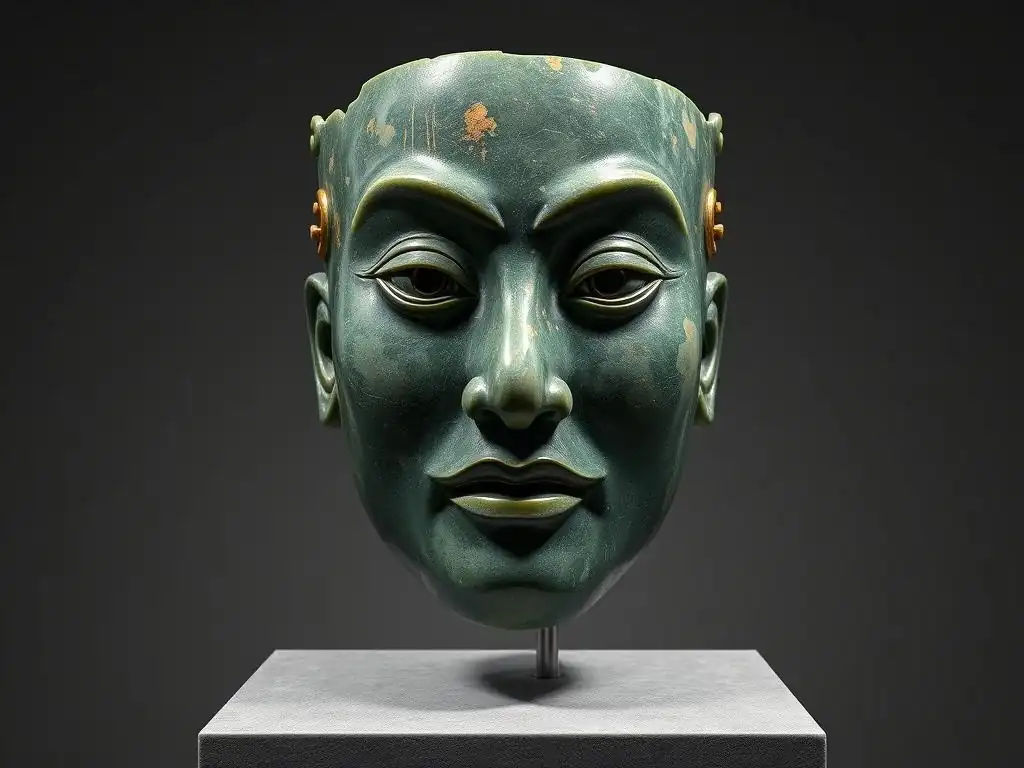
Qin Dynasty funerary art is primarily functional and symbolic, serving to directly represent imperial power and military might. The Terracotta Army, while a monumental artistic achievement, functions as a practical guard for the emperor. Its artistic merit lies predominantly in the realistic depiction of soldiers and horses, emphasizing uniformity, discipline, and the overwhelming strength of the Qin military machine.
The art within the Qin mausoleum is largely devoid of complex mythological narratives or elaborate scenes of daily life. Instead, it focuses almost exclusively on reinforcing the emperor's absolute command and the martial strength of his unified empire. The grandeur and impact are conveyed through the sheer scale, meticulous organization, and precise execution of the figures, rather than through intricate pictorial storytelling or diverse thematic content.
The Representation of Power and Authority in Qin Art
The overwhelming number and detailed realism of the Terracotta Warriors powerfully project an image of unparalleled imperial power. Each warrior, while part of a unified and disciplined force, possesses unique facial features, suggesting a mastery of individual representation within a tightly controlled, standardized military context. This combination underscores the Qin's ability to mobilize and organize vast human resources.
The strategic organization of the army into distinct military units—infantry, cavalry, and charioteers—and its precise battle formation within the pits further reinforce the idea of a highly organized, formidable state under the undisputed authority of Qin Shi Huang. The art is a direct visual manifestation of the emperor's absolute control over his empire and his enduring desire for that control in the afterlife.
Terracotta Warriors: Uniformity and Individuality in Representation
Despite being part of a mass-produced army, the Terracotta Warriors exhibit a remarkable blend of uniformity and individuality. While their bodies and general armor types were likely produced using standardized molds, their heads were individually sculpted, leading to an astonishing diversity of facial features, hairstyles, and expressions. This artistic approach distinguishes the Qin figures.
This unique combination of mass production efficiency and individual artistry reflects the Qin's practical yet ambitious approach to projecting its power into the afterlife. The art is less about aesthetic beauty for its own sake and more about the functional representation of a formidable and disciplined force, showcasing both the organizational capacity and the artistic skill of the Qin craftsmen.
Han Dynasty Funerary Art: Incorporating Mythology and Daily Life
In stark contrast to the Qin, Han Dynasty funerary art became far more diverse, narrative, and thematically rich. Tombs were frequently adorned with elaborate murals, painted bricks, and carved stone reliefs depicting a wide array of subjects. These included vivid scenes from daily life, historical events, mythological creatures, and complex cosmological diagrams, reflecting a broader and more sophisticated cultural and intellectual landscape.
Han funerary art served multiple purposes: to entertain the deceased, to guide their soul through the afterlife, and often to illustrate philosophical concepts. The art frequently depicted Daoist themes of immortality and spiritual journeys, Confucian ideals of good governance and filial piety, and popular beliefs about the spirit world. This rich narrative quality marked a significant evolution from the Qin's more singular focus.
The Influence of Confucianism and Daoism on Han Artistic Motifs
Confucianism profoundly influenced Han artistic motifs, leading to the depiction of didactic scenes emphasizing filial piety, loyalty, and historical exemplars of virtue. These moralizing narratives were often found in tomb murals, serving as visual lessons for the deceased and possibly for visitors. Concurrently, Daoism inspired a rich iconography of mythical beasts, immortals, and celestial beings, most notably the Queen Mother of the West, reflecting the pervasive pursuit of eternal life and spiritual transcendence.
These intertwined philosophical influences led to a vibrant and symbolic artistic vocabulary. Motifs such as the Four Auspicious Beasts—the Azure Dragon (east), Vermilion Bird (south), White Tiger (west), and Black Tortoise (north)—frequently appeared, representing the cardinal directions and cosmic order. This deep integration of philosophical and cosmological themes set Han funerary art apart from the Qin's more secular and militaristic representations.
Han Dynasty Tomb Murals: Depictions of Daily Life and the Afterlife
Han Dynasty tomb murals, exemplified by those found in sites like Mawangdui or various tombs in Luoyang, offer invaluable and vivid glimpses into Han society. They frequently depict scenes of banquets, musical performances, hunting expeditions, agricultural activities, and even intricate bureaucratic processes. These detailed visual records provide archaeologists with crucial insights into the daily lives, customs, and social structures of the Han elite.
Beyond mundane daily life, many murals illustrate the deceased's journey to the afterlife, encounters with deities, and representations of celestial realms. These narrative murals often functioned as a visual guide or map for the deceased's soul, facilitating its passage and ensuring a prosperous existence in the spirit world. This narrative breadth and thematic diversity are defining characteristics that distinguish Han funerary art from the more uniform and militaristic focus of the Qin.
The Scale and Scope of Imperial Construction: A Question of Resources
Qin Shi Huang's Mausoleum: A Testament to Centralized Power and Forced Labor
The construction of Qin Shi Huang's mausoleum represents an unparalleled undertaking in terms of scale and resource mobilization in ancient history. Historical records, notably from Sima Qian, suggest that over 700,000 laborers were conscripted and worked on the project for nearly four decades. This monumental endeavor was only made possible by Qin Shi Huang's absolute authority and the highly centralized, militarized state apparatus he established after unifying China.
The project demanded an immense expenditure of resources, both human and material, from across the newly formed empire. It involved massive earthworks, complex subterranean engineering for the underground palace, and the production of millions of artifacts, including the Terracotta Army. The sheer logistical coordination required for such an enterprise underscores the coercive power and organizational capacity of the Qin Dynasty.
The Enormous Resource Expenditure on the Qin Mausoleum
The construction of Qin Shi Huang's mausoleum required enormous quantities of raw materials, including vast amounts of timber, bronze, mercury, and other precious commodities, which had to be sourced and transported from various regions across the newly unified empire. The sheer volume of these raw materials and the subsequent production of millions of finished goods represent an investment of resources unparalleled for its time, likely consuming a significant portion of the Qin state's annual revenue.
The labor force, drawn from all corners of China, comprised not only skilled artisans and engineers but also vast numbers of conscripted peasants and forced laborers. This massive diversion of human capital from agriculture, infrastructure development, and other productive activities undoubtedly placed immense strain on the Qin economy and the general populace, contributing to widespread discontent.
The Impact of the Mausoleum's Construction on the Qin Dynasty's Economy
The colossal expenditure on Qin Shi Huang's mausoleum, alongside other monumental projects such as sections of the Great Wall and an extensive network of imperial roads and canals, represented an unsustainable drain on the Qin Dynasty's economy. The continuous demand for labor and resources, coupled with the harsh legalist policies and heavy taxation imposed by the Qin regime, severely alienated the populace.
This immense economic burden and the resulting social unrest were significant factors contributing to the rapid collapse of the Qin Dynasty shortly after Qin Shi Huang's death in 210 BCE. The mausoleum, while a powerful symbol of the emperor's ambition and the dynasty's might, also became an enduring symbol of the regime's exploitative nature and its ultimate downfall.
Han Dynasty Imperial Tombs: Balancing Imperial Ambitions with Economic Realities
While Han Dynasty imperial tombs were still grand and substantial undertakings, their construction generally reflected a more pragmatic and measured approach compared to the Qin's singular, all-consuming project. Han emperors, having witnessed the rapid collapse of the Qin partly due to over-expenditure, often adopted more sustainable construction practices, relying more on regional resources and a less overtly coercive labor system.
The duration of construction for individual Han tombs was often spread out over many years, allowing for more gradual resource mobilization. Although large, these projects typically did not involve the same immediate, all-encompassing resource and labor mobilization seen with Qin Shi Huang's single, massive mausoleum. This reflects a more cautious approach to imperial spending.
A More Measured Approach to Tomb Construction in the Han Dynasty
The Han Dynasty adopted a more phased and measured approach to tomb construction. While emperors would still begin work on their mausolea early in their reigns, the process was often less frantic and more strategically managed than the Qin's. This allowed for better resource management and a more distributed impact on the economy. The Han also decentralized some aspects of construction, relying on local administrations to provide labor and materials for certain components of the tomb complex.
Furthermore, the shift to primarily above-ground earthen mounds, while still requiring massive earthworks, might have been less technically complex or resource-intensive in terms of specialized materials and deep excavation compared to the Qin's intricate, deep underground palace. This allowed for a more distributed and less disruptive construction process over the decades of an emperor's reign.
The Use of Local Resources and Skilled Labor in Han Tomb Construction
Han Dynasty tombs often utilized materials readily available in their immediate vicinities, thereby reducing the immense logistical and transportation costs that plagued the Qin. For example, local clays were used extensively for bricks and pottery mingqi, and stone from nearby quarries was employed for tomb chambers and reliefs. This emphasis on local sourcing made the construction more economically viable.
While corvée labor (compulsory state labor) was still employed, there was also a greater reliance on skilled artisans and craftsmen, particularly for the intricate jade burial suits, sophisticated lacquerware, and delicate silk textiles found in Han tombs. This suggests a more developed and specialized economy, capable of supporting highly skilled labor, compared to the Qin's reliance on a vast, undifferentiated conscripted workforce.
Comparing Mortuary Rituals: Evolution and Adaptation
Qin Dynasty Mortuary Rituals: Emphasis on Practical Provisions for the Afterlife
Qin Dynasty mortuary rituals, as inferred from the archaeological evidence of Qin Shi Huang's mausoleum, were primarily focused on providing the emperor with all the practical necessities and symbols of power he would need in the afterlife. The Terracotta Army is the ultimate manifestation of this: a literal, functional army designed to protect him and maintain his military supremacy in the spiritual realm. The emphasis was on replicating his earthly dominion.
The rituals appear to have been direct extensions of his terrestrial rule, ensuring the continuity of his imperial authority, physical well-being, and control over his empire even after death. There seems to be less overt emphasis on complex ancestral worship as understood by later dynasties, with the focus instead being on tangible provisions and the perpetuation of his absolute rule.
Han Dynasty Mortuary Rituals: Integration of Ancestor Worship and Elaborate Offerings
Han Dynasty mortuary rituals underwent a significant evolution, becoming deeply intertwined with Confucian ancestor worship. Deceased emperors were revered as powerful ancestors whose blessings were considered crucial for dynastic legitimacy, stability, and prosperity. This profound belief led to the establishment of elaborate shrine complexes ( lingmiao) within the imperial tomb parks and the institutionalization of regular sacrificial rites.
Offerings became much more diverse and symbolic, including food, wine, textiles, and various ritual objects. These offerings were performed at specific times of the year, often led by the reigning emperor, signifying a continuous connection and veneration of the deceased. The focus moved beyond mere physical provision to active communication and spiritual communion with the deceased, reflecting a more nuanced and formalized understanding of the relationship between the living and the dead.
Conclusion: Continuity and Change in Chinese Imperial Burial Practices
The Enduring Influence of Qin Shi Huang's Mausoleum
Qin Shi Huang's mausoleum stands as an unparalleled achievement in ancient Chinese history, setting an unprecedented standard for imperial burial in terms of its immense scale, audacious ambition, and the concept of recreating the earthly realm in the afterlife. Its discovery near Xi'an provided a tangible and awe-inspiring link to China's first unified empire, fundamentally reshaping our understanding of the Qin Dynasty's capabilities and aspirations.
Despite the Qin Dynasty's short reign, its approach to monumental tomb construction left an indelible mark on subsequent imperial burial practices. The sheer scale and meticulous planning of the Qin mausoleum influenced later dynasties to continue the tradition of grand imperial burials, even as they adapted and evolved its specific forms and underlying philosophies.
The Han Dynasty's Innovations in Imperial Tomb Design and Burial Practices
The Han Dynasty, while building upon the Qin's legacy, introduced significant innovations in imperial tomb design and burial practices. These included a notable shift towards more prominent above-ground burial mounds, a deeper integration of Confucian and Daoist philosophies into funerary art and ritual, and a remarkable diversification of burial goods, exemplified by the iconic jade burial suits and detailed models of daily life.
These changes reflect the Han's success in consolidating imperial power and establishing a more enduring cultural and political framework. The Han emperors moved beyond the Qin's raw militarism to incorporate a broader range of societal values, philosophical beliefs, and artistic expressions into their mortuary practices, creating a more integrated and culturally rich representation of the afterlife.
Understanding the Evolution of Chinese Imperial Power Through Tombs
Comparing Qin Shi Huang's mausoleum with Han Dynasty imperial tombs offers a profound and illuminating lens through which to understand the evolution of Chinese imperial power. The striking architectural and artifactual differences between these Qin Shi Huang Han tombs reveal crucial shifts in political ideology, religious belief, economic capacity, and artistic expression across these foundational dynasties.
These imperial tombs serve as invaluable archaeological records, illustrating not just the individual aspirations of rulers but the broader trajectory of early imperial China. From the centralized, autocratic, and militaristic vision of the Qin to the more culturally integrated, philosophically nuanced, and enduring legacy of the Han, these monumental burial sites provide a unique and tangible narrative of China's imperial past.
Frequently Asked Questions
How does Qin Shi Huang's mausoleum differ from later Han Dynasty imperial tombs in terms of scale and construction?
Qin Shi Huang's mausoleum is immense in scale, reflecting his absolute power. Han Dynasty tombs, while still impressive, generally show a shift towards more standardized and less extravagant construction, reflecting a change in imperial ideology.
What similarities exist between Qin Shi Huang's mausoleum and Han Dynasty imperial tombs regarding burial goods and their symbolic significance?
Both Qin Shi Huang's tomb and Han Dynasty tombs contain significant quantities of burial goods intended to serve the emperor in the afterlife. These goods, often including miniature armies or symbolic representations of court life, highlight the belief in an afterlife mirroring earthly existence.
What innovations in tomb construction or design are evident in Han Dynasty tombs compared to the Qin Dynasty mausoleum?
Han Dynasty tombs often incorporate more sophisticated architectural techniques like underground palaces and complex drainage systems. There's also a greater emphasis on incorporating feng shui principles into the tomb's layout and orientation.
The Qin Dynasty, marked by its authoritarian rule and centralized power, is reflected in the monumental scale of Qin Shi Huang's tomb. The Han Dynasty, with its more established bureaucracy and Confucian values, saw a shift towards more symbolic and less overtly extravagant displays of power in their tombs.
What can the archaeological study of Qin Shi Huang's mausoleum and Han Dynasty tombs tell us about the beliefs and practices surrounding death and the afterlife in ancient China?
The artifacts and architectural features found in these tombs provide valuable insights into ancient Chinese beliefs about death. From the types of offerings included to the tomb's layout, we learn about their expectations for the afterlife and the rituals performed to ensure a smooth transition.
Final Reflection: Echoes of Emperors, Whispers of Time
The echoes of Qin Shi Huang's ambition and the subsequent Han Dynasty's refinement continue to resonate in the very soil of China, reminding us that the pursuit of immortality and legacy is a timeless human endeavor. The grand scale of these imperial tombs, from the terracotta army to the meticulously planned burial complexes, speaks volumes about the power, beliefs, and artistic prowess of these ancient dynasties, offering invaluable insights into the evolution of Chinese civilization.
The enduring fascination with Qin Shi Huang and the Han emperors underscores the profound impact these figures had on shaping Chinese identity and culture. Their tombs are not merely historical sites; they are powerful symbols of continuity and change, reflecting the evolving philosophies and artistic styles of their respective eras. A society grows great when old men plant trees whose shade they know they shall never sit in.
This ancient proverb perfectly encapsulates the long-term vision and dedication to posterity that characterized these imperial projects, leaving an indelible mark on the landscape and the collective memory.
As we contemplate the grandeur and the intricate details of Qin Shi Huang's mausoleum and the Han Dynasty imperial tombs, let us reflect on the legacies we ourselves are creating. What stories will our actions tell to future generations? What enduring impact will we leave on the world? Let us strive to build a future worthy of the past, learning from the triumphs and the follies of those who came before us, and ensuring that our own contributions echo with purpose and meaning.
Unearth Your Inner Archaeologist: Start Exploring Now!
Thank you for delving into the fascinating world of imperial Chinese tombs! We hope this exploration of the Qin and Han dynasties has sparked your curiosity about the past. Now, it’s time to take your newfound knowledge and turn it into action.
- Visit your local museum: Many museums have collections of artifacts related to ancient China. Seek out exhibits that showcase burial practices, funerary objects, or the art and architecture of the Qin and Han dynasties.
- Dive deeper: Research other aspects of early Chinese history beyond just these two dynasties. Learning about related cultures can help broaden your knowledge and appreciation for ancient China.
- Share your reflections: What surprised you most about the differences or similarities between the Qin Shi Huang's Mausoleum and the Han Dynasty tombs?
Which aspect of these imperial tombs – the scale, the symbolism, or the artistry – inspires you to learn more about the lives of those who created them?