
The Rise and Fall of Xianyang: An Archaeological Timeline of the Qin Imperial Center

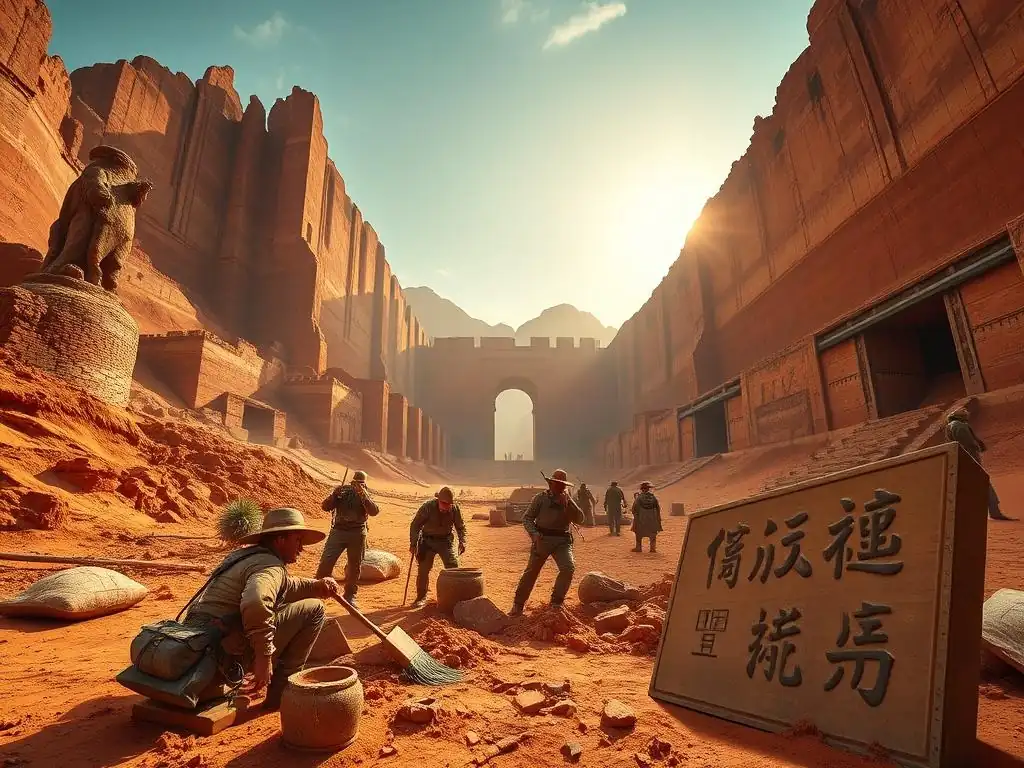
Welcome to ArchaeologyHub.org, your gateway to unlocking the secrets of the past!
Delve into the heart of ancient China as we unravel the captivating story of Xianyang, the imperial capital of the Qin Dynasty. Ever wondered how a small state rose to conquer all under heaven? Our comprehensive Xianyang Qin Dynasty Timeline offers an unparalleled archaeological journey, from its humble beginnings to its dramatic fall, revealing the innovations and intrigues that shaped a dynasty and left an indelible mark on history. Prepare to explore the unearthed foundations of power and discover the legacy that continues to resonate today. Curious to know more? Begin your exploration now!
- Introduction: Xianyang as the Heart of the Qin Dynasty
- The Pre-Imperial Era: Xianyang Before the Qin Dynasty (Pre-221 BCE)
-
Xianyang: The Imperial Capital of the Qin Dynasty (221-206 BCE)
- Qin Shi Huang and the Construction of Imperial Xianyang
- The Layout of Imperial Xianyang: Palaces, Walls, and Infrastructure
- Key Archaeological Discoveries at the Qin Imperial Palace Complex
- The Ebang Palace: Excavations and Reconstruction Theories
- Daily Life in Xianyang: Insights from Archaeological Finds
- The Fall of Xianyang and the End of the Qin Dynasty
- Post-Qin Xianyang: Transformation and Decline
- Key Archaeological Sites within Ancient Xianyang
- Artifacts from Xianyang: Glimpses into Qin Dynasty Life
- Xianyang Qin Dynasty Timeline: A Chronological Overview
- Interpreting Xianyang: Understanding the Qin Dynasty Through Archaeology
- Conclusion: Xianyang as a Window into the Qin Dynasty
-
Frequently Asked Questions
- How did Xianyang become significant during the Qin Dynasty?
- What is the "Xianyang Qin Dynasty Timeline" and what does it detail?
- What kind of archaeological discoveries have been made at the Xianyang site?
- What happened to Xianyang after the fall of the Qin Dynasty?
- Where can I find more in-depth information about the Xianyang Qin Dynasty Timeline and archaeological discoveries?
- Final Reflection: Echoes of Xianyang's Legacy
- Unearth Your Inner Explorer: Start Your Archaeological Journey Today!
Introduction: Xianyang as the Heart of the Qin Dynasty
ArchaeologyHub.org: Exploring the Qin Dynasty's Capital
ArchaeologyHub.org serves as an essential digital repository for understanding critical historical periods and their archaeological footprints. Among the most pivotal sites documented is Xianyang, the illustrious capital of the Qin Dynasty, which stands as a testament to China's first unified empire. Our exploration delves into the extensive archaeological work conducted at this site, providing a comprehensive overview of its development, zenith, and eventual decline, offering unparalleled insights into the sociopolitical landscape of ancient China.
The archaeological significance of Xianyang cannot be overstated; it represents the administrative and cultural zenith of the Qin Dynasty, a period that fundamentally shaped subsequent Chinese history. Excavations have uncovered vast palace complexes, sophisticated infrastructure, and countless artifacts, all contributing to a detailed picture of imperial life and governance. These discoveries allow researchers and enthusiasts alike to virtually walk through the streets of an empire that, though short-lived, left an indelible mark on civilization.
Defining Xianyang: Location and Significance in Qin History
Xianyang is strategically located in modern-day Xianyang, Shaanxi province, nestled north of the Wei River. This geographic position was crucial for the Qin state, providing both natural defenses and fertile agricultural land. Its selection as the capital in 350 BCE under Duke Xiao of Qin transformed it into a burgeoning urban center even before the imperial unification.
As the capital of the first unified Chinese empire under Qin Shi Huang (221-206 BCE), Xianyang became the unparalleled administrative, military, and cultural hub of a vast dominion. It was here that the emperor centralized power, standardized weights and measures, unified the script, and initiated grand projects that symbolized his absolute rule. The city's structure and scale reflected this ambition, making it a focal point for understanding the entire Xianyang Qin Dynasty Timeline.
The Pre-Imperial Era: Xianyang Before the Qin Dynasty (Pre-221 BCE)
Early Settlements and the Rise of the Qin State in Xianyang
Archaeological investigations in the Xianyang area reveal evidence of human habitation dating back to the Neolithic period, with findings from the Longshan culture (c. 3000-1900 BCE) indicating early agricultural communities. The Qin state, initially a peripheral entity, gradually expanded its territory and influence. Its strategic decision to establish Xianyang as its capital in 350 BCE, during the Warring States period, marked a significant turning point in its rise to dominance.
Under Duke Xiao and his chief minister Shang Yang, Xianyang was meticulously planned and developed, laying the groundwork for a formidable administrative center. Its location along the Wei River facilitated irrigation for agriculture and provided a vital transportation artery. The city's early urban planning, though on a smaller scale than its imperial successor, optimized its defensive capabilities and economic potential, attracting a growing population and skilled artisans.
Archaeological Evidence of Pre-Imperial Xianyang
Excavations have uncovered remnants of pre-imperial structures, including sections of rammed earth walls that predated the grand imperial constructions. These earlier defensive fortifications, often less robust than later imperial walls, indicate a period of continuous conflict and the necessity for protection. Within these pre-imperial layers, archaeologists have found evidence of residential areas and workshops, characterized by simpler building materials and less ornate designs compared to the later Qin imperial architecture.
Specific findings from this era include distinct pottery types, such as coarse grey earthenware, and early bronze implements that reflect the technological capabilities of the Qin state before its unification of China. Burial sites from this period also provide insights into the social hierarchy and funerary practices of the Qin nobility and commoners, showing a clear evolution in material culture and architectural ambition as the Qin state gained power.
Xianyang's Strategic Importance Before Qin Unification
Xianyang's geographical position was paramount to the Qin state's pre-unification strategy. Situated in the Guanzhong Plain, it was naturally protected by the Wei River to the south and the towering Qinling Mountains to the north, creating a defensible "Eight Passes" region. This natural fortress provided a secure base from which the Qin could launch military campaigns against rival states during the Warring States period.
Beyond its defensive attributes, Xianyang served as a crucial logistical and economic hub. The fertile plains surrounding the city provided abundant food supplies, sustaining a large population and military. Its access to key trade routes facilitated the movement of goods and resources, further bolstering Qin's economic strength and allowing it to fund its ambitious military expansion, ultimately leading to the unification of China in 221 BCE.
Xianyang: The Imperial Capital of the Qin Dynasty (221-206 BCE)
Qin Shi Huang and the Construction of Imperial Xianyang
Following the unification of China in 221 BCE, Qin Shi Huang embarked on an unprecedented campaign to transform Xianyang into a monumental imperial capital, reflecting his absolute power and the newly unified empire. His vision included the construction of grand palaces and extensive administrative complexes designed to awe and centralize authority. Historical records indicate a massive mobilization of labor, with hundreds of thousands of conscripted workers and artisans engaged in these colossal building projects.
A symbolic act of centralization involved the dismantling of palaces from the conquered six states and their reconstruction in Xianyang. This move not only showcased Qin's dominance but also served to physically integrate the diverse elements of the new empire into a single, unified center. This period represents the zenith of the Xianyang Qin Dynasty Timeline, characterized by an explosion of architectural ambition and engineering prowess.
The Layout of Imperial Xianyang: Palaces, Walls, and Infrastructure
Archaeological surveys of imperial Xianyang suggest a sprawling urban complex, estimated to have stretched several kilometers along the north bank of the Wei River. The city's layout likely followed a sophisticated planning scheme, with a clear north-south axis guiding the placement of key imperial structures. The Wei River itself may have divided the city into distinct zones, with administrative and residential areas situated on either side, connected by bridges.
The city boasted advanced infrastructure for its time, including well-laid roads, extensive drainage systems, and possibly even canals to facilitate water transport. While specific perimeter walls for the entire city are still debated, the inner palace complexes were undoubtedly fortified with massive rammed earth walls. The sheer scale of these constructions indicates a highly organized and centralized administration capable of commanding immense resources and labor.
Key Archaeological Discoveries at the Qin Imperial Palace Complex
Numerous archaeological discoveries within the Qin Imperial Palace Complex at Xianyang provide concrete evidence of its grandeur. The most significant finding is the No. 1 Palace Site, located about 1.5 kilometers northeast of the modern city. Excavations here revealed a massive rammed earth platform, approximately 60 meters wide, 40 meters deep, and 6 meters high, serving as the foundation for a multi-courtyard palace structure. Artifacts unearthed include large quantities of roof tiles, many adorned with distinctive cloud patterns and animal motifs, along with fragments of painted wall plaster, indicating sophisticated decoration.
Further investigations across the broader complex have identified foundations of other large buildings, suggesting a network of interconnected palaces and administrative offices. The sheer volume of architectural debris—including broken roof tiles, drainage pipes, and structural timbers—attests to the monumental scale of these imperial constructions. These findings are crucial for reconstructing the daily operations and ceremonial functions of the Qin imperial court.
The Ebang Palace: Excavations and Reconstruction Theories
The legendary Ebang Palace, described in historical texts as an immensely grand structure, has been a subject of intense archaeological interest and debate. According to historical accounts, its Front Hall (Qian Dian) alone was said to measure 1,200 meters long and 400 meters wide, capable of seating 10,000 people.
Archaeological excavations at the designated Ebang Palace site, located south of the Wei River, have indeed uncovered a massive rammed earth foundation for what is believed to be the Front Hall, measuring approximately 1,270 meters from east to west and 426 meters from north to south, with a height of 8 meters.
However, despite the colossal foundation, there is limited archaeological evidence of the complete palace as described in historical records. This has led to various reconstruction theories: some scholars believe only the foundation and a portion of the structure were completed before the Qin Dynasty's collapse, while others suggest the historical accounts might have exaggerated its final form. The site continues to be a focus of research, with ongoing efforts to reconcile historical descriptions with the tangible archaeological evidence.
Daily Life in Xianyang: Insights from Archaeological Finds
Archaeological finds from Xianyang offer a vivid glimpse into the daily lives of its diverse inhabitants, from imperial officials to common laborers. Ubiquitous pottery shards reveal utilitarian wares for cooking and storage, alongside more refined ceramics used by the elite. Discoveries of bronze tools, iron agricultural implements, and standardized Ban Liang coinage highlight the economic activities and the centralized administration of the Qin empire.
Evidence of craft production, such as kiln sites for pottery and workshops for bronze casting, indicates a thriving artisan class. Personal adornments like hairpins, mirrors, and fragments of silk and hemp textiles provide insights into fashion and personal grooming. Furthermore, analysis of food remains (e.g., carbonized grains, animal bones) sheds light on the diet of Xianyang residents, confirming a staple of millet and wheat, complemented by various meats. These mundane objects collectively paint a detailed picture of the social stratification and daily routines within the bustling imperial capital.
The Fall of Xianyang and the End of the Qin Dynasty
The Rebellion Against the Qin and the Sack of Xianyang (206 BCE)
The death of Qin Shi Huang in 210 BCE plunged the Qin Dynasty into a rapid decline, marked by internal power struggles, weak leadership, and widespread discontent. The harsh policies and immense labor demands of the empire fueled peasant rebellions, notably the Dazexiang Uprising led by Chen Sheng and Wu Guang in 209 BCE. These localized revolts quickly escalated into a full-blown civil war, drawing in powerful contenders like Xiang Yu and Liu Bang.
In 206 BCE, the forces of Xiang Yu, a prominent rebel leader, advanced on Xianyang. Despite some resistance, the imperial capital fell. Historical accounts vividly describe Xiang Yu's army entering the city, systematically looting its treasures, and setting fire to the magnificent imperial palaces. This catastrophic event marked the symbolic and effective end of the Qin Dynasty, a violent conclusion to the imperial phase of the Xianyang Qin Dynasty Timeline.
Archaeological Evidence of the Destruction of Xianyang
Archaeological excavations at various sites within ancient Xianyang provide compelling evidence that corroborates the historical accounts of its violent destruction in 206 BCE. At the No. 1 Palace Site, for instance, archaeologists have uncovered thick layers of ash, charred timbers, and fire-damaged structural elements, unequivocally indicating a massive conflagration. Many artifacts found in situ were broken or scattered amidst debris, suggesting rapid abandonment and widespread destruction rather than orderly dismantling.
The presence of melted bronze fragments and distorted pottery shards further reinforces the narrative of intense heat and destruction. While some areas might have been partially salvaged or repurposed, the overwhelming evidence from multiple palace foundations points to a deliberate and comprehensive act of burning, consistent with the historical accounts of Xiang Yu's retaliatory actions against the Qin capital.
The Legacy of Xianyang: Influence on Subsequent Dynasties
Despite its dramatic and violent end, Xianyang's legacy profoundly influenced subsequent Chinese dynasties, particularly the Han. The very concept of a unified empire, forged in Xianyang under Qin Shi Huang, became the enduring model for Chinese governance. The principles of centralized administration, standardized laws, and a unified currency, all pioneered in Xianyang, were adopted and refined by the Han.
Architecturally, the grand scale and axial planning of Xianyang's imperial complexes served as a blueprint for later capitals. The Han Dynasty's capital, Chang'an (modern Xi'an), though built anew, drew heavily on Qin precedents in its layout and monumental aspirations. Thus, even in its ruins, Xianyang continued to shape the political and cultural landscape of China for millennia, a testament to its foundational role in imperial history.
Post-Qin Xianyang: Transformation and Decline
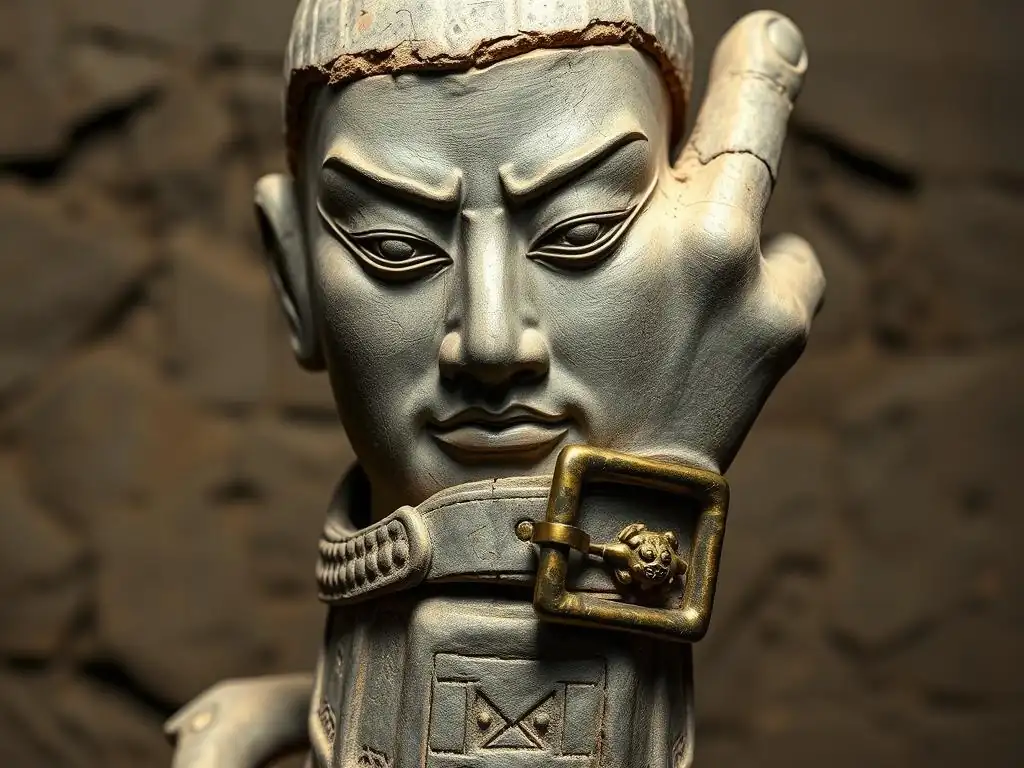
Xianyang Under the Han Dynasty: Changes and Continuities
Following the fall of the Qin, the Han Dynasty established its capital, Chang'an, just a short distance southeast of former Xianyang. While Chang'an quickly became the new imperial center, archaeological evidence suggests that parts of Xianyang were not entirely abandoned. Some areas likely continued to be inhabited, perhaps repurposed for smaller settlements, agricultural use, or as sources for building materials for the new capital.
Findings from Han Dynasty occupation layers within the broader Xianyang area include distinct types of Han pottery, bronze coins, and burial sites that differ from the Qin period. These indicate a shift in the city's function from a grand imperial capital to a more localized administrative or agricultural hub. The continuity in some infrastructural elements, such as roads or water channels, suggests that certain aspects of the Qin's planning were still utilized, albeit on a much reduced scale.
Later Dynasties and the Gradual Abandonment of the Qin Capital
Over the centuries that followed the Han Dynasty, the once-grand Qin capital of Xianyang gradually faded from prominence. As subsequent dynasties established their own capitals, often in the same general region (like the Tang Dynasty's Chang'an), the original Qin structures were increasingly neglected. Building materials from the ancient palaces were likely scavenged for new constructions, contributing to their physical disappearance above ground.
Natural processes such as erosion, silting from the Wei River, and the accumulation of debris further buried the ancient city. By the Song Dynasty (960-1279 CE), the precise location and extent of the former Qin capital were largely forgotten, existing primarily in historical texts. It was not until the systematic archaeological surveys of the 20th century that the true scale of ancient Xianyang began to be uncovered from beneath centuries of earth.
Archaeological Evidence of Post-Qin Occupation and Reuse of Xianyang
Archaeological strata at the Xianyang site clearly demonstrate a transition from the intensive Qin imperial occupation to sparser, later period activities. Above the burnt Qin layers, archaeologists have identified distinct Han Dynasty cultural layers, characterized by specific ceramic types like glazed wares and different brick styles, indicating continued, though diminished, human presence. These findings often include evidence of smaller, less formal dwellings or agricultural activities.
Further up the stratigraphic column, fragments of pottery and other artifacts from the Tang, Song, and even Ming and Qing dynasties have been found in various contexts, such as refuse pits or scattered debris. While these later finds do not indicate a sustained urban center on the scale of the Qin capital, they show intermittent or localized occupation and reuse of the land, reflecting the long-term human interaction with this historically significant landscape, even after its imperial glory had passed.
Key Archaeological Sites within Ancient Xianyang
Xianyang Palace Site: Unearthing the Imperial Past
The Xianyang Palace Site, located north of the Wei River, represents the core of the Qin imperial capital and is arguably the most significant archaeological complex in the area. Comprising multiple palace foundations and associated structures spread over several square kilometers, it was the administrative, political, and ceremonial heart of the first unified Chinese empire. Systematic excavations, which began in the 1950s, have been ongoing, continuously revealing new insights into the layout and grandeur of the Qin court.
The site is characterized by massive rammed earth platforms that served as foundations for multi-story buildings, indicating sophisticated architectural planning and engineering. Discoveries here include immense quantities of distinctive Qin roof tiles, intricate drainage systems, and evidence of elaborate interior decorations, all pointing to a highly developed imperial aesthetic and the immense resources commanded by the Qin Dynasty. The overall site provides crucial context for the entire Xianyang Qin Dynasty Timeline.
Palace No. 1 Site: Details and Findings
Among the most thoroughly excavated structures within the Xianyang Palace Site is Palace No. 1. This significant discovery revealed a large rammed earth platform, approximately 60 meters long and 40 meters wide, serving as the foundation for a substantial palace building. The layout suggests multiple courtyards and halls, indicative of a major administrative or residential complex for high-ranking officials or even members of the imperial family.
Excavations at Palace No. 1 yielded a wealth of artifacts, including numerous fragments of roof tiles, many adorned with the distinctive cloud and animal motifs characteristic of Qin imperial architecture. Bronze fittings, remnants of lacquered wood, and painted wall plaster fragments were also found, providing insights into the building's opulent decoration. Crucially, the site bears clear evidence of extensive burning, consistent with the historical accounts of Xianyang's destruction in 206 BCE.
Kiln Site Excavations: Details and Findings
Archaeological surveys around ancient Xianyang have led to the discovery of extensive kiln sites, essential for the massive production of bricks, tiles, and ceramics required for the imperial capital's construction and daily life. These sites often feature large "dragon kilns" or "horse-shoe kilns," capable of firing vast quantities of materials at high temperatures. One notable kiln complex, located west of the main palace site, stretched for hundreds of meters.
The findings at these kiln sites include discarded or imperfect roof tiles, pottery shards, and kiln furniture (e.g., saggers, props), offering invaluable information about Qin ceramic technology and industrial organization. The sheer scale of these operations underscores the immense logistical capabilities of the Qin empire and its ability to mobilize resources and skilled labor for its ambitious building projects within the Xianyang Qin Dynasty Timeline.
Mausoleum of Zhao Xiangwang: Details and Findings
While not directly part of the imperial capital under Qin Shi Huang, the Mausoleum of King Zhaoxiang (Zhao Xiangwang), who reigned from 306 to 251 BCE, is located within the broader Xianyang region and provides crucial context for the pre-imperial Qin state. This mausoleum, like many royal tombs of the period, features a large burial mound and associated pits. King Zhaoxiang was a pivotal figure in the Qin's expansion, preceding Qin Shi Huang's unification.
Excavations around the mausoleum have revealed satellite burial pits containing chariots, horses, and various funerary objects, reflecting the elaborate burial practices of pre-imperial Qin royalty. While less is known about its internal structure compared to Qin Shi Huang's mausoleum, these finds contribute to understanding the evolution of Qin power, military organization, and elite culture in the centuries leading up to the empire's establishment.
Artifacts from Xianyang: Glimpses into Qin Dynasty Life
Qin Dynasty Pottery and Ceramics Unearthed at Xianyang
The pottery and ceramics unearthed at Xianyang are fundamental to understanding daily life and artistic expression during the Qin Dynasty. Utilitarian wares, predominantly grey pottery, include common forms such as dou (stemmed bowls), fu (cooking vessels), and guan (jars) for storage, used by all social strata. More refined pieces, sometimes with a greenish glaze or painted decorations, suggest their use by the elite.
Perhaps most distinctive are the vast quantities of architectural ceramics, particularly roof tiles. These include both flat and semi-cylindrical tiles, often adorned with intricate patterns like cloud scrolls, animal motifs (e.g., phoenixes, dragons), and even characters. These tiles not only protected imperial buildings but also served as powerful symbols of imperial authority and aesthetic sophistication, reflecting the monumental scale of construction in the Xianyang Qin Dynasty Timeline.
Bronze Ware and Metalwork from the Qin Imperial Center
Bronze artifacts from Xianyang highlight the advanced metallurgical skills of the Qin Dynasty. Discoveries include a range of weapons, such as swords, spears, and arrowheads, many of which show a high degree of standardization, reflecting the Qin's military efficiency. Chariot fittings, horse trappings, and various decorative elements also demonstrate sophisticated casting techniques.
Beyond weaponry, bronze was used for household utensils, tools, and ceremonial vessels, though these are less common than pottery. Crucially, the discovery of numerous Ban Liang bronze coins, standardized by Qin Shi Huang, provides direct evidence of the centralized economy and widespread commerce within the imperial capital. These coins typically weigh around 8 grams and feature the characters "Ban Liang" (half tael), signifying their value and the unified monetary system.
Jade Artifacts and Royal Treasures Discovered in Xianyang
Jade artifacts, while less numerous than pottery or bronze, represent some of the most precious and symbolically significant finds at Xianyang, primarily associated with royalty and high status. These include ceremonial blades, intricate ornaments, and seals, all meticulously carved from high-quality jade. The craftsmanship reflects the elite demand for such objects, which were often imbued with spiritual and ritualistic meaning in ancient China.
Due to the historical looting of Xianyang's imperial palaces, complete royal treasures are rare. However, fragments of jade and other precious materials, alongside historical accounts, hint at the immense wealth and artistic sophistication of the Qin imperial court. These scattered finds, even in their fragmented state, offer glimpses into the opulence and symbolic importance of the objects that once adorned the emperor and his closest retinue.
Everyday Objects: Insights into the Lives of Xianyang Residents
Beyond the grand imperial artifacts, the excavation of everyday objects provides invaluable insights into the lives of ordinary residents in Xianyang. Iron tools, such as hoes, shovels, and knives, demonstrate the widespread use of iron in agriculture and various crafts. Bone implements, including needles, pins, and hairpins, reveal aspects of domestic life and personal grooming.
Remnants of textiles, though often poorly preserved, indicate the types of fabrics worn, primarily hemp for commoners and silk for the elite. Carbonized grains (millet, wheat) and animal bones provide direct evidence of the inhabitants' diet. These mundane yet crucial finds, often recovered from residential areas or refuse pits, offer a tangible connection to the daily routines, craftsmanship, and economic activities of the diverse population that resided within the Qin imperial center.
Xianyang Qin Dynasty Timeline: A Chronological Overview
Pre-Qin Period: Early Development of Xianyang
- c. 3000-1900 BCE: Early human habitation in the Xianyang area, evidenced by Neolithic settlements (e.g., Longshan culture).
- 350 BCE: Duke Xiao of Qin establishes Xianyang as the capital of the Qin state, marking a significant step in its rise to power. The city begins to develop as a strategic and administrative center, laying the groundwork for its future imperial role.
- 221 BCE: The Qin state, based from Xianyang, unifies China under Qin Shi Huang, bringing an end to the Warring States period and ushering in the imperial era.
221-210 BCE: Reign of Qin Shi Huang and Peak of Xianyang
- 221 BCE: Qin Shi Huang becomes the First Emperor of China. He initiates massive construction projects in Xianyang, including grand palaces and administrative complexes, symbolizing his centralized power and the new imperial order.
- 220-210 BCE: Xianyang flourishes as the undisputed capital of the unified empire. The city undergoes extensive urban planning, with the development of sophisticated infrastructure, including roads, drainage systems, and monumental buildings.
- 212 BCE (approx.): Construction of the legendary Ebang Palace begins, though its full completion before the emperor's death is debated by archaeologists. This period represents the absolute peak of the Xianyang Qin Dynasty Timeline, characterized by unparalleled ambition and scale.
- 210 BCE: Death of Qin Shi Huang. His mausoleum, located near modern Xi'an (east of Xianyang), is a testament to his imperial legacy, though not directly within the capital itself.
210-206 BCE: Decline and Fall of the Qin Dynasty
- 210-209 BCE: Internal power struggles and weak leadership follow Qin Shi Huang's death. The harsh policies and heavy taxation continue to fuel widespread discontent among the populace.
- 209 BCE: The Dazexiang Uprising, led by Chen Sheng and Wu Guang, ignites peasant rebellions across the empire, marking the beginning of the end for the Qin Dynasty.
- 207 BCE: Qin Er Shi, the second emperor, is assassinated. Ziying, a relative, is briefly enthroned but quickly surrenders to rebel forces.
- 206 BCE: Xiang Yu's forces enter Xianyang, systematically looting and burning the imperial palaces. This catastrophic event marks the violent end of Xianyang as the Qin imperial capital and effectively the end of the Qin Dynasty.
Post-206 BCE: Xianyang Under the Han and Subsequent Dynasties
- 206 BCE - 220 CE (Han Dynasty): While the Han Dynasty establishes its new capital, Chang'an, nearby, parts of former Xianyang continue to be inhabited or repurposed for smaller settlements and agricultural activities. Archaeological evidence indicates continued, though diminished, human presence.
- Later Dynasties (e.g., Tang, Song): Over centuries, the grand Qin structures gradually decay and are often scavenged for building materials. The focus of imperial power shifts to other capitals, and the ancient city of Xianyang becomes largely forgotten, buried under layers of earth and time.
- 20th Century Onwards: Modern archaeological surveys and excavations begin to uncover the hidden remains of ancient Xianyang, bringing to light its immense historical significance and allowing for the reconstruction of its remarkable Xianyang Qin Dynasty Timeline.
Interpreting Xianyang: Understanding the Qin Dynasty Through Archaeology
The Significance of Xianyang in Understanding Qin Imperial Power
The archaeological remains of Xianyang offer unparalleled insights into the nature of Qin imperial power. The sheer scale and complexity of the discovered palace foundations, sophisticated urban planning, and extensive infrastructure (like roads and water systems) directly reflect the immense centralized authority and organizational capacity of the Qin empire. The construction of these monumental structures required a level of state control over resources and labor previously unseen in China.
Furthermore, the city's layout and monumental architecture served as a tangible manifestation of Qin Shi Huang's vision of a unified, absolute imperial rule. The imperial capital was designed not merely as a seat of government but as a powerful symbol of the new order, setting crucial precedents for later dynasties in terms of urban design, administrative structure, and the very concept of a unified Chinese state.
Challenges and Future Directions in Xianyang Archaeology
Xianyang archaeology faces several significant challenges. The vastness of the ancient city, estimated to cover tens of square kilometers, combined with extensive modern urban development over parts of the site, makes comprehensive excavation difficult. The destructive events of 206 BCE, including the widespread burning and looting, further complicate the full reconstruction of palace interiors and the recovery of intact artifacts. The ongoing debate surrounding the true extent and completion of the Ebang Palace also highlights the complexities of reconciling historical texts with archaeological evidence.
Future directions in Xianyang archaeology involve the increasing application of non-invasive technologies such as geophysical surveys and remote sensing to map buried structures without extensive excavation. Interdisciplinary studies, combining archaeology with history, environmental science, and material analysis, will provide a more holistic understanding. International collaborations are also crucial for sharing expertise and resources, ultimately contributing to a more complete understanding of Xianyang and its pivotal role in the Xianyang Qin Dynasty Timeline.
The Preservation and Presentation of Xianyang's Archaeological Heritage
Recognizing the immense historical and cultural value of Xianyang, significant efforts have been made towards its preservation and presentation. Large portions of the ancient city have been designated as protected archaeological zones, safeguarding them from further modern development. The establishment of facilities such as the Xianyang Museum and the Qin Imperial Palace Site Museum serves to house and display the vast array of unearthed artifacts, making them accessible to the public.
These preservation efforts are vital for ensuring that this crucial piece of Chinese heritage is protected for future generations. Balancing ongoing archaeological research with public access and tourism also presents a continuous challenge. Effective interpretation through exhibitions, educational programs, and digital resources is key to conveying the profound significance of Xianyang as the heart of China's first unified empire to a global audience.
Conclusion: Xianyang as a Window into the Qin Dynasty
The Enduring Legacy of Xianyang and the Qin Empire
Xianyang stands as a pivotal archaeological site, serving as a profound window into the Qin Dynasty and the birth of imperial China. As the capital of the first unified empire, its rapid rise and dramatic fall encapsulate the ambition, power, and eventual fragility of Qin Shi Huang's reign. The city's sophisticated urban planning, monumental architecture, and the sheer volume of artifacts unearthed collectively paint a vivid picture of a highly centralized and powerful state that laid the foundational elements for China's subsequent dynastic history.
Despite its relatively short lifespan as an imperial capital, Xianyang's enduring legacy is evident in the administrative structures, standardized systems, and architectural precedents that influenced millennia of Chinese governance. It remains a testament to the Qin's genius in forging a unified empire out of disparate warring states, a monumental achievement that profoundly shaped the course of East Asian civilization.
Further Research and Exploration of Xianyang's Archaeological Treasures
Xianyang remains a remarkably rich field for ongoing archaeological inquiry. Despite decades of excavation, vast areas of the ancient city are yet to be fully explored, promising further discoveries that could deepen our understanding of this crucial period. Each new finding contributes another piece to the complex puzzle, shedding more light on the daily lives, political dynamics, and cultural achievements of the Qin Dynasty.
Continued research and exploration are essential for fully unraveling the mysteries of Xianyang's past. From refining our understanding of its urban layout to discovering previously unknown structures and artifacts, the ongoing work at this site will continue to enrich the Xianyang Qin Dynasty Timeline, offering invaluable insights into the origins of imperial China and the enduring impact of its first unified capital.
Frequently Asked Questions
How did Xianyang become significant during the Qin Dynasty?
Xianyang's rise to prominence began when it became the Qin state capital in the 4th century BCE. It was strategically chosen and developed into a powerful political and military center, laying the foundation for the Qin Dynasty's unification of China.
What is the "Xianyang Qin Dynasty Timeline" and what does it detail?
The Xianyang Qin Dynasty Timeline is a chronological account of key events in Xianyang during the Qin Dynasty. It details the city's growth, its role in the Qin unification, and its eventual decline after the dynasty's fall.
What kind of archaeological discoveries have been made at the Xianyang site?
Archaeological digs have unearthed numerous artifacts, including palace foundations, terracotta fragments, and evidence of advanced urban planning, providing insights into Qin Dynasty life and power.
What happened to Xianyang after the fall of the Qin Dynasty?
Following the Qin Dynasty's collapse, Xianyang was largely destroyed and abandoned. The new Han Dynasty established its capital elsewhere, marking the end of Xianyang's imperial significance.
Where can I find more in-depth information about the Xianyang Qin Dynasty Timeline and archaeological discoveries?
You can find detailed timelines, artifact profiles, and interpretive analyses of Xianyang and the Qin Dynasty on ArchaeologyHub.org. The site offers a vast taxonomy of in-depth historical content, organized by geographic region and time period.
Final Reflection: Echoes of Xianyang's Legacy
The archaeological timeline presented here underscores the profound impact of Xianyang as the Qin Dynasty's imperial center, a reality that resonates even today. Understanding the rise and fall of Xianyang is crucial for grasping the foundations of Chinese imperial history and the enduring legacy of the Qin Dynasty. The remnants unearthed offer tangible connections to a pivotal period, reminding us that the past is not merely history, but a living influence shaping our present.
The story of Xianyang, its rapid ascent and subsequent decline, serves as a powerful reminder of the cyclical nature of power and the impermanence of even the grandest empires. Personally, I find the meticulous planning and sheer scale of Xianyang's construction deeply inspiring, yet also tinged with the melancholy of its eventual abandonment. A nation can survive its fools, and even the ambitious. But it cannot survive treason from within. An enemy at the gates is less formidable, for he is known and carries his banner openly. But the traitor moves amongst those within the gate freely, his sly whispers rustling through all the alleys, heard in the very halls of government itself.
- Marcus Tullius Cicero. This quote highlights the internal vulnerabilities that can contribute to the downfall of even the most seemingly invincible powers, a lesson vividly illustrated by Xianyang's fate.
As you reflect on the timeline of Xianyang, consider the lessons it holds for us today. How can we learn from the Qin Dynasty's successes and failures? How can we ensure that our own endeavors leave a positive and lasting legacy? Let the echoes of Xianyang inspire you to build with purpose, to govern with wisdom, and to strive for a future that honors the lessons of the past.
Unearth Your Inner Explorer: Start Your Archaeological Journey Today!
Thank you for diving into the fascinating history of Xianyang with us! We hope you found this archaeological timeline insightful and inspiring. Now, it's time to take that inspiration and turn it into action.
Here's how you can further engage with the world of archaeology:
- Visit a local archaeological site or museum and see history come to life right before your eyes.
- Share this article with fellow history buffs and spark a discussion about the Qin Dynasty's impact.
- Research a lesser-known archaeological discovery in your region and present it at your local historical society.
What other ancient city are you most curious to explore, and why? Let us know in the comments!