The Historical Development of the Mogao Cave Complex: An Archaeological Timeline
🌟 Explore the fascinating Mogao cave complex timeline, tracing its evolution from ancient Buddhist site to a vital cultural and artistic hub.…
Read article
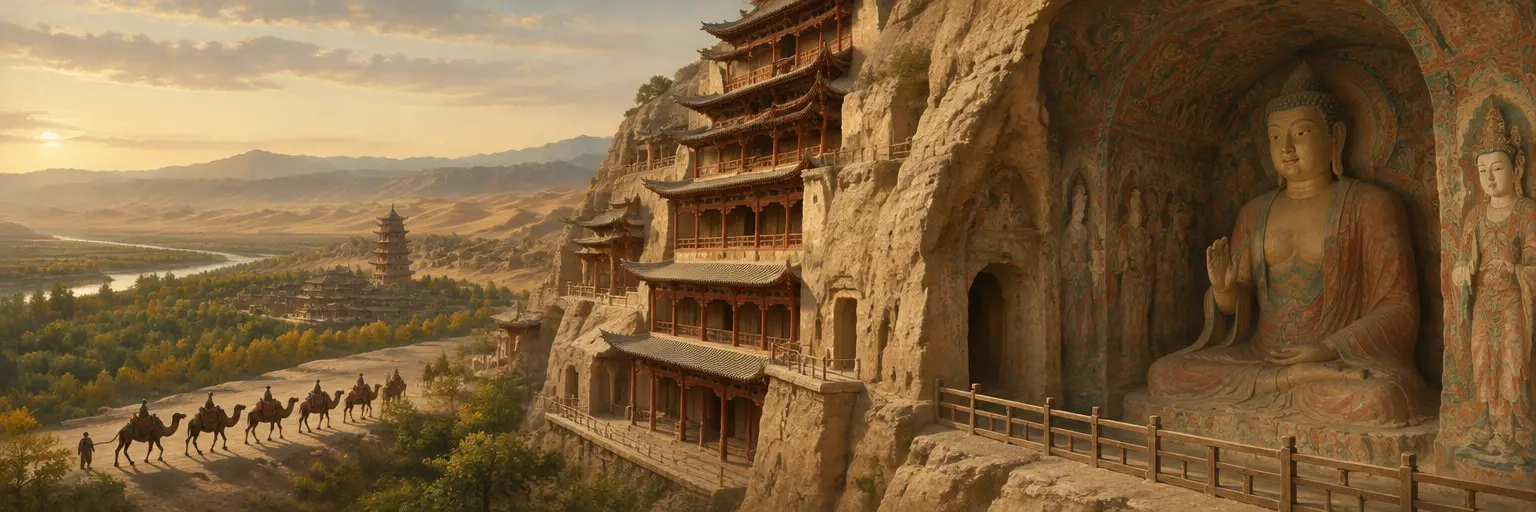
Explore the breathtaking Dunhuang & Mogao Caves, a crown jewel of Silk Road art and one of the world’s most extraordinary archaeological treasures. Nestled at the edge of the Gobi Desert, this UNESCO World Heritage site preserves over 1,000 years of Buddhist mural painting, sculpture, and manuscript culture, offering an unparalleled window into transcontinental exchange between China, India, Persia, and beyond. With more than 700 caves carved into sandstone cliffs, the Mogao complex holds the largest and richest collection of ancient wall art on Earth—spanning dynamic celestial beings, vivid trade caravans, and intricate narrative scenes. Discover how this remote oasis became a spiritual and commercial crossroads, and why its hidden library of early manuscripts revolutionized our understanding of medieval history. Dive into our interpretive guides to decode the iconography, pigments, and stylistic evolution that make Dunhuang a living encyclopedia of cultural fusion. Perfect for enthusiasts of archaeology, art history, and the ancient Silk Road, this section brings the desert’s painted wonders to life with expert analysis and immersive timelines.
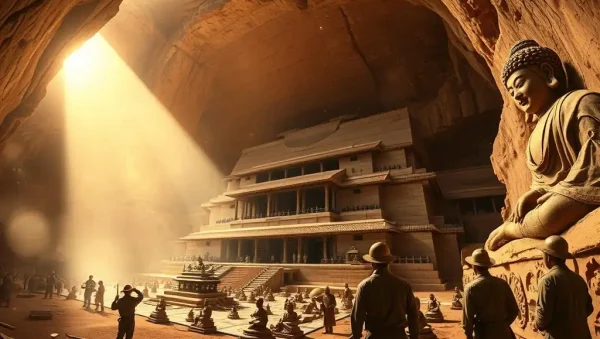
🌟 Explore the fascinating Mogao cave complex timeline, tracing its evolution from ancient Buddhist site to a vital cultural and artistic hub.…
Read article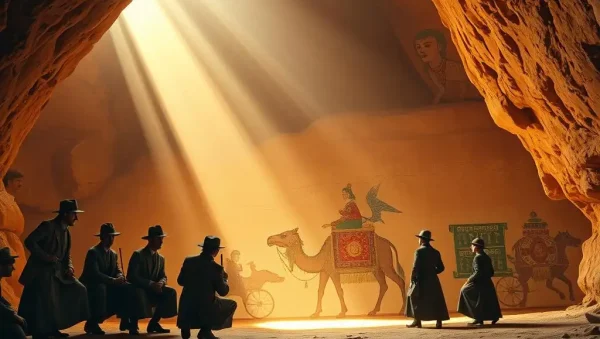
🌟 Explore how Mogao cave art foreign influences reflect a rich tapestry of cultural exchanges along the Silk Road, revealing the interconnectedness…
Read articleWelcome to ArchaeologyHub.org’s dedicated section on East Asian Sites: Dunhuang & Mogao Caves - Silk Road Art. This subcategory dives into one of the world’s most extraordinary treasure troves of Buddhist art, mural painting, and cross-cultural exchange. Situated at the crossroads of the ancient Silk Road, the Mogao Caves—also known as the Caves of the Thousand Buddhas—offer a unique window into over a millennium of religious devotion, artistic evolution, and geopolitical history. Here, you will find detailed timelines, artifact profiles, and interpretive analyses that illuminate how this desert oasis became a beacon of cultural synthesis between China, Central Asia, India, and beyond.
Readers will explore the cave complex’s origins in 366 CE, when the monk Le Zun is said to have witnessed a vision of golden rays, prompting the first cave excavation. The subcategory provides a phased timeline—from the Northern Liang dynasty through the Tang, Song, and Yuan periods—highlighting how political shifts and Silk Road trade influenced artistic styles. You will learn how Buddhist patronage expanded the site to over 700 caves, with each era contributing distinct iconographic and architectural innovations.
By contextualizing the caves within broader archaeological discoveries, this section clarifies why Dunhuang was a pivotal religious and commercial hub. It examines the role of oasis cities in facilitating exchanges of manuscripts, textiles, and religious ideas. The chronological breakdown also addresses periods of decline and rediscovery, including the infamous 1900 find of the Library Cave, which contained over 50,000 documents and revolutionized the study of medieval Central Asia.
Dive deep into the visual language of the Mogao Caves, where over 45,000 square meters of murals depict Buddhist sutras, celestial beings, and daily life scenes. This section analyzes color palettes, brushwork techniques, and compositional layouts, showing how influences from Gandharan Greek art, Gupta Indian realism, and Chinese ink-wash traditions intermingled. You will gain insight into specific motifs—from flying Apsaras to Vairocana Buddha—and their symbolic meanings.
Expect detailed artifact profiles of pigments such as lapis lazuli and malachite, revealing trade networks that supplied these precious materials. The stylistic evolution is traced from the austere, linear forms of early caves to the lavish, naturalistic Tang-era compositions. Comparative analyses with other Silk Road sites, like Kizil or Bamiyan, help position Mogao’s unique artistic synthesis within a regional context.
Understand how the caves served not just as art galleries but as functional pilgrimage centers and monastic retreats. This section reconstructs the ritual life of monks and lay devotees, including meditation practices, sutra copying, and circumambulation ceremonies. You will discover how cave layouts—with central pillars, niches, and ceiling designs—were engineered to enhance spiritual experiences and direct worshippers’ gazes toward sacred imagery.
Interpretive analyses clarify the doctrinal shifts reflected in the caves, such as the rise of Pure Land Buddhism and Esoteric rituals. The subcategory also examines votive inscriptions and donor portraits, which reveal the social hierarchies and gender roles of medieval Chinese society. By integrating textual evidence from the Library Cave with archaeological remains, you’ll gain a holistic view of how religious practice shaped and was shaped by the physical environment.
This facet highlights Dunhuang’s role as a cultural melting pot, where merchants, monks, and diplomats from Persia, India, Tibet, and Byzantium converged. Readers will explore how cave art incorporated foreign deities like Shiva and Zoroastrian symbols, alongside Chinese cosmology. The section also traces economic networks—silk, spices, and glassware—that funded construction and brought artisans from distant lands.
Expect detailed case studies of specific caves, such as Cave 285, which features a mix of Indian and Central Asian deities, and Cave 61, which depicts pilgrim routes across the entire Silk Road. This subcategory emphasizes the role of the caves as a living record of cultural synthesis, challenging Eurocentric narratives of ancient history. It also addresses modern scholarship on how Dunhuang connects with other UNESCO World Heritage sites in the region.
Learn about the ongoing challenges of protecting the Mogao Caves from environmental degradation, tourism pressure, and human damage. This section outlines innovative conservation techniques, such as climate-controlled enclosures and 3D scanning, used by the Dunhuang Research Academy. You will also explore digital humanities projects that are creating virtual replicas, allowing global access while minimizing physical impact.
ArchaeologyHub.org provides critical updates on international collaborations, including the Getty Conservation Institute’s work on structural reinforcement and pigment stabilization. Readers interested in excavation techniques will appreciate discussions of stratigraphy and nondestructive testing methods applied to the caves. The subcategory also addresses ethical debates about repatriation and the sale of stolen manuscripts, offering a balanced view of preservation dilemmas.
The Mogao Caves boast an unmatched continuous record of artistic and religious development over roughly 1,000 years, with 492 surviving caves. Their sheer scale—including thousands of murals and sculptures—combined with the Library Cave manuscripts, provides an extraordinary interdisciplinary resource for historians, art historians, and linguists.
The Library Cave (Cave 17) contained around 50,000 manuscripts, paintings, and textiles sealed for centuries. These documents include rare Sanskrit, Tibetan, and Khotanese texts, offering insights into trade contracts, medical recipes, and Buddhist teachings. They redefine our understanding of medieval cross-cultural connections.
Artists first applied a clay plaster base, then sketched outlines with ink or charcoal. Pigments, made from minerals like azurite and cinnabar, were mixed with binders and applied in layers. Gold leaf was used for highlights. Some murals were repainted over centuries, preserving earlier forms underneath.
Yes, but access is limited. Only a selection of caves is open to tourists, and visitation is regulated to protect fragile paintings. Visitors must follow timed entry and no-photography rules. Digital tours and VR experiences provide alternative ways to explore the site without causing damage.
Primary threats include salt crystallization from groundwater, wind erosion, and fluctuating humidity caused by large tourist numbers. Human activities like touching murals and excessive lighting also cause damage. Conservationists use monitoring systems, protective coatings, and audience caps to mitigate these risks.







