
Cultural Crossroads: Tracing Foreign Influences in Mogao Cave Art

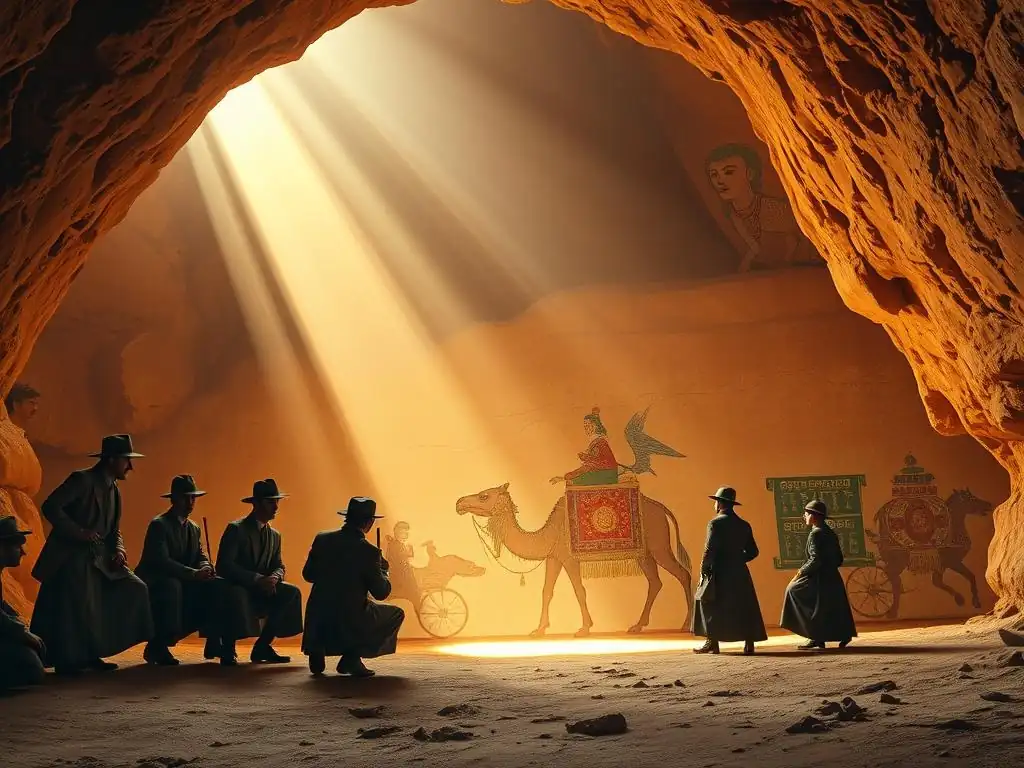
Welcome to ArchaeologyHub.org, your gateway to unlocking the mysteries of the past!
Ever wondered how the vibrant murals of the Mogao Caves reflect a world far beyond the Silk Road? Our latest exploration delves into the fascinating network of foreign influences in Mogao cave art, revealing a complex tapestry of cultural exchange woven into the very fabric of these ancient masterpieces. Prepare to journey through time and uncover the hidden stories embedded within these breathtaking artworks. Intrigued? Read on to discover the surprising connections that link the Mogao Caves to distant lands and forgotten empires…
- Introduction to Mogao Caves and Silk Road Art
- Identifying Foreign Influences in Mogao Art
- Indian Influences on Mogao Cave Art
- Central Asian Influences in Mogao Cave Art
- Iranian and Persian Influences on Mogao Cave Art
- Hellenistic Influences: Echoes of the West in the East
- Chinese Artistic Traditions and Their Interaction with Foreign Styles
- Case Studies: Specific Caves Showcasing Foreign Influences
- The Legacy of Foreign Influences on Mogao Cave Art
-
Frequently Asked Questions
- What are the Mogao Caves, and why are they significant?
- How does the art in the Mogao Caves reflect foreign influences?
- What specific examples demonstrate foreign influence in the Mogao Cave art?
- How did these foreign influences reach the Mogao Caves?
- Why is understanding the foreign influences in Mogao Cave art important for archaeological research?
- Final Reflection: Echoes of Distant Shores in Ancient Caves
- Unveil the Secrets: Your Next Adventure Awaits!
Introduction to Mogao Caves and Silk Road Art
The Significance of Mogao Caves as a Silk Road Hub
The Mogao Caves, located near Dunhuang in Gansu Province, China, served as a pivotal strategic and cultural nexus along the ancient Silk Road for over a millennium. Situated at the crossroads of major trade routes connecting East and West, this site became an essential stopover for merchants, pilgrims, and envoys traversing the vast landscapes of Central Asia. Its unique geographical position fostered an unparalleled environment for the exchange of goods, ideas, and, crucially, artistic and religious traditions, making it a living testament to the multicultural vibrancy of the Silk Road.
From the 4th to the 14th century, the caves were continuously excavated and adorned, reflecting the patronage of diverse groups, including local gentry, imperial courts, and pious individuals. This sustained development resulted in an extraordinary collection of nearly 500 decorated caves, housing approximately 45,000 square meters of murals and over 2,000 painted sculptures. The sheer scale and continuous artistic activity underscore Dunhuang's importance not merely as a transit point but as a thriving center where various cultures converged and left their indelible mark.
Overview of Mogao Cave Art: A Synthesis of Cultures
Mogao Cave art is far more than a collection of Buddhist imagery; it is a grand synthesis of artistic styles and cultural narratives from across Eurasia. While deeply rooted in Chinese artistic traditions, the murals and sculptures prominently display a fascinating array of Mogao cave art foreign influences, reflecting centuries of cross-cultural interaction. These influences are evident in iconography, stylistic techniques, narrative compositions, and even the materials used.
The evolution of Mogao art from the Northern Wei (386-534 CE) through the Tang (618-907 CE) and into the Yuan Dynasty (1271-1368 CE) demonstrates a continuous absorption and adaptation of foreign elements. Early caves, for instance, show strong Indian and Central Asian characteristics, which gradually blended with and were sinicized by native Chinese aesthetic principles. This dynamic interplay created a unique visual language, making the Mogao Caves an invaluable resource for understanding the complex tapestry of Silk Road art and the diverse origins of Mogao cave art foreign influences.
Identifying Foreign Influences in Mogao Art
Understanding the Scope of Foreign Cultural Exchange
The vast array of Mogao cave art foreign influences is a direct consequence of the extensive cultural exchange facilitated by the Silk Road. This exchange was multifaceted, involving not only the movement of goods but also the transmission of religious doctrines, philosophical ideas, and artistic conventions. Buddhist monks traveling from India and Central Asia brought sacred texts and iconographic models, while merchants from Persia and Sogdiana introduced new motifs, textile patterns, and secular imagery.
Beyond religious transmission, the presence of diverse communities—Sogdian traders, Turkic warriors, and Indian pilgrims—contributed to a cosmopolitan environment in Dunhuang. Artisans and craftsmen, drawing inspiration from these varied sources, ingeniously incorporated elements from distant lands into their work. This continuous cross-pollination of ideas ensured that the art of Mogao was never insular but constantly evolving through its engagement with the broader Eurasian artistic landscape.
Defining "Foreign" Within the Context of Mogao Art
Within the context of Mogao art, "foreign" refers to artistic elements, techniques, or iconographies that originated outside the traditional sphere of Han Chinese culture. This encompasses influences from India, Central Asia (including regions like Sogdiana, Khotan, and Kucha), Persia (Sasanian Empire), and even indirect Hellenistic echoes transmitted through Gandharan art. Identifying these Mogao cave art foreign influences requires careful analysis, as they often underwent a process of adaptation and transformation upon arrival in Dunhuang.
For example, a "foreign" element might be a specific mudra (hand gesture) of a Buddha figure derived from Indian iconography, a pearl roundel motif commonly found in Sasanian textiles, or a facial feature reminiscent of Greco-Buddhist sculpture. The challenge lies in distinguishing direct borrowings from integrated elements that have been subtly sinicized, yet their external origins remain discernible to the trained eye. This nuanced approach helps to appreciate the complex layers of cultural interaction embedded within the murals and sculptures.
Indian Influences on Mogao Cave Art
Early Buddhist Iconography and its Transmission from India
The most profound Mogao cave art foreign influences stem from India, the birthplace of Buddhism. As Buddhism spread eastward along the Silk Road from the 1st century CE onwards, it carried with it a rich visual lexicon of iconography and artistic conventions. Early Buddhist art, particularly from the Gupta period (c. 320-550 CE) and the Gandhara region (c. 1st-5th century CE), provided the foundational models for the depiction of the Buddha, Bodhisattvas, and various celestial beings.
At Mogao, early caves from the Northern Wei Dynasty (late 5th to early 6th century CE), such as Cave 254, vividly illustrate this direct transmission. The figures often exhibit a distinct "wet drapery" style, where robes cling to the body, revealing its form, a characteristic feature of Indian sculpture. Furthermore, specific mudras (hand gestures), the elongated earlobes, the urna (dot between the eyebrows), and the ushnisha (cranial bump) on Buddha figures are direct borrowings from established Indian iconographic traditions, indicating a faithful adoption of these sacred visual codes.
Tracing Indian Artistic Styles in Mogao Cave Paintings
Beyond iconography, specific Indian artistic styles permeated the painting techniques at Mogao. The "iron-wire" line drawing, characterized by its fine, even, and continuous lines, while refined in China, found its roots in Indian painting traditions. The emphasis on modeling the body through subtle gradations of color, known as chiaroscuro or sfumato in Western art, or the "three-dimensional modeling" technique in Indian art, also appears in early Mogao murals, giving figures a sense of volume and depth.
The color palette itself, often dominated by vibrant mineral pigments like azurite blue and malachite green, and occasionally lapis lazuli (imported from Afghanistan), reflects the material culture of the Silk Road and the aesthetic preferences of Indian Buddhist art. The narrative compositions, particularly the continuous narrative format used to tell Jataka tales or sutra stories across a single mural, also bear strong resemblances to the narrative traditions found in Indian cave temples like Ajanta.
The Impact of Indian Narratives (Jataka Tales) on Mogao Murals
Indian narratives, especially the Jataka tales, which recount the previous lives of the Buddha, had a profound impact on the thematic content of Mogao murals. These didactic stories, originating in India, served as moral exemplars for Buddhist practitioners, illustrating virtues such as compassion, sacrifice, and perseverance. Their visual depiction at Mogao helped to propagate Buddhist teachings among a wider audience, transcending language barriers.
Prominent examples include the Mahasattva Jataka in Cave 254, which depicts Prince Mahasattva sacrificing himself to feed a starving tigress and her cubs, and the Sibi Jataka, where King Sibi offers his flesh to save a dove. These narratives are rendered with dramatic intensity, often occupying large sections of cave walls. The visual storytelling techniques, the composition of scenes, and the emotional expression within these murals clearly demonstrate the direct influence of Indian narrative traditions on the thematic content and artistic execution of Mogao cave art foreign influences.
Central Asian Influences in Mogao Cave Art
Sogdian Art and its Role in Shaping Mogao Aesthetics
Sogdians, an ancient Iranian people from Central Asia (modern-day Uzbekistan and Tajikistan), were preeminent merchants and cultural intermediaries along the Silk Road from the 4th to the 8th centuries. Their extensive trade networks brought them into direct contact with Dunhuang, and their artistic traditions significantly contributed to Mogao cave art foreign influences. Sogdian art, known for its vibrant colors, dynamic compositions, and often secular narrative focus, introduced new visual elements.
Their influence is particularly evident in the depiction of donor figures and secular scenes. Sogdian merchants and their families often commissioned cave art, leading to the incorporation of their distinctive attire, facial features (e.g., prominent noses, round faces), and hairstyles into the murals. In caves from the Western Wei (535-556 CE) and Northern Zhou (557-581 CE) periods, such as Cave 285, one can observe donor portraits wearing Sogdian-style belted tunics and conical hats, reflecting the cosmopolitan nature of Dunhuang's patronage.
Influence of Kushan Art Styles on Sculpture and Painting
The Kushan Empire (circa 1st to 3rd century CE), centered in modern-day Afghanistan, Pakistan, and parts of India and Central Asia, played a crucial role in transmitting Buddhist art styles. Gandharan art, a prominent style within the Kushan realm, was a significant conduit for Mogao cave art foreign influences, particularly those with Hellenistic undertones. This style blended Indian iconography with Greco-Roman sculptural techniques, resulting in a unique synthesis.
Kushan artistic elements, characterized by more naturalistic rendering of the human form, classical drapery folds that reveal the body's musculature, and idealized, often Greco-Roman facial features for Buddhas and Bodhisattvas, found their way to Mogao. Early sculptures in the caves, particularly from the Northern Wei period, show figures with broad shoulders, well-defined torsos, and flowing robes that are clearly reminiscent of Gandharan prototypes. These stylistic choices reflect the indirect but powerful impact of Kushan artistic innovations on the evolving aesthetic of Dunhuang.
Identifying Central Asian Motifs and Decorative Elements
Central Asian influences are also discernible in specific motifs and decorative elements found throughout the Mogao Caves. The ubiquitous pearl roundel motif, a circular design enclosing figures of animals (such as ducks, boars, or senmurvs—mythical winged creatures), or sometimes human faces, is a hallmark of Central Asian and Sasanian Persian textiles that became highly popular along the Silk Road. These motifs frequently appear in the painted garments of figures, as borders, or on the ceilings of the caves.
Furthermore, the depiction of various Central Asian musical instruments in the celestial orchestras and paradise scenes is another clear indicator. Instruments like the pipa (a Chinese lute of Central Asian origin), the konghou (an angular harp), and various drums and wind instruments are frequently shown being played by celestial musicians, reflecting the diverse musical traditions that converged at Dunhuang. These elements underscore the rich tapestry of Mogao cave art foreign influences derived from the vibrant cultures of Central Asia.
Iranian and Persian Influences on Mogao Cave Art
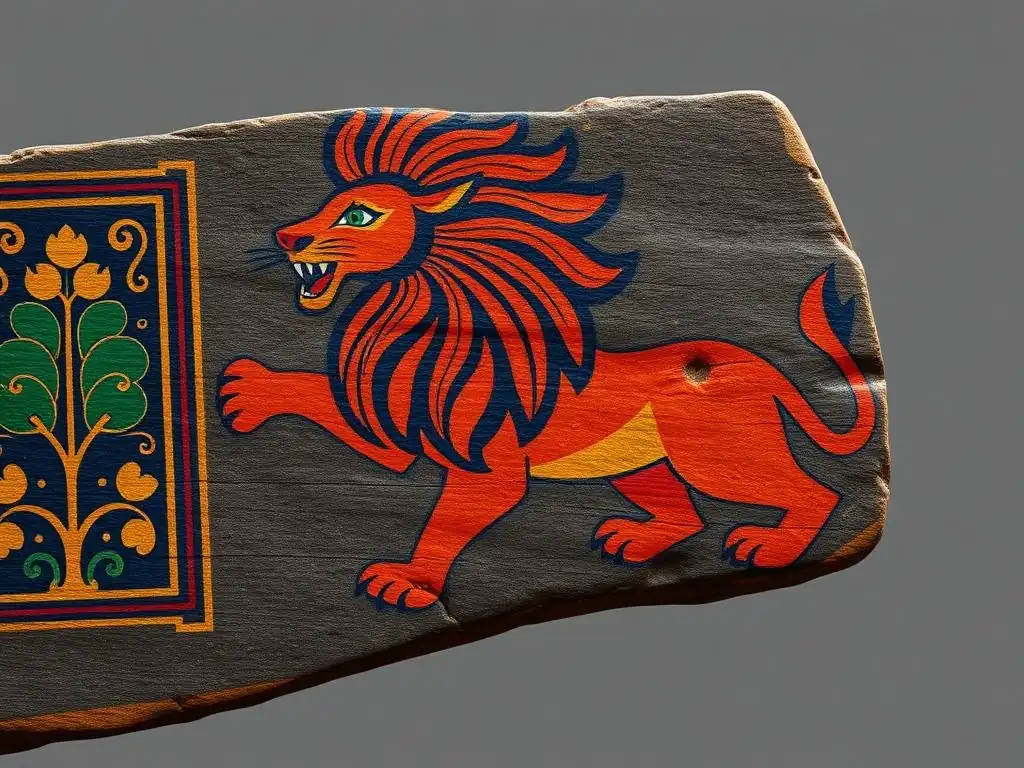
Zoroastrianism and its Representation in Mogao Art
Zoroastrianism, the ancient pre-Islamic religion of Persia, although not directly depicted as a faith in the Buddhist caves, exerted an indirect Mogao cave art foreign influence through its iconography and symbolic elements. Its presence in Dunhuang was primarily through Sogdian merchants, who often practiced Zoroastrianism alongside Buddhism or Manichaeism. While no explicit Zoroastrian temples or deities are found, certain visual cues and motifs reflect the cultural environment where such beliefs coexisted.
For instance, the depiction of certain celestial beings or deities with specific attributes or stylistic elements may subtly echo Zoroastrian iconography. The pervasive motif of winged creatures (like the senmurv, a mythical bird-dog), which is prominent in Sasanian art and textiles, carries Zoroastrian connotations of divinity and protection. Similarly, the occasional appearance of fire altars or specific ritual objects in secular scenes, while not religious depictions themselves, reflects the broader cultural milieu and the presence of diverse religious practices among the patrons and artisans.
Persian Artistic Techniques in Textiles and Mural Decoration
Persian artistic techniques, particularly those related to Sasanian textiles (224-651 CE), profoundly influenced the decorative aspects of Mogao Cave art. Sasanian silks, renowned for their intricate patterns and luxurious quality, were highly prized commodities traded along the Silk Road. These textiles, often featuring symmetrical designs within pearl roundels, became a source of inspiration for the mural painters at Dunhuang.
The detailed patterns of Sasanian textiles were meticulously replicated in the painted drapery of Buddhas, Bodhisattvas, and donor figures, as well as in the decorative borders and ceiling designs within the caves. The precision of these repetitions, showcasing animals, floral motifs, or geometric patterns, demonstrates a direct stylistic borrowing from Persian aesthetic principles. This integration of textile designs into murals highlights how trade facilitated the transmission of artistic ideas, making Sasanian patterns a significant component of Mogao cave art foreign influences.
Examining Sasanian Motifs in Mogao Cave Designs
Beyond textile patterns, several other Sasanian motifs found their way into Mogao Cave designs, enriching the visual vocabulary. The "hunting scene" motif, often featuring a monarch on horseback engaged in a hunt, a hallmark of Sasanian imperial art, occasionally appears in the secular depictions or as decorative elements, albeit adapted to the Buddhist context. Such scenes, while not central to the Buddhist narrative, reflect the prestige and admiration for Persian imperial iconography among the Silk Road elite.
Specific crown types, often adorned with wings or crescent moons, which are characteristic of Sasanian rulers, also appear on some celestial beings or donor figures, symbolizing regal authority and divine connection. The use of specific floral patterns, such as the palmette and lotus, although universal in their appeal, often show Sasanian variations in their execution and arrangement. These subtle yet pervasive Sasanian motifs underscore the complex layers of Mogao cave art foreign influences, showcasing the deep artistic connections across vast geographical distances.
Hellenistic Influences: Echoes of the West in the East
The Presence of Greco-Buddhist Art in Mogao Caves
Hellenistic influences, though indirect, are discernible in Mogao cave art foreign influences, primarily through the transmission of Greco-Buddhist art from the Gandhara region. Following Alexander the Great's conquests in the 4th century BCE, Greek artistic traditions blended with local Buddhist iconography in areas like present-day Afghanistan and Pakistan. This syncretic style, characterized by its classical approach to the human form, then traveled eastward along the Silk Road.
At Mogao, particularly in earlier caves from the Northern Wei and Western Wei periods (late 5th to mid-6th century CE), elements of Greco-Buddhist art are evident. Figures of the Buddha and Bodhisattvas sometimes exhibit more naturalistic facial features, defined musculature, and a sense of classical repose, deviating from earlier, more stylized Chinese representations. This suggests that the visual language of Gandhara served as an important intermediary in conveying Western artistic ideals to the East.
Analyzing Hellenistic-Inspired Facial Features and Drapery Styles
Specific Hellenistic-inspired traits can be observed in the facial features and drapery styles of figures in Mogao murals and sculptures. Buddhas and Bodhisattvas occasionally display classical profiles, strong noses, and wavy hair, reminiscent of Greek and Roman statuary. The "wet drapery" effect, where fabric appears thin and clings to the body, revealing its contours, is a direct inheritance from Hellenistic art, where it was used to emphasize the idealized human form.
This technique is prominent in early Mogao caves, particularly on standing Buddha figures, where the folds of the monastic robe are rendered with a fluid, almost transparent quality. While later Chinese art would develop its own distinct drapery styles, the initial adoption of this Hellenistic convention highlights the significant impact of Western aesthetic principles, filtered through Gandharan art, on the early development of Mogao cave art foreign influences.
The Role of Trade and Cultural Exchange in Spreading Hellenistic Art
The spread of Hellenistic art to Mogao was not a direct transmission from the Mediterranean but rather a gradual diffusion through centuries of trade and cultural exchange along the Silk Road. Intermediate cultures, such as the Kushan Empire, absorbed and adapted Hellenistic styles into their own artistic expressions, particularly in Buddhist art. It was through these cultural intermediaries—the movement of artisans, monks, and merchants—that these artistic ideas eventually reached Dunhuang.
The Silk Road served as an intricate network, allowing for the slow but steady flow of artistic techniques and iconographies across vast distances. Hellenistic influences, therefore, represent a fascinating example of how distant artistic traditions could subtly reshape the visual landscape of a site like Mogao, demonstrating the profound and far-reaching impact of ancient global interconnectedness on the development of Mogao cave art foreign influences.
Chinese Artistic Traditions and Their Interaction with Foreign Styles
The Sinicization of Foreign Art: Adaptation and Transformation
While Mogao cave art foreign influences are undeniable, a crucial aspect of its development is the process of sinicization. Foreign artistic elements were not merely copied; they were actively adapted, transformed, and integrated into existing Chinese artistic conventions and philosophical frameworks. This often involved a softening of more robust or realistic foreign features, a shift towards more ethereal and elongated forms, and the incorporation of Chinese landscape elements and brushwork techniques.
For example, the initially muscular and voluminous Indian-style Buddha figures gradually evolved into more slender, graceful, and elegant forms characteristic of Chinese Buddhist art by the Tang Dynasty. Indian mudras (hand gestures) were often reinterpreted with greater fluidity and elongation, aligning with Chinese aesthetic ideals of refinement. This process demonstrates a dynamic cultural assimilation, where foreign ideas were recontextualized to resonate with Chinese artistic sensibilities and spiritual understanding.
The Evolution of Buddhist Art within a Chinese Context
The evolution of Buddhist art at Mogao vividly illustrates its development within a Chinese context, even as it absorbed various foreign styles. Early caves show strong reliance on Indian and Central Asian prototypes, but over centuries, a distinctively Chinese Buddhist aesthetic emerged. This involved not only the sinicization of foreign forms but also the development of new iconographies and narrative compositions that reflected Chinese cultural values and interpretations of Buddhist doctrine.
By the Tang Dynasty, Chinese landscape painting techniques became increasingly prominent within the murals, serving as elaborate backdrops for Buddhist narratives and imbuing scenes with a sense of place and atmosphere. The development of sophisticated Chinese brushwork, the use of vibrant, often contrasting, color palettes, and the emphasis on narrative clarity within complex compositions all contributed to the unique character of Mogao art, showcasing how Mogao cave art foreign influences were ultimately reinterpreted through a Chinese lens.
The Vimalakirti Sutra Scene: A Synthesis of Styles
The Vimalakirti Sutra scene, prominently depicted in caves such as Cave 220 (Early Tang Dynasty), stands as a quintessential example of the synthesis of Chinese and foreign artistic styles at Mogao. This popular Buddhist sutra, which features the enlightened lay disciple Vimalakirti debating the Bodhisattva Manjushri, provided a rich narrative framework that artists used to showcase both spiritual profundity and the grandeur of contemporary Chinese courtly life.
In these murals, one can observe Indian iconography for the central Buddhist figures, Central Asian features for some of the attending foreign dignitaries, and distinctly Chinese elements in the depiction of courtly costumes, architecture, and surrounding landscapes. The blend of realistic portraiture for human figures with idealized Buddhist forms, all set within a detailed Chinese architectural and natural environment, illustrates the successful integration of Mogao cave art foreign influences into a unique and sophisticated Chinese aesthetic.
Case Studies: Specific Caves Showcasing Foreign Influences
Cave 254: An Example of Indian Influence
Cave 254, dating to the Northern Wei Dynasty (late 5th century CE), stands as a prime example of profound Indian Mogao cave art foreign influences. This cave features a central pillar and is renowned for its vivid depiction of Jataka tales, such as the Mahasattva Jataka and the Sibi Jataka, which directly transmit narrative content from India. The artistic style within these murals closely adheres to early Indian Buddhist conventions, particularly those seen in the Ajanta Caves.
Specific Indian stylistic elements are clearly visible: the "wet drapery" style on the Buddha figures, where their robes cling to the body, revealing its contours; the elongated eyes and serene expressions; and the tribhanga (triple bend) pose, which imparts a sense of graceful movement. The vibrant mineral pigments used, combined with the emphasis on outlining figures, further highlight the direct adoption of artistic techniques and iconography transmitted from the Indian subcontinent, making Cave 254 a crucial site for understanding early Mogao cave art foreign influences.
Cave 285: Demonstrating Central Asian Artistic Styles
Cave 285, dating to the Western Wei Dynasty (mid-6th century CE), is celebrated for its remarkable syncretism, showcasing a rich array of Central Asian artistic styles and other Mogao cave art foreign influences. This cave is unique for its inclusion of a diverse pantheon of deities, not only Buddhist but also Hindu gods (such as Shiva and Vishnu) and native Chinese deities, reflecting the broad religious landscape of the Silk Road.
The influence of Central Asian art is particularly evident in the depiction of donor figures, many of whom are believed to be Sogdian merchants. They are shown with distinctive Central Asian facial features, elaborate hairstyles, and attire, including belted tunics and conical hats.
Furthermore, the celestial orchestras within the cave feature a variety of musical instruments common in Central Asia, such as the pipa and the konghou. The decorative patterns, including the ubiquitous pearl roundels enclosing animals, also strongly point to Central Asian and Sasanian origins, solidifying Cave 285 as a testament to the diverse artistic contributions from the heart of Asia.
Cave 220: Featuring Persian Motifs and Hellenistic Elements
Cave 220, from the Early Tang Dynasty (mid-7th century CE), represents a zenith of Tang art at Mogao and beautifully integrates various Mogao cave art foreign influences, including significant Persian motifs and subtle Hellenistic elements. This grand cave is famous for its large-scale, dynamic compositions, particularly the iconic Vimalakirti Sutra scene, which showcases the cosmopolitan nature of the Tang empire.
Persian influence is palpable in the elaborate Sasanian-style pearl roundels adorning the robes of donor figures and celestial beings, reflecting the popularity and prestige of Persian textiles. These intricate patterns feature symmetrical designs of birds, animals, or floral elements within circular borders. Additionally, some Bodhisattvas and celestial figures exhibit subtle Hellenistic-inspired drapery, where fabric folds are rendered with a classical realism, and facial features that hint at Greco-Buddhist prototypes. The overall sophistication of Cave 220 demonstrates how these diverse Mogao cave art foreign influences were masterfully woven into a new, distinctly Tang Chinese aesthetic.
The Legacy of Foreign Influences on Mogao Cave Art
The Lasting Impact on Chinese Art and Culture
The Mogao cave art foreign influences had a profound and lasting impact on Chinese art and culture, particularly on the development of Buddhist art in China. The influx of Indian iconography, Central Asian stylistic elements, Persian decorative motifs, and even indirect Hellenistic artistic principles enriched and diversified the visual language available to Chinese artists. These foreign ideas were not merely adopted but deeply integrated and transformed, leading to the creation of uniquely Chinese artistic expressions that retained echoes of their diverse origins.
This process of cultural assimilation at Mogao exemplifies a broader historical trend in China, where foreign elements were absorbed, reinterpreted, and ultimately contributed to the dynamism and richness of Chinese civilization. The artistic innovations witnessed at Dunhuang, born from this cross-cultural fertilization, influenced subsequent generations of Chinese painters and sculptors, leaving an indelible mark on the trajectory of Chinese Buddhist art and beyond.
Preserving and Studying Mogao Caves in the 21st Century
In the 21st century, the preservation and study of the Mogao Caves remain paramount. Organizations like the Dunhuang Academy, in collaboration with international partners, are engaged in monumental efforts to protect these invaluable historical treasures from environmental degradation, natural erosion, and the impact of increasing visitor numbers. Advanced conservation techniques, including climate control systems and meticulous restoration work, are vital for safeguarding the fragile murals and sculptures.
Simultaneously, academic study continues to reveal new insights into the Mogao cave art foreign influences, Silk Road history, religious art, and the complex interplay of cultures. Digital preservation projects, such as the "Digital Dunhuang" initiative, are crucial for creating high-resolution digital archives of the murals and sculptures, ensuring their accessibility for future research and public education, even as physical access to some sensitive caves is restricted to minimize damage.
Mogao Caves as a Testament to Cultural Exchange and Artistic Innovation
Ultimately, the Mogao Caves stand as an unparalleled testament to the power of cultural exchange and artistic innovation. They are not merely an archaeological site but a living historical record, illustrating how diverse civilizations interacted, influenced one another, and collectively created something extraordinary. The layered Mogao cave art foreign influences visible within each grotto tell a story of interconnectedness, adaptation, and creative synthesis across millennia.
From the earliest Indian Buddhist iconography to the latest Central Asian motifs and Persian decorative elements, the art of Mogao showcases how human creativity thrives on dialogue and mutual inspiration. It is a powerful reminder that culture is fluid and dynamic, constantly evolving through interaction. The Mogao Caves thus serve as an enduring symbol of humanity's shared artistic heritage and the profound beauty that can emerge when different traditions converge and innovate.
Frequently Asked Questions
What are the Mogao Caves, and why are they significant?
The Mogao Caves, also known as the Caves of the Thousand Buddhas, are a complex of 492 cave temples near Dunhuang, China. They are significant due to their extensive collection of Buddhist art spanning centuries, offering invaluable insights into cultural exchange and artistic evolution.
How does the art in the Mogao Caves reflect foreign influences?
The art showcases influences from various cultures, including Indian Buddhist art, Central Asian styles, and even Persian and Hellenistic motifs. These influences are evident in the painting styles, iconography, and decorative elements found within the caves.
What specific examples demonstrate foreign influence in the Mogao Cave art?
Examples include depictions of Indian deities alongside Chinese figures, the use of Central Asian pigments and techniques, and the incorporation of Hellenistic drapery styles in Buddha statues.
How did these foreign influences reach the Mogao Caves?
The Silk Road, a major trade route, facilitated the exchange of ideas, goods, and artistic styles. Dunhuang, being a crucial Silk Road oasis, became a melting pot of cultures, directly impacting the art within the Mogao Caves.
Why is understanding the foreign influences in Mogao Cave art important for archaeological research?
Understanding these influences provides crucial context for interpreting the historical interactions and cultural exchanges that shaped the region. It also illuminates the transmission of Buddhist art along the Silk Road and its adaptation in different cultural contexts.
Okay, here's a final reflection designed to close your article "Cultural Crossroads: Tracing Foreign Influences in Mogao Cave Art," optimized for the keyword "Mogao cave art foreign influences," and following the structure you provided:
Final Reflection: Echoes of Distant Shores in Ancient Caves
The journey through the Mogao Caves, as we've explored, reveals far more than static images; it unveils a vibrant tapestry woven with threads from across continents. The enduring legacy of foreign influences within these sacred spaces serves as a potent reminder that cultural exchange is not a modern phenomenon, but a timeless dance that enriches and transforms societies. The art of Mogao stands as a testament to the power of connection, even across vast distances and seemingly insurmountable barriers.
The impact of these foreign influences on Mogao Cave art extends far beyond mere aesthetic borrowing. It speaks to a profound openness to new ideas and perspectives, a willingness to embrace the unfamiliar that shaped not only the art itself, but also the spiritual and cultural landscape of the Silk Road. Witnessing this fusion firsthand, even through images and scholarship, evokes a sense of wonder and underscores the vital role of cultural exchange in fostering creativity and understanding. Art is not what you see, but what you make others see.
- Edgar Degas. This quote perfectly encapsulates how Mogao Cave art, influenced by foreign cultures, allows us to see the world through a different lens, broadening our understanding of history and humanity.
As we step away from the painted walls of Mogao, let us carry with us the lessons learned from this remarkable cultural crossroads. Consider how the spirit of openness and exchange, so vividly embodied in these ancient caves, can inform our own lives. How can we, like the artists of Mogao, embrace the unfamiliar, learn from different perspectives, and contribute to a richer, more interconnected world? The echoes of distant shores still resonate within those caves; may they also inspire us to build bridges, not walls, and to celebrate the beauty of our shared human story.
Unveil the Secrets: Your Next Adventure Awaits!
Thank you for exploring the fascinating world of Mogao Cave art with us! We hope you’ve enjoyed discovering the foreign influences woven into these ancient masterpieces. Now, let's keep that sense of discovery alive!
Here's how you can continue your journey:
- Plan a Virtual Pilgrimage: Deepen your understanding by taking a virtual tour of the Mogao Caves. Many online resources offer immersive experiences that bring these incredible sites to life.
- Share the Wonder: Spread the article's message and invite your friends to explore the artistic influences of Mogao Cave art by easily sharing it across social media.
- Uncover Your Own Connections: Research your personal heritage to uncover unique historical connections, and post to the community forum about your discoveries!
What other ancient art forms inspire you to explore different cultures?