
The Historical Development of the Mogao Cave Complex: An Archaeological Timeline

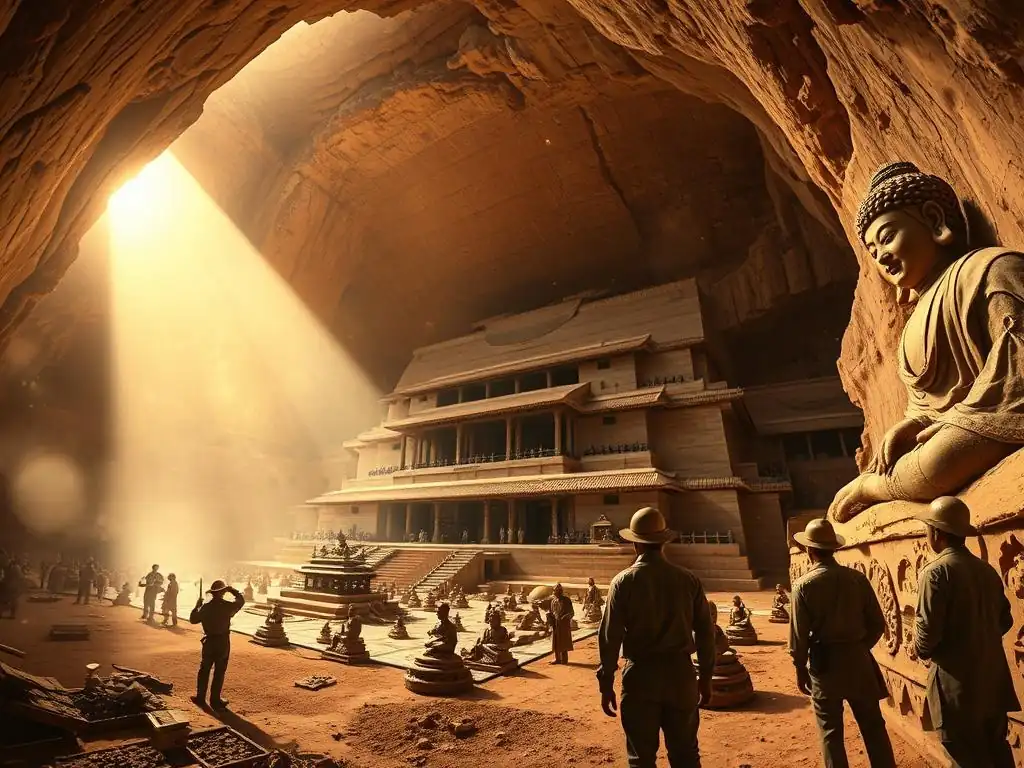
Welcome to ArchaeologyHub.org, your digital gateway to the past! Dive into the fascinating world of archaeological discovery, where we unravel the mysteries of ancient civilizations. Are you ready to embark on a journey through time? This article presents an in-depth Mogao Cave Complex Timeline, meticulously charting its historical development. But what hidden stories do these murals and sculptures truly tell? Continue reading to uncover the secrets within the caves and explore the captivating evolution of this extraordinary site.
- Introduction to the Mogao Caves: A Historical Overview
- Early Foundations: The 4th to 6th Centuries (Northern Dynasties)
- The Sui and Tang Dynasties: A Golden Age (6th - 9th Centuries)
- The Five Dynasties and Song Dynasty: Continuity and Adaptation (10th - 13th Centuries)
- The Yuan Dynasty and Beyond: Preservation and Decline (13th - 20th Centuries)
- Key Archaeological Discoveries and Research at the Mogao Caves
- The Mogao Cave Complex Timeline: A Chronological Summary
- The Art and Architecture of the Mogao Caves: A Visual Journey
- Preserving the Mogao Caves: Challenges and Future Directions
- Conclusion: The Enduring Significance of the Mogao Caves
-
Frequently Asked Questions
- ### What is the Mogao Cave Complex and where is it located?
- ### What is the significance of the Mogao Cave Complex from an archaeological perspective?
- ### What is the general timeline of the Mogao Cave Complex's development?
- ### What kind of artifacts are commonly found within the Mogao Cave Complex?
- ### What factors contributed to the decline and eventual rediscovery of the Mogao Cave Complex?
- Final Reflection: Echoes of Eternity in the Mogao Caves
- Unearth Your Inner Archaeologist
Introduction to the Mogao Caves: A Historical Overview
The Mogao Caves: A Jewel of Buddhist Art on the Silk Road
The Mogao Caves, situated near the city of Dunhuang in Gansu province, China, stand as an unparalleled testament to Buddhist art and a crucial nexus of cultural exchange along the ancient Silk Road. Designated a UNESCO World Heritage site in 1987, this vast complex comprises approximately 735 caves carved into a cliff face, spanning over 1,600 meters.
Within these caves, an astonishing 45,000 square meters of murals and over 2,400 painted sculptures depict a millennium of religious devotion, artistic evolution, and societal life. The Mogao Caves serve as a living chronicle of the transmission of Buddhism from India to China and its subsequent Sinicization.
This remarkable site, often referred to as the "Caves of a Thousand Buddhas," is not merely an art gallery but an archaeological treasure trove. Its significance lies in the continuous artistic and architectural development recorded within its rock-cut chambers, offering a unique opportunity to trace the influences of various cultures—Indian, Central Asian, Tibetan, and Chinese—that converged at this strategic desert oasis. The sheer scale and chronological depth of the Mogao cave complex timeline provide invaluable insights into the religious practices, social structures, and aesthetic sensibilities of successive dynasties.
Focus: Unveiling the Mogao Caves' Past
This article aims to provide a comprehensive archaeological timeline of the Mogao Caves, exploring their genesis, periods of flourishing, and eventual decline, all through the lens of their artistic and architectural evolution. By examining the layers of construction and the stylistic shifts in the murals and sculptures, we can reconstruct the dynamic history of this extraordinary site. Understanding the Mogao cave complex timeline is essential for appreciating its role not only as a spiritual sanctuary but also as a vibrant cultural crossroads.
Our exploration will delve into the specific contributions of various dynasties and kingdoms, highlighting how political changes and shifting patronage influenced artistic output. From the earliest monastic cells to the grand Tang Dynasty temples, each period left its distinct mark, creating a layered archaeological record. This chronological approach will unveil the intricate tapestry of human endeavor that shaped one of the world's most significant Buddhist art sites.
Early Foundations: The 4th to 6th Centuries (Northern Dynasties)
The Genesis of Mogao: Legend and Initial Cave Construction
The origins of the Mogao Caves are traditionally attributed to the Buddhist monk Le Zun, who, around 366 CE, had a vision of a thousand Buddhas bathed in golden light at this very spot. Inspired, he excavated the first cave, marking the inception of what would become a monumental religious complex. Following Le Zun, another monk named Fa Liang joined him, and the site gradually began to attract more devotees and patrons, leading to the excavation of additional caves. This initial phase saw the creation of small, simple meditation cells, primarily for individual monastic practice.
Archaeological evidence supports the early establishment of the caves, with some of the oldest surviving examples, such as Cave 275, 254, and 257, dating back to the Northern Liang (421-439 CE) and Northern Wei (439-534 CE) dynasties. These early caves often feature a central pillar serving as a stupa, allowing for circumambulation, and their murals reflect a strong influence from Indian and Central Asian Buddhist art. The initial patrons were often local officials, merchants, and devout individuals who sought spiritual merit through the sponsorship of these sacred spaces.
Early Buddhist Art and Iconography in the Earliest Caves
The art of the Northern Dynasties at Mogao is characterized by its distinctive blend of foreign and nascent Chinese styles. Murals from this period, such as those in Cave 254, depict Jataka tales (stories of the Buddha's previous lives) and scenes from the Buddha's life, rendered with elongated figures, sharp noses, and a sense of spiritual asceticism.
The drapery of the figures often shows the "wet drapery" technique, clinging to the body, a clear indicator of Indian artistic influence from sites like Ajanta. Pigments derived from natural minerals, such as azurite for blues and malachite for greens, were applied directly to the plaster-covered rock walls.
The iconography of these early caves frequently includes representations of the Thousand Buddhas, a recurring motif symbolizing the vastness of Buddhist enlightenment. Cave 257 features a monumental mural of the "Deer King Jataka," showcasing the early narrative sophistication. The sculptures, typically made of clay, also exhibit a similar stylistic approach, with a focus on spiritual rather than earthly beauty. This foundational artistic period laid the groundwork for the stylistic developments that would unfold over the subsequent centuries, forming the initial layers of the Mogao cave complex timeline.
Patronage and Development Under the Northern Liang and Northern Wei Dynasties
The true expansion of the Mogao Caves during its early phase was significantly propelled by the patronage of the Northern Liang and Northern Wei dynasties. Although politically fragmented, these northern Chinese states were fervent supporters of Buddhism, recognizing its potential for unifying diverse populations and legitimizing their rule. The Northern Liang, a short-lived state, directly controlled Dunhuang from 421 to 439 CE and initiated a period of more systematic cave construction. Many of the earliest and most artistically significant caves at Mogao date from this era.
Following the Northern Liang, the Northern Wei dynasty, which unified much of northern China in 439 CE, continued and expanded this tradition of patronage. While their capital was far to the east, their influence extended to Dunhuang, leading to the excavation of larger and more complex cave structures.
Wealthy families, aristocrats, and even imperial officials sponsored the carving and decoration of caves, hoping to accrue merit and ensure prosperity. This period saw an increase in the scale of murals and sculptures, reflecting a growing confidence in the artistic expression of Buddhist doctrines and establishing a crucial early segment in the Mogao cave complex timeline.
The Sui and Tang Dynasties: A Golden Age (6th - 9th Centuries)
Mogao Caves During the Sui Dynasty: A Period of Expansion
The Sui Dynasty (581-618 CE), though brief, played a pivotal role in the transition and expansion of the Mogao Caves, bridging the artistic styles of the Northern Dynasties with the grandeur of the subsequent Tang era. With the reunification of China under the Sui, imperial patronage for Buddhism became more centralized and systematic, leading to a surge in construction activities at Mogao.
During this period, more than 100 new caves were excavated, and many existing ones were renovated or expanded. The art began to shed some of its earlier foreign influences, moving towards a more distinctly Chinese aesthetic, characterized by a greater sense of volume and fluidity in figures.
Sui Dynasty murals at Mogao exhibit a noticeable shift in composition and color palette. Figures became fuller and more naturalistic, departing from the elongated and somewhat rigid forms of the Northern Dynasties. Narrative scenes grew more complex, and the use of vibrant colors became more pronounced. This period also saw the emergence of more standardized cave layouts, often featuring a main hall with a central altar and circumambulatory passage. The Sui contribution marked a significant step in the Mogao cave complex timeline, setting the stage for its most glorious period.
The Tang Dynasty: The Zenith of Mogao Cave Art and Influence
The Tang Dynasty (618-907 CE) represents the undisputed golden age of the Mogao Caves. During this era, Dunhuang flourished as a vital hub on the Silk Road, a melting pot of cultures, ideas, and wealth. This prosperity and cosmopolitanism directly fueled an unprecedented boom in cave construction and artistic output. Over 200 new caves were excavated, and many existing ones were extensively redecorated, reflecting the robust imperial patronage and the fervent popular devotion to Buddhism. The Tang emperors, particularly Empress Wu Zetian, were devout Buddhists, and their support led to the creation of monumental statues and elaborate murals.
The Tang period saw the Mogao Caves reach their peak in terms of artistic sophistication, scale, and influence. The site became a major center for Buddhist scholarship and pilgrimage, attracting monks, artists, and patrons from across Asia. The sheer volume and quality of the artwork from this era are staggering, providing an unparalleled visual record of Tang society, religious beliefs, and artistic innovation. This period is undeniably the most vibrant chapter in the Mogao cave complex timeline.
Tang Dynasty Cave Murals: Reflecting Cosmopolitan Culture and Buddhist Philosophy
Tang Dynasty murals at Mogao are renowned for their majestic scale, vibrant colors, and dynamic compositions. Figures are depicted with a newfound plumpness, realism, and elegance, often adorned in elaborate Tang court attire. The artistic style reflects the cosmopolitan nature of the empire, incorporating elements from Central Asian, Indian, and even Persian art, seamlessly integrated with traditional Chinese aesthetics. Pure Land paradise scenes, such as those in Cave 220 and Cave 172, dominate the walls, depicting elaborate celestial realms filled with Buddhas, bodhisattvas, musicians, and dancers, showcasing the promise of salvation.
Beyond religious narratives, Tang murals also offer invaluable glimpses into daily life and the diverse populace of Dunhuang. Donor portraits, depicting wealthy patrons and their families in contemporary dress, provide a unique social record. Scenes of foreign merchants, acrobats, and musicians illustrate the bustling Silk Road trade and the multicultural environment of the city. The detailed depiction of musical instruments, textiles, and architectural elements makes these murals an indispensable resource for understanding Tang Dynasty culture and its profound engagement with Buddhist philosophy, further enriching the Mogao cave complex timeline.
The Dunhuang Library Cave (Cave 17) and its Significance
One of the most extraordinary archaeological discoveries at Mogao, and indeed in the history of archaeology, is the Dunhuang Library Cave (Cave 17). Sealed around 1000 CE, likely to protect its contents from invading armies, this small cave was discovered by accident in 1900 by a Daoist monk named Wang Yuanlu. Inside, he found a meticulously arranged cache of approximately 50,000 manuscripts, paintings, silk banners, and other artifacts, preserved in remarkably dry conditions. This immense collection represents over a millennium of written history, ranging from the 4th to the early 11th centuries.
The contents of the Library Cave are incredibly diverse, encompassing Buddhist scriptures, Daoist texts, Confucian classics, secular documents like contracts, medical texts, astronomical charts, and folk songs. The manuscripts are written in a multitude of languages, including Chinese, Tibetan, Uighur, Khotanese, Sogdian, and Sanskrit, underscoring Dunhuang's role as a multilingual hub.
The discovery of the Library Cave transformed the study of medieval China, Central Asia, and the Silk Road, providing unparalleled primary source material that had been lost to history. Its contents continue to be a subject of intense academic study worldwide, making its sealing and discovery a crucial, if late, event in the Mogao cave complex timeline.
The Five Dynasties and Song Dynasty: Continuity and Adaptation (10th - 13th Centuries)
Mogao's Enduring Legacy During the Five Dynasties Period
Following the collapse of the unified Tang Dynasty in 907 CE, China entered a period of political fragmentation known as the Five Dynasties and Ten Kingdoms (907-960 CE). Despite this instability, the Mogao Caves continued to receive patronage, primarily from local ruling families like the Cao clan, who governed Dunhuang as a semi-independent kingdom.
While the grand imperial projects of the Tang era diminished, the Cao family maintained a strong commitment to Buddhism, sponsoring the renovation of existing caves and the excavation of new, albeit generally smaller, ones. This period saw a continuation of artistic traditions, though often with a more localized flavor.
The art of the Five Dynasties at Mogao reflects this shift in patronage. Murals often feature prominent donor portraits of the Cao family members, depicted with elaborate costumes and retinue, emphasizing their piety and wealth. The stylistic trends began to incorporate more indigenous Chinese elements, with figures becoming less idealized and more expressive. While not as prolific as the Tang era, the Five Dynasties period ensured the ongoing vitality of the Mogao complex, bridging the gap between the Tang zenith and later developments in the Mogao cave complex timeline.
The Western Xia Kingdom's Impact on Mogao Cave Art
In 1036 CE, Dunhuang fell under the control of the Western Xia Kingdom (1038-1227 CE), established by the Tangut people. This conquest brought a distinct new cultural and artistic influence to the Mogao Caves. The Tanguts, who had their own written script and unique cultural traditions, were devout Buddhists, particularly drawn to Esoteric (Tantric) Buddhism. Their rule led to the creation of caves with unique iconography, blending Tangut, Tibetan, and Han Chinese artistic elements. This period is marked by a noticeable shift in artistic themes and stylistic conventions.
Western Xia murals often feature multi-headed and multi-armed deities, mandalas, and other Tantric Buddhist imagery, reflecting the prevailing religious trends of the time. The figures tend to be more rigid and stylized compared to the Tang period, and the color palette can be darker and more intense. Inscriptions in the distinctive Tangut script also appear in some caves, providing invaluable linguistic and historical data. The Western Xia period represents a unique and fascinating chapter in the Mogao cave complex timeline, showcasing the dynamic interplay of diverse cultural influences.
Song Dynasty Contributions: Maintaining Artistic Traditions
While Dunhuang was largely outside the direct control of the Song Dynasty (960-1279 CE) for much of its history, the artistic and cultural traditions associated with the Song era still found their way into the Mogao Caves, albeit indirectly or through continued local patronage. Even under Western Xia rule, some artistic continuity with Chinese styles persisted, and specific caves or murals might exhibit characteristics aligned with Song aesthetics. These contributions, though less dominant than those of the Tang or Western Xia, ensured that the artistic evolution of the Mogao complex remained dynamic.
The Song influence is sometimes seen in more refined brushwork, a greater emphasis on landscape elements, and a subtle shift in figure proportions, reflecting the broader artistic trends in central China. The scale of new construction diminished significantly compared to earlier periods, with efforts often focused on the repair and re-decoration of existing caves. Nevertheless, these later contributions are crucial for understanding the full scope of the Mogao cave complex timeline, demonstrating the site's enduring appeal and the persistence of its artistic heritage even amidst political changes.
The Yuan Dynasty and Beyond: Preservation and Decline (13th - 20th Centuries)
Mogao Under Mongol Rule: A Shift in Patronage
With the Mongol conquest of the Western Xia in 1227 CE and the subsequent establishment of the Yuan Dynasty (1271-1368 CE) by Kublai Khan, the Mogao Caves entered a new phase. While the Mongols were generally tolerant of various religions, including Buddhism, patronage at Mogao shifted. Imperial support was less direct and systematic compared to the Tang, and local aristocratic patronage also waned as Dunhuang's strategic importance as a Silk Road hub diminished. Despite this, some new caves were excavated, and existing ones were repainted, particularly reflecting the influence of Tibetan Buddhism, which gained prominence under the Yuan.
Yuan Dynasty murals at Mogao often feature elements of Tibetan Buddhist iconography, such as wrathful deities and specific mandala configurations, reflecting the Sakya school's influence. The artistic style became more formulaic, with a noticeable decline in the dynamism and artistic quality seen in earlier periods. While the site continued to function as a religious center, the scale of activity was significantly reduced. This period marks a transition in the Mogao cave complex timeline from continuous growth to a phase of gradual decline.
Gradual Decline and Abandonment: Environmental and Societal Factors
Following the Yuan Dynasty, the Mogao Caves experienced a prolonged period of gradual decline and eventual abandonment. Several factors contributed to this. The rise of maritime trade routes during the Ming Dynasty (1368-1644 CE) significantly reduced the importance of the overland Silk Road, leading to a decrease in traffic and wealth flowing through Dunhuang. Political instability and border conflicts also contributed to the region's isolation. With diminishing patronage and pilgrims, maintenance of the caves became sporadic.
Over centuries, many caves fell into disrepair, becoming obscured by sand dunes and natural erosion. Murals faded, sculptures deteriorated, and wooden structures supporting the cave entrances collapsed. By the Qing Dynasty (1644-1912 CE), the Mogao Caves were largely forgotten by the outside world, known only to a few local monks and residents. This long period of neglect, while leading to degradation, also ironically helped preserve the site from further human interference until its "rediscovery" in the early 20th century, a critical turning point in the Mogao cave complex timeline.
The Rediscovery of the Mogao Caves: 20th Century Exploration
The "rediscovery" of the Mogao Caves in the early 20th century by Western explorers brought the site back into global prominence, albeit under controversial circumstances. In 1900, the Daoist monk Wang Yuanlu, who had appointed himself custodian of the caves, stumbled upon the sealed Library Cave (Cave 17). Word of this immense treasure trove eventually reached foreign scholars and adventurers. This led to a series of expeditions, most notably by the Hungarian-British archaeologist Sir Aurel Stein in 1907 and the French sinologist Paul Pelliot in 1908.
Stein and Pelliot, among others, acquired vast quantities of manuscripts, paintings, and artifacts from Wang Yuanlu, often for relatively small sums. These acquisitions, while enriching Western museums and academic institutions, also led to the dispersal of the Dunhuang collection across the globe. Despite the ethical debates surrounding these acquisitions, their expeditions undeniably brought international attention to the Mogao Caves, sparking intense scholarly interest and laying the groundwork for modern archaeological and conservation efforts. This era marks the beginning of the modern phase of the Mogao cave complex timeline.
Key Archaeological Discoveries and Research at the Mogao Caves
The Discovery of the Dunhuang Manuscripts: A Turning Point
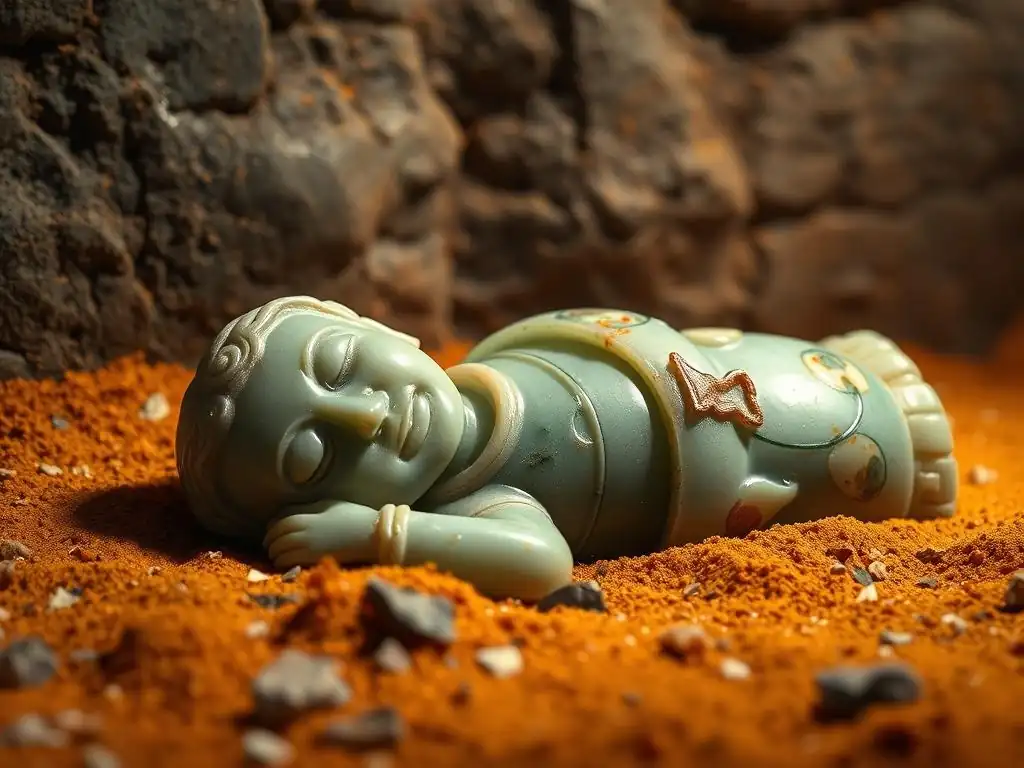
The discovery of the Dunhuang Manuscripts in Cave 17 (the Library Cave) in 1900 by Wang Yuanlu was a pivotal moment in global archaeology and Asian studies. This extraordinary cache, estimated to contain over 50,000 items, including scrolls, paintings on silk and paper, and textiles, provided an unparalleled window into more than a millennium of history (from the 4th to the 11th centuries CE). The manuscripts cover a vast array of subjects: Buddhist, Daoist, and Confucian texts, historical records, administrative documents, folk songs, and even medical prescriptions. Many of these documents were previously unknown or thought to be lost.
The significance of this discovery cannot be overstated. It revolutionized the study of medieval China, Central Asian history, linguistics, art history, and the intricate cultural exchanges along the Silk Road. For instance, the Diamond Sutra, dated 868 CE, found among the Dunhuang manuscripts, is the world's earliest dated complete printed book. The sheer volume and diversity of these primary sources have allowed scholars to reconstruct the religious practices, daily life, economic activities, and political landscapes of a crucial period in East Asian history, making the Library Cave's contents central to understanding the Mogao cave complex timeline.
Sir Aurel Stein and Paul Pelliot: Early Explorers and Their Findings
The early 20th century saw several foreign expeditions to Dunhuang, with Sir Aurel Stein and Paul Pelliot being the most prominent figures. Sir Aurel Stein, a Hungarian-British archaeologist, visited Mogao in 1907. Persuading Wang Yuanlu, he acquired thousands of manuscripts and artifacts, including many of the most significant Buddhist scrolls and paintings, which are now housed primarily in the British Library and the National Museum of India. Stein's meticulous documentation, though controversial in its acquisition methods, brought the Dunhuang treasures to academic attention in the West.
Following Stein, the French sinologist Paul Pelliot arrived in 1908. Unlike Stein, Pelliot was a fluent Chinese speaker and spent weeks meticulously examining the manuscripts in the Library Cave, selecting those he deemed most historically and linguistically valuable. His acquisitions, now predominantly in the Bibliothèque Nationale de France, included many rare and unique secular and Daoist texts. Both Stein's and Pelliot's expeditions, despite the ethical complexities of their actions, were instrumental in unveiling the archaeological and historical richness of the Mogao Caves to the international scholarly community, profoundly impacting our understanding of the Mogao cave complex timeline.
Modern Archaeological Excavations and Conservation Efforts
Since the mid-20th century, particularly after the establishment of the Dunhuang Art Institute (later renamed the Dunhuang Academy) in 1944, archaeological research and conservation efforts at the Mogao Caves have become systematic and scientifically rigorous. Chinese archaeologists have undertaken extensive surveys, stratigraphic excavations, and detailed mapping of the caves, revealing hidden layers of construction and previously unknown features. This work has provided a clearer understanding of the site's architectural evolution and its precise Mogao cave complex timeline.
Modern conservation efforts employ state-of-the-art techniques to combat the severe environmental threats to the caves, such as sand encroachment, humidity, and temperature fluctuations. Scientists use advanced materials to stabilize murals, prevent pigment flaking, and reinforce deteriorating rock. Collaborative projects with international institutions, including the Getty Conservation Institute, have introduced cutting-edge conservation science and digital preservation technologies. These ongoing efforts are crucial not only for preserving the physical integrity of the caves but also for continually deepening our archaeological understanding of this invaluable heritage site.
The Mogao Cave Complex Timeline: A Chronological Summary
A Detailed Timeline of Mogao Cave Development
The Mogao Cave complex timeline spans over a millennium, showcasing a continuous evolution of art, architecture, and religious practice:
- Northern Dynasties (c. 366 – 581 CE):
- 366 CE: Traditional founding by Monk Le Zun.
- 421-439 CE (Northern Liang): Initial systematic excavation, early Indian and Central Asian artistic influences.
- 439-534 CE (Northern Wei): Increased patronage, development of central-pillar caves, stylized figures.
- 534-581 CE (Western Wei & Northern Zhou): Continued development, transition towards more Chinese artistic traits.
- Sui Dynasty (581 – 618 CE):
- Significant expansion (over 100 new caves), imperial patronage, shift towards fuller figures and more vibrant colors.
- Tang Dynasty (618 – 907 CE):
- 618-755 CE (Early & High Tang): The Golden Age, peak of artistic and architectural grandeur, cosmopolitan style, monumental statues (e.g., Cave 96, 130).
- 755-907 CE (Mid & Late Tang): Continued artistic output, though affected by political instability (An Lushan Rebellion) and Tibetan occupation (781-848 CE).
- Five Dynasties (907 – 960 CE):
- Local patronage by the Cao family, continuation of traditions, focus on donor portraits.
- Song Dynasty (960 – 1279 CE):
- Dunhuang mostly under Western Xia rule, but some artistic continuity and influence.
- Western Xia Kingdom (1036 – 1227 CE):
- Tangut rule, distinct artistic style with Tibetan Buddhist iconography, Tangut script inscriptions.
- Yuan Dynasty (1271 – 1368 CE):
- Mongol rule, shift in patronage, increased Tibetan Buddhist influence, gradual decline in new construction.
- Ming & Qing Dynasties (1368 – 1912 CE):
- Gradual abandonment and neglect, decline in Silk Road trade.
- 20th Century Rediscovery & Conservation:
- 1900 CE: Wang Yuanlu discovers the Library Cave (Cave 17).
- 1907 CE: Sir Aurel Stein's expedition.
- 1908 CE: Paul Pelliot's expedition.
- 1944 CE: Establishment of the Dunhuang Art Institute (later Dunhuang Academy).
- 1987 CE: Designated a UNESCO World Heritage site.
Key Events and Rulers Shaping the Mogao Caves' History
The development of the Mogao Caves was intrinsically linked to broader historical events and the patronage of powerful rulers and families. The initial impetus came from devout monks and local patrons during the fragmented Northern Dynasties, such as the Northern Liang rulers who actively supported early cave construction.
The unification of China under the Sui and particularly the Tang Dynasties brought unprecedented imperial wealth and artistic patronage, transforming Mogao into a major Buddhist art center. The Tang Dynasty's cosmopolitanism, driven by its role as a central Silk Road power, allowed for the flourishing of diverse artistic styles and the creation of monumental works like the colossal Buddhas in Cave 96 and Cave 130.
The sealing of the Library Cave around 1000 CE, likely due to the threat of invading armies, proved to be an accidental act of immense preservation, safeguarding tens of thousands of invaluable manuscripts. The subsequent rule by the Tangut Western Xia Kingdom (1036-1227 CE) introduced unique artistic and religious influences, particularly Esoteric Buddhism.
The decline in the Silk Road's importance after the Yuan Dynasty led to centuries of neglect, only to be dramatically reversed by the "rediscovery" in the early 20th century. The establishment of the Dunhuang Academy in 1944 marked a crucial turning point, initiating systematic archaeological research and conservation efforts that continue to shape our understanding of the Mogao cave complex timeline today.
The Art and Architecture of the Mogao Caves: A Visual Journey
Cave Architecture: Evolution of Cave Design and Construction Techniques
The architecture of the Mogao Caves is primarily that of rock-cut temples, carved directly into the conglomerate cliff face. Over the centuries, the design and construction techniques evolved significantly. The earliest caves, dating from the Northern Dynasties, are typically small, simple meditation cells or caves with a central pillar, designed for circumambulation (e.g., Cave 254). These early forms reflect strong Indian architectural influences, mimicking freestanding stupas within the rock. The process involved carving out the basic chamber, then plastering the rough rock surfaces with a mixture of clay, straw, and sand, which provided a smooth ground for painting.
As the Mogao cave complex timeline progressed into the Sui and Tang Dynasties, the scale and complexity of the caves dramatically increased. Larger assembly halls, often with elaborate painted ceilings and monumental Buddha sculptures, became common. Some caves feature multi-chambered layouts, including antechambers, main halls, and rear chambers, often with a central Buddha shrine.
The Tang period also saw the creation of colossal Buddha statues, like the 35.5-meter high Maitreya Buddha in Cave 96, which required massive wooden structures to support the cliff face and provide access. The exterior facades of many caves were originally fronted by multi-story wooden temples, though most have not survived the centuries, leaving only the rock-cut interiors and the occasional timber framework.
Mural Painting Styles: A Reflection of Changing Artistic Trends
The murals of the Mogao Caves represent an extraordinary visual chronicle of Chinese art history, reflecting stylistic changes across different dynasties and influences from various cultures along the Silk Road. In the Northern Dynasties (4th-6th centuries), murals often depict Jataka tales and Buddha's life stories with elongated, slender figures, characterized by linear outlines and a somewhat ethereal quality, showing clear Indian and Central Asian influences. The color palette was often limited, relying on mineral pigments like azurite and malachite.
The Sui and particularly the Tang Dynasties (6th-9th centuries) ushered in a golden age of mural painting. Tang murals are renowned for their vibrant colors, dynamic compositions, and plump, lifelike figures. Themes expanded to include elaborate Pure Land paradises, intricate narrative scenes, and detailed donor portraits.
The use of gongbi (meticulous brushwork) became highly refined, and the palette broadened to include more vivid reds, golds, and whites. Later periods, such as the Five Dynasties, Western Xia, and Yuan, saw further stylistic evolution, incorporating more indigenous Chinese elements, Tibetan Buddhist iconography, and sometimes a more folk-art aesthetic, providing a rich, layered record of artistic evolution within the Mogao cave complex timeline.
Sculptural Masterpieces: Buddhist Deities and Narrative Scenes
Alongside the murals, the Mogao Caves house a remarkable collection of clay sculptures, often painted, that complement the painted narratives. The majority of these sculptures are made of a clay core covered with layers of plaster and then painted, allowing for delicate modeling and expressive details. Early Northern Dynasties sculptures often feature a more rigid and archaic smile, with a focus on spiritual rather than earthly beauty, mirroring the painting styles of the period. Figures tend to be slender, with simplified drapery.
The Sui and Tang Dynasties saw a dramatic shift towards more naturalistic and monumental sculpture. Tang Buddhist sculptures are celebrated for their plump, graceful forms, expressive faces, and flowing drapery that convey a sense of movement and vitality.
The colossal Buddhas, such as the 35.5-meter high Maitreya in Cave 96 (dating to 695 CE) and the 26-meter high Buddha in Cave 130 (dating to 713-741 CE), are awe-inspiring examples of Tang sculptural prowess, demonstrating the scale of devotion and technical skill. Later dynasties continued to create sculptures, though often on a smaller scale and with stylistic changes reflecting new influences, contributing to the diverse artistic heritage documented in the Mogao cave complex timeline.
Preserving the Mogao Caves: Challenges and Future Directions
Conservation Challenges: Threats to the Caves' Integrity
The preservation of the Mogao Caves, a site of immense historical and artistic value, faces numerous complex challenges. The primary threats are environmental: the semi-arid desert climate leads to sand erosion, which abrades the outer surfaces of the caves and clogs entrances. Fluctuations in temperature and humidity cause the plaster and pigments of the murals to expand and contract, leading to cracking, flaking, and pigment loss.
Moisture seepage from the cliff face can also cause mold growth and salt crystallization, severely damaging the artwork. Over centuries, natural processes have already caused significant deterioration, with an estimated 30% of the murals having faded or been lost.
Human activity also poses significant threats. While past neglect and looting (especially in the early 20th century) caused irreversible damage, modern tourism, if not properly managed, can accelerate deterioration through increased humidity from visitors' breath, dust, and direct physical contact. Improper restoration attempts in earlier periods also sometimes caused more harm than good. Addressing these multifaceted challenges requires a comprehensive and ongoing conservation strategy that balances access with protection, ensuring the long-term survival of the Mogao cave complex timeline.
Digital Preservation and Virtual Reality: Safeguarding the Caves for Future Generations
To mitigate the impact of environmental factors and increasing tourism, the Dunhuang Academy has pioneered innovative digital preservation techniques, notably through its "Digital Dunhuang" project. This ambitious initiative involves high-resolution scanning and imaging of every mural, sculpture, and architectural detail within the caves. Using advanced photographic techniques, 3D laser scanning, and virtual reality (VR) technology, the project creates precise digital replicas of the caves and their contents. This digital archive serves as a crucial backup, preserving the fragile artwork in perpetuity, even if the physical caves were to suffer further degradation.
Beyond preservation, digital technologies offer unprecedented opportunities for research and public access. Scholars can study the murals in minute detail without causing physical wear, while the public can experience virtual tours of caves that are too fragile for physical visitation. For example, some highly sensitive caves are accessible only via immersive VR experiences at the Dunhuang Academy's visitor center. This approach not only safeguards the physical site but also democratizes access to this world heritage, allowing a global audience to explore the rich Mogao cave complex timeline from anywhere.
Sustainable Tourism and Responsible Site Management
Managing tourism at a site as delicate and historically significant as the Mogao Caves requires a highly strategic and sustainable approach. The Dunhuang Academy has implemented stringent visitor control measures to minimize environmental impact while still allowing public engagement. This includes limiting the number of daily visitors to approximately 6,000, which can be dynamically adjusted based on environmental conditions. Visitors typically view a carefully selected set of caves, and access to more fragile or important caves is often restricted or requires special arrangements.
Furthermore, the Academy employs a system of guided tours, where visitors are accompanied by trained docents who provide context and ensure respectful behavior. Pre-booking systems are in place to manage visitor flow, and educational materials are provided to enhance the visitor experience while emphasizing the importance of conservation. By carefully balancing public access with the imperative of preservation, the Dunhuang Academy strives to ensure that future generations can continue to appreciate and learn from the unparalleled artistic and archaeological legacy embedded within the Mogao cave complex timeline.
Conclusion: The Enduring Significance of the Mogao Caves
The Mogao Caves: A Window into Ancient Buddhist Culture and the Silk Road
The Mogao Caves stand as an extraordinary testament to human creativity, religious devotion, and cultural exchange, offering an unparalleled window into ancient Buddhist culture and the vibrant dynamics of the Silk Road. This vast complex, with its more than 700 caves adorned with approximately 45,000 square meters of murals and over 2,400 painted sculptures, provides a continuous artistic and archaeological record spanning over a millennium. It chronicles the transmission of Buddhism from India to China, its assimilation into Chinese society, and its subsequent flourishing under various dynasties, from the Northern Wei to the Yuan.
Beyond their religious significance, the Mogao Caves are an invaluable repository of historical and cultural information. The diverse styles of art reflect the convergence of influences from India, Central Asia, and China, illustrating the cosmopolitan nature of Dunhuang as a crucial Silk Road hub. The discovery of the Library Cave manuscripts further cemented Mogao's status as a global archaeological treasure, providing primary sources that illuminate every facet of medieval life, from economic transactions to philosophical treatises. The Mogao cave complex timeline is not just a chronological sequence of art, but a living narrative of human civilization.
Continuing Archaeological Research and Unanswered Questions
Despite over a century of intensive archaeological research and conservation efforts, the Mogao Caves continue to yield new discoveries and pose fascinating questions. The ongoing work by the Dunhuang Academy and international collaborators utilizes cutting-edge technology, such as ground-penetrating radar and remote sensing, to explore areas of the cliff face that may still conceal undiscovered caves or artifacts. Scientific analysis of pigments and materials continues to reveal details about ancient artistic techniques and trade networks.
Future research aims to delve deeper into the social history of the cave patrons, understanding the motivations and demographics of those who funded the artistic endeavors. The broader environmental impact of climate change on the caves also remains a critical area of study, informing long-term preservation strategies. The Mogao cave complex timeline is a dynamic field, where every new discovery contributes to a richer, more nuanced understanding of this magnificent site and its enduring legacy for humanity.
Frequently Asked Questions
### What is the Mogao Cave Complex and where is it located?
The Mogao Caves, also known as the Caves of the Thousand Buddhas, are a system of 492 temples located near Dunhuang, China. They are renowned for their Buddhist art.
### What is the significance of the Mogao Cave Complex from an archaeological perspective?
The Mogao Caves hold immense archaeological significance due to the well-preserved Buddhist art, manuscripts, and other artifacts that provide invaluable insights into the cultural and religious practices of ancient China along the Silk Road.
### What is the general timeline of the Mogao Cave Complex's development?
Construction of the Mogao Caves began in the 4th century AD and continued for approximately 1,000 years, with new caves and artworks being added throughout various dynasties. The complex saw a decline in use and preservation after the 14th century.
### What kind of artifacts are commonly found within the Mogao Cave Complex?
Common artifacts include Buddhist murals, sculptures, silk paintings, textiles, and a vast collection of manuscripts written in various languages, offering a glimpse into the diverse cultures that interacted along the Silk Road.
### What factors contributed to the decline and eventual rediscovery of the Mogao Cave Complex?
Factors included the decline of the Silk Road, political instability, and natural erosion. Rediscovery occurred in the early 20th century, leading to international efforts for preservation and study.
Okay, here's a final reflection designed to close your article, "The Historical Development of the Mogao Cave Complex: An Archaeological Timeline," while incorporating the requested Markdown format, tone, and keyword focus:
Final Reflection: Echoes of Eternity in the Mogao Caves
The journey through the Mogao Cave Complex timeline reveals more than just a sequence of artistic and religious endeavors; it unveils a profound testament to human resilience and the enduring power of cultural exchange. Today, as we grapple with questions of identity and globalization, the Mogao Caves stand as a vibrant reminder of how diverse influences can coalesce to create something truly extraordinary and lasting.
The Mogao Caves have profoundly shaped our understanding of Silk Road history and Buddhist art, offering invaluable insights into the lives and beliefs of those who came before us. This exploration has reinforced my belief in the importance of preserving cultural heritage, not just as artifacts of the past, but as living sources of inspiration and wisdom. Art washes away from the soul the dust of everyday life.
- Pablo Picasso. This quote resonates deeply when considering the Mogao Caves, a sanctuary where art transcends time and continues to inspire awe and introspection.
As you reflect on the intricate Mogao cave complex timeline, consider how its lessons of cultural fusion, artistic innovation, and spiritual devotion can inform your own life. Let the echoes of eternity within those painted walls inspire you to embrace diversity, cultivate creativity, and seek deeper meaning in the world around you.
Unearth Your Inner Archaeologist
Thank you for delving into the rich history of the Mogao Caves! We hope this archaeological timeline has illuminated the incredible artistic and cultural legacy preserved within these ancient walls. Now, it's your turn to connect with this extraordinary site.
Here are a few ways to continue your journey:
- Visit a virtual Mogao Cave: Many online platforms offer detailed virtual tours. Choose one cave you found particularly fascinating and spend some time exploring its artwork and history in detail.
- Share this article with someone who appreciates art, history, or travel to spark a discussion.
- Research a specific aspect of Mogao cave art (e.g., the depiction of Buddhas, the use of color pigments, or the influence of foreign cultures) and contribute your findings in the comment section of ArchaeologyHub.org.
What's one specific detail about the Mogao Caves that truly captivated you, and how might you explore that further?