Explore the Imperial Capitals of Chang'an (Xi'an)
Dive into the heart of ancient Chinese civilization with our comprehensive guide to Chang'an, the magnificent capital of the Han and Tang Dynasties. As a pivotal node in the Silk Road and a cradle of political power, Chang'an—modern-day Xi'an—represents a treasure trove for archaeology enthusiasts. This subcategory within ArchaeologyHub.org offers a rich tapestry of excavation findings, urban planning insights, and cultural artifacts, designed to transport you back over two millennia. From the grandeur of imperial palaces to the silent legions of the Terracotta Army, discover how recent archaeological techniques unravel the daily life, governance, and global connections of one of history's greatest metropolises.
🏛️ The Urban Layout and Cosmopolitan Culture of Han Dynasty Chang'an
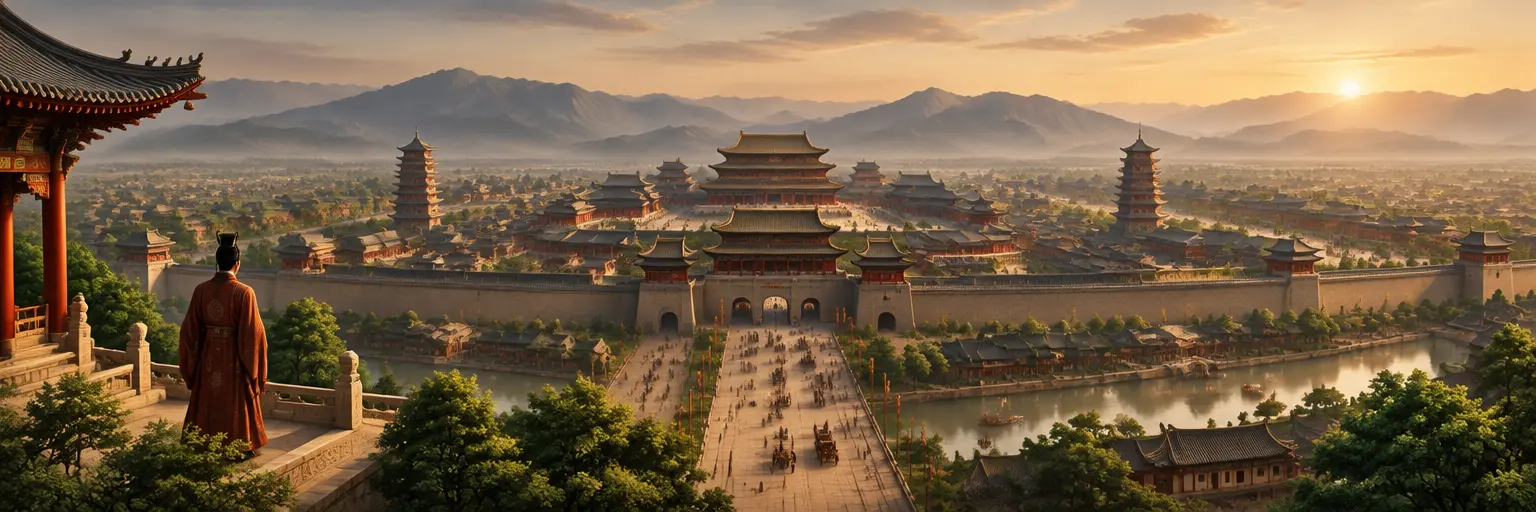
During the Western Han (206 BCE–9 CE), Chang'an was engineered as a symbol of cosmic order, with a rectangular grid that mirrored celestial patterns. Our site details the Weiyang Palace, the largest palace complex ever built, covering 4.8 square kilometers. Recent ground-penetrating radar surveys have revealed extensive market wards, residential sectors, and workshops that showcased a bustling economy. Excavated relics, including bronze mirrors and imported Persian glass, confirm Chang'an's role as a multicultural hub.
This section provides an interpretive analysis of how Han urban planning influenced subsequent Chinese capitals. You will find interactive timelines of the city's construction phases, alongside profiles of key artifacts like the jade burial suits and coin mints. We also examine the archaeobotanical evidence of crops like millet and rice, painting a vivid picture of daily sustenance and trade networks. Through these discoveries, you’ll grasp how Chang'an functioned both as a fortified administrative center and a vibrant melting pot of Central Asian, Indian, and local cultures.
🐎 Tang Dynasty Glory: Cosmopolitanism and Monumental Architecture
The Tang Dynasty (618–907 CE) transformed Chang'an into the world's most populous city, with over one million residents within its walls. This subcategory highlights the Daming Palace, a political stage for emperors, using LiDAR scanning to map its hidden foundations. Unearthed frescoes from tomb murals show elegantly dressed women, foreign envoys, and musicians, proving the city's openness to global influences via the Silk Road. The archaeological record of the Western Market reveals shops selling spices, textiles, and slaves from as far as Byzantium.
We provide a detailed stratigraphic study of the city's water supply systems, including the Qujiang Pool, an artificial lake used for imperial leisure. Artifact profiles feature Tang sancai (three-color) ceramics and silverware engraved with Sogdian motifs. Our expert-written essays explore how the Tang legal code and bureaucratic systems are reflected in excavated administrative tablets. This section also covers the tragic decline, using evidence of fire layers and abandoned wells to narrate the fall of this glorious capital, offering a holistic view of its rise and legacy.
🏺 The Terracotta Army and the Mausoleum of Qin Shi Huang
Although technically preceding the Han dynasty, the Mausoleum of Qin Shi Huang—located a short distance from Chang'an—forms a cornerstone of this subcategory due to its proximity and archaeological interconnection. Our content details the ongoing excavation of Pit 1, where over 6,000 life-sized terracotta warriors stand guard. We explain the archaeometric analysis of the warriors' pigments, revealing original bright colors now fading upon exposure. The site's mercury survey of the central tomb mound confirms historical records of rivers of mercury, alluding to an emperor obsessed with immortality.
For readers, we offer a virtual tour simulation and 3D reconstructions of the burial complex, including bronze chariots and acrobat figurines. This section emphasizes the forensic study of production techniques—how assembly-line methods created unique facial features using clay stamps. We also investigate the accompanying mass graves of artisans and laborers, shedding light on the human cost of this monumental project. Through these insights, you’ll understand why UNESCO designated this site a World Heritage treasure and its impact on our understanding of early imperial funerary practices.
⛏️ Excavation Techniques and Modern Discoveries at Chang'an
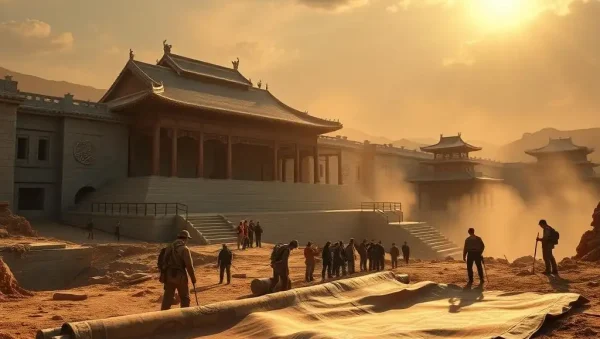
Archaeology at Chang'an is a dynamic field, with non-invasive methods like magnetometry and resistivity surveys leading the charge. Our site documents how these techniques have identified unexcavated palaces, roads, and kilns without disturbing the soil. We profile the collaboration between Chinese and international teams, showcasing drones with multispectral imaging that detect crop marks indicating buried walls. Recent discoveries, such as a 5th-century Buddhist monastery with a reliquary containing skull fragments, have rewritten local religious history.
This subcategory also covers the ethical challenges of preserving the site during Xi'an's modern urbanization. We detail the controversial construction of the Xi'an Metro, which required a massive archaeological rescue operation. Readers will learn about flotation analysis of soil samples to recover plant seeds and pollen, providing climate data from 2000 years ago. We include video interviews with lead excavators and interactive maps showing the exact locations of current digs. This section is perfect for students understanding field methodology, offering real-world case studies.
🌏 Global Connections: Chang'an on the Silk Road
Chang'an was the eastern terminus of the Silk Road, a network that facilitated the exchange of goods, ideas, and religions. Our deep dive highlights archaeological finds like Christian tombstones and Manichaean manuscripts, proving the city's religious diversity. Excavated glassware from Roman workshops and Kushan coins illustrate long-distance trade, while musical instruments from Persia appear in tomb figurines. We analyze the imported grape seeds linked to winemaking, suggesting cultural integration.
This section provides a comparative study with contemporaneous cities like Constantinople and Baghdad, showing shared technological exchanges. You’ll find a detailed map of caravan routes and a timeline of diplomatic missions, with primary source quotes from Tang court chronicles. Our artifact profiles include a Sogdian merchant’s ledger on paper, rare for the period, which details transactions for silk and horses. We also discuss the spread of Buddhist art styles from Gandhara to Chang'an, visible in excavated stucco heads and pagodas. This global perspective enriches your understanding of how a single city connected continents.
🖼️ Preservation Challenges and Digital Reconstructions
Preserving Chang'an's fragile mud-brick architecture is a delicate task, especially with rising groundwater and pollution. This subcategory outlines innovative conservation efforts, including silicone injections to stabilize wall paintings and climate-controlled shelters. We feature case studies on the reconstruction of the Hanyuan Hall using traditional rammed earth techniques, balancing authenticity with visitor access. Digital reconstruction using photogrammetry offers virtual models, allowing researchers to test hypotheses without physical impact.
For the curious user, we provide access to a 3D walkthrough of Tang-era streetscape, created from excavation data and historical records. Our content discusses the ethical debate of reconstructions—should missing areas be restored or left as ruins? We also explore community engagement programs, where local schools participate in archaeology outreach to foster stewardship. Through expert opinions and behind-the-scenes footage, this section highlights the future of heritage management, ensuring that Chang'an's legacy persists for generations. Learn how technology bridges the gap between ancient remnants and living memory.
Frequently Asked Questions
What is the best time of year to visit Xi'an's archaeological sites?
The optimal visiting window is from April to June or September to October, when temperatures are mild (15–25°C) and rainfall low. Summers can be hot and crowded, while winters are cold but offer fewer tourists. For the Terracotta Army, early mornings on weekdays avoid peak crowds. Always check local weather for dust storms, which can affect visibility.
How do archaeologists distinguish between Han and Tang dynasty ruins in Chang'an?
They use stratigraphy and typology—Han layers contain gray pottery and bronze coins while Tang levels have white porcelain and sancai ceramics. Radiocarbon dating of organic matter and thermoluminescence on bricks provide absolute dates. Urban layouts also differ: Han is more rigidly geometric, Tang has wider avenues and larger wards.
Are there any real human remains in the Terracotta Army pits?
No, the warriors are hollow clay statues. However, the mausoleum site has revealed mass graves of tomb builders and possibly sacrificial victims. The central tomb itself remains unexcavated, but mercury detection suggests possible embalmed remains, though none have been confirmed.
Can I see artifacts from Chang'an in museums outside China?
Yes, major institutions like the British Museum, the Metropolitan Museum of Art, and the Guimet Museum hold Tang ceramics, gold items, and Buddhist sculptures from Chang'an. However, the most comprehensive collection is at the Shaanxi History Museum in Xi'an, which hosts rotating exhibitions with loans from international partners.
Is the city of Chang'an still visible on the ground today?
Above-ground remains are scarce, mostly surviving as earthen ramparts and foundation platforms in Xi'an's suburbs. The city’s original walls were demolished, but parts of the Han walls remain, like the Xi'an City Wall from the Ming Dynasty, which overlays Tang foundations. Archaeological parks protect key areas, offering informative trails with signboards.