
The Symbolism of the Double Axe (Labrys) in Mycenaean Contexts: Minoan Influence or Independent Meaning?

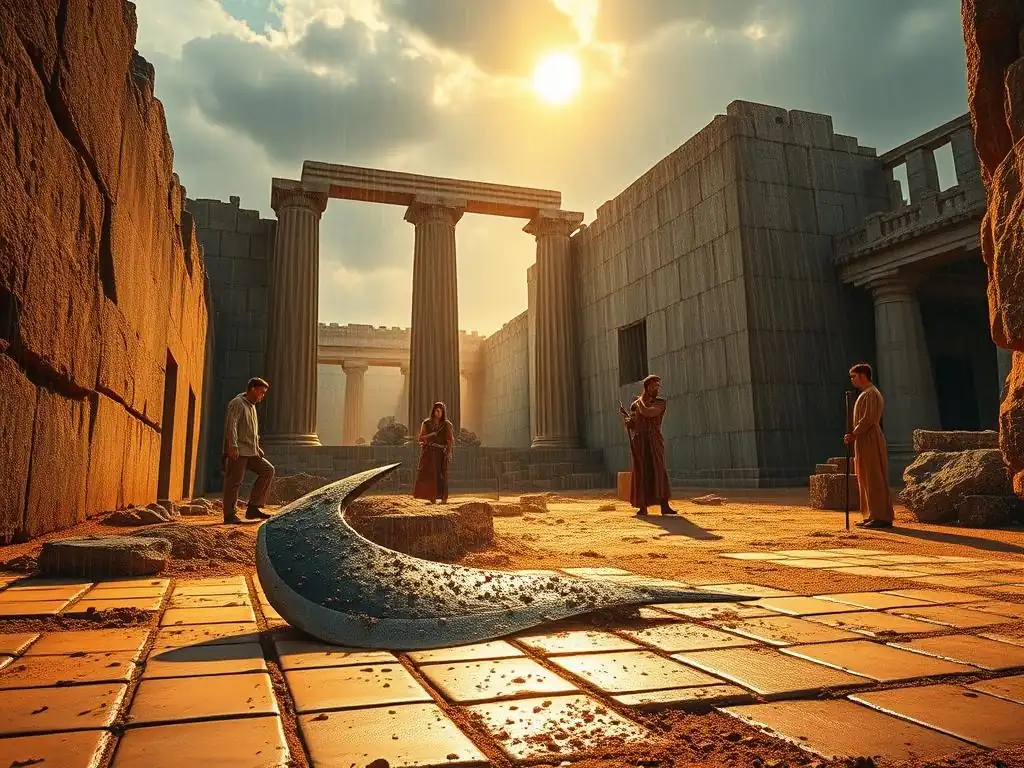
Welcome to ArchaeologyHub.org, your gateway to unraveling the mysteries of the past.
Delve into the fascinating world of ancient civilizations and uncover the stories etched in stone and artifact. Ever wondered about the significance behind the Mycenaean double axe symbolism? Our in-depth exploration awaits, examining its potential Minoan roots and unique Mycenaean interpretations. Begin your journey now and unlock the secrets held within this powerful emblem, and discover what it reveals about a lost world.
- Introduction: Unveiling the Mycenaean Double Axe Symbolism
- The Double Axe (Labrys): A Background on its Origins and Significance
- The Minoan Double Axe: Religious and Cultural Significance
- Mycenaean Adoption of the Double Axe: Evidence and Context
- Minoan Influence on Mycenaean Double Axe Symbolism: A Detailed Analysis
- Independent Meanings of the Double Axe in Mycenaean Culture: Exploring Alternative Interpretations
- Comparing and Contrasting Minoan and Mycenaean Double Axe Symbolism
- The Double Axe and Mycenaean Religious Syncretism
- Conclusion: The Legacy of the Double Axe in Mycenaean Culture
-
Frequently Asked Questions
- What is the Labrys, and why is it important in understanding Mycenaean culture?
- Did the Mycenaeans adopt the double axe symbol directly from the Minoans, or did they develop their own interpretation?
- What are some of the proposed interpretations of the Labrys symbol in Mycenaean archaeology?
- Where are examples of the Labrys found in Mycenaean archaeological sites?
- How does ArchaeologyHub.org help researchers and enthusiasts learn more about the Labrys and Mycenaean civilization?
- Final Reflection: Echoes of Power and Meaning
- Unveil the Mysteries: Start Your Archaeological Journey Now!
Introduction: Unveiling the Mycenaean Double Axe Symbolism
The double axe, or Labrys, stands as one of the most enigmatic and enduring symbols of the Bronze Age Aegean. Its prevalence in Minoan Crete is well-documented, often associated with religious rituals and powerful deities. However, its appearance in Mycenaean contexts on the Greek mainland raises intriguing questions about its meaning and the nature of cultural exchange between these two dominant powers. Understanding the "Mycenaean double axe symbolism" is crucial for deciphering the complex religious and political landscape of the late Bronze Age.
This article delves into the origins and significance of the Labrys, meticulously examining its role in Minoan culture before exploring its adoption and potential reinterpretation by the Mycenaeans. We will analyze archaeological evidence, art, and iconography to discern whether the Mycenaean double axe symbolism was primarily a direct inheritance from Minoan traditions or if it acquired distinct, indigenous meanings within the warrior-centric and palatial society of mainland Greece. The nuanced understanding of this symbol offers a unique window into the syncretic nature of Mycenaean religious and political ideology.
The Double Axe (Labrys): A Background on its Origins and Significance
Defining the Labrys: Form and Function
The Labrys, from the Lydian word labrys meaning "double axe," is characterized by its symmetrical form with two opposing blades, often narrowing towards the center where a handle would be affixed. While some examples are robust enough for practical use as tools or weapons, the vast majority of excavated Labrys artifacts, particularly those crafted from precious materials like gold, silver, or bronze, or those depicted in art, suggest a predominantly cultic or ceremonial function.
These objects range dramatically in size, from miniature votive offerings, sometimes only a few centimeters long, found in sanctuaries, to monumental versions possibly used as architectural embellishments or processional standards.
Archaeological finds indicate that the Labrys was crafted from a variety of materials depending on its intended purpose and context. Bronze double axes, often with a central socket for a wooden handle, have been unearthed in considerable numbers, suggesting their potential use in specific rituals, perhaps involving animal sacrifice, or as high-status grave goods. Examples made from gold, ivory, or steatite, frequently found in elite burials or palatial settings, underscore their symbolic rather than utilitarian value, signifying power, divinity, or sacred authority within the Bronze Age Aegean societies.
The Labrys in Ancient Cultures: A Brief Overview
While the Labrys is most famously associated with Minoan Crete and, subsequently, Mycenaean Greece, its form and symbolic resonance appear in various ancient cultures, albeit with differing contexts and meanings. In Anatolia, particularly in Caria, the double axe was a known symbol, believed to be associated with the Carian god Zeus Labraundos, reinforcing a potential connection between the symbol and divine authority or thunder. This suggests a broader, albeit perhaps independent, development of the double axe as a powerful emblem across the ancient Near East.
Beyond the Aegean, the double axe form appears in isolated instances in other cultures, sometimes as a functional tool or weapon, and less frequently as a prominent cultic symbol. However, the sheer ubiquity and profound religious significance attributed to the Labrys in Minoan Crete, and its subsequent transmission to the Mycenaean world, distinguish its Aegean manifestations. This concentration of "Mycenaean double axe symbolism" and its Minoan precursor highlights a unique cultural trajectory within the Bronze Age Mediterranean, making the Aegean region the primary focus for understanding its complex iconographic journey.
The Minoan Double Axe: Religious and Cultural Significance
The Labrys as a Minoan Religious Symbol
In Minoan Crete, the Labrys was an overwhelmingly pervasive and potent religious symbol, deeply integrated into nearly every aspect of cultic life. It is frequently depicted in frescoes, on seals, rings, and ritual vessels, and found as actual artifacts in sanctuaries, peak sanctuaries, and palatial cultic areas across the island. Its strong association with the Minoan Mother Goddess, or a principal female deity, is widely accepted, often appearing alongside sacred knots, horns of consecration, and other vegetative symbols, reinforcing its connection to fertility, regeneration, and divine power.
The Labrys played a central role in Minoan sacrificial rituals, particularly those involving bulls, as evidenced by frescoes depicting bull-leaping spectacles and the presence of double axes in areas believed to be associated with animal sacrifice. For instance, at the Palace of Knossos, numerous representations and actual bronze Labrys axes have been unearthed in contexts suggesting their use in cultic ceremonies. The symbol’s consistent presence across diverse ritual settings underscores its fundamental importance in Minoan religious practice, signifying divine presence, consecration, or a sacred boundary.
The Double Axe in Minoan Art and Architecture
The omnipresence of the double axe in Minoan art and architecture speaks volumes about its profound cultural significance. It is a recurring motif on Minoan seals and signet rings, often depicted in intricate detail alongside human figures, animals, or other religious emblems, suggesting its use as an apotropaic device or a symbol of status and religious affiliation. Furthermore, the Labrys is frequently carved into the stonework of Minoan palaces and villas, such as the famous "Pillar Crypts" at Knossos, where the symbol is directly incised into pillars, indicating its role in sanctifying architectural spaces.
In Minoan frescoes, the Labrys often appears in scenes of religious procession or ritual. For example, the Sacred Grove and Dance fresco from Knossos shows female figures in a sacred landscape, with elements that could imply the presence or significance of the Labrys, even if not explicitly depicted as a central object. Its artistic representation is not merely decorative; it serves to imbue the artwork and the spaces they adorn with sacred meaning, making the "Mycenaean double axe symbolism" a direct descendant of this highly integrated Minoan artistic tradition.
Knossos and the Labrys: A Central Association
The Palace of Knossos, the largest and most influential Minoan palatial center, stands as a testament to the Labrys's central role in Minoan religion and governance. Sir Arthur Evans, the excavator of Knossos, even coined the term "Palace of the Double Axes" for a specific section of the complex, due to the numerous double axe carvings found on its walls and pillars. This architectural integration suggests that the symbol was not merely an object of worship but also an intrinsic part of the palace's sacred identity and perhaps its political authority, blurring the lines between religious and secular power.
Within the various cultic areas of Knossos, such as the Pillar Crypts and the Shrine of the Double Axes, archaeologists have recovered a significant concentration of Labrys artifacts, ranging from large bronze axes to small votive models made of lead or clay. These finds, often alongside ritual vessels and other cult paraphernalia, confirm that Knossos was a major center for the veneration of the Labrys.
The sheer volume and diverse contexts of Labrys finds at Knossos highlight its unparalleled importance as a focal point for Minoan religious practice, making it the primary source for understanding the original "Mycenaean double axe symbolism" influence.
Mycenaean Adoption of the Double Axe: Evidence and Context
Archaeological Evidence of the Labrys in Mycenaean Sites
The presence of the double axe in Mycenaean archaeological contexts across mainland Greece provides tangible evidence of its adoption, albeit with varying degrees of prevalence compared to Minoan Crete. Bronze Labrys axes, often of a more utilitarian or standardized form, have been recovered from major Mycenaean centers such as Mycenae, Tiryns, and Pylos. For instance, several large bronze double axes were found in the Grave Circles at Mycenae (e.g., Grave Circle A), suggesting their inclusion as prestigious grave goods for elite individuals, possibly signifying status or a connection to specific cultic practices.
Beyond burials, smaller bronze or lead votive double axes have been unearthed in Mycenaean cult centers, such as the Cult Centre at Mycenae, indicating their use in religious offerings or rituals. While not as ubiquitous as in Minoan contexts, the consistent discovery of Labrys artifacts, including a notable example of a gold double axe from a shaft grave at Mycenae, confirms its integration into Mycenaean material culture. The distribution and material composition of these finds offer crucial insights into the evolving "Mycenaean double axe symbolism."
The Labrys in Mycenaean Art and Iconography
While less pervasive than in Minoan art, the Labrys does appear in Mycenaean iconography, primarily on seals, signet rings, and occasionally on frescoes. Mycenaean sealstones often depict the double axe alongside griffins, lions, or human figures, sometimes in what appear to be ritual or processional scenes. For example, a gold signet ring from Tiryns shows a goddess figure holding a Labrys, suggesting a continuation of its association with divinity, though the specific deities may differ from Minoan ones.
The artistic representations of the Labrys in Mycenaean contexts tend to be less frequent and often more stylized than their Minoan counterparts. While Minoan frescoes often integrate the Labrys as a central element within complex ritual narratives, Mycenaean depictions are generally more isolated or used as a symbolic attribute. This difference in artistic emphasis provides a crucial starting point for exploring whether the "Mycenaean double axe symbolism" retained its full Minoan religious depth or acquired new, more focused meanings within Mycenaean visual culture.
Contextualizing the Double Axe Finds: Mycenae, Tiryns, and Pylos
The specific contexts of Labrys finds at key Mycenaean palatial sites offer valuable clues about its significance. At Mycenae, the presence of gold and bronze double axes in the Shaft Graves of Grave Circle A (dating to the early Mycenaean period, c. 1600-1500 BCE) suggests a strong association with elite power, wealth, and potentially funerary cult. These were not merely everyday tools but ceremonial objects, possibly indicating a connection to the deceased's status or a belief in the symbol's protective qualities in the afterlife.
At Tiryns, a notable gold signet ring depicts a female divinity grasping a Labrys, reinforcing its religious connotation, while bronze examples have been found in various contexts, including workshops and residential areas, hinting at broader distribution. At Pylos, while fewer iconic Labrys images exist, the discovery of bronze double axes, sometimes in administrative or workshop contexts, suggests their potential role in palatial administration or as specialized tools, alongside their symbolic value. The varying contexts across these sites underscore the multifaceted "Mycenaean double axe symbolism" and its adaptability to different aspects of Mycenaean life.
Minoan Influence on Mycenaean Double Axe Symbolism: A Detailed Analysis
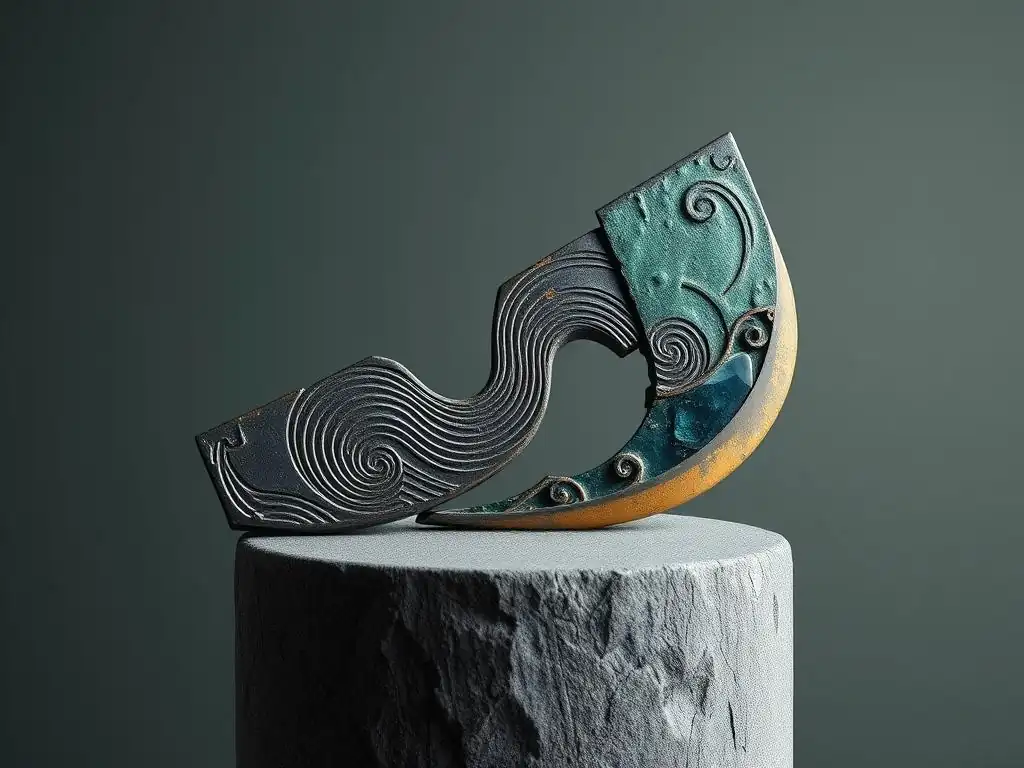
Transmission of Minoan Religious Ideas to Mycenae
The transmission of Minoan religious ideas to Mycenaean Greece was a complex process, driven by centuries of intense cultural interaction, trade, and occasional political dominance. During the early Mycenaean period (c. 1600-1450 BCE), often referred to as the "Shaft Grave era," Mycenaean elites exhibited a strong fascination with Minoan luxury goods and artistic styles, absorbing many elements of Minoan culture, including religious iconography. The Labrys, as a highly visible and potent Minoan religious symbol, was naturally among these adopted elements.
It is plausible that the initial adoption of the Labrys by the Mycenaeans was largely imitative, reflecting a desire to emulate the sophisticated and powerful Minoan civilization. Minoan artisans may have been present on the mainland, either voluntarily or as captives, contributing directly to the spread of Minoan artistic and religious motifs. This direct exposure facilitated the transfer of the Labrys, initially likely with its core Minoan sacred associations, laying the groundwork for the development of "Mycenaean double axe symbolism."
Cultural Exchange and the Labrys: Identifying Minoan Elements
The cultural exchange between Minoan Crete and Mycenaean Greece is evident in numerous shared artistic motifs and ritual practices, where the Labrys often serves as a key indicator. Mycenaean frescoes, seals, and gold rings frequently employ Minoanizing styles and themes, including depictions of the Labrys. For instance, the aforementioned gold signet ring from Tiryns depicting a goddess with a Labrys bears striking stylistic resemblances to Minoan glyptic art, suggesting a direct borrowing or influence in its religious iconography.
However, the Mycenaeans rarely copied Minoan religious scenes wholesale. Instead, they often integrated the Labrys into their own artistic and religious frameworks, sometimes stripping it of its broader Minoan narrative context while retaining its core symbolic power. This selective adoption suggests a process of appropriation and adaptation, where the "Mycenaean double axe symbolism" became part of a new visual and religious lexicon, yet one that clearly acknowledged its Minoan heritage.
The Role of Trade and Contact in Spreading the Symbol
Maritime trade and extensive cultural contact were pivotal in the dissemination of the Labrys from Minoan Crete to Mycenaean Greece. Minoan influence reached the mainland through the exchange of luxury goods, raw materials, and finished products, including cultic objects and artifacts adorned with religious symbols. Mycenaean merchants and elites, engaging in trade with Minoan centers, would have encountered the Labrys frequently, recognizing its pervasive religious and cultural significance.
Furthermore, the movement of people, including artisans, priests, and possibly even elite intermarriages, facilitated the direct transfer of ideas and practices. The flourishing trade routes across the Aegean Sea, connecting major Minoan ports like Kommos and Zakros with Mycenaean strongholds such as Mycenae and Pylos, provided ample opportunities for the "Mycenaean double axe symbolism" to take root. This continuous interaction ensured that the double axe was not merely an imported object but a symbol whose meaning could be understood, adapted, and integrated into the evolving Mycenaean cultural fabric.
Independent Meanings of the Double Axe in Mycenaean Culture: Exploring Alternative Interpretations
Warrior Symbolism: The Labrys as a Weapon or Emblem of Power
While the Labrys in Minoan contexts is primarily religious, its appearance in Mycenaean Greece, a society renowned for its martial prowess, suggests a potential reinterpretation as a symbol of warrior status or military might. Unlike the often ceremonial or miniature Minoan Labrys, some Mycenaean bronze examples are robust and clearly functional as battle-axes, found in contexts associated with elite warriors or their burials. This practical form aligns with the Mycenaean emphasis on warfare and the celebration of heroic deeds.
The presence of Labrys axes alongside other weapons like swords and daggers in elite Mycenaean graves, such as those in Grave Circle A at Mycenae, further supports an interpretation of the double axe as an emblem of power or a warrior's attribute. It may have symbolized the deceased's prowess in battle, their authority, or their capacity for decisive action. This potential "Mycenaean double axe symbolism" as a martial emblem diverges significantly from its primary Minoan religious function, reflecting the distinct societal values of the mainland.
Beyond its potential warrior associations, the Labrys may have acquired meaning as a symbol of royal or palatial authority within the highly centralized Mycenaean kingdoms. Its presence in palatial workshops at Pylos, or as elite grave goods at Mycenae, suggests a connection to the ruling class. The wanax, the Mycenaean king, held significant religious and military power, and a potent symbol like the Labrys could have served to visually reinforce his multifaceted authority.
While no direct textual evidence explicitly links the Labrys to Mycenaean kingship, its consistent appearance in elite and palatial contexts implies a strong connection to the exercise of power. It could have been used in royal ceremonies, processions, or as a decorative motif in official residences, subtly conveying the ruler's divine mandate or unchallengeable dominion. This interpretation of "Mycenaean double axe symbolism" as a marker of kingship would distinguish it from the broader religious associations found in Minoan Crete.
Mycenaean Religious Practices and the Labrys: Libation Rituals and Funerary Rites
Even if influenced by Minoan religion, the Labrys likely found specific, independent roles within Mycenaean religious practices, particularly in libation rituals and funerary rites. Votive double axes, often made of lead or bronze, have been found in Mycenaean cultic areas, such as the Cult Centre at Mycenae, suggesting their use as offerings or as implements in sacred ceremonies. These finds indicate that the Labrys was integrated into the Mycenaean pantheon and ritual calendar, perhaps associated with specific deities or cultic acts distinct from Minoan bull sacrifice.
In funerary contexts, the inclusion of Labrys axes in elite burials points to their significance in beliefs about the afterlife or the cult of the dead. They might have served as symbolic protectors, ensuring the deceased's safe passage, or as a link to ancestral power. While the specific meaning of "Mycenaean double axe symbolism" in these rites remains debated, its consistent presence suggests an adaptation to indigenous Mycenaean beliefs and eschatology, moving beyond a mere replication of Minoan practices.
Comparing and Contrasting Minoan and Mycenaean Double Axe Symbolism
Key Differences in the Use and Representation of the Labrys
One of the most striking differences between Minoan and Mycenaean double axe symbolism lies in its pervasiveness and primary context. In Minoan Crete, the Labrys is ubiquitous, appearing in virtually all sacred spaces, from grand palaces to modest peak sanctuaries, and is deeply embedded in depictions of bull sacrifice, processions, and female deities. It often serves as a central, narrative element in Minoan art, signifying divine presence or a consecrated space.
In contrast, while present, the Labrys is notably less pervasive in Mycenaean contexts. Its appearances are often more restricted to elite burials, palatial settings, and certain cultic areas, and it rarely forms the central focus of complex narrative scenes in Mycenaean art. The absence of widespread depictions of bull-leaping rituals involving the Labrys in Mycenaean art, a hallmark of Minoan iconography, further highlights a divergence in its primary ritual function and the specific "Mycenaean double axe symbolism."
Similarities in the Symbolic Associations of the Double Axe
Despite the differences, significant similarities exist in the symbolic associations of the double axe across both cultures, suggesting a shared understanding of its fundamental power. In both Minoan and Mycenaean contexts, the Labrys is consistently found in elite and sacred settings, indicating its strong connection to authority, divinity, and high status. Whether associated with a Minoan goddess or a Mycenaean warrior-king, it consistently functions as a potent emblem of power.
Furthermore, its use as a votive offering in both cultures underscores its shared role in religious supplication or dedication. Both Minoans and Mycenaeans crafted miniature Labrys axes for ritual purposes, suggesting a common belief in its efficacy as a sacred object. This continuity in its general symbolic weight, even if the specific deities or rituals differed, points to a successful cultural transmission of the core "Mycenaean double axe symbolism" from its Minoan antecedents.
Analyzing the Nuances: Representations in Frescoes and Pottery
A close examination of fresco and pottery representations reveals subtle but important nuances in the "Mycenaean double axe symbolism" compared to its Minoan origins. While Minoan frescoes often depict the Labrys as an integral part of complex religious scenes, sometimes held by a goddess or erected in a sacred precinct, Mycenaean frescoes are generally less explicit in their Labrys depictions. When it appears, it might be an isolated motif or an attribute of a figure, rather than a focal point of a grand ritual narrative.
On pottery, the Labrys is a more common motif in Minoan ceramics, often painted on ritual vessels or storage jars, reflecting its widespread religious integration. In Mycenaean pottery, while geometric motifs and animal figures are prevalent, the Labrys is a less frequent decorative element, appearing primarily on high-status or cultic vessels. This difference in artistic application suggests that while the Mycenaean double axe symbolism retained its sacred aura, its visual integration into daily life and broader artistic narratives was less pervasive than in Minoan Crete.
The Double Axe and Mycenaean Religious Syncretism
Blending Minoan and Mycenaean Beliefs
The "Mycenaean double axe symbolism" serves as a prime example of religious syncretism, where elements from Minoan religion were adopted and blended with indigenous Mycenaean beliefs and practices. The Mycenaeans did not simply replicate Minoan cults; instead, they selectively integrated Minoan iconography and possibly some ritual forms into their existing religious framework, which was characterized by a distinct pantheon of gods (precursors to the Olympian deities) and a strong emphasis on ancestor worship and heroic cults.
This blending process meant that the Labrys, while retaining its aura of sacred power from its Minoan origins, likely acquired new layers of meaning within the Mycenaean context. It might have been associated with a Mycenaean deity, perhaps a warrior god or a chthonic deity, or repurposed for specific Mycenaean rituals not directly analogous to Minoan ones. The resulting "Mycenaean double axe symbolism" was therefore a hybrid, reflecting the dynamic interaction between two distinct but interconnected Bronze Age cultures.
The Evolution of the Labrys Symbol in Mycenaean Religion
The evolution of the Labrys symbol in Mycenaean religion can be traced through its changing contexts and associations over time. In the early Mycenaean period (e.g., Shaft Graves), its presence as a prestigious grave good suggests an initial emphasis on its status-conferring and possibly apotropaic qualities, heavily influenced by Minoan luxury and ritual. As Mycenaean power consolidated, the symbol may have gradually shifted to encompass aspects of royal authority and warrior identity, reflecting the emerging socio-political structure.
By the later palatial period, the "Mycenaean double axe symbolism" appears to have been integrated into established cult centers, indicating its secure place within Mycenaean religious practice, even if its specific function might have diverged from its Minoan origins. This evolution from an imported, high-status symbol to an integrated element of local cult reflects the Mycenaeans' ability to adapt and redefine foreign religious elements to suit their own cultural and theological needs.
Interpretations of Religious Syncretism
Interpretations of religious syncretism in the Mycenaean world emphasize the agency of the Mycenaeans in shaping their own religious identity. Scholars suggest that the adoption of symbols like the Labrys was not passive imitation but an active process of cultural negotiation. The Mycenaeans likely recognized the power and prestige associated with the Minoan Labrys and chose to incorporate it, perhaps to enhance their own religious legitimacy or to connect with the perceived divine favor of the Minoans.
This syncretic approach allowed the Mycenaeans to selectively borrow elements that resonated with their own beliefs, while discarding others. The "Mycenaean double axe symbolism" thus represents a fascinating case study of how a powerful religious emblem can transcend its original cultural context, adapt to new societal structures, and acquire new, complex meanings within a different religious system, demonstrating the fluidity and dynamism of ancient belief systems.
Conclusion: The Legacy of the Double Axe in Mycenaean Culture
Summarizing the Minoan Influence and Independent Mycenaean Interpretations
The symbolism of the double axe (Labrys) in Mycenaean contexts is a compelling testament to the intricate cultural interactions of the Bronze Age Aegean. While undeniably rooted in its profound Minoan religious significance, the "Mycenaean double axe symbolism" evolved to encompass distinct interpretations unique to the mainland's warrior-centric and palatial society. Minoan influence is evident in its initial adoption as a prestigious, sacred object, appearing in elite burials and cultic settings, often with stylistic parallels to Cretan prototypes.
However, the Mycenaeans appear to have recontextualized the Labrys, imbuing it with independent meanings related to warrior prowess, royal authority, and specific indigenous religious practices, such as funerary rites and localized cults. This dual nature—partially inherited, partially re-imagined—highlights the dynamic process of cultural appropriation, where a foreign symbol is not merely copied but adapted and integrated into a new cultural fabric, reflecting the distinct values and beliefs of the adopting society.
The Enduring Significance of the Mycenaean Double Axe Symbolism
The enduring significance of the "Mycenaean double axe symbolism" lies in its ability to illuminate the complex interplay between cultural transmission and indigenous development in the Bronze Age. As a prominent archaeological motif, the Labrys serves as a tangible link between Minoan Crete and Mycenaean Greece, providing invaluable insights into their shared spiritual landscape and the ways in which powerful symbols transcend geographical and cultural boundaries. Its analysis offers a nuanced understanding of Mycenaean religion, demonstrating its capacity for syncretism and its unique identity.
Furthermore, the Labrys continues to be a subject of intense scholarly debate, underscoring the richness and complexity of Mycenaean religious thought. Its multifaceted interpretations—as a religious emblem, a mark of power, or a ritual implement—reveal the sophistication with which ancient societies imbued objects with layers of meaning. The "Mycenaean double axe symbolism" remains a cornerstone for understanding the religious and political ideologies that shaped one of the most powerful civilizations of the ancient world.
Future Research Directions: Iconographic Analysis and Comparative Religion
Future research into the "Mycenaean double axe symbolism" could benefit significantly from more exhaustive iconographic analysis, particularly focusing on the subtle stylistic differences and contextual associations of the Labrys across various Mycenaean sites and artifact types. A comprehensive database of all Labrys finds, meticulously cataloging their material, size, and archaeological context, could reveal more precise patterns of distribution and use, potentially differentiating between cultic, funerary, and administrative functions.
Moreover, comparative religious studies, extending beyond the Minoan-Mycenaean dichotomy to include other Bronze Age cultures in the Near East and Anatolia where double axes appear, could provide broader insights into the universal or regionally specific meanings of this powerful symbol. Such research, leveraging new archaeological discoveries and advanced analytical techniques, promises to further unravel the enigmatic layers of the "Mycenaean double axe symbolism" and its profound legacy.
Frequently Asked Questions
What is the Labrys, and why is it important in understanding Mycenaean culture?
The Labrys is a double axe symbol, often found in Mycenaean and Minoan contexts. It's important because its presence and usage can offer insights into their religious beliefs, social structures, and cultural interactions.
Did the Mycenaeans adopt the double axe symbol directly from the Minoans, or did they develop their own interpretation?
While Minoan influence is undeniable, the exact nature of the Mycenaean adoption remains debated. Some scholars argue for a direct transfer, while others suggest the Mycenaeans assigned their unique significance to the symbol.
What are some of the proposed interpretations of the Labrys symbol in Mycenaean archaeology?
Interpretations range from a religious symbol representing a deity or power, to a secular emblem of authority or military strength. Its meaning likely varied depending on the context of its usage.
Where are examples of the Labrys found in Mycenaean archaeological sites?
The Labrys appears on pottery, frescoes, and even as miniature votive offerings at sites like Mycenae and Pylos. Its presence is widespread, suggesting its significance within Mycenaean society.
How does ArchaeologyHub.org help researchers and enthusiasts learn more about the Labrys and Mycenaean civilization?
ArchaeologyHub.org provides detailed artifact profiles, historical timelines, and interpretive analyses related to Mycenaean culture, including the Labrys. This helps users understand the symbol's context and possible meanings within the broader archaeological landscape.
Final Reflection: Echoes of Power and Meaning
The exploration of the Mycenaean double axe, or Labrys, reveals more than just an ancient tool or weapon; it unveils a complex tapestry of cultural exchange and independent symbolism that continues to resonate in modern interpretations of power, matriarchy, and societal structure. The journey through its potential Minoan origins and its distinct Mycenaean applications highlights the enduring human need to imbue objects with meaning, transforming them into potent symbols that transcend their practical function.
The Labrys, whether borrowed or independently conceived, has undeniably shaped our understanding of the Bronze Age Aegean. Its enduring presence in art, architecture, and religious contexts speaks volumes about its significance, reminding us that symbols, even those originating millennia ago, can continue to inspire debate and fuel our imagination. Symbols are the language of the soul; they speak to us in ways that words cannot.
This quote perfectly encapsulates the power of the double axe to communicate across time, inviting us to delve deeper into the beliefs and values of those who wielded it, both literally and figuratively.
As we conclude this exploration of Mycenaean double axe symbolism, consider the power of symbols in your own life. What objects, images, or ideas hold particular significance for you, and what stories do they tell? Let the Labrys serve as a reminder that even the simplest form can carry profound meaning, and that by understanding the symbols around us, we can gain a deeper appreciation for the rich tapestry of human culture and experience.
Unveil the Mysteries: Start Your Archaeological Journey Now!
Thank you for exploring the captivating world of the double axe and its place in Mycenaean culture. Now that you’ve uncovered its potential meanings, it’s time to take your understanding a step further!
Here are a few ways you can continue your exploration:
- Delve Deeper: Visit your local library or online databases to research specific Mycenaean sites where labrys artifacts have been discovered and analyze their context.
- Share Your Insights: Spark a conversation with fellow archaeology enthusiasts! Discuss the most compelling argument for the labrys' origin and meaning in the comments below.
- Become an Explorer: Plan a virtual (or real!) trip to a museum with a Mycenaean collection and search for examples of the double axe.
What fresh perspective will you bring to the ongoing debate about the Labrys?