
Lithic Technology of the Postclassic Maya: Tools, Weapons, and Production

Welcome to ArchaeologyHub.org, your gateway to the past!
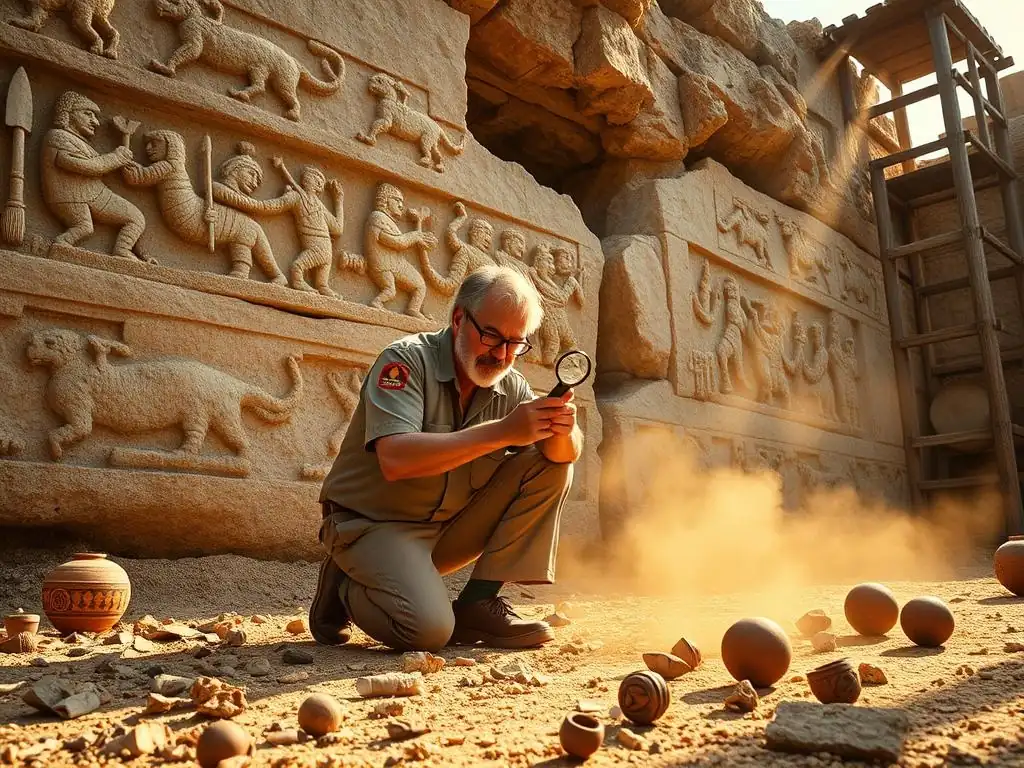
Dive into the fascinating world of archaeology and uncover the secrets buried beneath our feet. Ever wondered how ancient civilizations crafted the tools of their survival and power? Explore our expansive digital encyclopedia, starting with an in-depth look at Postclassic Maya Lithic Technology. Discover the intricate details of their tools, weapons, and production methods, and unlock a deeper understanding of this captivating culture. What can these stone remnants tell us about their daily lives, their wars, and their beliefs? Let's begin the exploration...
- Postclassic Maya Lithic Technology: Tools, Weapons, and Production
- Introduction to Postclassic Maya Lithic Technology
- Raw Materials Used in Postclassic Maya Lithic Production
- Tool Types and Their Functions in the Postclassic Period
- Lithic Production Techniques of the Postclassic Maya
- Lithic Technology and Social Organization
- Case Studies: Lithic Assemblages from Postclassic Maya Sites
- The Decline of Lithic Technology and the Introduction of Metal Tools
- Conclusion: Understanding Postclassic Maya Lithic Technology
-
Frequently Asked Questions
- What types of lithic tools were commonly used by the Postclassic Maya?
- How did the lithic technology of the Postclassic Maya differ from that of earlier periods?
- What raw materials were primarily used in Postclassic Maya lithic production?
- What role did lithic tools play in the Postclassic Maya economy and society?
- Where can I find more information about Postclassic Maya lithic technology on ArchaeologyHub.org?
- Final Reflection: Echoes in Stone, Lessons in Resilience
- Unearth Your Inner Archaeologist!
Postclassic Maya Lithic Technology: Tools, Weapons, and Production
Introduction to Postclassic Maya Lithic Technology
The Significance of Stone Tools in Postclassic Maya Society
Stone tools were the bedrock of daily life and economic activity for the Postclassic Maya, enduring as essential implements even as their civilization adapted to new sociopolitical landscapes from approximately AD 900 to 1500. Far from being a period of decline in technological ingenuity, the Postclassic saw a continuation and refinement of Postclassic Maya lithic technology, crucial for subsistence, craft production, and warfare. These tools underpinned fundamental activities such as agriculture, allowing for the cultivation of staple crops like maize, and facilitated the processing of food, construction of dwellings, and production of various goods.
The pervasive importance of lithic implements extended across all social strata, reflecting both the practical needs of the populace and the specialized demands of craftspeople. Whether it was the robust chert axes used for forest clearance or the razor-sharp obsidian blades for intricate carving and ritual bloodletting, Postclassic Maya lithic technology was indispensable. The resourcefulness demonstrated in adapting locally available materials, alongside the sophisticated networks for acquiring exotic stones, highlights the enduring ingenuity and economic vitality of Postclassic Maya communities.
Context: Postclassic Maya Civilization and Its Material Culture
The Postclassic period, generally spanning from AD 900 to 1500, witnessed significant shifts in Maya civilization, including the decline of many Classic period centers in the southern lowlands and the rise of new power hubs in the northern Yucatán, such as Mayapán, and resilient centers like Lamanai in Belize. Despite these transformations, material culture, particularly Postclassic Maya lithic technology, remained a vital window into their adaptation, continuity, and innovation. The material record showcases a complex society that maintained extensive trade networks and sustained robust craft economies.
Lithic technology serves as a direct reflection of the economic systems, social structures, and even ritual practices of the Postclassic Maya. The types of raw materials utilized, the methods of production, and the distribution of finished tools all provide insights into regional economic integration, the organization of specialized labor, and the social stratification within communities. For instance, the widespread distribution of obsidian from distant Guatemalan sources across the Yucatán Peninsula underscores the vitality of long-distance trade routes that persisted throughout the Postclassic era.
Raw Materials Used in Postclassic Maya Lithic Production
Sourcing Chert for Maya Stone Tools
Chert, a fine-grained sedimentary rock, was the most widely used raw material for Postclassic Maya lithic technology due to its widespread availability and excellent flaking properties. Throughout the Maya lowlands, numerous chert sources were exploited, with notable concentrations in northern Belize, such as the workshops at Colha and Pulltrouser Swamp, which continued to be major production centers into the Postclassic period. These sources provided a consistent supply of material for everyday tools.
Different qualities of chert were utilized for specific purposes. High-quality, homogeneous chert was often reserved for bifacial tools requiring durability and sharp edges, such as large axes and specialized chopping tools. Lower-grade, more nodular chert might be used for expedient flake tools or less demanding implements. Archaeological evidence from sites like Mayapán indicates a reliance on local chert varieties for much of the domestic toolkit, underscoring the practical approach to resource utilization in Postclassic communities.
Obsidian Procurement and Trade Networks
Obsidian, a volcanic glass, was highly prized for its extremely sharp edges, making it ideal for cutting, slicing, and ritual bloodletting. Unlike chert, obsidian sources are geographically limited to volcanic highlands, primarily in Guatemala (e.g., El Chayal, Ixtepeque, San Martín Jilotepeque) and central Mexico (e.g., Pachuca). Consequently, its presence at Postclassic Maya sites, often hundreds of kilometers from its origin, is a strong indicator of extensive and resilient long-distance trade networks.
Analysis of obsidian artifacts using techniques like X-ray fluorescence (XRF) reveals the specific geological source, allowing archaeologists to reconstruct trade routes and economic relationships. For example, Postclassic sites in the northern Yucatán, including Mayapán, consistently show a high proportion of obsidian from Ixtepeque and El Chayal, sometimes accounting for 80-90% of all recovered cutting tools. This demonstrates the critical role of obsidian in the Postclassic economy and the sophisticated logistical systems in place to transport this valuable material.
Other Lithic Resources: Quartz, Basalt, Limestone
Beyond chert and obsidian, the Postclassic Maya utilized a variety of other lithic resources, each selected for its specific properties and local availability. Quartz, though less common for primary cutting tools due to its irregular fracture, was sometimes used for small projectile points or expedient flake tools. Its localized availability made it a pragmatic choice in areas where higher-quality chert was scarce.
Basalt, a dense igneous rock, was exceptionally important for grinding implements, primarily manos and metates, essential for processing maize. Its abrasive texture made it highly effective for pulverizing grain. Limestone, abundant throughout the Maya lowlands, was predominantly used for construction materials, but also for some ground stone tools or as a raw material for expedient chopping tools when other options were limited. The presence of basalt metates at sites like Mayapán, often weighing several kilograms, attests to their critical role in daily food preparation.
Tool Types and Their Functions in the Postclassic Period
Projectile Points and Hunting Implements
Types of Arrowheads and Spear Points
Postclassic Maya lithic technology for hunting saw a notable shift towards smaller, more efficient projectile points, reflecting the increasing prevalence of the bow and arrow over the atlatl (spear-thrower). Arrowheads were typically small, triangular forms, often unstemmed or with short, contracting stems, ranging in length from 2 to 5 centimeters. These were commonly made from either high-quality chert or, for a sharper and more precise edge, obsidian.
Larger spear points, while still present, became less common compared to earlier periods. These could be up to 10-15 centimeters in length, often bifacially flaked from chert. The transition to smaller points suggests an adaptation to hunting smaller game more efficiently, or perhaps a tactical preference for ranged weaponry in warfare. The craftsmanship of these points, particularly the delicate flaking on obsidian specimens, highlights a continued mastery of bifacial reduction.
Hunting Techniques and Lithic Weaponry
Postclassic Maya communities relied on a diverse range of hunted animals, including deer, peccary, various birds, and smaller mammals, to supplement their agricultural diet. The adoption of the bow and arrow, armed with these lithic projectile points, allowed for more effective hunting from a distance and in denser forest environments. Hunters would meticulously craft the wooden shafts and fletching to ensure accuracy, with the stone point providing the crucial piercing capability.
While the bow and arrow gained prominence, some evidence suggests that the atlatl might have persisted in certain regions or for specific hunting strategies, particularly for larger game or in specialized contexts. The hunting implements of Postclassic Maya lithic technology were not merely tools but integral components of a subsistence strategy that balanced agriculture with the exploitation of wild resources, demonstrating a sophisticated understanding of their environment.
Agricultural Tools: Celts and Ground Stone Implements
Maize Cultivation and Lithic Technology
Maize was the dietary staple of the Postclassic Maya, and its cultivation was inextricably linked to Postclassic Maya lithic technology. Celts, or stone axes, were paramount for clearing land, particularly for swidden (slash-and-burn) agriculture, which required felling trees and clearing undergrowth. These celts were typically ground and polished from durable materials like chert or basalt, ranging in length from 15 to 25 centimeters, and were hafted onto wooden handles.
The efficiency of these celts, often exhibiting a highly polished bit (the cutting edge), allowed for the preparation of fields for planting. Beyond initial clearance, lithic tools like hoes, though less commonly preserved archaeologically, would have been used for tilling the soil and managing weeds. The consistent presence of these robust tools in archaeological assemblages underscores the continuous investment in agricultural productivity throughout the Postclassic period.
Other Agricultural Practices and Tool Use
Beyond maize, the Postclassic Maya cultivated a variety of other crops, including beans, squash, chili peppers, and various root crops. Postclassic Maya lithic technology supported these diversified agricultural practices. While not always easily identifiable, specialized digging sticks, possibly tipped with sharpened stone points or blades, would have been used for planting and harvesting.
In regions employing more intensive agricultural techniques, such as raised fields (chinampas) or terracing, specific lithic tools might have been employed for maintaining these complex systems. The overall toolkit for agriculture reflects a deep engagement with the landscape and a reliance on durable stone implements to sustain a large population, adapting to local environmental conditions and supporting varied farming methods.
Craft Production and Specialized Lithic Tools
Tools for Woodworking and Carving
Postclassic Maya lithic technology also provided the essential tools for various crafts, including woodworking and carving. Adzes, similar to axes but with a blade oriented perpendicular to the handle, were used for shaping wood, crucial for canoe construction, house building, and the creation of wooden effigies or furniture. Chisels, often made from chert or obsidian, allowed for more precise cuts and detailing.
Small, sharp obsidian blades, often prismatic in form, were particularly valuable for fine carving on wood, bone, shell, and even for incising designs on pottery. These tools allowed for the creation of intricate designs and functional wooden objects, demonstrating a high degree of craftsmanship. The durability and sharp edges of these lithic tools made them indispensable for Postclassic Maya artisans.
Lithic Tools in Pottery Manufacture
The production of pottery, a ubiquitous element of Postclassic Maya material culture, also relied on specific Postclassic Maya lithic technology. Scrapers, typically made from chert flakes or even repurposed pottery sherds, were used to smooth the surfaces of unfired clay vessels, removing imperfections and preparing them for further decoration or firing. This step was crucial for achieving a uniform and aesthetically pleasing finish.
Burnishing stones, often smooth, water-worn pebbles or ground pieces of fine-grained stone, were employed to compress the clay particles on the surface of a vessel before firing. This process created a polished, often lustrous, finish and reduced the porosity of the ceramic. These specialized lithic tools, though simple in form, were vital for the quality and finish of Postclassic Maya ceramics.
Domestic Tools: Knives, Scrapers, and Grinding Stones
Food Preparation and Processing with Lithic Tools
In every Postclassic Maya household, Postclassic Maya lithic technology played a central role in daily food preparation and processing. Knives, primarily fashioned from chert flakes or obsidian blades, were used for a myriad of tasks, including cutting meat, slicing vegetables, and preparing other foodstuffs. Their sharp edges were essential for efficient and hygienic meal preparation.
Scrapers, often made from retouched chert flakes, had diverse applications, from cleaning hides for clothing or shelter to processing plant fibers for cordage or textiles. But perhaps the most fundamental domestic lithic tools were the grinding stones: manos (hand stones) and metates (grinding slabs). These heavy, often basalt, implements were indispensable for grinding dried maize kernels into masa, the dough used for tortillas, which formed the caloric backbone of the Maya diet. A typical metate could measure between 30 and 60 centimeters in length and several kilograms in weight.
Everyday Uses of Stone Implements
Beyond food preparation, the versatility of Postclassic Maya lithic technology meant stone implements were used for a wide array of everyday tasks. From opening gourds and cracking nuts to processing medicinal plants and preparing pigments, the ubiquitous presence of knives, scrapers, and smaller flakes in domestic archaeological contexts underscores their fundamental role.
These tools were often expediently produced from readily available chert, reflecting a pragmatic approach to toolmaking for common household needs. The continuous wear patterns observed on many of these artifacts provide direct evidence of their constant use in the mundane yet vital activities that sustained Postclassic Maya families.
Lithic Production Techniques of the Postclassic Maya
Core and Flake Technology
Methods of Core Preparation
Core and flake technology was a foundational aspect of Postclassic Maya lithic technology. The process began with the careful preparation of a lithic core—a block of raw material, often chert or obsidian. This involved shaping the core to create a suitable striking platform, a flat or slightly convex surface from which flakes could be detached. This initial shaping was typically achieved through percussion flaking, using a hammerstone to strike the core.
For prismatic blade production, especially with obsidian, polyhedral cores were meticulously prepared. These cores were often cylindrical or conical, designed to allow for the systematic removal of long, slender, parallel-sided blades. This highly specialized technique required significant skill and precision to maintain the core's geometry and ensure a continuous supply of uniform blades.
Flake Tool Production Processes
Once the core was prepared, flakes—thin, sharp pieces of stone—were detached through either percussion (striking the core with a hammerstone or billet) or pressure flaking (applying steady pressure with a pointed tool, such as an antler tine). These flakes, rather than the core itself, were often the desired end product for many tools due to their naturally sharp edges.
Many flakes were used as expedient tools with little or no modification. However, for specific functions, flakes underwent secondary modification, known as retouching. This involved removing smaller flakes from the edges to create specific working edges, such as those found on scrapers, knives, or small projectile points. The efficiency of flake production allowed for the rapid creation of numerous versatile tools from a single core.
Ground Stone Technology
Shaping and Polishing Techniques
Ground stone technology represents a distinct approach within Postclassic Maya lithic technology, typically used for tools requiring durability, weight, and a smooth, strong edge, such as axes, adzes, and grinding stones. The process was multi-staged and labor-intensive. It began with rough shaping, often through pecking (repeatedly striking the stone with another hard stone) or primary flaking, to achieve the general form of the tool.
Following this initial shaping, the tool was then ground against an abrasive surface, often a larger stone slab, using water and sand as an abrasive medium. This process smoothed the rough surfaces and refined the shape. Finally, polishing with finer abrasives achieved a smooth, often lustrous surface, which not only improved the aesthetic appeal but also enhanced the tool's performance and longevity by reducing friction.
The Craft of Ground Stone Tool Production
The production of ground stone tools, particularly large basalt metates or finely polished chert celts, required significant time, effort, and specialized knowledge. Unlike flaked tools that could be produced relatively quickly, a large metate could take many hours, if not days, of dedicated labor to complete. This intensive production often suggests specialized workshops or craftspeople focusing on these durable implements.
Evidence from Postclassic sites like Mayapán indicates the presence of grinding stone fragments in various stages of production, suggesting local manufacture alongside the acquisition of finished goods. The enduring presence of ground stone tools, even into the colonial period, underscores their fundamental importance in daily life, especially for food processing, a core aspect of Postclassic Maya lithic technology.
Bifacial Reduction Techniques
Creating Projectile Points and Specialized Tools
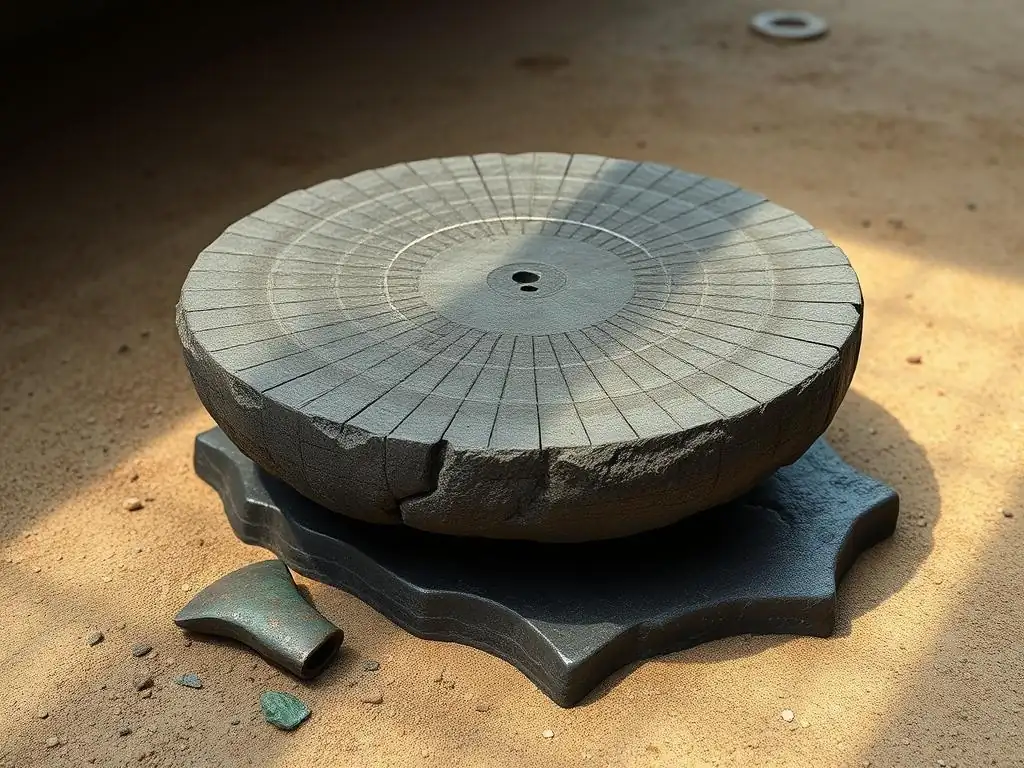
Bifacial reduction was a sophisticated aspect of Postclassic Maya lithic technology, involving the removal of flakes from both faces of a stone blank to create a symmetrical, often thin, tool with two working edges. This technique was paramount for crafting projectile points (arrowheads and spear points), large bifacial knives, and specialized ceremonial objects known as eccentrics.
The process typically began with percussion flaking to thin the blank and establish the general outline. Subsequent stages involved more controlled percussion and, crucially, pressure flaking, where precise force was applied with a pointed tool (e.g., antler tines, bone) to detach small, controlled flakes. This allowed for the creation of sharp, durable edges and intricate shapes.
The Art of Bifacial Tool Making
The mastery of bifacial tool making represented a pinnacle of lithic craftsmanship among the Postclassic Maya. The ability to thin a stone blank to just a few millimeters while maintaining structural integrity and creating razor-sharp edges was a testament to the knapper's skill. Examples of finely crafted bifacial tools, such as the elaborate obsidian eccentrics found at sites like Mayapán, demonstrate not only utilitarian function but also significant aesthetic and symbolic value.
These eccentrics, often depicting zoomorphic or anthropomorphic forms, were likely used in ritual contexts, highlighting that Postclassic Maya lithic technology extended beyond mere pragmatism into the realm of art and spirituality. The intricate flaking patterns on these artifacts showcase the highest level of control and precision achievable with stone.
The Role of Craft Specialists
The complexity and scale of Postclassic Maya lithic technology suggest the presence of craft specialists. Evidence from archaeological sites, particularly workshop areas, points to dedicated production centers for specific tool types. For instance, at Colha in northern Belize, specialized workshops continued to produce vast quantities of chert tools, including celts and bifacial choppers, well into the Postclassic period, with estimates suggesting hundreds of thousands of tools produced annually.
Similarly, the highly standardized production of prismatic obsidian blades, requiring significant skill and control, indicates specialized artisans. These specialists were likely organized in ways that facilitated efficient production and distribution, contributing to a more complex division of labor within Postclassic Maya society. Their existence implies a demand for consistent quality and quantity of tools, supporting a thriving economy.
Distribution and Exchange of Lithic Resources
The distribution of lithic resources, particularly exotic materials like obsidian, reveals the extensive and intricate trade networks that characterized the Postclassic Maya world. Obsidian, sourced from distant volcanoes in the Guatemalan Highlands (e.g., El Chayal, Ixtepeque) and even central Mexico (e.g., Pachuca), traveled hundreds of kilometers to reach sites across the Yucatán Peninsula and Belize.
This widespread distribution suggests various mechanisms of exchange, including established market systems, elite-controlled tribute or gift exchange, and possibly even direct procurement expeditions. The presence of Ixtepeque obsidian at nearly all major Postclassic sites in the northern Yucatán, alongside smaller amounts of El Chayal obsidian, illustrates a robust economic integration that sustained the flow of essential and valuable lithic materials across the region, demonstrating the reach of Postclassic Maya lithic technology beyond local production.
While basic Postclassic Maya lithic technology was accessible and essential for all social strata, certain types of lithic artifacts served as indicators of social status, wealth, or ritual authority. The presence of exotic obsidian, especially from distant sources, in elite burials or residential compounds, often in the form of finely crafted blades or eccentrics, suggested access to prestigious trade networks and valuable goods.
Beyond the raw material, the level of craftsmanship also played a role. Exquisitely flaked bifacial knives or elaborate obsidian eccentrics, which required exceptional skill and time to produce, were likely restricted to elites or used in specific ritual contexts, signifying power, prestige, and perhaps connections to supernatural realms. These special lithic artifacts underscore the dual nature of Postclassic Maya lithic technology: utilitarian for the masses and symbolic for the powerful.
Case Studies: Lithic Assemblages from Postclassic Maya Sites
Analysis of Lithic Artifacts from Mayapán
Mayapán, a prominent Postclassic capital in the northern Yucatán, provides a rich archaeological record for understanding Postclassic Maya lithic technology. Its lithic assemblage is characterized by a significant reliance on both locally available chert and abundant imported obsidian. Studies have shown that approximately 80-90% of cutting tools at Mayapán were obsidian blades, primarily sourced from Ixtepeque and El Chayal in Guatemala, underscoring the site's participation in extensive trade networks.
Evidence from Mayapán indicates a mixed pattern of lithic production. While some chert tools might have been produced at the household level for expedient use, there is also clear evidence for specialized workshops, particularly for obsidian blade production. The high volume of obsidian waste flakes in certain areas points to dedicated knapping activities, supporting the idea of specialized artisans within the city's economic structure.
Examination of Lithic Technology at Lamanai
Lamanai, a long-lived Maya site in Belize with a substantial Postclassic occupation, offers another valuable case study for Postclassic Maya lithic technology. Unlike Mayapán, Lamanai's lithic profile shows a stronger reliance on local chert resources, which were readily available in the immediate vicinity. This is reflected in the dominance of chert tools for everyday functions, including large bifacial choppers and various flake tools.
While imported obsidian was present at Lamanai, it was generally less abundant than at Mayapán, suggesting different trade priorities or access routes. The site's lithic assemblage reflects a mixed economy that combined intensive agriculture with the exploitation of riverine and forest resources, with stone tools adapted for these specific needs. The continuity in chert use at Lamanai demonstrates a pragmatic and consistent approach to tool production throughout the Postclassic period.
Comparative Studies of Lithic Assemblages
Comparative studies of Postclassic Maya lithic technology across different sites reveal fascinating regional variations in resource availability, trade patterns, and economic activities. For instance, comparing the lithic toolkit of a coastal site like Tulum with an inland agricultural center like Mayapán highlights distinct adaptations. Coastal sites might exhibit a higher proportion of tools related to fishing, shell working, or canoe maintenance, such as specialized drills or adzes.
Conversely, inland agricultural centers would emphasize farming implements like celts, hoes, and abundant grinding stones. These comparative analyses underscore the diversity and adaptability of Postclassic Maya communities, each tailoring their lithic technology to their specific environmental and economic contexts, while still participating in broader regional exchange networks for essential materials like obsidian.
The Decline of Lithic Technology and the Introduction of Metal Tools
The Impact of European Contact on Maya Lithic Industries
The arrival of Europeans in the early 16th century marked a pivotal turning point for Postclassic Maya lithic technology. The introduction of iron and steel tools by the Spanish, possessing superior hardness, durability, and edge retention compared to stone, gradually began to displace traditional Maya lithic industries. Tasks that previously required meticulously crafted stone tools, such as felling trees, shaping wood, or processing hides, could now be performed more efficiently with metal implements.
This new technology, though initially scarce and expensive, slowly permeated Maya communities, leading to a decline in the demand for complex stone tool production. The shift was not instantaneous, but over decades and centuries, the economic and practical advantages of metal tools profoundly impacted the indigenous lithic traditions that had endured for millennia.
The Transition from Stone to Metal Tools
The transition from stone to metal tools was a gradual process rather than an abrupt replacement. In many remote or less accessible Maya communities, stone tools continued to be used alongside metal implements for decades, even centuries, after initial European contact due to limited access to the new materials. Metal tools were often highly prized, carefully maintained, and recycled until completely unusable.
For certain specialized tasks, particularly those requiring a disposable sharp edge like ritual bloodletting, obsidian blades might have persisted in use for a longer time, especially if metal equivalents were not readily available or culturally appropriate. The archaeological record from early colonial sites often shows a mix of both stone and metal artifacts, illustrating this period of technological overlap and adaptation in Postclassic Maya lithic technology.
The Persistence of Traditional Lithic Practices
Despite the widespread adoption of metal tools, some traditional Postclassic Maya lithic technology practices demonstrated remarkable persistence. Notably, the production and use of ground stone tools, especially manos and metates for grinding maize, continued largely uninterrupted well into the colonial period and, in some remote communities, even to the present day. This is largely because metal equivalents for these specific grinding tasks were not readily available or did not offer a significant advantage.
The knowledge and skills associated with some aspects of Postclassic Maya lithic technology, therefore, were not entirely lost but adapted or reserved for specific, culturally significant items or for tasks where stone remained the most practical material. This enduring legacy highlights the deep cultural roots and practical effectiveness of ancient Maya stone tool traditions.
Conclusion: Understanding Postclassic Maya Lithic Technology
The Importance of Lithic Analysis in Maya Archaeology
The study of Postclassic Maya lithic technology is of paramount importance in Maya archaeology, offering invaluable insights into the daily lives, economic systems, trade networks, and social organization of the Postclassic period. Because stone tools are incredibly durable and often survive well in the archaeological record, they provide direct, tangible evidence of human behavior and adaptation that might not be preserved through other material forms.
Through detailed analyses of raw material sourcing, production techniques, tool morphology, and use-wear patterns, archaeologists can reconstruct subsistence strategies, identify craft specialization, trace long-distance exchange routes, and even infer social hierarchies. Lithic analysis thus serves as a fundamental lens through which to understand the resilience, ingenuity, and complexity of Postclassic Maya societies.
Future Research Directions in Postclassic Maya Lithic Studies
Future research in Postclassic Maya lithic technology holds significant promise for deepening our understanding. One key direction involves more precise and comprehensive sourcing of raw materials, utilizing advanced geochemical techniques to pinpoint the exact origins of chert and obsidian artifacts, thereby refining our understanding of ancient trade networks. Further detailed use-wear analysis on tool edges can provide even more specific insights into the precise functions of various implements, revealing nuances of daily activities.
Moreover, integrating lithic studies with other specialized analyses, such as paleobotanical (plant remains) and faunal (animal remains) studies, can provide a more holistic picture of Postclassic Maya subsistence and economy. Experimental archaeology, replicating ancient production techniques, also offers valuable insights into the skill, time, and effort involved in creating these essential tools, continually enriching our appreciation for Postclassic Maya lithic technology.
Frequently Asked Questions
What types of lithic tools were commonly used by the Postclassic Maya?
The Postclassic Maya utilized a diverse range of lithic tools, including obsidian blades for cutting, chert points for projectile weapons, and ground stone tools for processing food. The specific types varied regionally.
How did the lithic technology of the Postclassic Maya differ from that of earlier periods?
Compared to earlier periods, Postclassic Maya lithic technology saw a greater reliance on obsidian, potentially due to trade networks and resource availability. There was also a shift toward more standardized production techniques.
What raw materials were primarily used in Postclassic Maya lithic production?
The primary raw materials included obsidian, readily available from volcanic sources, and chert, found in various locations throughout the Maya region. Other materials like chalcedony were also used.
What role did lithic tools play in the Postclassic Maya economy and society?
Lithic tools were essential for various economic activities, including agriculture, hunting, and craft production. They were also used in warfare and ritual practices, reflecting their importance in Maya society.
Where can I find more information about Postclassic Maya lithic technology on ArchaeologyHub.org?
You can explore the "Ancient Civilizations" section, specifically focusing on the Maya region and the Postclassic period. Look for entries on artifact profiles and excavation techniques related to lithic analysis.
Final Reflection: Echoes in Stone, Lessons in Resilience
The journey through the Postclassic Maya Lithic Technology reveals more than just the tools and weapons of a bygone era; it unveils the ingenuity and adaptability of a civilization facing profound societal shifts. Understanding their resourcefulness in crafting tools from stone, amidst the challenges of the Postclassic period, offers a powerful lens through which to examine our own capacity for innovation in times of uncertainty. These echoes in stone remind us that even in the face of upheaval, human creativity can flourish.
The enduring legacy of Postclassic Maya lithic technology lies not only in the artifacts themselves, but also in the lessons they teach us about resource management, technological adaptation, and the resilience of the human spirit. Their ability to optimize available materials and refine existing techniques speaks volumes about their understanding of their environment and their commitment to survival. The past is never dead. It's not even past.
- William Faulkner. This quote resonates deeply when considering the enduring impact of ancient technologies on our understanding of human innovation and adaptation.
As we conclude this exploration of Postclassic Maya lithic technology, I invite you to reflect on the ingenuity and resourcefulness displayed by this civilization. Consider how their ability to adapt and innovate in the face of change can inspire you to approach challenges in your own life with creativity and resilience. Let the echoes in stone remind you of the enduring power of human ingenuity and the importance of learning from the past to build a better future.
Unearth Your Inner Archaeologist!
Thank you for exploring the fascinating world of Postclassic Maya lithic technology with us! Now that you've glimpsed into their ingenious tools and techniques, it's time to take your engagement a step further.
Here are a few ways to continue your journey:
- Reimagine a Maya Tool: Pick one of the lithic tools discussed and sketch a modern adaptation – how could a similar design be used today? What materials would you use?
- Dive deeper: Research a specific type of Postclassic Maya lithic tool (e.g., obsidian blades, chert points) and share your findings on social media using #ArchaeologyHub.
- Share this article with a friend or colleague who shares your interest in archaeology!
What surprising connection did you find between ancient Maya technology and our modern world? Share your thoughts in the comments below!