
Geometric Patterns and Abstract Symbols in San Rock Art: Unraveling Their Significance

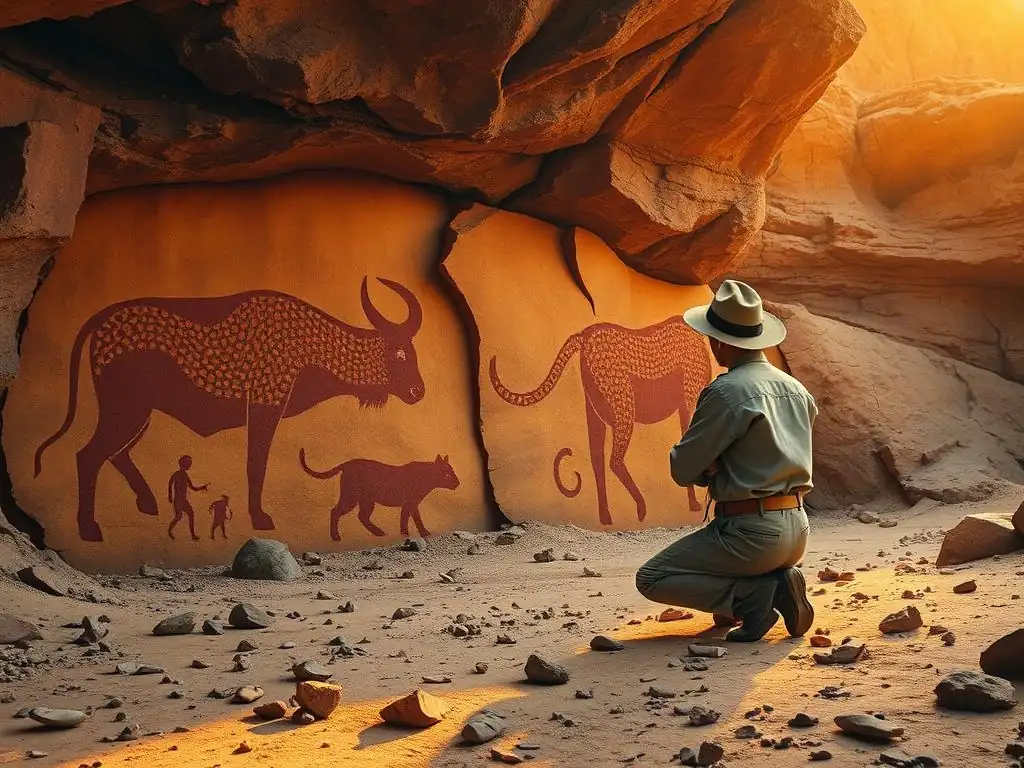
Welcome to ArchaeologyHub.org, your portal to the past!
Delve into the captivating world of ancient civilizations as we explore groundbreaking discoveries, meticulous excavation techniques, and the secrets hidden within historical sites across the globe. Ever wondered about the profound meaning embedded in seemingly simple shapes? Join us as we embark on a journey to understand the San rock art symbolism meaning, unraveling the mysteries behind the geometric patterns and abstract symbols etched onto the very face of history. Intrigued? The story awaits...
- Introduction to San Rock Art: A Window into Ancient Beliefs
- Deciphering San Rock Art: An Overview of Key Symbols and Motifs
- San Rock Art Symbolism Meaning: Exploring Interpretations and Theories
- Common Geometric Patterns in San Art and Their Possible Meanings
- Abstract Symbols in San Rock Art: Beyond Literal Representation
- The Role of Entoptic Phenomena in San Rock Art
- Case Studies: Examining Specific San Rock Art Sites and Their Symbolism
- Challenges in Interpreting San Rock Art: Acknowledging Limitations
- Preserving San Rock Art: Protecting a Valuable Cultural Heritage
- Conclusion: Appreciating the Enduring Legacy of San Rock Art Symbolism
-
Frequently Asked Questions
- How can ArchaeologyHub.org help me understand San rock art symbolism meaning?
- What are some common geometric patterns found in San rock art, and what might they symbolize?
- Besides geometric patterns, what other types of symbols are frequently encountered in San rock art?
- What excavation techniques do archaeologists use to uncover and preserve San rock art sites?
- How does ArchaeologyHub.org organize its information to help researchers find specific San rock art sites or themes?
- Final Reflection: Echoes of the Ancestors
- Rediscover the Wisdom of the Ancients!
Introduction to San Rock Art: A Window into Ancient Beliefs
SanRockArt.org: Exploring the Rich Tapestry of Southern African Rock Art
San rock art represents an extraordinary visual archive, spanning at least 26,000 years, and offers unparalleled insights into the ancient history and spiritual lives of the San people across Southern Africa. This vast collection of paintings and engravings, found in countries such as South Africa, Namibia, Botswana, Lesotho, Zimbabwe, and Angola, serves as a primary source for understanding one of the world's oldest continuous artistic traditions. It documents not only daily life but also complex belief systems that predate many well-known civilizations.
The sheer volume and diversity of San rock art are staggering. For instance, the Drakensberg Mountains alone, a UNESCO World Heritage Site in South Africa, contain an estimated 35,000 individual rock art sites, with literally hundreds of thousands of individual images. This immense body of work provides a unique lens through which to explore the social structures, subsistence strategies, and rich spiritual cosmology of the San, making it a critical component of global archaeological studies.
The Enduring Mystery of San Rock Art Symbolism
The profound symbolic nature of San rock art is central to its enduring fascination. While some depictions clearly narrate events like hunting or gathering, a substantial portion, particularly the intricate geometric patterns and abstract forms, remains deeply enigmatic. Deciphering these complex visual codes is crucial for understanding the San rock art symbolism meaning and the worldview of their creators.
Despite decades of intensive research, the complete lexicon of San rock art symbols is not fully deciphered, largely due to the tragic loss of direct ethnographic links with the artists. However, by meticulously drawing upon 19th and early 20th-century ethnographic accounts of San beliefs and practices, particularly those related to shamanism and trance states, significant progress has been made in interpreting these complex visual narratives and unlocking their hidden meanings.
Deciphering San Rock Art: An Overview of Key Symbols and Motifs
The Prevalence of Geometric Patterns in San Rock Art
Geometric patterns are a ubiquitous and highly significant feature across San rock art sites, ranging from simple lines, dots, and dashes to highly complex grids, spirals, and concentric circles. These motifs are not merely decorative elements but are believed to hold profound symbolic significance, often representing experiences and phenomena related to altered states of consciousness, thus contributing significantly to the overall San rock art symbolism meaning.
Their widespread distribution and stylistic consistency across vast geographical areas, such as the Cederberg Mountains in South Africa or the Brandberg Massif in Namibia, indicate a shared symbolic framework. These geometric motifs frequently appear alongside zoomorphic (animal) and anthropomorphic (human) figures, suggesting an integrated symbolic system where these elements interact to convey deeper spiritual or cosmological messages rather than existing as isolated designs.
Understanding Abstract Representations in San Paintings
Abstract representations in San rock art move beyond literal depictions of the physical world to convey deeper, often spiritual or conceptual messages. These can include elongated human forms, therianthropes (beings combining human and animal characteristics), or complex non-representational forms that defy straightforward identification. These abstract elements are critical to understanding the spiritual dimensions of San art.
Such abstract forms are frequently interpreted within the context of shamanic trance experiences. For instance, the San believed that shamans could transform into animals or journey to the spirit world during ritualistic trance. These profound experiences were often depicted through highly abstract or composite figures, offering crucial insights into the San rock art symbolism meaning related to spiritual power, transformation, and interaction with the unseen realms.
San Rock Art Symbolism Meaning: Exploring Interpretations and Theories
The Shamanistic Hypothesis: Trance States and Altered Consciousness
The dominant theoretical framework for interpreting much of San rock art, particularly its more enigmatic and abstract forms, is the shamanistic hypothesis. Pioneered by researchers such as David Lewis-Williams, this theory posits that a significant portion of the art depicts the experiences of shamans in trance states, representing visions, spiritual journeys, and interactions with the spirit world. This approach has revolutionized the understanding of San rock art symbolism meaning.
Within this framework, specific motifs are interpreted as direct representations of physiological and psychological responses to deep trance. For example, nasal bleeding, often depicted in human figures, is a known physiological response to intense trance states. Furthermore, many geometric patterns are thought to represent entoptic phenomena – universally experienced visual percepts generated by the nervous system during altered states of consciousness, linking the art directly to visionary experiences.
Hunting and Gathering Rituals: Depictions of Daily Life and Spiritual Connection
While shamanism is a central interpretive lens, it is important to acknowledge that not all San rock art is exclusively shamanistic. Many panels vividly depict scenes of daily life, including detailed hunting expeditions, gathering activities, dances, and social interactions. These portrayals offer invaluable ethnographic data, providing a visual record of ancient San subsistence strategies, technological practices, and social structures.
Even these seemingly mundane scenes often carry profound spiritual undertones. For instance, the eland antelope, a frequently depicted animal, was not only a vital food source but also held immense spiritual significance for the San. It was associated with fertility, rain-making, and powerful spiritual energy, particularly in the Drakensberg region. Its depiction often transcends mere hunting, embodying a deeper spiritual connection and contributing significantly to the San rock art symbolism meaning within a holistic worldview.
Regional Variations in San Rock Art Symbolism
Despite overarching themes and a shared symbolic framework, notable regional variations exist in the frequency, style, and specific San rock art symbolism meaning found across different geographical areas. These variations reflect localized traditions, environmental adaptations, and distinct cultural emphases among different San groups over millennia.
For example, the Drakensberg region in South Africa is renowned for its extraordinarily detailed depictions of eland and complex trance figures, often associated with rain-making and healing rituals. In contrast, sites in the Western Cape might feature more detailed human figures, fynbos flora, and specific animal species relevant to their local ecology.
Similarly, the Matobo Hills in Zimbabwe often display a greater emphasis on abstract patterns and less on narrative scenes compared to the Drakensberg, while the Brandberg in Namibia showcases unique 'White Lady' figures and distinct animal representations, illustrating the rich diversity within the broader San rock art tradition.
Common Geometric Patterns in San Art and Their Possible Meanings
Concentric Circles: Symbolism of the Sun, Waterholes, and Cycles of Life
Concentric circles are a recurrent and striking motif found across numerous San rock art sites. These patterns are often interpreted as symbols representing vital resources such as waterholes, which were crucial for survival in arid environments, or the sun, a central celestial body. In some contexts, their cyclical nature may also symbolize the continuous cycles of life, death, and rebirth, or the perpetual movement of spiritual energy.
In many panels, concentric circles appear in close proximity to animal figures or human groups, reinforcing their association with essential life-sustaining elements. Ethnographic records from the Kalahari San suggest that waterholes were often regarded as sacred places, sometimes imbued with spiritual power, thus deepening the San rock art symbolism meaning of these seemingly simple geometric forms to encompass profound cosmological significance.
Spirals and Meanders: Representing Journeys, Transformation, and the Spirit World
Spirals and meanders, characterized by their continuous, winding, and curvilinear forms, are also frequently encountered in San rock art, often in intricate and complex arrangements. These dynamic patterns are commonly interpreted as representing journeys, particularly shamanic travel into the spirit world or the experience of altered states of consciousness. Their flowing nature evokes a sense of movement, transition, and the passage between realms.
Researchers often connect these patterns to the disorienting or swirling sensations experienced during deep trance. In some instances, meanders are seen to represent water, rivers, or the flow of spiritual energy, linking them to rain-making rituals or the movement of powerful spiritual forces. The intricate nature of these designs often suggests complex narratives of transformation and spiritual exploration, central to understanding San rock art symbolism meaning.
Triangles and Zigzags: Interpretations Based on Context, Location, and Associated Imagery
Triangles and zigzags are common geometric motifs in San rock art, but their San rock art symbolism meaning is highly context-dependent, relying heavily on their specific arrangement, location on the rock face, and associated imagery. Triangles might represent mountains, female anatomy, or specific spiritual entities, depending on their orientation and surrounding figures.
Similarly, zigzags often denote lightning, water (especially rain), or the erratic path of a powerful spiritual force, such as a shaman's journey through the spirit world. A zigzag depicted near a 'rain animal' might unequivocally signify rain or a water spirit, whereas a series of triangles forming a pattern might represent a specific type of spiritual energy, a ritualistic dance formation, or a topographical feature. Their interpretation is rarely singular and often requires a holistic view of the entire rock art panel.
Abstract Symbols in San Rock Art: Beyond Literal Representation
Elongated Figures: Depictions of Shamans and Spirit Beings
Elongated figures are a striking and recurring abstract motif in San rock art, frequently interpreted as depictions of shamans in deep trance or powerful spirit beings. These figures often possess exaggerated limbs, attenuated bodies, or adopt unusual, contorted postures that signify their departure from the mundane physical realm and their entry into the spiritual dimension.
These elongated figures are central to understanding the spiritual framework of the San. They often appear with symbolic attributes such as cloaks, bags, or animal heads, further emphasizing their role as intermediaries between the human and spirit worlds. Their depiction provides profound insights into the San rock art symbolism meaning related to spiritual power, altered states of consciousness, and the interaction with the unseen forces that govern the universe.
Therianthropes: The Fusion of Human and Animal Forms
Therianthropes, composite figures combining human and animal characteristics, are among the most powerful, enigmatic, and frequently discussed images in San rock art. These figures represent the profound concept of transformation, particularly the ability of shamans to take on animal forms or to interact intimately with animal spirits during their spiritual journeys.
The most famous therianthropes often combine human bodies with the heads, hooves, or other features of eland, the most spiritually potent animal for many San groups. These transformations were believed to confer spiritual power, facilitate healing, or enable journeys to the spirit world. The prevalence and complexity of therianthropes offer profound insights into the San rock art symbolism meaning of human-animal relationships, spiritual potency, and the fluidity of being in the San cosmology.
Dots and Lines: Exploring Meanings Based on Arrangement, Color, and Context
The seemingly simple motifs of dots and lines, while basic, hold significant symbolic weight in San rock art. Despite their apparent simplicity, their arrangement, color, and surrounding context are crucial for deciphering their complex San rock art symbolism meaning. Dots might represent rain drops, stars, swarms of bees, or concentrations of spiritual energy, depending on their placement and density.
Similarly, lines can signify pathways, boundaries, flows of power, or even the trajectory of spears in a hunt. Large fields of dots might depict a torrential rainstorm or a dense concentration of spiritual power emanating from a shaman. Parallel lines could indicate a spiritual journey, a pathway to the spirit world, or the shimmering aura of a powerful being. The specific pigment used (e.g., white often associated with spiritual power) also adds another crucial layer of interpretation to these fundamental elements.
The Role of Entoptic Phenomena in San Rock Art
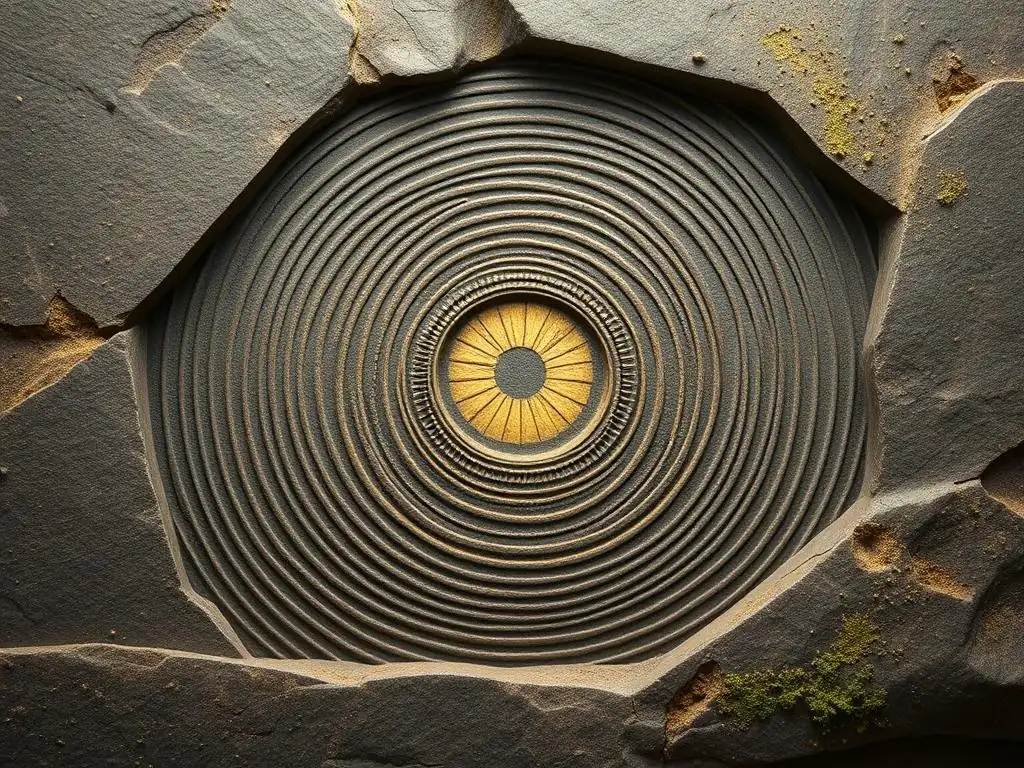
Visual Hallucinations and the Creation of Geometric Forms
A cornerstone of the shamanistic hypothesis is the concept of entoptic phenomena: universal visual experiences generated by the human nervous system itself, particularly during altered states of consciousness. These states, induced by various means such as sensory deprivation, meditation, extreme fatigue, or psychoactive plants, typically manifest as geometric patterns like grids, zigzags, spirals, concentric circles, and tunnels of light.
The striking resemblance between these universally experienced entoptic forms and the geometric patterns prevalent in San rock art provides compelling support for the interpretation that many of these designs are direct representations of visionary experiences. Shamans, perceiving these forms during their trance journeys, would then depict them on the rock face, providing a direct link between spiritual experience and artistic creation, which is fundamental to understanding the San rock art symbolism meaning.
The Universal Nature of Entoptic Motifs in Rock Art Traditions
The presence of entoptic motifs is not exclusive to San rock art; they are found in diverse rock art traditions across the globe, spanning vast geographical and temporal distances. From the Upper Paleolithic caves of Europe, such as Lascaux and Chauvet, to indigenous art in Australia, North America, and other continents, similar geometric patterns recur. This cross-cultural universality suggests a common neurological basis for certain types of visionary or spiritual art.
This widespread occurrence strengthens the argument that these geometric patterns are often direct representations of altered states of consciousness, rather than purely decorative elements or literal depictions of the mundane world. This comparative perspective helps to solidify the understanding of San rock art symbolism meaning within a broader human context, highlighting the shared human capacity for spiritual experience and its artistic expression across diverse cultures and eras.
Case Studies: Examining Specific San Rock Art Sites and Their Symbolism
Drakensberg Site, South Africa: Detailed Analysis of Eland Depictions and Interpretations
The Drakensberg Mountains, a spectacular UNESCO World Heritage Site in South Africa, boast the largest and most extensive concentration of San rock art in Southern Africa. A defining characteristic of this region's art is the overwhelming prominence of the eland antelope. The eland is depicted in myriad contexts, from realistic hunting scenes to highly stylized and anthropomorphic forms, underscoring its central role in San cosmology.
The San rock art symbolism meaning of the eland in the Drakensberg is multifaceted and profound: it was considered the most potent animal, associated with rain, fertility, healing, and shamanic power. Shamans were believed to 'draw power' from the eland or even transform into it during trance, with depictions often showing nasal bleeding (a sign of trance) or figures adorned with eland-skin cloaks, reinforcing its central role in spiritual rituals and the transmission of power.
Tsodilo Hills, Botswana: Comparing and Contrasting Symbolic Representations
Tsodilo Hills, another UNESCO World Heritage Site located in the Kalahari Desert of Botswana, is often referred to as the "Louvre of the Desert" due to its astonishing concentration of over 4,500 paintings on a relatively small cluster of hills. While Tsodilo also features a wide array of animal depictions, its art displays distinct stylistic and symbolic emphases when compared to the Drakensberg.
At Tsodilo, there is a broader range of depicted animal species, including marine animals like whales and penguins (despite being inland), suggesting ancient trade routes or widespread knowledge. The site also exhibits a higher prevalence of distinct geometric patterns that may relate to specific local groups or unique belief systems. The sheer density and layering of paintings at Tsodilo, with some panels showing hundreds of superimpositions, suggest continuous use over thousands of years, with evolving artistic conventions and San rock art symbolism meaning over time.
Challenges in Interpreting San Rock Art: Acknowledging Limitations
The Loss of Cultural Context and Oral Traditions
The primary and most significant challenge in fully interpreting San rock art is the tragic loss of direct cultural context and the disruption of oral traditions. The San communities who created this intricate art faced severe persecution, displacement, and cultural suppression over centuries, leading to a profound break in the transmission of knowledge about the San rock art symbolism meaning from generation to generation.
While invaluable ethnographic accounts from the 19th and early 20th centuries, particularly the Bleek and Lloyd collection, provide crucial insights into San beliefs and practices, they are necessarily incomplete and represent only a snapshot in time. The nuances of ancient beliefs, the specifics of rituals, and the full lexicon of symbols and their precise meanings are largely lost, making definitive and comprehensive interpretations exceptionally difficult.
The Subjectivity of Interpretation and the Importance of Collaboration
Interpretation of San rock art is inherently subjective, influenced by the theoretical frameworks, cultural backgrounds, and personal biases of individual researchers. Different scholars may bring varied perspectives to the study, leading to diverse, and sometimes conflicting, interpretations of the same motifs or panels. This subjectivity underscores the complexity of deciphering ancient symbolic systems.
To mitigate this subjectivity and advance understanding, a multidisciplinary and collaborative approach is essential. This involves close cooperation between archaeologists, anthropologists, art historians, and, crucially, contemporary San descendants and indigenous communities where possible. This collaborative effort helps to refine interpretations, incorporate invaluable indigenous perspectives, and move towards a more holistic and culturally sensitive understanding of the San rock art symbolism meaning.
Preserving San Rock Art: Protecting a Valuable Cultural Heritage
Threats to San Rock Art Sites: Vandalism, Weathering, and Development
San rock art sites face numerous and escalating threats that jeopardize their long-term survival. Direct human impacts, such as vandalism (graffiti, chipping, or rubbing), are a significant concern. Natural weathering processes, including erosion from wind and rain, water seepage causing pigment loss, and the exfoliation of rock surfaces due to temperature fluctuations, also contribute to the gradual degradation of these fragile artworks.
Furthermore, uncontrolled tourism, agricultural expansion, and infrastructure development (such as the construction of roads, dams, and settlements) pose additional risks. These activities can lead to direct destruction of sites, alteration of the delicate microclimates that protect the art, or increased accessibility that inadvertently exposes sites to further damage. These threats jeopardize our ability to continue studying and understanding the profound San rock art symbolism meaning.
Conservation Efforts and Community Involvement
Recognizing the immense value of San rock art, significant conservation efforts are underway globally. These initiatives include meticulous site documentation through photography and 3D scanning, the implementation of protective barriers or shelters where appropriate, and the development of sustainable tourism practices designed to minimize human impact. Scientific research into pigment stability and rock mechanics also informs more effective preservation strategies.
Crucially, the involvement of local communities, particularly contemporary San people, is paramount. Their traditional knowledge, cultural insights, and direct participation in conservation efforts ensure that preservation strategies are culturally sensitive and effective. Empowering communities to become custodians of these sites fosters a deeper appreciation for their historical, spiritual, and San rock art symbolism meaning, ensuring this invaluable heritage endures for future generations.
Conclusion: Appreciating the Enduring Legacy of San Rock Art Symbolism
The Importance of San Rock Art for Understanding Human History and Spirituality
San rock art is far more than mere ancient decoration; it represents a sophisticated artistic and spiritual tradition that offers unparalleled insights into the minds, beliefs, and complex societies of early modern humans in Southern Africa. It stands as a profound testament to the human capacity for abstract thought, spiritual expression, and complex symbolic communication, making it an invaluable part of global cultural heritage.
This ancient art provides a unique window into a worldview where the physical and spiritual realms were intrinsically linked, where animals held sacred power, and where shamans served as vital conduits between worlds. Understanding the nuances of San rock art symbolism meaning allows us to connect with the deep spiritual heritage of one of the world's oldest cultures, enriching our comprehension of human history and the diversity of human spirituality.
Further Research and the Ongoing Quest to Decipher Ancient Meanings.
Despite significant advancements in interpreting San rock art over the past few decades, much remains to be understood about its full symbolic complexity. Ongoing archaeological excavations continue to unearth new sites and contexts, while advanced dating techniques offer more precise chronologies for the art. Continued ethnographic research, particularly engaging with contemporary San descendants where possible, promises to unveil further layers of meaning within these ancient images.
The quest to fully decipher the San rock art symbolism meaning continues to inspire researchers, conservators, and enthusiasts worldwide. This extraordinary artistic legacy remains at the forefront of archaeological and anthropological inquiry, ensuring that its profound messages continue to resonate and inform our understanding of the human past.
Frequently Asked Questions
How can ArchaeologyHub.org help me understand San rock art symbolism meaning?
ArchaeologyHub.org offers detailed artifact profiles and interpretive analyses of ancient civilizations, including the San. You can explore specific regions and time periods to find information related to their rock art and its potential meanings.
What are some common geometric patterns found in San rock art, and what might they symbolize?
Common patterns include dots, lines, and concentric circles. These are often interpreted as representing trance experiences, altered states of consciousness, or spiritual energy.
Besides geometric patterns, what other types of symbols are frequently encountered in San rock art?
Animal depictions, particularly of the eland, are prevalent and hold immense spiritual significance. Human figures in various postures, often associated with hunting or dancing, are also frequently found, representing daily life and ritual practices.
What excavation techniques do archaeologists use to uncover and preserve San rock art sites?
Archaeologists employ non-invasive techniques like photogrammetry and laser scanning to create 3D models. Careful documentation, cleaning, and stabilization are crucial to preserve the fragile art for future generations.
How does ArchaeologyHub.org organize its information to help researchers find specific San rock art sites or themes?
The site utilizes a geographic and chronological classification system, allowing users to easily navigate through different regions and time periods. You can search by region or specific keywords like "San rock art" to find relevant content and discover related sites and themes.
Final Reflection: Echoes of the Ancestors
The journey through San rock art, as we've explored, is far more than a visual experience; it's a profound encounter with a worldview meticulously etched onto stone. Understanding the intricate geometric patterns and abstract symbols is crucial today because it offers a unique window into the cognitive and spiritual landscape of a culture deeply connected to its environment. These ancient artworks are not merely decorations, but complex narratives that continue to resonate with contemporary understandings of human consciousness and our relationship with the natural world.
The enduring power of San rock art lies in its ability to transcend time and cultural boundaries. Its symbolism speaks to universal human experiences – our search for meaning, our connection to the spiritual realm, and our profound dependence on the environment. The art serves as a powerful reminder of the interconnectedness of all things, a lesson that is perhaps even more vital in our increasingly fragmented world. The rock paintings are not just pictures; they are a record of the San's spiritual experiences, their beliefs, and their understanding of the world.
- J. David Lewis-Williams.
As we conclude this exploration of San rock art symbolism, I invite you to consider the profound lessons embedded within these ancient images. Let the intricate patterns and enigmatic symbols inspire you to reflect on your own connection to the past, your relationship with the natural world, and the enduring power of human creativity. What stories are you telling with your life? What symbols will you leave behind? Let the echoes of the ancestors guide you towards a deeper understanding of yourself and your place in the grand tapestry of existence.
Rediscover the Wisdom of the Ancients!
Thanks for diving into the fascinating world of San rock art! We hope you’ve gained a deeper appreciation for the intricate meanings woven into these ancient artworks. Ready to connect with this legacy?
Here are some ways to take your exploration further:
- Visit a Rock Art Site (Respectfully!): If possible, find a local rock art site (always with permission and guidance) and spend time observing the patterns and symbols firsthand.
- Delve Deeper: Research specific symbols that resonated with you. Can you find any alternative interpretations?
- Share Your Insights: Discuss your newfound understanding with friends or fellow enthusiasts. What do they make of these abstract symbols?
What unanswered questions about San rock art are still swirling in your mind?