
Daily Life in Ancient Petra: Reconstructing Society from Archaeological Evidence

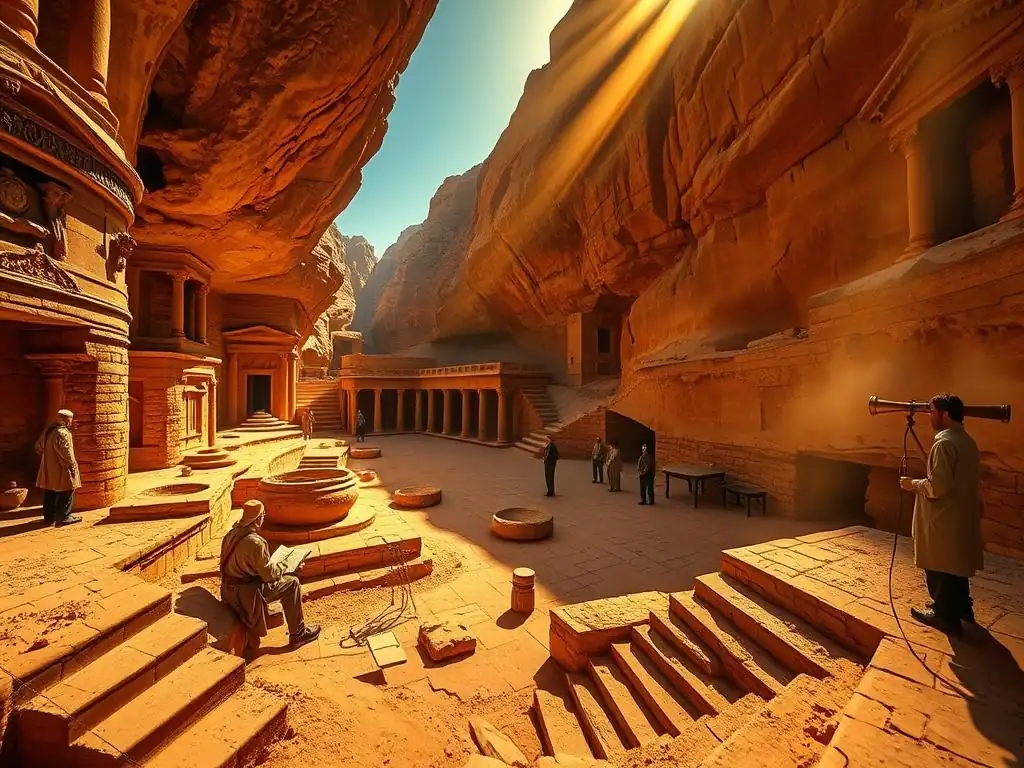
Welcome to ArchaeologyHub.org, your gateway to unlocking the secrets of the past. Ever wondered what daily life was really like in the lost city of Petra? Delve into our comprehensive analysis and discover how archaeological evidence paints a vivid picture of Ancient Petra daily life, reconstructing a vibrant society from the sands of time. Prepare to be amazed as we unveil the routines, rituals, and realities of this captivating Nabataean metropolis. Intrigued? Let's explore!
- Introduction: Unveiling the Everyday in Ancient Petra
- The Geographical Context: Petra's Environment and its Influence
- Housing and Architecture: Glimpses into Nabataean Homes
- Food and Diet: Sustaining Life in the Desert Kingdom
- Commerce and Trade: The Economic Engine of Petra
- Social Structure and Governance: Understanding Nabataean Society
- Crafts and Industries: The Skills of the Nabataean People
- Burial Practices and Beliefs about the Afterlife
- Decline and Abandonment: The End of Daily Life
- Conclusion: Reconstructing a Day in the Life
-
Frequently Asked Questions
- ### What were the primary sources of water for the inhabitants of Ancient Petra?
- ### What evidence suggests the social hierarchy and economic activities of people in Ancient Petra?
- ### How did the unique geography of Petra influence daily life for its citizens?
- ### What types of dwellings did people typically inhabit in Ancient Petra, and what materials were used in their construction?
- ### What were some common crafts and industries practiced by the residents of Ancient Petra?
- Final Reflection: Echoes of Daily Life in Stone
- Unearth Your Inner Explorer!
Introduction: Unveiling the Everyday in Ancient Petra
Archaeology and Nabataean Society
Archaeology provides an unparalleled window into the often-unseen aspects of ancient civilizations, particularly the intricate fabric of daily life. For the Nabataeans, a sophisticated people who carved an empire out of the desert, their monumental rock-cut city of Petra stands as a testament to their grandeur.
However, beyond the awe-inspiring facades of the Treasury or the Monastery, lie countless smaller discoveries – fragments of pottery, worn tools, and the subtle contours of domestic spaces – that allow us to reconstruct the routines, challenges, and triumphs of the average Nabataean citizen. It is through these meticulous archaeological investigations that the silent stones of Petra begin to whisper tales of their inhabitants' everyday existence, bridging the gap between grand historical narratives and intimate human experiences.
This deep dive into Nabataean society moves beyond the political and religious elites, focusing instead on the practicalities of living in a bustling desert metropolis. Understanding Ancient Petra daily life involves piecing together details about their homes, what they ate, how they earned a living, and their social interactions. By examining the material culture left behind, researchers can paint a vivid picture of a people who not only mastered their environment but also fostered a vibrant culture, whose daily routines were as complex and fascinating as their iconic architecture.
The Significance of Archaeological Evidence
The reconstruction of Ancient Petra daily life relies almost entirely on archaeological evidence, which serves as the primary source material for understanding a society that left few extensive written records of its daily affairs. Excavations have unearthed a wealth of artifacts, including ceramics, coins, agricultural implements, textiles, and human remains, each offering specific clues. For instance, the discovery of a hearth in a rock-cut dwelling indicates where meals were prepared, while the specific types of animal bones found in refuse pits reveal dietary habits.
Moreover, the architectural remains themselves, from the grand public buildings to the more modest domestic structures, provide invaluable insights into social organization, economic activity, and religious practices. The layout of streets, the presence of markets, and the intricate water management systems all speak to a highly organized society.
Through careful stratigraphic analysis and the precise dating of artifacts, archaeologists can establish timelines of activity and discern changes in Ancient Petra daily life over centuries, allowing for a dynamic understanding rather than a static snapshot. This meticulous process of discovery and interpretation transforms scattered fragments into a coherent narrative of ancient existence.
The Geographical Context: Petra's Environment and its Influence
Petra's Location: A Crossroads of Trade
Petra's strategic location in the rugged mountains of modern-day Jordan was paramount to its prosperity and the shaping of Ancient Petra daily life. Situated at the intersection of major ancient trade routes, it served as a pivotal link connecting the Arabian Peninsula with the Mediterranean world, Mesopotamia, and Egypt. This geographical advantage meant that caravans laden with precious commodities – frankincense and myrrh from Arabia, spices from the East, silks from China, and exotic goods from Africa – regularly passed through its valleys.
The Nabataeans expertly leveraged this position, offering protection, water, and provisions to passing traders, and levying taxes on the goods. This economic engine transformed Petra from a mere desert outpost into a thriving urban center, influencing everything from its architecture to its diverse population. The constant flow of people and goods through the city enriched its inhabitants, exposed them to various cultures, and provided the economic backbone that sustained the complex Ancient Petra daily life for centuries.
Water Management and Agriculture
In an arid desert environment, water was the lifeblood of Petra, and the Nabataeans' ingenious water management systems were a marvel of ancient engineering, fundamental to sustaining Ancient Petra daily life. They developed sophisticated techniques to harness every drop of the scarce rainfall and seasonal flash floods. This included constructing elaborate networks of dams, cisterns, channels carved into rock, and ceramic pipelines, some stretching for kilometers, to collect, store, and distribute water throughout the city and its surrounding areas.
This mastery of hydraulics allowed for the cultivation of crops in an otherwise barren landscape. Archaeological evidence points to terraced fields where barley, wheat, dates, grapes, and olives were grown. Small-scale agriculture, supported by these advanced irrigation systems, provided a crucial local food source, supplementing the diet derived from trade. The ability to secure and manage water not only supported the population but also enabled Petra to serve as a reliable oasis for thirsty caravans, further cementing its role as a vital trade hub and enabling the distinct Ancient Petra daily life to flourish.
Housing and Architecture: Glimpses into Nabataean Homes
Rock-Cut Dwellings: Adapting to the Terrain
The most iconic architectural feature of Petra is its monumental rock-cut facades, primarily associated with tombs. However, the Nabataeans also carved numerous dwellings directly into the sandstone cliffs, showcasing their remarkable adaptability to the challenging desert terrain. These residential caves, often simpler in design than the grand tombs, provided natural insulation, keeping interiors cool during scorching summer days and relatively warm during chilly desert nights. Archaeological surveys have identified clusters of these dwellings, particularly in areas like the Wadi Farasa and the vicinity of the High Place of Sacrifice, indicating distinct residential zones.
These rock-cut homes varied in size and complexity, from single-chambered units to multi-room complexes, sometimes with carved benches, niches for storage, and ventilation shafts. While less ornate than their funerary counterparts, the practical ingenuity behind their construction reflects a deep understanding of their environment. The integration of living spaces directly into the natural landscape was a hallmark of Ancient Petra daily life, demonstrating a harmonious relationship between the Nabataeans and their unique surroundings.
Domestic Life within Petra's Homes
Archaeological excavations within these rock-cut dwellings and associated built structures offer fascinating glimpses into the intimate details of Nabataean domestic life. Finds include a variety of pottery vessels – cooking pots (often blackened by soot), storage jars for grains and liquids, and finely decorated bowls and plates for serving meals. Grinding stones, used for processing grains into flour, are common discoveries, indicating daily bread-making. Spindle whorls, small weights used in hand-spinning, suggest that textile production, likely for clothing and household linens, was a regular activity within the home.
The layout of these domestic spaces often suggests distinct areas for sleeping, cooking, and storage, even if not formally partitioned. Hearths for cooking and warmth were central features. The presence of oil lamps points to evening activities. These humble artifacts and architectural details allow researchers to reconstruct the routines of Ancient Petra daily life: preparing meals, crafting goods, and simply existing within the confines of their unique homes, highlighting the practicalities and comforts of their everyday existence.
Public Architecture and its Role: Tem temples, Markets, and Theaters
Beyond the private sphere of homes, public architecture played a crucial role in shaping Ancient Petra daily life, serving as centers for communal activity, commerce, and religious devotion. The Great Temple, a monumental complex, likely functioned as a primary religious and civic center, hosting ceremonies and gatherings. Qasr al-Bint, another significant temple, was dedicated to the chief Nabataean deity, Dushara, and would have been a focal point for religious rituals and festivals, drawing people from across the city.
The Nabataean Theater, carved into the side of a mountain, could seat an estimated 8,500 spectators, indicating a vibrant public life that included dramatic performances and possibly civic assemblies. The Colonnaded Street, the city's main thoroughfare, was lined with shops and public buildings, functioning as the bustling commercial heart of Petra. Here, merchants displayed their wares, citizens engaged in trade, and social interactions unfolded. These public spaces were not merely architectural marvels but dynamic arenas where the diverse facets of Ancient Petra daily life converged, fostering community, economic exchange, and cultural expression.
Food and Diet: Sustaining Life in the Desert Kingdom
Agricultural Practices and Crop Cultivation
Despite its arid environment, the Nabataeans employed ingenious agricultural practices to cultivate a variety of crops, essential for sustaining Ancient Petra daily life. Their advanced water management systems, including terracing and sophisticated irrigation channels, maximized the limited arable land in the wadis and surrounding plains. Archaeological evidence, such as paleo-botanical remains and ancient field systems, indicates the cultivation of staple grains like barley and wheat, which formed the basis of their diet.
Beyond grains, evidence suggests the growth of various fruits, including dates, figs, and grapes, which were likely consumed fresh or dried for preservation. Olives, important for both oil and consumption, were also grown. These localized agricultural efforts, though perhaps not sufficient for the entire population, provided a crucial foundation for Ancient Petra daily life, supplementing the food supply obtained through their extensive trade networks and showcasing their remarkable ability to coax sustenance from a challenging landscape.
Trade and the Import of Foodstuffs
While local agriculture provided some staple foods, Petra's position as a major trade hub meant that its diet was significantly enriched and diversified by imported foodstuffs. The caravan routes brought not only luxury goods but also essential provisions from distant lands. Grains, such as specific varieties of wheat or barley, might have been imported from more fertile regions like the Nile Valley or the Fertile Crescent to ensure a stable supply for the large urban population.
Spices from Arabia and beyond, like pepper, cinnamon, and ginger, would have been readily available, adding flavor to Nabataean cuisine. Wine, often imported from regions like Egypt, Syria, or even distant Italy, supplemented local beverages. This constant influx of diverse food items through trade not only ensured a robust food supply but also introduced new culinary influences, making the Nabataean diet a unique blend of local produce and international flavors, a true reflection of their cosmopolitan Ancient Petra daily life.
Analysis of Animal Remains: Meat Consumption
Archaeozoological studies, which involve the analysis of animal bones recovered from archaeological sites, offer significant insights into meat consumption and animal husbandry in Ancient Petra daily life. The most commonly identified animal remains belong to domesticates such as sheep and goats, indicating that these were primary sources of meat, milk, and wool. Cattle bones are also found, suggesting their use for meat, milk, and as draft animals for agriculture or transport.
Camels, crucial for desert travel and trade, were also consumed, though likely less frequently than sheep and goats. The presence of fish bones, despite Petra's inland location, points to the import of dried or salted fish, likely from the Red Sea or Mediterranean coast, further illustrating the reach of their trade networks for dietary purposes. The patterns of butchery marks on the bones provide clues about how animals were processed and prepared, adding another layer of detail to our understanding of the Nabataean diet and the practical aspects of their Ancient Petra daily life.
Nabataean Cuisine: Reconstructing Meals
Piecing together the various strands of evidence from agricultural practices, imported foodstuffs, and animal remains allows for a reconstruction of typical Nabataean meals and overall cuisine. A staple would have been bread, made from local barley or wheat, likely baked in simple ovens or on hot stones. Stews and porridges, incorporating grains, pulses (like lentils or chickpeas), and vegetables such as onions or garlic, would have been common, often enriched with meat from sheep, goats, or cattle.
The availability of imported spices meant that Nabataean cooking was likely flavorful and diverse. Dates and figs provided natural sweetness, while olive oil was used for cooking and as a condiment. Beverages included water, possibly milk, and fermented drinks like grape wine or date wine, both locally produced and imported. The presence of triclinia (dining couches) in some tombs and homes suggests a culture that valued communal meals and banquets, transforming the basic act of eating into a social and perhaps ritualistic experience central to Ancient Petra daily life.
Commerce and Trade: The Economic Engine of Petra
Petra as a Hub for Caravan Trade
Petra's identity and prosperity were inextricably linked to its role as a central hub for caravan trade, which profoundly shaped Ancient Petra daily life. Positioned strategically along the ancient Incense Route, it became a vital intermediary for the flow of goods between the Arabian Peninsula, the Indian subcontinent, and the Mediterranean world. Caravans laden with highly coveted commodities such as frankincense and myrrh (essential for religious rituals and perfumes), exotic spices, precious stones, gold, silver, and even silks from distant China, passed through Petra.
The Nabataeans provided essential services to these caravans: secure lodging, fresh water, provisions, and protection from bandits. In return, they levied substantial taxes and fees on the goods, accumulating immense wealth that fueled the city's growth and sustained its population. This continuous movement of goods and people brought not only economic prosperity but also cultural exchange, making Petra a truly cosmopolitan center where the rhythms of Ancient Petra daily life were dictated by the arrival and departure of caravans.
The Role of Merchants and Traders
The economic engine of Petra was powered by its vibrant class of merchants and traders, who held significant influence and wealth within Nabataean society. These individuals organized and financed the vast caravan expeditions, managing the logistics of transporting valuable goods across challenging desert landscapes. Their success is often reflected in the grandeur of their rock-cut tombs and the size of their domestic residences, which frequently contained luxury items acquired through their commercial ventures.
Beyond the wealthy elite, a broader spectrum of traders and vendors contributed to the bustling commercial scene. Local artisans sold their crafts, farmers brought their produce to market, and smaller-scale merchants dealt in everyday commodities. The constant interaction between these various commercial actors created a dynamic marketplace that was central to Ancient Petra daily life, providing opportunities for employment, exchange, and the daily sustenance of the population. The merchant class was not just a part of society; it was the driving force behind Petra's very existence.
Evidence of Economic Activity: Coins, Weights, and Measures
Archaeological discoveries provide concrete evidence of the sophisticated economic activity that characterized Ancient Petra daily life. The most compelling is the extensive collection of Nabataean coinage. Beginning in the late 2nd century BCE, the Nabataeans minted their own coins, often featuring portraits of their kings (such as Aretas IV Philopatris) and symbols of their deities. These coins facilitated commercial transactions both within Petra and along its trade routes, indicating a standardized and organized monetary system.
Furthermore, excavations have unearthed various weights and measures, crafted from stone or metal, often bearing inscriptions. The standardization of these tools suggests a regulated marketplace and a system for ensuring fair trade practices. The presence of numerous storage jars and amphorae also points to the large-scale storage and transport of goods, while the remains of market stalls along the Colonnaded Street confirm the existence of dedicated commercial zones. Together, these artifacts paint a clear picture of a highly developed economy that underpinned every aspect of Ancient Petra daily life.

Reconstructing the social hierarchy of Ancient Petra daily life relies on interpreting archaeological evidence, particularly the size and adornment of tombs and dwellings, and the types of artifacts found within them. At the apex was the royal family, whose monumental tombs and palaces (like the "Royal Tombs" complex) reflect immense wealth and power. Beneath them were a powerful elite comprising wealthy merchants, high priests, and military commanders, whose elaborate rock-cut facades and finely furnished homes signify their elevated status.
A substantial middle class likely consisted of skilled artisans, scribes, lower-ranking traders, and soldiers, whose dwellings and burials were less grand but still indicative of comfortable living. At the base of the pyramid were the common laborers, farmers, and servants, whose archaeological footprint is less pronounced, often represented by simpler dwellings, utilitarian pottery, and fewer personal adornments. While specific titles and roles are not always clear from archaeological finds, the distinct material differences strongly suggest a stratified society where status was visibly expressed through architecture and possessions, influencing all facets of Ancient Petra daily life.
Religious Practices and Their Impact
Religious practices were deeply interwoven into the fabric of Ancient Petra daily life, profoundly influencing architecture, art, and social customs. The Nabataeans were polytheistic, with a pantheon of deities. The chief male deity was Dushara, often represented by a block-like stone anicon (a sacred stone without human form), symbolizing a mountain god. His consort, Al-Uzza, a goddess of fertility and war, was also widely revered. Numerous temples, high places of worship carved into mountain peaks (like the High Place of Sacrifice), and countless cultic niches dedicated to various gods are scattered throughout Petra.
Religious ceremonies, processions, and festivals would have been regular occurrences, drawing large crowds and fostering community cohesion. Votive offerings, such as small altars, lamps, and figurines, have been found in both public and domestic contexts, indicating personal devotion. The pervasive presence of religious symbols on tombs, coins, and everyday objects underscores the centrality of faith in Ancient Petra daily life, guiding their understanding of the world, their moral code, and their hopes for the afterlife.
Nabataean Law and Administration
While direct archaeological evidence for the day-to-day workings of Nabataean law and administration is sparse, historical accounts and inscriptions provide clues about governance and its impact on Ancient Petra daily life. The Nabataeans were ruled by a succession of kings, such as Aretas IV Philopatris (c. 9 BCE – 40 CE), under whom Petra reached its zenith. These monarchs wielded significant authority, overseeing trade, taxation, and military affairs. Inscriptions on monuments and coins often celebrated their achievements and piety.
It is highly probable that a sophisticated administrative bureaucracy existed to manage the vast trade network, collect customs duties, and enforce laws. Scribes would have been essential for record-keeping, and a system of justice would have been in place to resolve disputes and maintain order within the bustling city. While details about specific legal codes are limited, the existence of a highly organized society, capable of monumental construction and extensive trade, implicitly points to a robust administrative framework that regulated and facilitated the complex Ancient Petra daily life.
Reconstructing family life and social customs in Ancient Petra daily life largely relies on inferences from domestic architecture, funerary practices, and occasional inscriptions. Homes, whether rock-cut or built, likely housed nuclear or extended families, with spaces for cooking, sleeping, and daily chores. The presence of multiple burial chambers within a single tomb suggests a strong emphasis on family lineage and collective remembrance, with generations interred together.
Women appear to have held a relatively prominent position in Nabataean society compared to some contemporary cultures. Representations of goddesses and noblewomen in art and inscriptions, sometimes with their names alongside those of their male counterparts, suggest a degree of social visibility. Social gatherings, possibly including banquets, are indicated by the presence of triclinia (dining rooms with couches) in some tombs and large residences, implying a culture that valued hospitality and communal feasting. These aspects paint a picture of a society where family bonds and social interactions were fundamental to the rhythm of Ancient Petra daily life.
Crafts and Industries: The Skills of the Nabataean People
Pottery Production and Use
The Nabataeans were renowned for their distinctive pottery, a hallmark of their craftsmanship and a ubiquitous element in Ancient Petra daily life. Their ceramic ware is characterized by its exceptionally thin walls, delicate forms, and often intricate painted decoration, typically featuring floral, geometric, or stylized animal motifs in reddish-brown or black on a lighter background. This fine ware was used for serving food and beverages, indicating a sophisticated dining culture.
Beyond the fine ware, archaeologists have uncovered a wide range of utilitarian pottery, including robust cooking pots, large storage jars for grains and liquids, and lamps. The discovery of pottery kilns and associated workshops within and around Petra confirms that much of this pottery was locally produced. The sheer volume and variety of ceramic finds underscore the importance of pottery production as a significant industry, providing essential vessels for every aspect of Ancient Petra daily life, from cooking and storage to ritual use.
Metalworking and Jewelry
Evidence of metalworking in Petra, though less prominent than stone carving or pottery, indicates a skilled artisan class involved in producing tools, weapons, and decorative items. Archaeological finds include bronze and iron implements, such as chisels, hammers, and agricultural tools, essential for construction and daily tasks. The presence of slag and fragments of crucibles at certain sites suggests localized metal smelting and crafting.
For personal adornment and status display, jewelry was also crafted. Finds include beads made of carnelian, glass, and bone, as well as metal rings, pendants, and fibulae (brooches). While gold and silver artifacts are rarer, their presence points to the import of these precious metals for high-status items, reflecting the wealth accumulated through trade. These metal artifacts, from practical tools to exquisite ornaments, highlight the diverse industrial skills that contributed to the richness of Ancient Petra daily life.
Stone Carving and Sculpture
The Nabataeans' most enduring legacy, and arguably their most celebrated craft, is their mastery of stone carving and sculpture. This skill is magnificently displayed in their monumental rock-cut facades, such as the Treasury (Al-Khazneh) and the Monastery (Ad Deir), which required immense technical prowess and artistic vision. These facades were not built but meticulously carved directly out of the sandstone cliffs, showcasing intricate architectural details, columns, and figurative sculptures.
Beyond the grand facades, stone carving was also applied to smaller-scale items. Sculpted altars, votive stelae (carved stone slabs), and freestanding cultic statues have been found in both public and domestic contexts, often depicting deities or human figures. The precision of their carving, evident in the crisp lines and detailed ornamentation, speaks to a highly developed tradition of stone masonry. This pervasive artistic skill shaped the very landscape of Petra, transforming natural rock into a testament to their culture and enriching every visual aspect of Ancient Petra daily life.
Burial Practices and Beliefs about the Afterlife
The thousands of tombs carved into the cliffs of Petra are the most visible and studied aspect of Nabataean funerary practices, offering profound insights into their social structure and beliefs. The size, ornamentation, and location of these rock-cut tombs served as clear indicators of the deceased's wealth, social status, and family prominence during Ancient Petra daily life. The most elaborate tombs, such as the "Royal Tombs" complex (including the Urn Tomb, Corinthian Tomb, and Palace Tomb), belonged to kings and the highest echelons of society, featuring multi-story facades, intricate architectural details, and often commanding views.
In contrast, simpler, undecorated tomb facades or single-chambered burial caves suggest a more modest status. The placement of tombs also mattered, with those closer to the city center or along prominent routes likely belonging to more influential families. The sheer variety in tomb design, from the simple to the grandiose, provides a tangible archaeological record of the social hierarchy that existed in Ancient Petra daily life, where even in death, status was explicitly expressed.
Grave Goods and Ritual Offerings
Archaeological excavations within Nabataean tombs have revealed a range of grave goods and evidence of ritual offerings, providing clues about their beliefs regarding the afterlife and the practicalities of burial in Ancient Petra daily life. Common finds include pottery vessels, such as lamps, bowls, and jars, which may have contained food or drink offerings for the deceased's journey. Personal ornaments, like beads, rings, and pendants, were sometimes interred with the body, reflecting the individual's earthly possessions and status.
Coins, particularly small bronzes, are frequently found in or near the mouth of the deceased, echoing the Greek tradition of Charon's obol, a payment for the ferryman to the underworld. Evidence of funerary banquets, often held in triclinia carved near the tombs, suggests communal feasting and remembrance of the dead, reinforcing social bonds. These grave goods and rituals were not merely decorative; they were integral to the Nabataean conception of a continuous existence beyond death, supporting the deceased in their transition and ensuring their well-being in the afterlife, a core belief impacting Ancient Petra daily life.
The Significance of Funerary Architecture
Beyond their function as burial places and indicators of social status, Nabataean funerary architecture held profound spiritual and cultural significance, deeply embedded in Ancient Petra daily life. The elaborate facades were not simply displays of wealth but expressions of a sophisticated architectural and artistic tradition, blending indigenous Nabataean elements with Hellenistic and later Roman influences. The monumental scale and enduring nature of these carved tombs reflect a strong desire for eternal remembrance and a belief in the perpetuation of the deceased's memory.
The tombs also served as a physical connection between the living and the dead, with families often returning to the sites for commemorative meals or rituals. The integration of religious symbols, deities, and architectural motifs on the tomb facades further underscores their sacred purpose. In essence, the funerary architecture of Petra was a testament to the Nabataeans' worldview, where death was not an end but a transition, and where the continuity of family, community, and spiritual belief was paramount, shaping the very rhythm of Ancient Petra daily life.
Decline and Abandonment: The End of Daily Life
Factors Contributing to Petra's Decline
The vibrant Ancient Petra daily life eventually faced a period of decline, influenced by a confluence of factors. A major blow came with the Roman annexation of the Nabataean Kingdom in 106 CE, which transformed it into the Roman province of Arabia Petraea. While some level of prosperity continued under Roman rule, the shift in political power gradually diminished Petra's unique status as an independent trade power. More significantly, Roman efforts to consolidate trade routes led to the rerouting of some major caravan traffic away from Petra, favoring alternative routes through newly established Roman cities like Bosra.
Natural disasters also played a critical role. A devastating earthquake in 363 CE caused widespread destruction to Petra's infrastructure, including its vital water management systems and public buildings. Another major earthquake in 551 CE inflicted further damage. These seismic events, coupled with the changing geopolitical landscape, made Ancient Petra daily life increasingly difficult to sustain for a large population, leading to a gradual but significant exodus from the city.
The Roman Influence and its Impact
The Roman influence on Ancient Petra daily life was transformative, gradually altering the city's character and economic foundations. Following the annexation in 106 CE, Petra ceased to be the capital of an independent kingdom and became a provincial city within the vast Roman Empire. Roman architectural styles began to appear, exemplified by the construction of the Colonnaded Street, a Roman theater, and Roman baths, often alongside existing Nabataean structures. This blend of styles reflects a cultural shift.
Economically, the Romans sought to integrate Petra into their broader imperial trade network, which, while initially maintaining some prosperity, ultimately led to a decline in Petra's unique role as the primary intermediary for Arabian goods. The establishment of new Roman trade centers and the construction of new roads diverted traffic, slowly eroding Petra's economic engine. While Ancient Petra daily life did not cease entirely, it evolved, becoming less distinctively Nabataean and more integrated into the Roman provincial system, contributing to its eventual decline as a major urban center.
Legacy and Rediscovery: Petra's Enduring Appeal
Despite its decline and eventual abandonment by most of its inhabitants, Petra's legacy endured, albeit as a "lost city" for centuries to the Western world. While local Bedouin communities continued to inhabit parts of the site, its monumental structures and rock-cut wonders remained largely unknown outside the region until its "rediscovery" by Swiss explorer Johann Ludwig Burckhardt in 1812. His accounts reignited Western interest, leading to subsequent explorations and archaeological expeditions.
Today, Petra stands as a UNESCO World Heritage Site and one of the most significant archaeological treasures globally. Its enduring appeal lies not only in its breathtaking beauty and architectural marvels but also in its profound historical significance. Continued archaeological research at Petra constantly uncovers new insights into Ancient Petra daily life, revealing more about the ingenious Nabataeans and their remarkable adaptation to their environment, ensuring that the story of this desert kingdom continues to captivate and educate.
Conclusion: Reconstructing a Day in the Life
The Tapestry of Daily Life
Reconstructing Ancient Petra daily life from archaeological evidence paints a vivid and multifaceted picture of a remarkable civilization. It reveals a people who were not only master architects and traders but also resourceful and adaptable, capable of thriving in a challenging desert environment. Their daily existence was a tapestry woven from sophisticated water management systems, allowing for limited agriculture and sustaining a large population; a bustling economy driven by the lucrative caravan trade, which brought wealth and diverse goods; and a complex social structure, reflected in their unique rock-cut dwellings and elaborate tombs.
Religious practices deeply permeated their routines, from public ceremonies in grand temples to personal devotions in humble shrines. Skilled craftsmanship, particularly in pottery and stone carving, provided both utilitarian objects and artistic expressions that defined their material culture. From the early morning routines of preparing meals to the evening gatherings, every aspect of Ancient Petra daily life was shaped by their environment, their ingenuity, and their rich cultural heritage. Beyond the monumental facades, there was a vibrant human story of resilience, innovation, and daily existence that continues to fascinate.
The Importance of Continued Archaeological Research
The current understanding of Ancient Petra daily life is a testament to decades of meticulous archaeological research, but it is far from complete. Petra remains an active archaeological site, with ongoing excavations continually unearthing new evidence and challenging previous assumptions. Each new pottery shard, each newly uncovered domestic structure, and each deciphered inscription adds another piece to the complex puzzle, refining our understanding of how the Nabataeans lived, worked, and worshipped.
Continued research is vital not only to fill in the gaps in our knowledge but also to address new questions posed by evolving archaeological methodologies and theories. As new technologies emerge, they offer unprecedented opportunities to analyze ancient remains with greater precision, revealing even finer details about diet, health, and environmental interactions. The ongoing commitment to archaeological investigation ensures that the story of Ancient Petra daily life remains dynamic, engaging, and ever-expanding, allowing future generations to connect with this extraordinary ancient civilization on a profound and intimate level.
Frequently Asked Questions
### What were the primary sources of water for the inhabitants of Ancient Petra?
The primary sources of water in Petra were ingeniously engineered systems. These included cisterns to collect rainwater, aqueducts that channeled water from distant springs, and dams to manage flash floods.
Archaeological finds like elaborate tombs, residential areas, and marketplaces reveal social stratification. The presence of trade goods indicates involvement in regional and long-distance commerce, supporting a diverse economy.
### How did the unique geography of Petra influence daily life for its citizens?
Petra's narrow siq provided natural defense but also limited space, influencing architecture and urban planning. The desert environment necessitated resourcefulness in water management and agriculture.
### What types of dwellings did people typically inhabit in Ancient Petra, and what materials were used in their construction?
Dwellings ranged from carved rock-cut tombs that also served as residences to more conventional buildings. Construction utilized the abundant sandstone, often combined with mud brick and timber for roofs.
### What were some common crafts and industries practiced by the residents of Ancient Petra?
The Nabataeans were skilled artisans, known for their pottery, metalworking, and stone carving. They also engaged in agriculture, exploiting the limited fertile land, and were heavily involved in the lucrative caravan trade.
Final Reflection: Echoes of Daily Life in Stone
The intricate details unearthed from the sands of Petra, as we've explored, aren't just relics of a bygone era; they are vibrant whispers of a society that thrived in the heart of the desert. Understanding the daily life of the Nabataeans allows us to connect with them on a human level, recognizing their ingenuity, resilience, and the shared experiences that bind us across millennia. Their story, etched in stone, continues to resonate with our own.
The enduring allure of Petra lies not only in its monumental architecture but also in the subtle narratives of its inhabitants. The ability to reconstruct their routines, their struggles, and their triumphs offers a profound connection to our shared human history, reminding us that even the most seemingly distant cultures have left an indelible mark on the world. The past is never dead. It's not even past.
- William Faulkner. This quote perfectly encapsulates how the echoes of ancient Petra continue to shape our understanding of human civilization and its capacity for innovation and adaptation.
As we conclude this exploration of daily life in ancient Petra, I invite you to consider the lessons gleaned from this remarkable civilization. How can their resourcefulness in the face of adversity inspire us to overcome our own challenges? How can their commitment to community and trade inform our approach to building a more interconnected and sustainable future? Let the echoes of Petra's daily life resonate within you, prompting reflection and action as we strive to create a world worthy of the legacy they left behind.
Unearth Your Inner Explorer!
Thank you for delving into the fascinating world of ancient Petra! We hope you found value in uncovering the intricacies of daily life within this remarkable city. Now, let’s bring that knowledge to life.
Here are a few ways you can continue your exploration:
- Embark on a personal research mission:Identify a specific aspect of daily life in Petra – like food, trade, or family structure – and research it further using academic databases or online resources.
- Create and share a piece of artwork (painting, sculpture, digital art) depicting your vision of daily life in Petra, and share it on your social media using the hashtag #PetraDailyLife.
- Visit a local museum or historical society that features exhibits on ancient civilizations or the Nabataean culture to experience artifacts firsthand.
What detail about daily life in Petra surprised you the most, and how does it challenge your perception of ancient societies?