
Trade and Commerce in Merv: A Silk Road Emporium

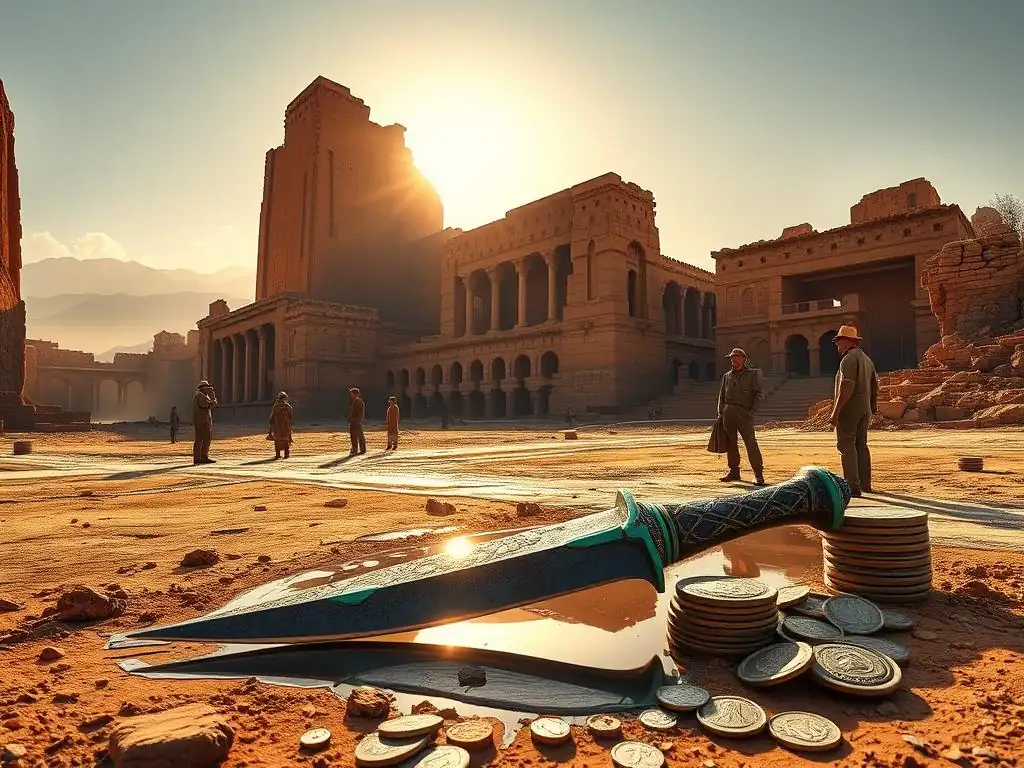
Welcome to ArchaeologyHub.org!
Unravel the mysteries of the past and embark on a journey through time. Delve into our ever-expanding digital encyclopedia of archaeological wonders, where we meticulously document the echoes of civilizations long gone. Today, we invite you to explore the fascinating story of Merv, a pivotal hub along the legendary Silk Road, and discover how its vibrant trade and commerce shaped history. Curious to learn how this ancient city thrived as a global emporium? Let's begin!
- Introduction: Merv, Crossroads of the Silk Road
- The Rise of Merv as a Major Trading Hub
- Key Commodities Traded in Merv
- The Infrastructure of Trade in Merv
- The Impact of Merv's Trade on its Cultural Landscape
- Archaeological Evidence of Trade in Merv
- The Decline of Merv's Silk Road Trade
- Legacy of Merv's Silk Road Trade
- Conclusion: Merv Silk Road Trade - A Vital Link
-
Frequently Asked Questions
- What made Merv such an important trading center on the Silk Road?
- What types of goods were commonly traded in Merv during its Silk Road prominence?
- How did the Silk Road trade impact the cultural development of Merv?
- What archaeological evidence supports the claim that Merv was a major Silk Road trading city?
- What factors contributed to the eventual decline of Merv as a major Silk Road emporium?
- Final Reflection: Echoes of Merv's Marketplace
- Unleash Your Inner Explorer: Step into Merv's Ancient Market!
Introduction: Merv, Crossroads of the Silk Road
Merv's Strategic Location and its Significance in Silk Road History
Merv, situated in the fertile oasis of the Murghab River delta in modern-day Turkmenistan, occupied an unparalleled strategic position along the ancient Silk Road. This geographical advantage placed it at the crossroads of major trade routes connecting China, India, the Middle East, and Europe. For over a millennium, Merv served as a vital transit point and a flourishing center for the exchange of goods, ideas, and cultures, making its history synonymous with the vibrancy of the Merv Silk Road Trade.
Its location provided a crucial stop for caravans traversing the vast Central Asian steppes and deserts. Merchants relied on Merv's abundant water, fertile lands, and established infrastructure as a safe haven and a place to resupply. This made Merv not merely a stopover but a thriving emporium where goods were bought, sold, and redistributed across continents, significantly contributing to the economic fabric of the ancient world.
ArchaeologyHub.org: Unveiling Merv's Commercial Past
ArchaeologyHub.org aims to illuminate the rich historical tapestry of sites like Merv, offering detailed analyses of their archaeological discoveries and historical significance. Through the lens of archaeological evidence, we can reconstruct the intricate commercial past of Merv, understanding the mechanisms, scale, and impact of its trade networks. Our exploration delves into the material culture and remnants of infrastructure that bear witness to Merv's extraordinary role as a hub of Merv Silk Road Trade.
By examining artifact profiles, urban layouts, and historical accounts, ArchaeologyHub.org provides a comprehensive understanding of how Merv functioned as a pivotal commercial center. This article specifically focuses on the economic activities that defined Merv, from the types of commodities exchanged to the sophisticated systems that supported its bustling marketplaces, offering invaluable insights into its commercial legacy.
The Rise of Merv as a Major Trading Hub
From Ancient Margiana to a Flourishing Silk Road City
Merv's origins stretch back to the Bronze Age, when it was part of the Margiana civilization, dating back to roughly 2200-1700 BCE. While early settlements engaged in localized exchange, it was under the Achaemenid Empire (c. 550-330 BCE) that Merv, then known as Margiana, began to integrate into broader regional networks. Its true ascent as a major international trading hub, however, commenced more significantly during the Parthian (c. 247 BCE – 224 CE) and particularly the Sasanian (224–651 CE) periods, when overland trade routes gained prominence.
During the Sasanian era, Merv became one of the four great cities of the empire and a vital strategic outpost. Its fortifications were strengthened, and its population grew, attracting merchants and artisans from across Eurasia. The city's peak as a center for Merv Silk Road Trade was arguably during the early Islamic period (8th-12th centuries), when it served as the capital of Khorasan and was considered one of the largest and most prosperous cities in the Islamic world, often referred to as "the mother of the world."
The Role of Agriculture and Irrigation in Supporting Merv's Trade
The sustained prosperity of Merv as a trading hub was inextricably linked to its remarkably productive agricultural hinterland, nourished by the Murghab River. The ingenious development and maintenance of extensive irrigation systems, including canals and qanats (underground aqueducts), transformed the arid landscape into a verdant oasis capable of supporting a substantial urban population and generating significant agricultural surpluses. These surpluses, primarily grain, fruits, and vegetables, were not only crucial for feeding the city's inhabitants and the thousands of merchants and their animals passing through, but also formed the basis of local trade and provisioning for long-distance caravans.
The ability to consistently produce an abundance of food and other agricultural products, such as cotton, ensured Merv's self-sufficiency and provided a stable economic foundation that underpinned its role in the Merv Silk Road Trade. Without this robust agricultural base, the massive influx of people and goods associated with international commerce would have been unsustainable, highlighting the critical interplay between environmental management and economic success in ancient urban centers.
Key Commodities Traded in Merv
Silk Road Goods Flowing Through Merv: A Detailed Overview
Merv's central position on the Silk Road ensured a vast array of goods flowed through its markets, originating from diverse regions across Asia and beyond. From the East, the most renowned commodity was, of course, silk, primarily from China, which traversed thousands of kilometers to reach Merv. Other valuable imports from China included porcelain, lacquerware, and jade. From India, spices such as pepper, cinnamon, and cardamom were highly sought after, alongside precious stones like sapphires and rubies, and exotic textiles.
From the West, goods like glass products from the Roman and Byzantine Empires, metalwork, and various finished luxury items made their way to Merv. Furs from the northern steppes and Siberia, along with horses – a crucial commodity for both trade and military purposes – were also significant items in the Merv Silk Road Trade. The city essentially functioned as a massive entrepôt, where these diverse goods were offloaded, stored, taxed, and then re-exported, often after being processed or repackaged.
Local Products of Merv: Cotton Textiles and Ceramics
While Merv was a conduit for international goods, it was also a significant producer and exporter of its own commodities, particularly renowned for its cotton textiles. The fertile Murghab oasis provided ideal conditions for cotton cultivation, and Mervian artisans developed a sophisticated textile industry, producing fine cotton fabrics that were highly prized across the Islamic world and beyond. These textiles were not merely for local consumption but constituted a valuable export commodity in the Merv Silk Road Trade, contributing significantly to the city's wealth.
In addition to textiles, Merv was known for its distinctive ceramic production. Archaeological excavations have unearthed a wealth of pottery, including glazed and unglazed wares, often decorated with unique regional motifs. These ceramics, ranging from utilitarian vessels to elaborate decorative pieces, were traded extensively throughout Central Asia and even further afield. The local production of these goods provided employment for a large segment of the population and solidified Merv's economic standing, making it a producer as well as a consumer in the grand scheme of Silk Road commerce.
The Import of Precious Metals and Luxury Goods to Merv
As a wealthy and influential city, Merv attracted a steady flow of precious metals and luxury goods, reflecting the affluence of its merchant class and ruling elite. Gold and silver, in the form of coins, ingots, and finished jewelry, were imported from various mining regions, including those in Central Asia, Afghanistan, and Persia. These metals were crucial for coinage, facilitating complex financial transactions and demonstrating the city's economic power within the Merv Silk Road Trade network.
Beyond raw metals, Merv imported exquisitely crafted luxury items that catered to the tastes of its cosmopolitan population. This included sophisticated metalwork, intricate glassware, and possibly even exotic animals for display or entertainment. The archaeological record often reveals fragments of imported luxury items, such as Chinese porcelain shards found in elite residences or finely crafted glass vessels from the Mediterranean, underscoring the city's role as a consumer of high-value goods from distant lands.
The Infrastructure of Trade in Merv
Caravanserais: Shelters and Trading Posts Along the Silk Road in Merv
The smooth operation of the Merv Silk Road Trade relied heavily on a well-developed network of infrastructure, with caravanserais forming its backbone. These fortified inns were strategically placed along trade routes, providing essential shelter, security, and services for merchants, their animals, and their valuable cargo. In and around Merv, numerous caravanserais served as vital staging posts before merchants entered the bustling city or departed on arduous journeys.
Archaeological surveys in the Merv oasis have identified the remains of several such structures, characterized by large courtyards, stables for camels and horses, individual rooms for merchants, and sometimes even mosques or baths. These caravanserais acted not only as rest stops but also as mini-trading posts where preliminary transactions might occur, information was exchanged, and goods could be temporarily stored, underscoring their integral role in facilitating the flow of commerce through Merv.
Marketplaces and Bazaars: The Heart of Merv's Commercial Activity
Within the urban fabric of Merv, the marketplaces and bazaars were the pulsating heart of its commercial life. These sprawling areas were dynamic centers where goods from across Eurasia converged and were exchanged. Archaeological excavations have revealed extensive areas within the ancient cities of Merv, such as Gyaur Kala and Sultan Kala, that were dedicated to commercial activity, characterized by rows of shops, workshops, and open spaces for vendors.
These bazaars were meticulously organized, often with specific sections dedicated to particular commodities – textiles, spices, ceramics, or precious metals. Merchants from diverse backgrounds haggled over prices, sealed deals, and conducted transactions, often using a variety of currencies including Sasanian dirhams and later Islamic dinars. The sheer scale and vibrancy of Merv's markets were frequently praised by contemporary chroniclers, cementing its reputation as a premier commercial hub on the Merv Silk Road.
Water Management Systems Supporting Merv's Trade Routes
Beyond merely sustaining agriculture, Merv's sophisticated water management systems were directly instrumental in facilitating its extensive trade. The elaborate network of canals diverted water from the Murghab River not only to irrigate fields but also to supply the vast quantities of water needed by the city's large population, its numerous caravanserais, and the thousands of camels and horses that passed through daily. Reliable access to fresh water was a fundamental prerequisite for any major trade hub in an arid region.
Furthermore, some of the larger canals may have served as internal waterways for transporting goods within the oasis, connecting agricultural areas to the urban markets. The maintenance of these complex hydraulic systems, which required significant engineering expertise and communal effort, demonstrates the profound understanding that Merv's inhabitants had of the critical link between water security and economic prosperity. This vital infrastructure ensured that Merv remained a viable and attractive destination for Merv Silk Road Trade for centuries.
The Impact of Merv's Trade on its Cultural Landscape

Cultural Exchange and Syncretism in Merv's Commercial Hub
The constant ebb and flow of merchants, pilgrims, scholars, and artisans through Merv, driven by the Merv Silk Road Trade, fostered an unparalleled environment of cultural exchange and syncretism. As people from diverse backgrounds lived and interacted within the city, ideas, technologies, artistic styles, and religious beliefs mingled and fused. Merv became a genuine melting pot, where the influences of China, India, Persia, and the Arab world were visibly interwoven into the fabric of daily life.
This dynamic cultural interaction led to the adoption and adaptation of foreign elements, enriching Merv's own distinctive cultural identity. For instance, new agricultural techniques or craft traditions might be introduced by visiting merchants, while local scholars engaged with foreign texts and philosophies. The city's cosmopolitan nature, born from its commercial prominence, made it a vibrant center for intellectual and artistic innovation.
Architectural Influences Reflected in Merv's Trading Structures
The architectural landscape of Merv vividly reflects the diverse cultural influences brought by its extensive trade connections. While local building traditions remained strong, elements from distant lands often found their way into Merv's structures, particularly those associated with commerce. For example, the grand arches and domes characteristic of Sasanian and early Islamic architecture, seen in caravanserais and market buildings, were adapted and refined.
There are even subtle hints of more distant influences, potentially from Indian or even Chinese architectural motifs, though these are more challenging to definitively identify in the archaeological record. The construction techniques and decorative elements found in Merv's elite residences and public buildings often show a sophisticated blend of various regional styles, demonstrating how wealth generated by the Merv Silk Road Trade allowed for the incorporation of diverse aesthetic trends, creating a unique Mervian architectural identity.
The Blend of Traditions: Zoroastrian, Buddhist, and Islamic Influences
Merv's role as a global trading hub meant it was not only a place of economic exchange but also a crucible of religious diversity. Prior to the Arab conquest, Merv was a significant center for Zoroastrianism, the state religion of the Sasanian Empire, with numerous fire temples. Simultaneously, it harbored a flourishing Buddhist community, with monasteries and stupas serving merchants and pilgrims traveling from the East. Nestorian Christianity also had a strong presence, with a metropolitan bishopric established by the 5th century CE, and evidence of Jewish communities exists as well.
With the advent of Islam in the 7th century, Merv gradually became a major Islamic center, particularly during the Abbasid Caliphate. However, the city's long history of religious pluralism meant that, for centuries, these diverse faiths coexisted, often facilitated by the tolerant atmosphere necessary for robust Merv Silk Road Trade. Archaeological findings, such as remains of temples, churches, and mosques in close proximity, attest to this extraordinary blend of traditions that defined Merv's spiritual landscape.
Archaeological Evidence of Trade in Merv
Excavations Unveiling Merv's Commercial Infrastructure
Extensive archaeological excavations at the Ancient Merv Archaeological Park, notably undertaken by the British-Turkmen Merv Project, have brought to light remarkable evidence of the city's commercial infrastructure. These projects have systematically investigated various urban sectors, revealing the remains of sprawling market areas, workshops, and extensive residential quarters that housed a thriving merchant class. For instance, in Sultan Kala (the Islamic city of Merv), large sections of the bazaar have been identified, indicating a meticulously planned commercial district.
Furthermore, the discovery of numerous caravanserais both within and outside the city walls provides tangible proof of the facilities that supported long-distance Merv Silk Road Trade. These structures, often massive in scale, demonstrate the organized effort required to accommodate the immense flow of goods and people. The sheer scale of the urban remains, spanning over 1,200 hectares, underscores the immense economic activity that once characterized this ancient metropolis.
Artifact Analysis: Tracing Trade Routes Through Merv's Material Culture
The analysis of artifacts recovered from Merv's archaeological layers offers invaluable insights into the extent and nature of its trade routes. Archaeologists employ techniques such as petrographic analysis and chemical fingerprinting to determine the provenance of pottery, glass, and other materials. For example, the presence of distinctive Chinese celadon wares, Indian glass fragments, or specific types of Iranian ceramics in Merv indicates direct or indirect trade links with these distant regions.
Conversely, the discovery of Mervian-made pottery or textiles in other Silk Road sites helps to map the city's own export reach. This meticulous material culture analysis provides concrete evidence of the commodities exchanged and the geographical breadth of Merv's commercial connections, allowing researchers to reconstruct the intricate network of the Merv Silk Road Trade that once flourished through the city.
Coin Hoards, Merchant Seals, and Pottery Shards as Evidence of Trade
Specific categories of archaeological finds provide particularly compelling evidence for Merv's commercial vibrancy. Coin hoards, often containing thousands of coins from various empires—including Sasanian, Umayyad, Abbasid, and even Chinese coins—are frequently unearthed. These hoards attest to the immense wealth circulating in Merv and the diversity of currencies accepted, reflecting its role as a major financial hub. The discovery of a hoard exceeding 1,500 silver dirhams from the Abbasid period, for instance, highlights the scale of transactions.
Merchant seals and clay bullae, used to secure goods or validate documents, offer direct insights into commercial administration and the identities of traders. These small but significant artifacts provide glimpses into the bureaucratic and legal frameworks that underpinned Merv Silk Road Trade. Lastly, the ubiquitous pottery shards, while seemingly mundane, are crucial. Their sheer volume, diverse origins, and chronological distribution allow archaeologists to track shifts in trade patterns, local production, and consumption habits over centuries, painting a detailed picture of Merv's economic life.
The Decline of Merv's Silk Road Trade
Shifting Trade Routes and their Impact on Merv's Economy
The decline of Merv's prominence as a major Silk Road trading hub was a gradual process influenced by several factors, including the shifting dynamics of global trade. From the 13th century onwards, new maritime trade routes, particularly those developed by European powers and facilitated by advances in shipbuilding and navigation, began to offer more efficient and often safer alternatives for transporting goods between East and West. These sea routes bypassed the traditional overland Silk Road entirely, gradually diverting much of the high-volume, high-value commerce away from Central Asian cities like Merv.
Furthermore, geopolitical changes and the rise and fall of empires along the Silk Road could disrupt established overland networks. As the political landscape shifted, new alliances formed, and old ones dissolved, the stability and security essential for long-distance caravan trade became increasingly precarious, contributing to a reduced flow of goods through Merv and a subsequent decline in its economic vitality.
Environmental Factors Contributing to Merv's Decline as a Trading Power
Beyond geopolitical and economic shifts, environmental factors also played a significant, albeit often subtle, role in Merv's decline as a trading power. The long-term sustainability of Merv's oasis economy was dependent on the consistent availability and careful management of water from the Murghab River. Over centuries of intensive agriculture and urban growth, issues such as salinization of the soil, caused by evaporation of irrigation water, could have gradually reduced agricultural productivity.
Changes in the river's course or fluctuations in its water levels, perhaps due to climatic shifts or upstream diversions, could have severely impacted the irrigation systems that sustained Merv's large population and its agricultural surplus. A weakened agricultural base would directly undermine the city's ability to feed its inhabitants and support the vast caravans, making it less attractive as a major stop in the Merv Silk Road Trade network.
The Mongol Conquest and its Devastating Effects on Merv's Commercial Activities
The most catastrophic and immediate cause of Merv's decline as a major commercial center was the Mongol conquest in 1221 CE. Led by Tolui, a son of Genghis Khan, the Mongol army besieged Merv, and after its surrender, unleashed an unparalleled wave of destruction. Historical accounts, though potentially exaggerated, describe a massacre of the city's inhabitants on an immense scale, with estimates ranging from hundreds of thousands to over a million lives lost, effectively depopulating the once-thriving metropolis.
The sophisticated irrigation systems, the very lifeblood of the oasis, were deliberately destroyed or fell into disrepair, rendering the agricultural hinterland barren. The city's magnificent buildings, including its markets, caravanserais, and residential areas, were razed. This act of unprecedented violence not only annihilated Merv's population but also dismantled its entire economic infrastructure, bringing its glorious era as a hub of Merv Silk Road Trade to an abrupt and devastating end from which it never fully recovered its former glory.
Legacy of Merv's Silk Road Trade
Merv as a UNESCO World Heritage Site: Preserving its Commercial History
Today, the ancient city of Merv stands as a UNESCO World Heritage Site, recognized for its exceptional testimony to a succession of Central Asian cultures and its profound historical significance. This designation is crucial for preserving the vast archaeological remains, including those directly related to its commercial history. The site encompasses multiple walled cities from different periods (Erk Kala, Gyaur Kala, Sultan Kala, Abdullah Khan Kala, Bairam Ali Khan Kala), each offering layers of evidence about Merv's evolution as a trading power.
The preservation efforts at Merv allow archaeologists and historians to continue studying its complex past, ensuring that future generations can learn about the intricate mechanisms of ancient trade. The remains of its markets, caravanserais, and urban infrastructure serve as tangible reminders of its vital role in global commerce and cultural exchange, safeguarding the legacy of the Merv Silk Road Trade.
Lessons from Merv: Understanding Ancient Trade Networks
The study of Merv offers invaluable lessons for understanding the complexities and dynamics of ancient trade networks. Its long history, spanning over a millennium as a significant commercial hub, provides a rich case study of how cities adapted to changing political landscapes, economic demands, and environmental challenges. Merv demonstrates the essential role of strategic location, sophisticated infrastructure, and robust local economies in sustaining long-distance trade.
Furthermore, Merv illustrates the profound impact of trade on urban development, cultural exchange, and technological diffusion across vast geographical areas. Its rise and fall serve as a powerful historical narrative about the interconnectedness of ancient civilizations and the vulnerabilities inherent in such extensive networks, offering insights into the broader patterns of global economic history, particularly concerning the Merv Silk Road Trade.
Merv's Contribution to the Global Exchange of Goods and Ideas
Merv's most enduring legacy lies in its immense contribution to the global exchange of goods and, perhaps even more significantly, ideas. As a central node on the Silk Road, it facilitated the movement of not just silk, spices, and precious metals, but also technologies like papermaking and gunpowder from China to the West, and scientific knowledge (e.g., astronomy, mathematics) from the Islamic world to Europe.
The city's cosmopolitan environment fostered a vibrant intellectual climate where scholars from diverse backgrounds interacted, translating texts and sharing innovations. Merv was a crucible where religious philosophies, artistic styles, and medical knowledge were disseminated across continents. Thus, Merv's role in the Merv Silk Road Trade extended far beyond mere commerce; it was a critical conduit for the intellectual and cultural enrichment of Afro-Eurasia, profoundly shaping the trajectory of human civilization.
Conclusion: Merv Silk Road Trade - A Vital Link
The Enduring Significance of Merv in Silk Road History
Merv stands as a quintessential example of a Silk Road city, embodying the spirit of intercontinental exchange and prosperity that characterized this ancient network. Its strategic location, fertile oasis, and sophisticated urban development allowed it to flourish for centuries as a vital link in the Merv Silk Road Trade, connecting diverse civilizations and facilitating the movement of goods, people, and ideas across Eurasia. Despite its eventual decline, its historical importance remains undiminished, serving as a powerful reminder of the deep interconnectedness of the ancient world.
The archaeological remains of Merv continue to tell the story of a city that was a beacon of commerce and culture, a testament to human ingenuity in adapting to and thriving within challenging environments. Its legacy as a major economic powerhouse on the Silk Road is etched into the very landscape of Turkmenistan, offering a window into the dynamic forces that shaped global history.
Further Research and Exploration of Merv's Commercial Past
While extensive archaeological work has unveiled much about Merv's commercial past, significant potential for further research and exploration remains. The vastness of the site means that many areas, particularly those related to the distribution networks within the city or the detailed organization of merchant guilds, are yet to be fully uncovered. Future excavations and advanced analytical techniques, such as remote sensing and detailed artifact analysis, promise to yield even deeper insights into the intricate workings of Merv's economy.
Continued investigation into the environmental factors affecting Merv's longevity, and a more granular understanding of specific trade agreements or financial instruments used, could further enrich our knowledge. By dedicating ongoing efforts to understanding Merv's commercial history, we can continue to reconstruct the vibrant narrative of the Merv Silk Road Trade, contributing to a more complete picture of ancient global commerce.
Frequently Asked Questions
What made Merv such an important trading center on the Silk Road?
Merv's strategic location at the crossroads of major Silk Road routes facilitated the exchange of goods between East and West. Its fertile oasis also allowed for agricultural production to support a large population and thriving trade network. This combination established Merv as a crucial commercial hub.
What types of goods were commonly traded in Merv during its Silk Road prominence?
A wide variety of goods passed through Merv, including silk, spices, textiles, and precious metals. Archaeological evidence also suggests trade in livestock, agricultural products, and manufactured goods. The city truly served as a melting pot of global commodities.
How did the Silk Road trade impact the cultural development of Merv?
The influx of merchants and travelers from diverse regions exposed Merv to a variety of cultures, religions, and ideas. This resulted in a cosmopolitan society that fostered innovation and intellectual exchange. Religious tolerance and artistic influences from across Eurasia are evident in Merv's archaeological record.
What archaeological evidence supports the claim that Merv was a major Silk Road trading city?
Excavations at Merv have revealed numerous caravanserais, marketplaces, and workshops, indicating a bustling commercial center. Artifacts from distant lands, such as Chinese ceramics and Indian textiles, further confirm the city's extensive trade connections. The presence of foreign coins is also indicative of commercial activity.
What factors contributed to the eventual decline of Merv as a major Silk Road emporium?
Political instability, including invasions and shifting trade routes, played a significant role in Merv's decline. The rise of maritime trade routes also diverted commerce away from the land-based Silk Road. Environmental factors, such as desertification, may have also contributed to the city's dwindling prosperity.
Final Reflection: Echoes of Merv's Marketplace
The bustling markets and vibrant exchange of goods that once defined Merv as a pivotal Silk Road emporium may seem distant echoes of a bygone era, yet the principles of interconnectedness and cultural exchange that fueled its prosperity remain profoundly relevant today. In a world increasingly defined by globalization and digital trade routes, understanding the historical precedent of Merv's success offers invaluable lessons about the enduring power of commerce to shape societies and foster understanding across borders.
The legacy of Merv extends far beyond dusty archaeological sites; it lives on in the very fabric of our globalized world. The story of Merv reminds us that trade is not merely about the exchange of commodities, but also about the exchange of ideas, technologies, and cultural values. This interconnectedness, so vital to Merv's success, is something we must actively cultivate in our own time. The road to prosperity is paved with the stones of mutual understanding and shared benefit.
This quote encapsulates the spirit of the Silk Road and the enduring relevance of Merv's role in fostering global connection.
As we reflect on the rise and fall of Merv, let us consider the lessons it offers for navigating the complexities of our own interconnected world. How can we, like the merchants of old, foster mutual understanding and build bridges across cultures through trade and commerce? Let us strive to create a future where the spirit of the Silk Road – the spirit of collaboration, innovation, and shared prosperity – continues to thrive, enriching lives and connecting communities across the globe.
Unleash Your Inner Explorer: Step into Merv's Ancient Market!
Thank you for delving into the fascinating world of Merv and its pivotal role in Silk Road trade! Now that you've gained a deeper understanding of this ancient emporium, let's turn that knowledge into action and continue the exploration.
Here are a few ways to further connect with the history of Merv:
- Craft Your Own Silk Road Artifact: Try your hand at recreating a simple craft item, like a clay seal or a miniature caravan, inspired by Merv's trade goods. This tactile experience will deepen your connection to the city's past.
- Explore Online Archives: Dig deeper into archaeological reports and historical texts related to Merv. Many institutions offer digitized resources that can unveil even more hidden stories.
- Share This Discovery: Spread the word about Merv's historical significance with friends or on social media. Help others uncover this amazing Silk Road city!
What aspect of Merv's trade and commerce resonates most with you, and how might its historical lessons apply to our modern world?