
Divine Patronage and City Identity: Enki in Eridu, Inanna and Anu in Uruk

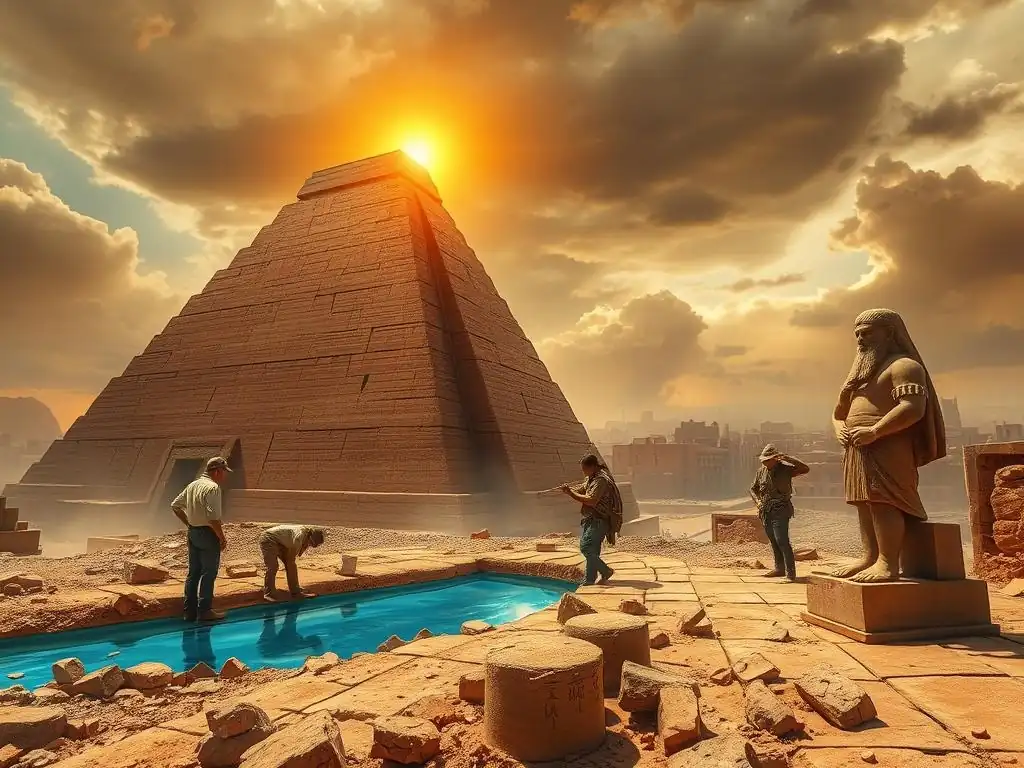
Welcome to ArchaeologyHub.org, your digital window into the past! Ever wondered how a deity could shape an entire city's identity? Dive into the fascinating story of Enki and his profound influence on Eridu, one of Mesopotamia's oldest urban centers. Explore how divine patronage intertwined with daily life, crafting a unique cultural landscape. What secrets lie buried beneath the sands? Discover the answers and more as we unravel the intricate connection between the gods and the cities they protected.
- Introduction: The Divine Foundation of Mesopotamian Cities
- Enki in Eridu: The God of Wisdom and the First City
- Inanna and Anu in Uruk: Divine Power and Urban Innovation
-
Comparing Divine Patronage: Enki in Eridu vs. Inanna and Anu in Uruk
- Contrasting Divine Attributes: Wisdom and Creation vs. Love, War, and Cosmic Order
- Temple Architecture and City Planning: Reflecting the Deities' Influence
- The Evolution of Urban Identity: Eridu's Sacred Origin vs. Uruk's Dynamic Metropolis
- The Role of Kingship: Early Priesthood in Eridu vs. The Gilgamesh Tradition in Uruk
- The Legacy of Divine Patronage: Shaping Mesopotamian City-States
- Conclusion: Divine City Identity in Ancient Mesopotamia's Urban Landscape
-
Frequently Asked Questions
- ### What was Enki's role in establishing Eridu's identity?
- ### How did Enki's patronage influence the archaeological findings at Eridu?
- ### How did the divine patronage of Enki in Eridu compare to that of Inanna and Anu in Uruk?
- ### What does the relationship between Enki and Eridu tell us about ancient Mesopotamian beliefs?
- ### How does ArchaeologyHub.org contribute to understanding the "Enki Eridu city identity" keyword?
- Final Reflection: Echoes of Divinity in Urban Identity
- Unearth Your Connection to Ancient Mesopotamia!
Introduction: The Divine Foundation of Mesopotamian Cities
Understanding the Role of Patron Deities in Ancient Mesopotamia
Ancient Mesopotamian cities were not merely geographical locations but deeply spiritual entities, each believed to be under the direct patronage of a specific deity. This divine guardianship was fundamental to the city's identity, influencing its governance, economy, architecture, and daily life.
The relationship between a city and its patron god or goddess was reciprocal: the deity provided protection and prosperity, while the city, through its temple and rituals, served as the deity's earthly dwelling and center of worship. This symbiotic bond permeated every aspect of urban existence, defining the very essence of what it meant to be a citizen of a particular city-state.
The concept of divine patronage was expressed through elaborate temple complexes, which were often the largest and most significant structures in the city. These temples were not just places of worship but also economic powerhouses, owning vast tracts of land, employing numerous people, and accumulating immense wealth through offerings and trade.
The priests and priestesses who served these deities held significant political and social influence, often mediating between the divine and the human realms. This intricate system ensured that the city's prosperity was directly linked to the favor of its patron deity, solidifying the deity's central role in the city's collective consciousness.
Eridu and Uruk: Cradle of Civilization and Early Urban Centers
Among the earliest and most influential urban centers in Mesopotamia were Eridu and Uruk, cities that played pivotal roles in the development of Sumerian civilization. Eridu, often considered the first city, holds mythical status as the primordial settlement where kingship "descended from heaven." Its deep archaeological layers reveal continuous occupation from the Ubaid period (c. 6500-3800 BCE) onwards, with a sequence of temples built one upon another, dedicated to the god Enki. This unbroken line of religious devotion highlights Eridu's significance as a sacred foundation for the later Sumerian world.
Uruk, on the other hand, emerged as a monumental urban hub during the late Uruk period (c. 4000-3100 BCE), marking a revolutionary shift towards large-scale urbanism, monumental architecture, and the invention of writing. It was home to the powerful deities Inanna and Anu, whose cults profoundly shaped its political and cultural trajectory. While Eridu represented the ancient, sacred origins of Mesopotamian urbanism, Uruk exemplified its dynamic, expansive future, pioneering administrative complexity and imperial ambitions. Understanding the divine patronage in these two cities provides crucial insights into the formation of early Mesopotamian city identity and the evolution of urban societies.
Enki in Eridu: The God of Wisdom and the First City
Enki as Patron Deity: Shaping Eridu's Identity as the Primordial City
Enki, the Sumerian god of water, wisdom, magic, and creation, was the revered patron deity of Eridu, the city often described in Mesopotamian tradition as the world's first city. Eridu's identity was inextricably linked to Enki's dominion over the Abzu, the cosmic freshwater ocean beneath the earth, from which all life was believed to spring. This association imbued Eridu with a sacred, primordial status, positioning it as the source of divine wisdom and the foundation of civilization. The city's very name, possibly meaning "good city" or "faraway place," resonated with its mythical origins as a place chosen by the gods.
The concept of Enki Eridu city identity was reinforced through various Sumerian myths, particularly those detailing Enki's role in establishing order and bestowing the me (divine decrees or attributes of civilization) upon humanity. These myths often depicted Eridu as the place where the essential elements of civilized life – agriculture, crafts, law, and kingship – were first revealed. The city was seen as a beacon of knowledge and stability, reflecting Enki's attributes of foresight and benevolent guardianship. This deep theological connection ensured that Eridu was not just a settlement, but a sacred archetype for all subsequent Mesopotamian cities.
The E-abzu Temple at Eridu: Archaeological Insights into Sumerian Worship
The E-abzu, Enki's temple in Eridu, is one of the most archaeologically significant structures in Mesopotamia, offering unparalleled insights into early Sumerian religious practices and architectural evolution. Excavations at the site of Tell Abu Shahrain revealed a remarkable sequence of 17 superimposed temple levels, dating from the Ubaid period (c. 5400 BCE) to the Early Dynastic period (c. 2900-2350 BCE). The earliest structure, a small one-room shrine, gradually evolved over millennia into a monumental complex, demonstrating a continuous tradition of worship centered around a single deity.
The consistent architectural plan across these levels—a rectangular building with an altar at one end and a central offering table—suggests a deeply ingrained ritual tradition. The presence of fish bones in the earliest temple levels, even those far from the ancient marshlands, strongly indicates offerings to Enki, the god of the aquatic realm. This tangible archaeological evidence directly supports the textual tradition associating Enki with water and Eridu, highlighting how material culture reinforces the Enki Eridu city identity and provides a rare glimpse into the persistent religious beliefs that shaped early urban development.
The Significance of Water and Abzu in Enki's Cult and Eridu's Mythology
Water was paramount to life in ancient Mesopotamia, and Enki's dominion over the Abzu—the deep, fresh underground water reservoir—made him a vital deity. The very existence of Eridu, located near the Euphrates River and ancient marshlands, was intrinsically tied to water resources. Enki's association with the life-giving waters, both earthly and cosmic, cemented his role as a provider of abundance and a source of purification and healing. This connection was not merely symbolic but practical, as the city's agricultural prosperity depended directly on irrigation, a domain linked to Enki's powers.
In Sumerian cosmology, the Abzu was also the source of primordial wisdom and magic, making Enki the master of incantations and spells. This aspect of his cult contributed to Eridu's reputation as a center of priestly knowledge and ritual expertise. Myths like "Enki and the World Order" describe him establishing the functions of various cities and their deities, often involving the flow of waters and the distribution of the me. Thus, the physical environment of Eridu, its mythological narratives, and the attributes of its patron deity converged to forge a coherent Enki Eridu city identity rooted in wisdom, creation, and the life-sustaining power of water.
Enki's Role in Early Sumerian Kingship and Cosmic Order
Enki's influence extended beyond the spiritual realm into the very foundations of Sumerian kingship and cosmic order. According to the Sumerian King List, Eridu was the first city to hold kingship after the flood, a testament to its foundational status. Enki, as the god who brought the me (divine laws and attributes of civilization) to humanity, was seen as the ultimate source of legitimate rule and societal structure. Kings, particularly in the early periods, often sought his blessing and claimed to uphold the order he established.
Moreover, Enki was a key figure in the pantheon responsible for maintaining the cosmic balance. His wisdom was often sought by other gods, and he played a crucial role in various creation myths and narratives of divine intervention. The city of Eridu, as his prime cult center, therefore served as a powerful symbol of divine authority and the orderly progression of civilization. The enduring Enki Eridu city identity thus encompassed not only its sacred origins but also its perceived role in establishing the very framework of Sumerian political and cosmic existence.
Inanna and Anu in Uruk: Divine Power and Urban Innovation
Inanna, Queen of Heaven and Earth: Defining Uruk's Dynamic Identity
Uruk, one of the largest and most influential cities of ancient Mesopotamia, found its dynamic identity largely shaped by the powerful cult of Inanna, the goddess of love, war, and fertility. As the patron deity of Uruk's Eanna district (meaning "House of Heaven"), Inanna embodied the city's vibrant energy, its rapid expansion, and its aggressive pursuit of regional dominance. Her dual nature—encompassing both the life-giving aspects of fertility and the destructive force of warfare—mirrored Uruk's own trajectory as a center of immense agricultural productivity and a formidable military power.
The narratives surrounding Inanna, particularly her descent to the underworld and her sacred marriage with Dumuzi, were central to Uruk's ritual life and public festivals. These rituals were not merely religious observances but also served to legitimize the ruler and ensure the city's prosperity. The colossal scale of the Eanna precinct, with its monumental temples and elaborate art, physically manifested Inanna's pervasive presence and reinforced Uruk's self-perception as a divinely favored metropolis destined for greatness.
While Inanna represented the earthly dynamism of Uruk, Anu, the supreme sky god and father of the gods, provided the city with a profound claim to cosmic authority. His cult center, the Anu District with its towering White Temple (a ziggurat), stood as a rival, yet complementary, sacred precinct to Inanna's Eanna. Anu's domain encompassed the vastness of the heavens, symbolizing ultimate power, destiny, and the source of divine kingship. His presence in Uruk elevated the city's status beyond mere earthly prominence, suggesting a direct connection to the highest celestial powers.
The co-existence and importance of both Inanna and Anu within Uruk's religious landscape reflected the city's multifaceted ambitions. Anu's cult provided a theological foundation for the concept of divine kingship, where the ruler was seen as the earthly representative of divine will. This dual patronage—Inanna for earthly vitality and conquest, Anu for cosmic legitimacy and universal order—provided Uruk with a comprehensive divine mandate for its unprecedented urban and political development.
The Eanna and Anu Districts: Uruk's Sacred Precincts and Urban Development
The Eanna and Anu Districts were the twin hearts of Uruk, monumental sacred precincts that stand as testaments to the city's revolutionary urban development. The Eanna precinct, dedicated to Inanna, grew to encompass an area of approximately 50 hectares, featuring massive structures like the Limestone Temple and the Cone Mosaic Temple. These buildings, constructed from innovative materials and techniques, required an immense mobilization of labor and resources, signaling Uruk's organizational prowess and its capacity for monumental undertakings. Archaeological finds, such as the Uruk Vase depicting offerings to Inanna, illustrate the vibrancy of her cult within this precinct.
Adjacent to Eanna, the Anu District was dominated by the Anu Ziggurat and its White Temple, a structure that rose approximately 13 meters above the surrounding plain. This towering temple, visible for miles, served as a powerful symbol of Anu's celestial presence and Uruk's connection to the divine cosmos.
The sheer scale and architectural sophistication of both districts underscore Uruk's role as the world's first true metropolis, with an estimated population reaching between 50,000 and 80,000 by the Early Dynastic period. These sacred complexes were not just religious sites but central nodes in the city's administrative, economic, and social life, physically embodying Uruk's divine patronage and its groundbreaking urbanism.
The Interplay of Divine Patronage and Uruk's Rise to Hegemony
The powerful divine patronage of Inanna and Anu was instrumental in Uruk's unprecedented rise to hegemony in southern Mesopotamia. Inanna's association with warfare and prosperity provided the ideological impetus for Uruk's expansionist policies and its ability to mobilize resources for large-scale projects, including irrigation systems and defensive walls. The city's military successes and economic innovations were often attributed to her divine favor, reinforcing the legitimacy of its rulers and their ambitions.
Concurrently, Anu's supreme authority lent a cosmic legitimacy to Uruk's claim as a leading city-state. The invention of cuneiform writing in Uruk, initially for administrative and economic purposes within the temple economies, further solidified the city's intellectual and organizational dominance. This fusion of divine favor, represented by its powerful patron deities, with practical innovations in administration and technology, allowed Uruk to establish a vast network of influence, becoming the archetype for subsequent Mesopotamian urban centers and laying the groundwork for the concept of imperial power.
Comparing Divine Patronage: Enki in Eridu vs. Inanna and Anu in Uruk
Contrasting Divine Attributes: Wisdom and Creation vs. Love, War, and Cosmic Order
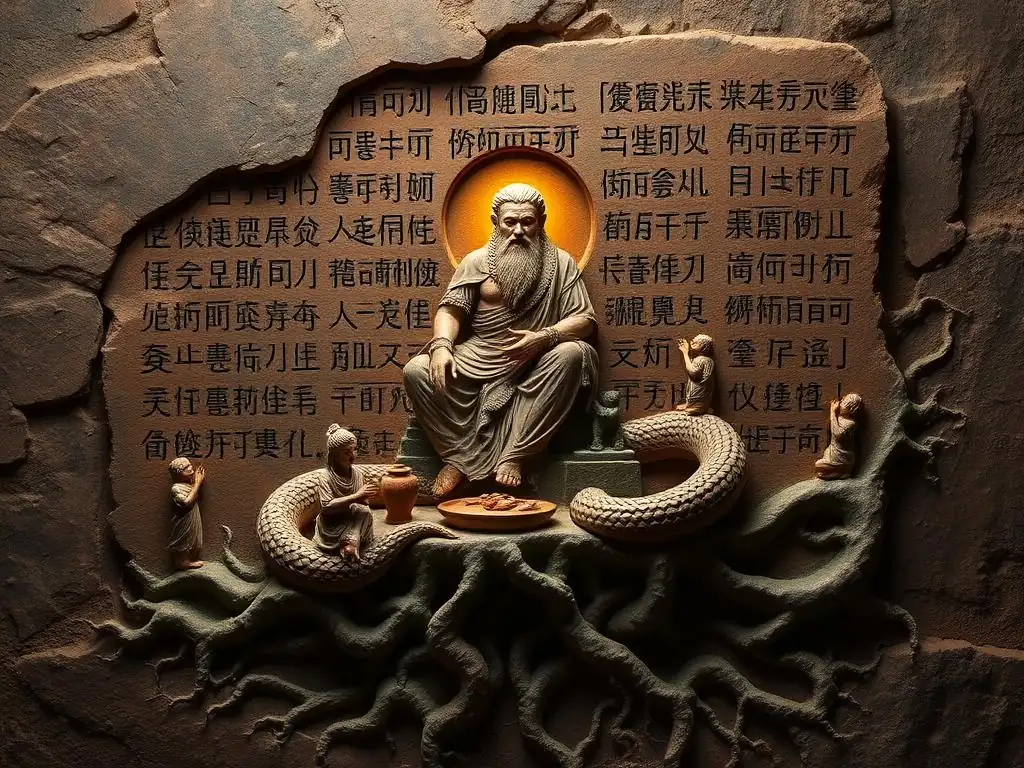
The patron deities of Eridu and Uruk embodied distinct attributes that profoundly shaped their respective cities' identities and roles in Mesopotamian civilization. Enki, the patron of Eridu, was primarily associated with wisdom, fresh water, creation, and the me (divine decrees that govern civilization). His character is often portrayed as benevolent, a bringer of order and knowledge, responsible for the well-being of humanity through his intelligent design and foresight. Eridu, as his city, thus gained an identity rooted in ancient wisdom, foundational principles, and primordial sacredness. The Enki Eridu city identity emphasized its role as the origin point of civilization and divine order.
In stark contrast, Uruk's primary patroness, Inanna, embodied a more dynamic and complex set of attributes: love, fertility, and warfare. Her cult was vibrant, passionate, and sometimes volatile, reflecting the ambitious and expansive nature of Uruk itself. Complementing Inanna, Anu, the sky god, represented cosmic authority, ultimate power, and destiny. Together, Inanna and Anu provided Uruk with a divine mandate for both earthly prosperity and celestial legitimacy. While Eridu's divine patronage pointed to ancient origins and established order, Uruk's pointed to ongoing innovation, growth, and the active pursuit of power and influence.
Temple Architecture and City Planning: Reflecting the Deities' Influence
The architectural evolution and city planning of Eridu and Uruk strikingly reflect the influence of their respective patron deities. Eridu's E-abzu temple, built upon the same sacred spot for millennia, demonstrates a deep, continuous reverence for Enki and his primordial status. The modest scale of its earliest shrines, gradually growing but always maintaining a core sacred focus, mirrors Enki's role as a stable, foundational deity. The city's layout, while not as extensively excavated as Uruk's, suggests a more organic growth around its sacred center, emphasizing its role as a spiritual origin point.
Uruk, conversely, showcased an unprecedented scale of monumental construction, particularly within the Eanna and Anu districts. The massive temples, ziggurats, and extensive precincts dedicated to Inanna and Anu speak to a city with vast resources, a highly organized labor force, and a powerful, centralized administration.
The sheer size of Uruk's sacred architecture, like the White Temple reaching approximately 13 meters high, and the Eanna precinct covering around 50 hectares, physically manifested the immense power of Inanna and Anu and Uruk's own imperial ambitions. This monumentalism reflects Inanna's dynamic energy and Anu's cosmic authority, demonstrating a deliberate urban planning designed to awe and impress.
The Evolution of Urban Identity: Eridu's Sacred Origin vs. Uruk's Dynamic Metropolis
The divine patronage in Eridu and Uruk contributed to distinct evolutionary paths for their urban identities. Eridu, with Enki as its patron, cultivated an identity as the sacred origin, the first city where kingship descended from heaven and the me were bestowed. Its identity was rooted in antiquity, wisdom, and a foundational role in Sumerian cosmology. This Enki Eridu city identity provided a moral and historical precedent for all subsequent urban centers, emphasizing continuity and the enduring power of primordial traditions. Eridu remained a revered pilgrimage site, even as its political influence waned.
Uruk, under the patronage of Inanna and Anu, developed an identity as a dynamic, innovative, and expansionist metropolis. It was the crucible of urban revolution, where writing was invented, monumental architecture flourished, and the concept of the true city-state took shape. Its identity was characterized by growth, power, and a pioneering spirit. While Eridu represented the sacred past, Uruk forged the urban future, becoming the archetype for subsequent Mesopotamian empires and demonstrating the potential for massive human organization and centralized authority.
The Role of Kingship: Early Priesthood in Eridu vs. The Gilgamesh Tradition in Uruk
The role of kingship in Eridu and Uruk also diverged, influenced by their respective divine patrons. In early Eridu, the relationship between the city and Enki appears to have been primarily mediated through an influential priesthood. The continuous sequence of temple structures suggests a long tradition of priestly authority, where the high priest served as the primary intermediary between Enki and the community. Kingship, while present in myth as originating in Eridu, seems to have been initially less pronounced in its political manifestation compared to later periods, with religious authority perhaps holding primacy in the earliest phases of Enki Eridu city identity.
In Uruk, the relationship between divine patronage and kingship was more explicitly intertwined with the rise of a powerful secular ruler. The epic of Gilgamesh, Uruk's legendary king, highlights a ruler who, while acknowledging the gods (especially Inanna and Anu), also asserts human agency and ambition.
Kings in Uruk, such as Enmerkar and Lugalbanda, are depicted as active agents of expansion and builders of monumental structures, directly harnessing the divine favor of Inanna and Anu to legitimize their imperial ambitions. This shift from a potentially more priest-centric authority in early Eridu to a powerful, divinely sanctioned king in Uruk marks a significant evolution in the concept of urban governance and its relationship with the divine.
The Legacy of Divine Patronage: Shaping Mesopotamian City-States
The Enduring Influence of Enki, Inanna, and Anu on Sumerian Religion and Urbanism
The cults of Enki in Eridu and Inanna and Anu in Uruk left an indelible mark on Sumerian religion and the trajectory of Mesopotamian urbanism. Enki's association with wisdom, creation, and the me continued to resonate throughout Mesopotamian thought, influencing later theological developments and legal codes. His role as a benevolent provider and a source of magical knowledge persisted, ensuring Eridu's enduring status as a sacred site and a symbol of ancient origins. The Enki Eridu city identity became synonymous with deep-rooted tradition and divine order.
Inanna's dynamic and multifaceted cult, embracing both fertility and warfare, became a paradigm for subsequent goddesses in the Near East, notably Ishtar in Akkad and Assyria. Her passionate narratives and powerful iconography influenced art, literature, and ritual across millennia.
Anu, as the supreme sky god, maintained his position at the apex of the pantheon, symbolizing ultimate divine authority. The monumental scale of Uruk's temples and its innovative urban planning, driven by the cults of Inanna and Anu, set a precedent for all future Mesopotamian cities, demonstrating how divine patronage could inspire and legitimize unprecedented levels of societal organization and architectural ambition.
The Impact on Subsequent Mesopotamian Cities and their Chosen Deities
The models of divine patronage established in Eridu and Uruk profoundly influenced how subsequent Mesopotamian cities chose and honored their own patron deities. The concept of a city's identity being intrinsically tied to its divine protector became a standard feature of the Mesopotamian urban landscape. Cities like Ur, with its moon god Nanna, and Nippur, with its wind god Enlil, each cultivated unique identities shaped by their chosen patrons. The architectural grandeur of Ur's ziggurat, for instance, reflected Nanna's celestial majesty, echoing the monumental scale pioneered in Uruk.
Furthermore, the theological principles articulated in the myths of Enki, Inanna, and Anu provided a foundational framework for the entire Mesopotamian pantheon. The attributes and relationships between these primordial deities informed the understanding of other gods and their roles within the cosmic order. Cities consciously adopted patron deities whose attributes aligned with their own aspirations, whether for wisdom and stability (like Eridu), or for power, prosperity, and expansion (like Uruk). This established a template where divine favor was not just a religious belief but a crucial component of political legitimacy and urban development.
Examine how these examples shaped the concept of divine kingship and imperial ideology
The distinct yet complementary examples of divine patronage in Eridu and Uruk were foundational in shaping the Mesopotamian concept of divine kingship and imperial ideology. In Eridu, the emphasis on Enki as the bestower of the me and the source of primordial kingship provided a religious underpinning for the very idea of legitimate rule. The king, whether a priest-king or a secular ruler, was seen as a steward of the divine order established by Enki, tasked with maintaining the principles of civilization he had granted. This early association of kingship with divine sanction laid the groundwork for later royal ideologies.
In Uruk, the relationship between powerful deities like Inanna and Anu and the city's dynamic growth solidified a more assertive form of divine kingship. Kings like Gilgamesh, though semi-mythical, embody a ruler who acts with divine favor to achieve greatness, build monumental structures, and expand the city's influence.
The scale of Uruk's urbanism, justified by the patronage of Inanna and Anu, fostered an imperial ideology where the king, as the earthly representative of these powerful deities, was authorized to extend his dominion. This set a precedent for later empires, such as the Akkadian Empire under Sargon, who would invoke divine favor to justify their vast conquests and centralized rule, directly building upon the foundations laid by Eridu's sacred origins and Uruk's urban revolution.
Conclusion: Divine City Identity in Ancient Mesopotamia's Urban Landscape
The Intertwined Fates of Gods and Cities: Eridu, Uruk, and the Sumerian Legacy
The histories of Eridu and Uruk vividly illustrate the profound and intertwined fates of gods and cities in ancient Mesopotamia. Eridu, with Enki as its patron, established the very concept of a divinely founded city, a sacred origin point steeped in wisdom and primordial order. Its Enki Eridu city identity ensured its enduring reverence as a site of deep historical and religious significance, even as other cities rose to political prominence. The continuous succession of E-abzu temples stands as a testament to the persistent belief in Enki's foundational role.
Uruk, under the powerful patronage of Inanna and Anu, showcased the explosive potential of urbanism driven by divine ambition. Its monumental architecture, administrative innovations, and expansive influence were seen as direct manifestations of its deities' favor. Together, these two cities, representing distinct phases and aspects of early urban development, demonstrate how divine patronage was not merely a religious belief but a fundamental force shaping the physical, social, and political landscapes of ancient Mesopotamia. Their legacies, preserved through archaeological finds and ancient texts, continue to inform our understanding of early human civilization.
Further Research: Exploring the Complex Relationship Between Religion and Urban Development in the Ancient Near East
The intricate relationship between religion and urban development in the Ancient Near East remains a rich field for further archaeological and textual research. Investigating how the specific attributes of patron deities influenced city planning, economic structures, and social hierarchies beyond Eridu and Uruk offers valuable insights. For instance, detailed comparative studies of temple economies in different city-states could illuminate varying scales of divine control over urban resources.
Future excavations and analyses of early urban sites, particularly those in less explored regions, could uncover new evidence regarding the earliest forms of divine patronage and their role in the very genesis of cities. Furthermore, interdisciplinary approaches combining archaeological data with comparative mythology and sociological theories can deepen our understanding of how religious beliefs fostered the complex organizational structures necessary for the emergence and sustenance of ancient urban centers across the broader Ancient Near East.
Frequently Asked Questions
### What was Enki's role in establishing Eridu's identity?
Enki, the god of wisdom and water, was considered the divine patron of Eridu. This association cemented Eridu's identity as an ancient and sacred city from the earliest periods of Mesopotamian civilization.
### How did Enki's patronage influence the archaeological findings at Eridu?
Archaeological evidence reveals that temples dedicated to Enki were continuously rebuilt and expanded throughout Eridu's history. This demonstrates the enduring importance of Enki in the city's cultural and religious landscape.
### How did the divine patronage of Enki in Eridu compare to that of Inanna and Anu in Uruk?
While Enki was central to Eridu's identity, Inanna and Anu played similar roles in Uruk. Each city developed a unique cultural identity deeply intertwined with their respective divine patrons.
### What does the relationship between Enki and Eridu tell us about ancient Mesopotamian beliefs?
The association between a god and a city reflects the Mesopotamian belief that cities were divinely ordained. The god's presence and power were essential for the city's prosperity and well-being.
### How does ArchaeologyHub.org contribute to understanding the "Enki Eridu city identity" keyword?
ArchaeologyHub.org provides detailed information on Eridu, including the significance of Enki's temples and the city's historical timeline. This allows users to explore the "Enki Eridu city identity" through various archaeological findings and historical analyses.
Final Reflection: Echoes of Divinity in Urban Identity
The exploration of Enki in Eridu and Inanna and Anu in Uruk reveals more than just ancient religious practices; it underscores the enduring power of divine patronage in shaping urban identity. The echoes of these Mesopotamian deities resonate even today, reminding us that cities are not merely collections of buildings, but living entities imbued with the values and aspirations of their people, often rooted in a shared spiritual or cultural heritage.
This journey through the ancient cities has profoundly highlighted the intricate dance between belief and place, demonstrating how deeply intertwined our identities are with the spaces we inhabit and the stories we tell about them. The legacy of Enki, Inanna, and Anu serves as a potent reminder that the spirit of a city is not static, but rather a dynamic force, constantly evolving yet forever tethered to its origins. Cities have the capability of providing something for everybody, only because, and only when, they are created by everybody.
- Jane Jacobs. This quote encapsulates the idea that the collective identity of a city, much like that of Eridu and Uruk, is a product of its inhabitants and their shared beliefs.
As we conclude this exploration of Enki in Eridu and Inanna and Anu in Uruk, let us consider the divine patrons, or perhaps the guiding principles, that shape our own cities and communities. What values do we choose to embody in the spaces we create? What stories will future generations tell about us? Let us strive to build cities that not only meet our practical needs but also nourish our souls, reflecting the best of humanity and leaving a legacy worthy of the gods themselves.
Unearth Your Connection to Ancient Mesopotamia!
Thank you for delving into the fascinating world of Mesopotamian city-states and their divine patrons! Now that you've explored the intricate relationship between Enki, Inanna, Anu, and their cities, let's bring that knowledge to life.
Here are a few ways to continue your journey:
- Imagine yourself as an ancient city planner: How would you honor your city's patron deity in its architecture and daily life? Consider the practical and symbolic implications of this influence.
- Research how similar relationships between deities and cities influenced other ancient cultures – compare and contrast Mesopotamia with Ancient Egypt or Greece.
- Share this article with fellow history enthusiasts and discuss: Which Mesopotamian city would you most want to visit, and why?
What aspect of Mesopotamian city planning or divine patronage resonates most with you, and how does it challenge our modern understanding of urban development?