The Influence of Geography on Indus Valley Urban Settlement Patterns
🌍 Explore how the diverse geography of the Indus Valley shaped its urban settlement patterns, revealing the crucial role of environmental features…
Read article
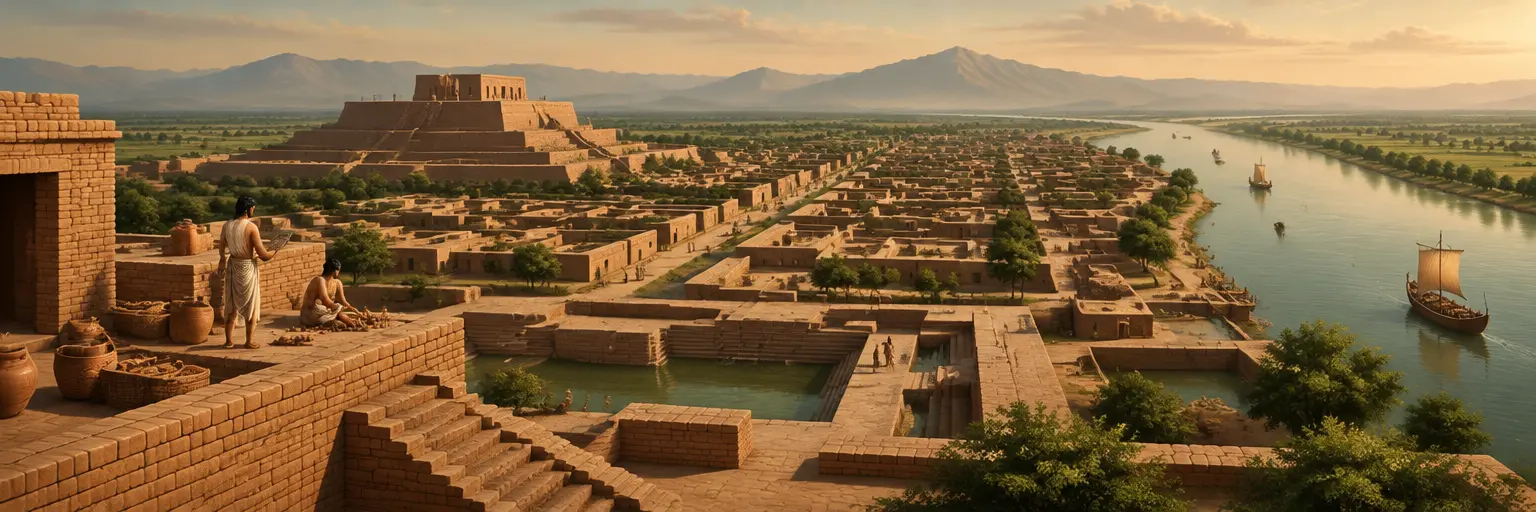
Step back in time to the Indus Valley Civilization, one of the world’s earliest and most advanced urban societies, where grid-planned cities like Mohenjo-Daro and Harappa thrived over 4,000 years ago. This subcategory explores the remarkable engineering and municipal foresight that defined South Asian antiquity—from sophisticated drainage systems and standardized baked-brick architecture to precise weight and measure systems that facilitated long-distance trade. Dive into archaeological evidence revealing water management technologies, public baths, and multi-story homes, offering a lens into daily life, governance, and innovation. URBAN PLANNING here was not accidental: streets aligned to cardinal directions, efficient sanitation, and granary complexes demonstrate a centralized authority unlike any contemporary civilization. For enthusiasts of ancient tech, this section uncovers metallurgy, seal-making, and even early urban sustainability practices. Ideal for students, researchers, and history buffs, this detailed study bridges excavation findings with interpretive analysis, showcasing how the Indus people engineered resilience and order amid changing rivers and climates.
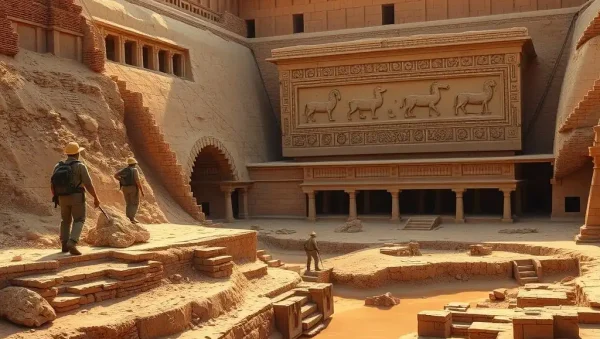
🌍 Explore how the diverse geography of the Indus Valley shaped its urban settlement patterns, revealing the crucial role of environmental features…
Read article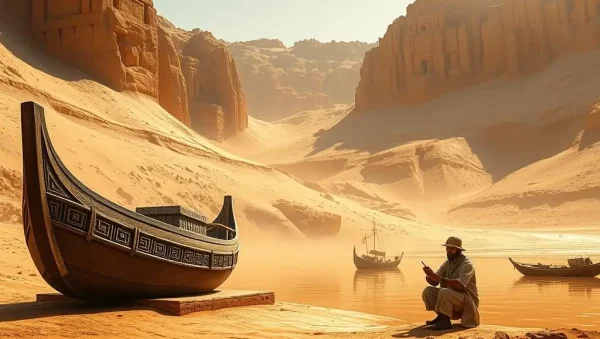
🚀 Explore the evolution of IVC riverine boat transport, from ancient bullock carts and riverine boats to sophisticated maritime vessels, revealing how…
Read articleWelcome to ArchaeologyHub.org’s deep dive into the Indus Valley Civilization, one of the world’s earliest and most sophisticated urban societies. Flourishing around 2500–1900 BCE in present-day Pakistan and northwest India, this civilization astonishes archaeologists with its grid-planned cities, advanced drainage systems, and technological innovations. In this subcategory, we explore the engineering marvels, urban design principles, and daily technologies that made Mohenjo-daro, Harappa, and Dholavira legendary. Whether you’re a student, enthusiast, or researcher, this section offers a rich, keyword-optimized resource on ancient South Asian engineering, water management, and craft production.
Indus cities were not organic settlements; they were meticulously designed using a grid system with main streets running north-south and east-west, intersecting at right angles. This urban planning, visible at Mohenjo-daro and Harappa, reflects centralized authority and advanced surveying techniques. Streets were wide enough for carts, and lanes branched off systematically, creating distinct residential and public zones. The use of standardized fired bricks, with a ratio of 1:2:4, ensured uniform construction across vast distances—a hallmark of Indus engineering that facilitated rapid rebuilding and defense against floods.
For SEO-focused readers, this section highlights the Indus Valley street planning, ancient urban grid systems, and Harappan architectural standards. The presence of covered drains alongside every main street underscores a forward-thinking approach to sanitation, unmatched in contemporary civilizations like Egypt or Mesopotamia. Archaeological excavations reveal that even small side lanes had drainage connections, indicating a civic mindset prioritizing public health. This meticulous layout not only eased movement but also allowed efficient management of monsoon rainwater, reducing erosion and waterlogging—a technological achievement that influenced later South Asian city design.
The Indus Valley’s most celebrated technological feat is its water management system. Each city featured covered, lined drainage channels constructed from brick and gypsum mortar, with manholes for cleaning—an innovation absent in most ancient societies. Private homes had bathing platforms and toilets connected to these drains, while public wells, like the famous Great Bath at Mohenjo-daro, provided purified water. The Great Bath, with its waterproof bitumen coating, remains a masterpiece of hydraulic engineering, likely used for ritual purification. Rainwater harvesting and stepped wells, such as those at Dholavira, demonstrate sophisticated storage techniques for arid climates.
Readers exploring this subtopic will discover ancient drainage systems, Indus water conservation, and Harappan public health engineering. The deliberate separation of potable and waste water flows indicates a scientific understanding of contamination. Excavators have found evidence of water-lifting devices and reservoir systems that supported dense populations, proving these cities could sustain over 40,000 residents. This technical mastery not only prevented disease outbreaks but also enabled agricultural surplus, fueling trade and urbanization. Such innovations positioned the Indus civilization centuries ahead of its contemporaries in urban hydraulics.
Indus technology extended to metallurgy, with artisans producing sophisticated bronze, copper, and even tin alloys. They crafted tools, weapons, and ornaments using lost-wax casting and forging techniques, as evidenced by artefacts from Chanhu-daro. Remarkably, they developed a standardized system of weights based on binary and decimal ratios, with cubic chert stones used for trade—accurate to within 0.125 grams. This precision enabled fair commerce across a vast network stretching to Mesopotamia, as seen in seals and beads found in Sumerian sites. Additionally, specialized kilns produced faience and glazed steatite, showcasing advanced ceramic technology.
This facet covers ancient metallurgy, Harappan trade weights, and Indus craft specialization. The discovery of workshop areas in Mohenjo-daro and Lothal reveals mass production of beads, shell bangles, and terracotta figurines, indicating organized labor and quality control. A bronze dancing girl figurine, with its lost-wax detail, exemplifies artistic and technological synergy. Furthermore, the presence of imported lapis lazuli and carnelian proves active maritime trade, facilitated by dockyards like Lothal’s tidal dock—the world’s earliest known. These technological advances not only met local needs but also positioned the Indus as a global manufacturing hub.
Sustaining large cities demanded advanced agriculture, and the Indus people pioneered flood-based irrigation using the Indus River’s seasonal cycles. They constructed levees, canals, and field boundaries to manage water, as seen in the Ghaggar-Hakra basin. Multiple cropping systems, including wheat, barley, and pulses, were supported by plows drawn by oxen—a significant upgrade from hand digging. Archaeobotanical evidence shows they cultivated cotton, making them among the first to develop textile production from this crop. Granaries, such as the elevated platforms at Harappa, ensured food storage during lean seasons, reflecting centralized distribution.
For those researching ancient irrigation systems, Indus agriculture technology, and Harappan food storage, this section provides essential insights. The use of crop rotation and controlled flooding demonstrates a pragmatic understanding of soil fertility, avoiding salinization that plagued other civilizations. Recent studies using satellite imagery reveal extensive field networks and check dams in the hinterlands, indicating landscape-scale engineering. Surplus grain not only fed cities but also supported specialized laborers, including scribes and craftsmen. This agricultural base was the bedrock of Indus prosperity, enabling urbanization without empire—a unique decentralized model among ancient cultures.
Indus technology also flourished in material culture, with pottery crafted on fast wheels and fired in controlled two-stage kilns, producing polished red and black ware. More notable are the steatite seals, each with unique motifs like the unicorn or humped bull, and a yet-undeciphered script. These seals, used for trade and administrative control, display precise carving—perhaps using copper chisels and abrasive powders. The script, with over 400 symbols, was inscribed on tablets, tools, and even pottery, suggesting widespread literacy, albeit limited. Their writing system remains a mystery, but its uniformity across sites points to a shared communication technology.
This segment addresses Indus Valley script, Harappan seal-making, and ancient pottery technology. The seals’ standardized size (about 2×2 cm) and iconography facilitated quick recognition in trade, akin to modern barcodes. The discovery of a scales-and-weight system alongside seals indicates a bureaucratic apparatus without royal pomp, unlike Egypt. Pottery shapes, including perforated jars for straining and goblets for drinking, reveal daily life and ritual practices. These technologies not only served functional ends but also encoded cultural identity, as seen in the widespread use of the swastika motif—a symbol of well-being. The script’s undeciphered nature continues to be a top research frontier, with AI-assisted analysis hoping to unlock its secrets.
Indus cities featured rigorous grid layouts, standardized fired bricks, and covered drainage systems—absent in Egypt or Mesopotamia. Their streets were oriented for wind flow and flood control, with priority on sanitation. This centralized, uniform approach suggests a collective governance model, unlike the monumental temples typical of other cultures.
The Great Bath used a layer of bitumen (natural tar) sandwiched between baked bricks, fixed with gypsum mortar. This sandwich construction, about 1-meter thick, prevented water seepage even under constant use. The bath measured 12 by 7 meters, with steps and a drain, demonstrating remarkable hydraulic knowledge for 2500 BCE.
The script lacks a bilingual inscription like the Rosetta Stone, and its texts are short—averaging only five symbols. With no known language family, scholars can’t map signs to sounds. Recent computational studies suggest it may represent a Dravidian language, but until more extensive texts or a bilingual find emerge, decipherment remains speculative.
They built sea-going vessels with multiple masts, using a dockyard at Lothal with tidal locks to handle small ships. On land, they used bullock carts with solid wooden wheels, evidenced by toy models. Standardized weights and seals ensured transaction reliability, while communication likely relied on caravans and riverboats along the Indus.
Yes, the drainage systems and stepwells were adopted in later Indian cities, and the use of uniform bricks continued. The decimal weight system influenced Mauryan currencies, while cotton cultivation and weaving technologies persisted. The grid city plan reappeared in planned towns like Jaipur, signifying a lasting legacy.







