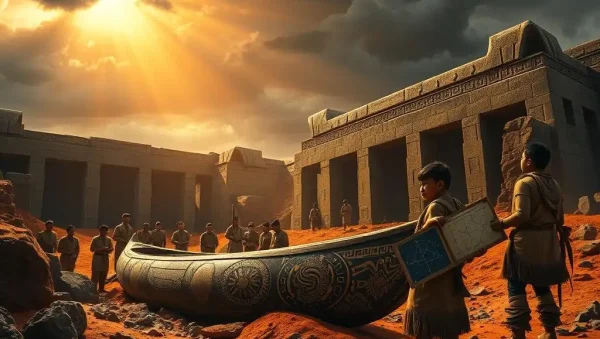
Navigational Prowess: How Polynesians Discovered Remote Rapa Nui
🌊 Discover how Polynesian Rapa Nui navigation techniques enabled ancient sailors to voyage across vast Pacific distances, showcasing remarkable maritime skills and…
Read article
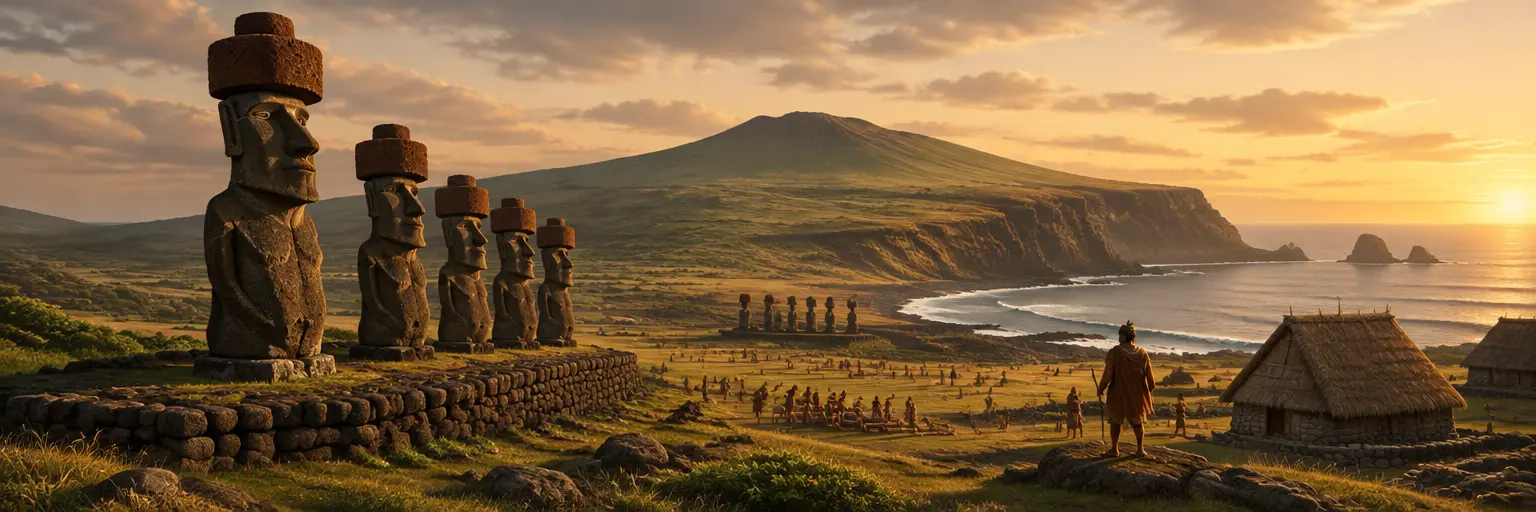
Uncover the enigmatic world of Rapa Nui, where the colossal Moai stand as silent sentinels over a remote Pacific island. This detailed study delves into the extraordinary Oceanian & Australian prehistory, exploring how a isolated Polynesian society engineered and erected nearly 900 monolithic giants. From the volcanic quarries of Rano Raraku to the ceremonial platforms of Ahu, trace the archaeological evidence behind their construction, cultural significance, and the ecological narratives that shaped their fate—offering a compelling lens into ancient ingenuity, societal organization, and the profound mysteries that continue to captivate researchers and travelers alike.
Welcome to ArchaeologyHub.org’s deep dive into one of the most enigmatic chapters of Oceanian prehistory. This subcategory focuses specifically on Rapa Nui (Easter Island), its unique Polynesian culture, and the monumental moai statues that have captivated researchers and the public alike. Here, you’ll move beyond tourist snapshots to explore the archaeological evidence, ecological history, and interpretive debates surrounding this remote island, one of the most isolated inhabited places on Earth.
Understanding the first settlement of Easter Island is crucial for situating its culture within broader Oceanian migration. Archaeological and linguistic evidence points to Polynesian voyagers, likely from the Marquesas or Mangareva islands, arriving around 1200 CE. This section examines the radiocarbon dates, botanical remains (like palm pollen), and artifact typologies that reveal how these settlers adapted to a marginal, subtropical environment. Expect to learn about the Hotto Matua founding myth and how it aligns—or conflicts—with empirical data.
Paradoxically, the island’s isolation fostered a highly stratified society. Here, you’ll find analyses of residential structures, stone chicken houses (hare moa), and obsidian tools that indicate clan-based territories. We also discuss the ecological transformation after settlement, including deforestation of the giant palm, which set the stage for the statue-building era. This foundational knowledge helps you grasp why Rapa Nui developed such a monumental culture in such a small, resource-limited setting.
The moai—nearly 900 monolithic human figures—are the island’s signature achievement. This section breaks down the volcanic tuff quarry at Rano Raraku, where most statues were carved directly into the rockface. We’ll explore the stages of production, from rough shaping to polishing, and the use of basalt toki (hand picks). Detailed imagery and microscopic wear analysis show how craftsmen achieved symmetrical faces and elongated ears, reflecting chiefly lineages.
Equally fascinating is the engineering puzzle of moving statues weighing up to 80 tons from quarry to coastal platforms (ahu). You’ll learn about competing theories: the "walking" hypothesis using ropes and rocking motions, versus sledges on lubricated tracks. Recent experimental archaeology, like the 2012 replicas, provides practical insights into labor organization and social coordination. We also cover the unfinished Moai Paro and abandoned carvings, which offer clues about sudden societal collapse.
While the moai stand alone, they originally stood on ceremonial platforms called ahu, which are themselves architectural feats. This section details the construction of stone-faced platforms with rubble fill, often incorporating red scoria topknots (pukao) and eye inlays of coral. We interpret the spatial arrangement along the coastline—many facing inland—as a reflection of ancestral worship and territorial marking. Learn how each ahu was aligned with astronomical events and water sources.
Beyond static structures, we discuss birdman cult sites like Orongo, which replaced statue veneration in later periods. This transition, evidenced by petroglyphs and stone houses, suggests a shift from ancestor worship to competitive fertility rituals. Through layout reconstructions, we show how ceremonial plazas served as stages for clan gatherings, feasts, and possibly human sacrifices, making the landscape a living political map.
For decades, Rapa Nui was the poster child for ecocide—a society that destroyed its forests and collapsed. However, recent scholarship challenges this narrative. Here, we analyze palaeoenvironmental data (pollen, charcoal, and rat bones) alongside demographic models. The “collapse” theory argues for population crash before European contact in 1722, while revisionists suggest a sustainable equilibrium and later impacts from introduced diseases and slave raids.
This section presents both sides with evidence: soil erosion from slash-and-burn versus the use of lithic mulching (stone gardens) to boost crop yields. We also examine island-wide rock gardens that may have supported a moderate population. By evaluating these conflicting interpretations, you’ll appreciate how archaeology grapples with pre-contact resilience and the dangers of projecting modern environmental anxieties onto the past.
The moai are not just relics; they are living symbols for the current Rapa Nui people, who are of mixed Polynesian and European descent. This subcategory covers UNESCO World Heritage status and ongoing conservation challenges, including erosion, tourism pressure, and the 2022 fire that damaged statues. We detail how modern ninjas (elders) collaborate with archaeologists to balance preservation with cultural practices, such as re-carving and re-erection ceremonies.
We also address repatriation efforts for moai taken to foreign museums, like the one in London, and the ethical debates surrounding them. Learn about digital documentation projects (3D scanning) and community-based archaeology that prioritize local voices. Ultimately, this section emphasizes that the past is dynamic—knowledge evolves, and the island’s heritage remains a powerful bridge between ancient traditions and contemporary identity.
Nearly 900 moai have been inventoried, but many remain incomplete in the quarry or have been toppled, partially destroyed, or re-erected. Only about 50 are standing on their ahu today, often after conservation projects. The largest complete statue, Moai Paro, is about 10 meters tall and weighs 80 tons.
Oral traditions and archaeological evidence suggest that moai were deliberately toppled during the island’s internal wars after the collapse of centralized authority. Enemy clans would knock down rivals’ statues to diminish their ancestral mana (spiritual power). European contact likely accelerated this process through introduced diseases and social disruption.
In the Rapa Nui language, “moai” simply means “figure” or “statue.” It does not imply a deity. The statues likely represented deified ancestors (ariki) who provided protection and fertility. Their oversized heads and pukao topknots may signify status, sacred power, or even a form of portable history.
Yes, that’s a leading theory! In 2012, a team demonstrated that moai replicas could be “walked” by rocking them side-to-side with ropes, requiring about 15-30 people. This method works on flat ground, but on slopes, sledges over lubricated tracks are more feasible. The debate hinges on the island’s terrain and available manpower.
Visitors should stick to designated paths, avoid touching statues (oils damage stone), and respect tapu (sacred) areas. Hiring local guides provides economic benefits and cultural insights. Also, consider visiting during low season to reduce pressure on the fragile tuff stone and support the island’s conservation funds.







