The Symbolic Use of Ochre in European Mesolithic Contexts
🌟 Discover the significance of ochre pigment in European Mesolithic cultures, highlighting its symbolic and practical roles. This article explores how ochre…
Read article
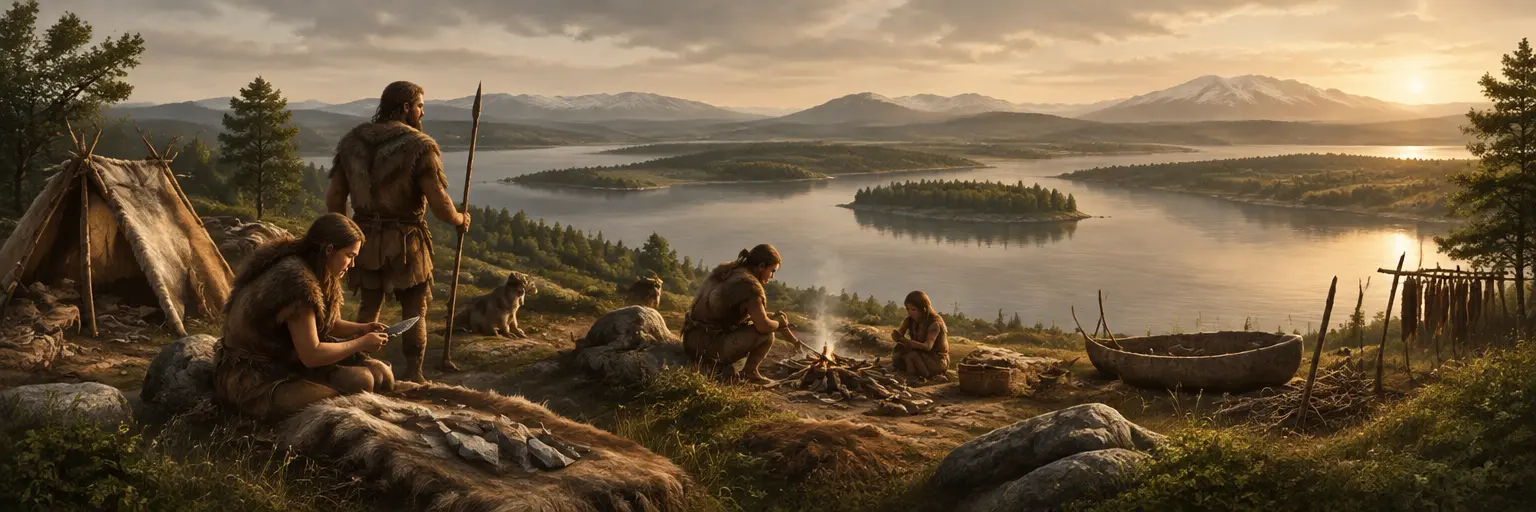
Discover how Europe’s Mesolithic communities pioneered resilience and creativity between the Ice Age and the Neolithic era. Mesolithic adaptations showcase a transformative period when hunter-gatherers refined innovative toolkits, from microliths to barbed spearheads, enabling survival across changing forests and coastlines. Explore seasonal mobility patterns, fishing technologies, and early domestication of dogs, alongside rich symbolic art and burial practices. These detailed studies illuminate the resourceful strategies that shaped human ingenuity, bridging nomadic lifeways and settled societies—essential insights for archaeology enthusiasts and researchers alike. Dive into site-specific evidence from Star Carr to the Danube Gorges, revealing how climate shifts spurred technological breakthroughs and social complexity.

🌟 Discover the significance of ochre pigment in European Mesolithic cultures, highlighting its symbolic and practical roles. This article explores how ochre…
Read article
🔍 Explore the fascinating European Mesolithic campsite spatial analysis, unveiling how ancient peoples organized their settlements. This study offers insights into early…
Read articleWelcome to ArchaeologyHub.org’s deep dive into the Mesolithic period of European prehistory—a transformative era roughly spanning 10,000 to 5,000 BCE, nestled between the retreat of Ice Age glaciers and the rise of farming. This subcategory explores how hunter-gatherer societies innovated technologically, socially, and ecologically in response to rapidly warming climates. From microlithic toolkits and forest-edge settlements to complex burial rites and early aquatic resource exploitation, you’ll discover how these “middle Stone Age” peoples laid the groundwork for Neolithic life. Our detailed studies emphasize regional variations across Scandinavia, the British Isles, the Balkans, and the Iberian Peninsula, with artifact profiles, site reconstructions, and interpretive analyses.
Microliths—tiny, geometric flint blades—are the signature innovation of the Mesolithic. These were hafted into shafts of wood, bone, or antler to create spears, arrows, and harpoons, offering flexibility and repairability. At sites like Star Carr in Yorkshire, archaeologists have unearthed barbed antler points alongside microliths, demonstrating a sophisticated modular design that allowed hunters to customize weapons for forest game, waterfowl, or fish. Composite tools reduced raw material waste and increased precision, crucial for thriving in the dense post-glacial woodlands.
This technological shift wasn’t just practical—it reflects a cognitive leap in planning and resource management. Unlike earlier handaxes, microliths required multi-stage production: core preparation, bladelet detachment, retouching, and hafting. Experimental archaeology at ArchaeologyHub shows that these tools could be resharpened in seconds, a key advantage during seasonal migrations. For SEO-rich exploration, our profiles include high-resolution images, 3D scans, and comparative charts of microlith types across European regions, helping you understand how climate zones influenced tool morphology.
Mesolithic Europeans were neither fully nomadic nor sedentary. Instead, they practiced seasonal transhumance, moving between coastal, riverine, and inland forest camps based on resource availability. For example, the Ertebølle culture of southern Scandinavia established large shell middens near lagoons during summer fish runs, while winter camps were smaller and inland. Excavations at sites like Mount Sandel (Ireland) reveal repeated seasonal occupations, with hearths, postholes, and flint-working floors suggesting durable, semi-permanent structures.
This flexible land-use strategy was a direct adaptation to the “wildwood” ecosystem—temperate forests rich in deer, wild boar, hazelnuts, and berries. Our subcategory provides settlement pattern maps, pollen analysis reconstructions, and site stratigraphy diagrams. You’ll learn how logistical mobility (long-distance expeditions for specific materials like high-quality flint) coexisted with residential mobility (shorter shifts between base camps). These patterns later influenced Neolithic territoriality, making Mesolithic settlement studies essential for understanding emerging land ownership concepts.
The Mesolithic diet expanded dramatically from big-game hunting to a broad-spectrum economy. Aquatic resources became central—fish weirs, nets, and leister spears appear in the archaeological record, with massive fish bone accumulations at sites like Lepenski Vir (Serbia, Danube Gorges). Simultaneously, plant storage pits and roasting platforms for hazelnuts and acorns indicate deliberate food processing and surplus management. These innovations allowed for larger, more stable populations—estimates suggest a tenfold increase in density compared to the Paleolithic.
Our interpretive analyses highlight the socio-economic implications of delayed-return foraging: storing food necessitated territorial claims and forward planning, fostering early inequality and trade networks. For instance, amber, volcanic glass, and seashells found hundreds of kilometers from their sources reveal long-distance exchange systems. Archaeobotanical and zooarchaeological data from our updated site files provide clear evidence of seasonal scheduling, seasonal resource depression, and even early forms of prey management (burning forests to attract grazing animals).
Mesolithic burial rites are remarkably diverse, ranging from single inhumations to collective, disarticulated deposits treated with ochre and adorned with tooth necklaces. At Vedbæk (Denmark), a young woman was buried with a newborn laid on a swan’s wing—a poignant symbol of afterlife beliefs. At Skateholm (Sweden), dogs were buried in human-style graves, suggesting a close spiritual bond with animals. These practices indicate complex social roles based on age, gender, and possibly inherited status.
Beyond simple interments, some sites show evidence of skull cults, where crania were removed, modified, and re-circulated—perhaps as ancestor veneration or trophy-taking. Our subcategory offers forensic reconstructions, stable isotope dietary analyses, and ritual context interpretations. We emphasize how burial variability correlates with regional ecosystems: coastal populations, reliant on rich but fluctuating marine food, developed more elaborate mortuary ceremonies to reinforce group cohesion during lean seasons. This SEO-rich section also connects Mesolithic cosmology to later megalithic constructions, sparking debates on cultural continuity.
Rising sea levels during the Mesolithic reshaped Europe’s coastlines, and communities responded with pioneering maritime technologies. Dugout canoes, paddles, and even antler-tipped harpoons for marine mammals appear in waterlogged sites. The famous Tybrind Vig (Denmark) site yielded decorated paddles and a canoe fragment, while island colonization in the Mediterranean and Atlantic proves seafaring competence. Coastal middens—often hundreds of cubic meters—contain oyster, mussel, and cockle shells, showing intensive intertidal gathering.
Our detailed studies explore how sea-level rise created new resources but also flooded earlier territories, prompting coastal resilience strategies. For example, shell mounds were sometimes purposefully constructed as raised platforms, elders’ meeting places, or territorial markers. Isotopic analysis of human bones from Brittany’s Mesolithic burials confirms a protein-rich diet from marine sources, distinct from inland populations. This subcategory provides bathymetric maps of drowned Doggerland, virtual reconstructions of coastal villages, and comparisons of boat-building techniques, highlighting how Mesolithic peoples were not merely passive adapters but active engineers of their maritime environments.
The Mesolithic (Middle Stone Age) spans roughly 10,000–5,000 BCE, following the last Ice Age and preceding agriculture. It’s characterized by microlithic tools, broad-spectrum subsistence (hunting, fishing, gathering), sedentary settlements, and warmer-climate adaptations. It ends regionally when Neolithic farming practices spread, though transitions varied by area.
They struck small bladelets from carefully prepared flint cores, then snapped them into geometric shapes using pressure flaking. These microliths were glued (using birch tar or resin) or bound into wooden or bone shafts. Production required high skill, with waste flakes often reused, indicating raw material conservation.
Yes—Star Carr (England, reconstructed dwelling), Lepenski Vir (Serbia, monumental trapezoidal houses), Tybrind Vig (Denmark, maritime artifacts), and Howick (England, 10,000-year-old hut). Many have visitor centers and museums displaying artifacts, while ArchaeologyHub provides virtual tours and downloadable guides.
Mostly no, but they managed wild resources—burning undergrowth to encourage game, replanting hazelnut groves, and possibly culling deer herds. Some late Mesolithic groups in the Mediterranean experimented with wild cereal harvesting but did not domesticate plants; full farming emerged later via Neolithic migrants or diffusion.
They didn’t disappear—many tools persisted in modified forms. However, domestication allowed higher population densities but also led to health declines (stature, dental health) and new social hierarchies. The shift likely resulted from immigration of Anatolian farmers, demographic pressure, or gradual adoption, but microliths continued for centuries alongside pottery.







