Exploring Late Bronze Age Europe: Urnfield and Nordic Bronze Age Cultures
Welcome to ArchaeologyHub.org’s deep dive into the transformative Late Bronze Age of Europe, focusing on two intertwined yet distinct cultural spheres: the Urnfield culture of Central Europe and the Nordic Bronze Age of Scandinavia. This period, roughly 1300–750 BCE, witnessed unprecedented innovation in metallurgy, long-distance trade networks, and profound shifts in burial practices and social organization. Here, you will uncover how these societies laid the groundwork for the Iron Age, revealing a world of sophisticated craftsmanship, maritime prowess, and complex ritual landscapes.
🏺 The Urnfield Culture: Cremation, Hillforts, and Metalworking Mastery
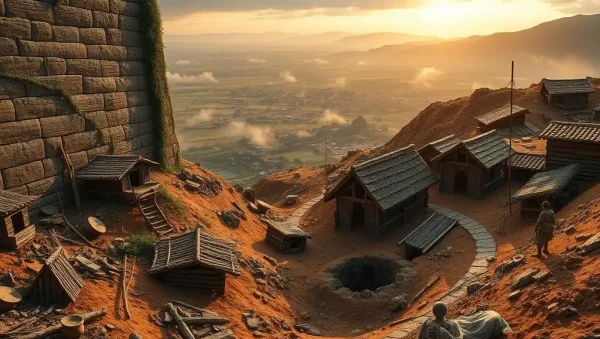
The Urnfield culture, named for its distinctive practice of placing cremated remains in pottery urns and burying them in large flat cemeteries, dominated Central Europe from the Alps to the Carpathians. This period marked a demographic explosion and the rise of massive hillforts—some spanning over 100 hectares—which served as political, economic, and ritual hubs. Expect to explore how these fortified centers controlled trade routes for copper and tin, essential for producing bronze, and how their elites amassed wealth through controlling the flow of raw materials.
Beyond settlements, Urnfield metalworkers produced an astonishing array of artifacts: bronze swords, socketed axes, and intricate sheet-bronze vessels. Their technological prowess extended to the use of lost-wax casting and the creation of elaborate horse harnesses and personal ornaments. The shift from inhumation to cremation suggests a major ideological transformation, possibly linked to solar cults and ancestor veneration. We will also examine regional variations, from the Lusatian culture of Poland to the Danubian groups, highlighting how local identities persisted within a broader shared material culture.
⚓ Nordic Bronze Age: Maritime Networks, Rock Art, and Solar Symbolism
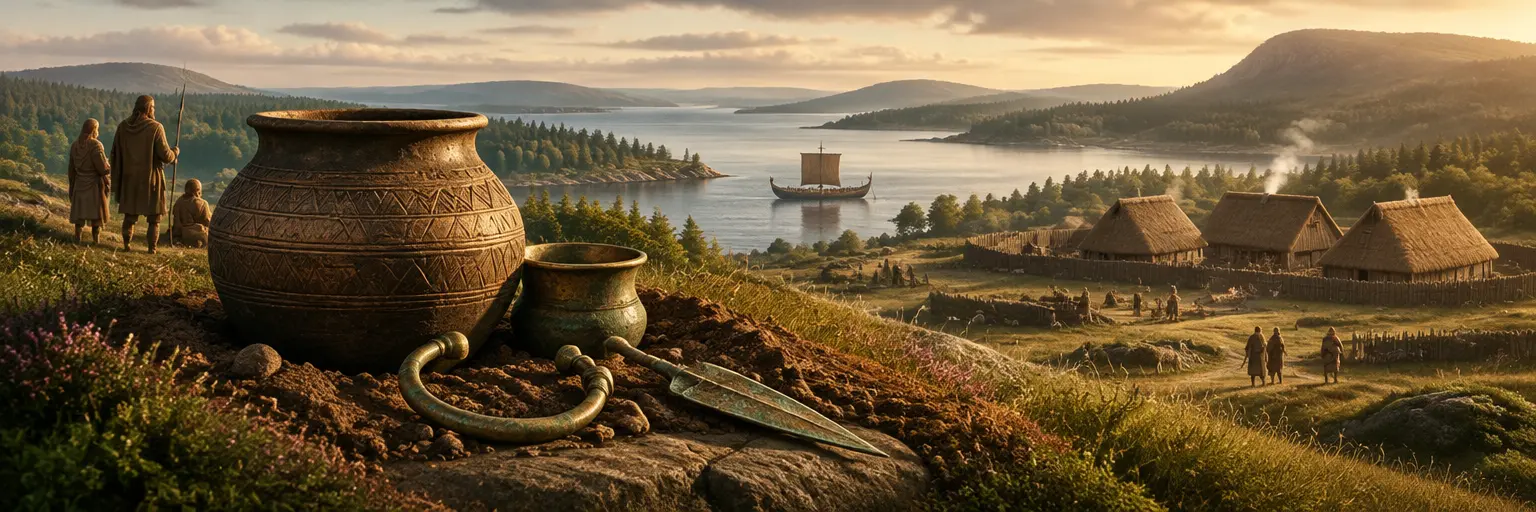
In stark contrast, the Nordic Bronze Age (c. 1700–500 BCE) flourished in southern Scandinavia, where the absence of local tin and copper made the region utterly dependent on maritime trade with Central Europe. This reliance fostered a remarkable seafaring culture, with well-preserved oak-log boats and the famous Tanum rock carvings depicting ships, warriors, and sun symbols. Expect to analyze how this long-distance exchange shaped a hierarchical society, where chieftains controlled access to bronze and ceremonial goods, as evidenced by the extraordinary burials at Kivik and Håga.
The Nordic Bronze Age is famed for its iconic bronzes, including the spectacular Trundholm sun chariot and beautifully crafted lurs (bronze horns). Unlike the Urnfield cremation rite, Nordic elites practiced inhumation under large burial mounds, such as the magnificent royal tumulus at Kivik, whose decorated slabs mirror Mediterranean art styles. We will also investigate the role of wetland deposits, where thousands of offerings were deliberately sunk into bogs, revealing a complex ritual economy aimed at appeasing deities and reinforcing social ties across the rugged Scandinavian landscape.
🗺️ Trade Networks and the “Tin Crisis”: Connecting Two Worlds
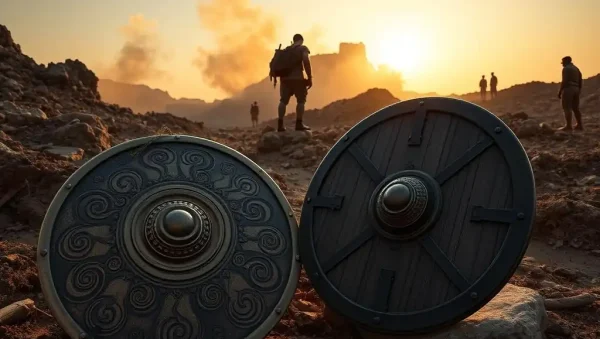
This subcategory illuminates the intricate web of exchange routes linking the Mediterranean, Atlantic Europe, and Scandinavia. Amber from the Baltic, tin from Cornwall and Iberia, and copper from the Alps moved along rivers like the Elbe and Danube, facilitated by the emerging Urnfield elites as middlemen. Expect to trace these networks through the distribution of identical artifact types—such as the “Vale of the White Horse” shields or specific sword hilt designs—which demonstrate a shared technological koiné across hundreds of kilometers.
Around 1200 BCE, the collapse of Mycenaean and Hittite states disrupted supplies, prompting a search for new sources and the development of bronze recycling and alloying innovations. This “tin crisis” likely intensified competition and conflict, visible in the proliferation of defensive hillforts and hoards of scrap metal. For the Nordic region, the crisis forced even more aggressive maritime outreach, possibly explaining the emergence of the Hjortspring boat tradition and early pre-Viking shipbuilding. We will evaluate how these economic imperatives drove political centralization, social stratification, and the eventual transition to iron technology around 750 BCE.
🏰 Ritual Landscapes and Belief Systems: Rings, Suns, and Water
Both cultures shared a profound reverence for watery places—rivers, bogs, and lakes—as portals to the supernatural. Urnfield hoards often contain weapons and jewelry deliberately bent or broken, suggesting ritual killing of objects for gods. Nordic bronzes, meanwhile, were overwhelmingly deposited in wetlands, with sites like Vikso’s lurs found in pairs. Expect to explore how these deposits reflect seasonal festivals, oath-taking ceremonies, and the legitimation of chiefly power through divine association.
Solar and celestial symbolism permeated both worlds. The Urnfield period saw the rise of gold cup votive offerings and the famous “sun ship” motif, while the Nordic Bronze Age’s rock art and the Nebra sky disk (though Central European) hint at sophisticated astronomical knowledge. We will analyze how polytheistic pantheons, likely involving a sun goddess and twin gods, were expressed through bronze figurines and the deliberate orientation of stone settings and burial mounds. These shared beliefs underscore a deep cultural cohesion that transcended linguistic and ethnic differences across prehistoric Europe.
🔍 Archaeological Evidence & Modern Interpretations: Sites, Homes, and DNA
Our detailed studies include key archaeological sites every enthusiast should know: the fortified settlement of Vrable (Slovakia), the Nordic cemetery of Bredtoft (Denmark), and the remarkable Glauberg hillfort in Germany. Expect to discover how modern excavations using LiDAR and geophysical surveying have revealed entire landscapes of farmsteads, fenced fields, and barrow cemeteries, challenging old views of these societies as nomadic or primitive. Well-preserved bronze-casting workshops, such as at Hedegård, provide intimate details on ancient craft production.
Recent aDNA studies have revolutionized our understanding, showing significant population movement but also continuity. For instance, the Nordic Bronze Age reveals a lasting genetic link to earlier Corded Ware farmers, while Urnfield groups exhibit more local ancestries. These findings, combined with isotopic analysis of teeth and bones, allow us to reconstruct diet, mobility, and even kinship structures. Expect to examine how scholars now debate whether the “Urnfield horizon” represents a unified culture or a shared economic and religious movement, and how Nordic elites adapted southern ideas to create a uniquely Scandinavian identity that would later inspire the Viking Age.
Frequently Asked Questions
What is the main difference between Urnfield and Nordic Bronze Age burial practices?
The Urnfield culture practiced cremation and buried ashes in pottery urns within large flat cemeteries, sometimes with stone cists. In contrast, the Nordic Bronze Age favored inhumation of elite individuals in wooden coffins or stone cists under impressive burial mounds (tumuli), often accompanied by rich bronze grave goods and occasionally leather or wool clothing.
How did Scandinavian societies obtain bronze without local tin or copper?
They relied entirely on long-distance maritime and river trade. Baltic amber and furs were exchanged with Central European Urnfield groups for copper, tin, and finished bronze objects. This trade was controlled by Nordic chieftains, who maintained social status through redistribution of these valuable goods, as evidenced by the concentration of exotic finds in elite burial mounds and wetland deposits.
Why are so many bronze artifacts found in bogs and rivers?
These wetlands were considered sacred liminal spaces connecting the living world with the dead and gods. Depositing weapons, jewelry, and even boats was a formal ritual act, perhaps as thanksgiving for victory, propitiation of deities, or seasonal fertility ceremonies. The anaerobic conditions also preserved wooden and leather items, providing extraordinary archaeological snapshots.
Did the Urfielld culture have warriors and fortifications?
Absolutely. The spread of hillforts, bronze swords, spearheads, and defensive shields indicates a warrior elite. The presence of mass graves at some settlements and violent trauma on skeletons confirms conflict, likely over resources or trade routes. However, forts also served as storage centers, craft areas, and communal refuges, not just military outposts.
What caused the transition from Bronze to Iron Age in Europe?
Around 750 BCE, the widespread disruption of tin and copper trade routes—possibly due to the collapse of Mediterranean states, climate shifts, and internal social changes—made iron more accessible and cheaper to produce. Iron ore was abundant, and new smelting technologies lowered costs. This transition did not occur overnight, but over several centuries, as bronze remained valued for Status and ritual use.