Animal Symbolism in Celtic Religion and Mythology: Iconographic Interpretations
📝 Explore the rich tapestry of Celtic animal symbolism meanings, revealing how ancient symbols conveyed spiritual beliefs and societal values. This article…
Read article
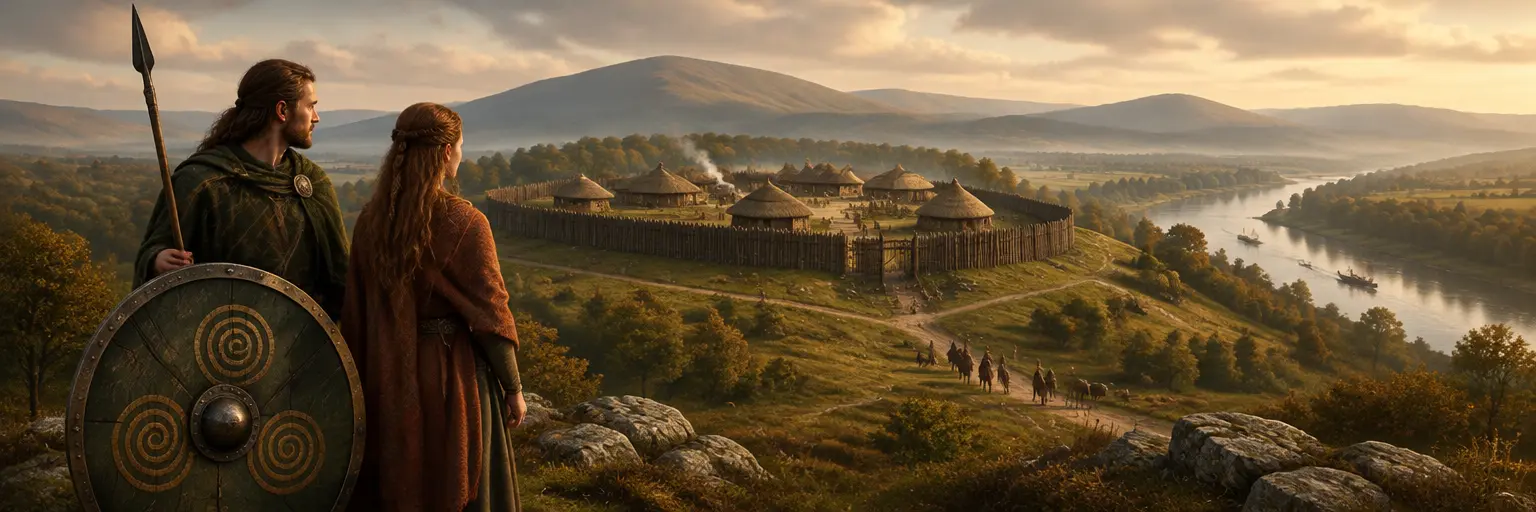
Explore the remarkable world of the La Tène Culture, the archaeological signature of the Celtic societies that flourished across Europe between roughly 450 BC and the Roman conquest. This period marks the height of Celtic artistic expression, metalworking mastery, and expansive tribal networks—from the British Isles to the Danube basin. Delve into the intricate curvilinear art styles, formidable weaponry, and sophisticated hillforts that define this era, revealing a civilization far more complex than the “barbarian” stereotype. Discover how recent excavations and interpretive analyses are reshaping our understanding of Celtic social structures, trade routes, and ritual practices, making the La Tène legacy a cornerstone of European prehistory. Ideal for enthusiasts of ancient history and archaeology, this detailed study uncovers the vibrant, interconnected world of the Celts—a culture whose influence still echoes in art, language, and regional identity today.
📝 Explore the rich tapestry of Celtic animal symbolism meanings, revealing how ancient symbols conveyed spiritual beliefs and societal values. This article…
Read article
🌟 The Hochdorf chariot burial significance lies in its rich artifacts and elaborate rituals, offering invaluable insights into early Celtic elite society,…
Read articleWelcome to ArchaeologyHub.org’s detailed study of the La Tène culture and Celtic societies, a cornerstone of European prehistory. This subcategory delves into the Iron Age period (circa 450–1 BCE) when Celtic tribes flourished across Central and Western Europe, leaving behind intricate artifacts, fortified settlements, and complex social structures. Here, you’ll discover how archaeology reconstructs the daily life, warfare, art, and beliefs of these enigmatic peoples, from the salt mines of Hallstatt to the oppida of Gaul. Our content is crafted for students, enthusiasts, and researchers seeking authoritative, SEO-rich insights into one of history’s most transformative eras.
The La Tène culture emerged around 450 BCE, named after the Swiss site of La Tène on Lake Neuchâtel, where thousands of artifacts were dredged in the 19th century. This period succeeded the Hallstatt culture and marks a shift toward greater social stratification, long-distance trade, and distinctive artistic expression. Archaeologists divide La Tène into early (450–250 BCE), middle (250–100 BCE), and late (100–1 BCE) phases, each defined by changes in metalwork, burial practices, and settlement patterns. Expect to learn how radiocarbon dating, stratigraphy, and typology help pin down these chronological markers, connecting Celtic developments to Mediterranean influences from Greeks, Etruscans, and Romans.
Understanding this timeline is crucial for interpreting broader European prehistory. For instance, the early phase saw the expansion of Celtic groups into Italy and the Balkans, while the late phase witnessed the rise of large fortified oppida—urban-like centers that facilitated craft specialization and coinage. Our articles provide clear, keyword-rich breakdowns of these periods, including maps of migration routes and comparative tables of artifact types. By the end, you’ll grasp how La Tène culture set the stage for Roman conquests and the eventual disappearance of independent Celtic polities, yet left a lasting legacy in language, folklore, and art.
Celtic societies were not monolithic but varied by region, though commonalities existed. The druids held religious and judicial authority, while warriors and aristocrats dominated politics, with commoners engaged in farming and crafts. Oppida—large hillforts—served as economic hubs, housing workshops for iron smithing, pottery, and glassmaking. Gender roles were less rigid than in Greco-Roman worlds, with women occasionally holding property and leadership, as evidenced by lavish female burials like the Vix tomb. Daily life revolved around subsistence agriculture, livestock rearing, and seasonal festivals, with feasting playing a central role in social bonding and status display.
Warfare was both practical and ritualistic. Celtic warriors used long iron swords, spears, and oval shields—artifacts frequently recovered from river deposits, likely offered as votive gifts. Headhunting was practiced, as classical sources note, but archaeology reveals more about arms and armor than beliefs. Our content examines skeletal evidence for trauma, weapon typologies, and reconstruction experiments, offering a balanced view of Celtic martial culture. You’ll also explore settlement layouts, including roundhouses in Britain and continental rectangular structures, and how household archaeology illuminates cooking, weaving, and childcare. This multifaceted approach ensures rich SEO coverage of terms like “Celtic social hierarchy,” “Iron Age domestic life,” and “ancient warfare.”
La Tène art is famed for its curvilinear motifs—spirals, triskeles, and vegetal patterns—distinguishing it from earlier geometric styles. This “Celtic art style” appears on torcs, fibulae, swords, and ceremonial cauldrons like the Gundestrup cauldron, though the latter is debated as Thracian or Celtic. Artisans used repoussé, engraving, and enamel inlay, mastering intricate compositions that blend abstraction and naturalism, often depicting boars, birds, and human heads. Symbolism likely tied to shamanic or religious beliefs, but precise meanings remain elusive, making this a rich field for interpretation.
Our subcategory explores the technological innovations behind this art, such as lost-wax casting and coral inlay imported from the Mediterranean. Case studies feature famous sites like the Glauberg statue in Germany and the Battersea Shield in Britain, analyzing their design grammar and production methods. For SEO, we target keywords like “Celtic knot patterns,” “Iron Age metalwork techniques,” and “La Tène decorative motifs.” By linking art to social identity, you’ll see how elite patrons commissioned distinctive pieces to display power, while regional variations reveal trade networks and cultural interactions. Each artifact profile includes high-resolution images (described textually) and contextual links to related cultures.
Discover the iconic sites that define our knowledge of La Tène culture. La Tène itself, alongside Hallstatt in Austria, provides foundational artifact assemblages. Bibracte in France (Mont Beuvray) is a major oppidum excavated since the 19th century, revealing urban planning, ramparts, and imported wine amphorae. The Hochdorf Chieftain’s Grave in Germany offers a rich burial with a bronze couch and gold torc, illustrating princely status. Meanwhile, the Manching oppidum in Bavaria and Stradonice in Czechia showcase craft districts and minting. Watery depositions like those at Llyn Cerrig Bach in Wales highlight ritual practices involving weapons and chariot fittings.
Each site profile on ArchaeologyHub provides practical details: location, excavation history, key finds, and current interpretations, optimized for geo-specific searches. We also cover recent excavations using LiDAR, geophysics, and citizen science, showing how modern technology uncovers new dimensions of these ancient landscapes. For travelers and virtual visitors, we include visitor information and links to museum collections (e.g., British Museum, National Museum of Ireland). By clustering related sites, we build a comprehensive network of interlinked pages, improving site authority and user engagement. Expect updates as new discoveries emerge from ongoing projects across Europe.
A key theme in this subcategory is the problem of “Celtic” identity—ancient writers used the term loosely, and modern genetics shows complex admixture. We examine whether La Tène culture represents a unified ethnicity or a shared material culture spread by migration, trade, or elite emulation. Debates also center on the nature of oppida: were they urban centers, refuges, or ceremonial sites? And what caused the La Tène decline—Roman conquest, internal strife, or climate change? Our articles present multiple scholarly perspectives, citing both classic texts (e.g., Caesar’s Gallic Wars) and recent DNA studies on population movements.
We encourage critical thinking by presenting evidence for and against each hypothesis, using graphs of settlement density, isotopic analyses for mobility, and paleoenvironmental data. For instance, strontium isotope analysis of burials reveals non-local individuals, suggesting migration, while pollen records show deforestation linked to farming expansions. The “Celtic fringe” question—whether Irish, Scottish, Welsh, and Breton cultures retain La Tène heritage—is addressed through archaeological continuity in decorative styles and linguistic cognates. This section is crucial for SEO as it answers high-intent searches like “who were the Celts,” “La Tène vs Hallstatt,” and “Celtic ethnicity theories,” providing balanced, citation-rich content that builds trust.
La Tène culture refers to the Iron Age Celtic civilization in Europe, roughly from 450 to 1 BCE, characterized by distinctive art, iron technology, and settlement patterns. It spans from the Atlantic coast to the Black Sea, with core areas in modern France, Switzerland, Germany, and Austria. The name comes from the site of La Tène in Switzerland.
Hallstatt culture (circa 800–450 BCE) was earlier, known for rich princely burials and salt mining, while La Tène evolved with more aggressive expansion, ornate curvilinear art, and wider trade networks. La Tène also saw the development of oppida and more standardized weaponry, reflecting social changes toward urbanism and militarism.
Yes, but limited. Most Celtic societies relied on oral traditions, but they adopted Greek and Latin alphabets for inscriptions, coins, and occasional records, such as the Gaulish calendar from Coligny. From about 300 BCE, Celtic inscriptions appear in Iberia, Gaul, and Cisalpine Gaul, though literacy was not widespread.
They were gradually absorbed or displaced by the Roman Empire’s expansion, starting with the Gallic Wars (58–50 BCE) led by Julius Caesar. Germanic invasions and internal conflicts also weakened them. However, celtic culture persisted in remote areas like Ireland, Scotland, and Wales, leaving lasting linguistic and artistic legacies.
They look for stylistic markers like spiral and S-curve motifs, specific bronze/iron typologies, and burial customs. Radiocarbon dating, stratigraphic context, and comparison with dated Mediterranean imports (e.g., Greek pottery) help assign artifacts to specific phases. Recent DNA analysis from skeletal remains confirms cultural ties to continental groups.







