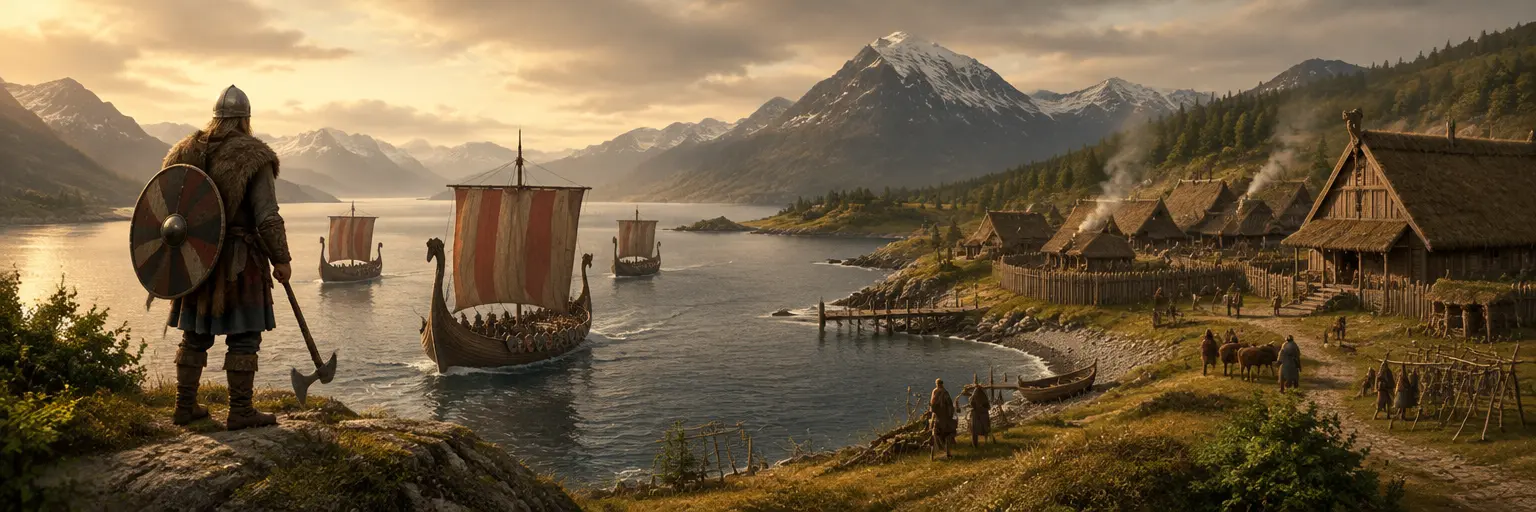
Explore the Viking Age: Seafaring, Raids & Settlements
Welcome to ArchaeologyHub.org’s deep dive into the Viking Age, a period roughly spanning 793–1066 CE, when Scandinavian seafarers transformed the medieval world. This subcategory focuses on the intertwined pillars of Viking life—their unmatched maritime technology, fearsome raiding expeditions, and enduring settlements across Europe and the North Atlantic. Here, you’ll uncover archaeological evidence from ship burials to longhouse foundations, tracing how Norse culture evolved from isolated fjords to a vast diaspora. Whether you’re a student, enthusiast, or researcher, this resource bridges artifact analysis with historical context, enriched by site-specific case studies.
⚓ Norse Shipbuilding & Navigation Mastery
The Viking longship was not merely a vessel but a technological marvel that enabled unprecedented mobility. Archaeological finds like the Oseberg and Gokstad ships reveal clinker-built hulls, flexible oak planks, and square sails that allowed both ocean crossings and shallow-river navigation. These designs were paired with navigational tools such as sunstones, bearing dials, and landmark-based piloting, enabling Norse sailors to traverse open water with remarkable accuracy. Excavations at Skuldelev in Denmark have reconstructed five distinct ship types, from cargo knarrs to swift warships, illustrating a sophisticated maritime economy.
For enthusiasts, this section explores experimental archaeology projects that replicate these vessels, testing their speed, cargo capacity, and seaworthiness. You’ll learn how dendrochronology dates ship timbers, revealing trade networks for timber and iron. The integration of sail, oar, and steering (a side rudder) provided tactical flexibility during raids, while the shallow draft facilitated beaching on unsuspecting coasts. By examining mooring sites and harbors, such as Hedeby and Birka, we piece together the logistical backbone of Viking expansion—from seasonal fishing to long-distance trading in walrus ivory and furs.
🗡️ Raiding Strategies & Tactical Archaeology
Viking raids were not random acts of violence but calculated operations leveraging speed, surprise, and local intelligence. The Lindisfarne attack (793 CE) set a template, targeting undefended monastic wealth, yet later campaigns involved coordinated fleets and overwintering strategies, as seen in the Great Heathen Army’s campaigns in England. Archaeological evidence from battle sites, such as Repton in Derbyshire, includes mass graves with weapon trauma, suggesting large-scale conflict. Artifact scatters—axe heads, spear points, and arrowheads—help map assault routes and skirmish zones, while written sagas and chronicles provide narrative context.
Defensive responses also feature here: burhs (fortified towns) built by Alfred the Great and river barriers in Francia illustrate the arms race. Excavations at Trelleborg ringforts in Denmark reveal military logistics, with barrack-style houses and centralized planning for recruitment and supply. We analyze how raiding patterns shifted from hit-and-run to territorial conquest, influencing settlement choices. By comparing hoard deposits—silver, coins, and looted church plate—you’ll see how raids fed into broader economic networks, funding further expeditions and political consolidation back in Scandinavia.
🏡 Settlement Patterns: From Longhouses to Towns
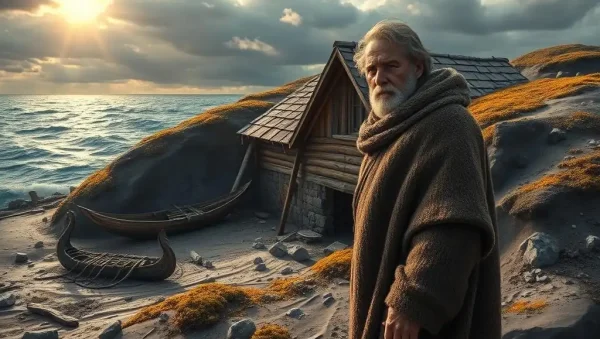
Viking settlements ranged from isolated farmsteads to bustling proto-urban centers, each shaped by geography and opportunity. In the North Atlantic, sites like L’Anse aux Meadows in Newfoundland reveal turf-walled longhouses and iron-smelting furnaces, indicating temporary but organized colonies. Meanwhile, excavated farmsteads in Iceland and Greenland show adaptation to harsh climates, with byres for livestock, hay meadows, and imported timber for roofs. Urban excavations at Dublin, York (Jórvík), and Kaupang expose dense plots, workshops for comb-making and metalwork, and evidence of craft specialization, including textile production and ship repair.
In this section, we examine settlement hierarchy using geophysical surveys and soil chemistry—phosphates from waste and hearths define activity zones. The shift from dispersed farms to nucleated towns is tied to royal patronage and trade demands. For example, Ribe’s marketplace grew from a seasonal fair to permanent plots. You’ll also explore colonial dynamics in the Danelaw, where Scandinavian legal and land tenure systems blended with Anglo-Saxon practices. Comparative analysis of house layouts, from the bowed walls of Lofoten chieftain halls to the simple pit-houses of Baltic outposts, highlights social stratification and regional identity.
⚰️ Burial Practices & Cosmology in Daily Life
Viking burials provide a rich archaeological record of social status, belief systems, and cross-cultural contacts. Ship burials, such as Oseberg and Ladby, contained lavish grave goods—textiles, animals, and vehicles—implying a journey to the afterlife, likely Valhalla or Hel. Mound burials with grave markers and stone settings, like those at Jelling, functioned as political statements for emerging kingdoms. In contrast, cremation practices, common in earlier periods, leave pyre sites and urn deposits. Recent isotope analyses of skeletal remains reveal geographic mobility, with individuals buried far from their birthplaces, confirming migration patterns.
Here, you’ll explore how burial variation reflects gender roles, with high-status women interred with keys and textile tools, while warriors carried weapons. The inclusion of animals—horses, dogs, and raptors—suggests companionship in death. Everyday objects, such as gaming pieces and combs, hint at personal habits. Notably, the blending of Christian symbols, like crosses, within pagan graves indicates gradual religious transition. By studying grave orientations, grave goods decay patterns, and runestone inscriptions, we reconstruct funerary rituals that were both communal spectacles and intimate farewells. This subcategory invites you to view death not as an end but as a mirror of Viking societal values.
🌍 Cultural Exchange & Legacy Beyond Raids
The Viking Age was not solely about violence; it was a period of profound cultural exchange, evidenced by trade goods, art styles, and language. The Silk Road reached Scandinavia via Volga and Dnieper routes, bringing dirhams, glass beads, and exotic spices. Islamic geographers described Norse Rus’ traders, while runestones in Byzantium mention elite mercenaries in the Varangian Guard. Artistically, the Mammen and Urnes styles blend animal motifs with Christian iconography, seen in carved stave church portals and brooches. Place-name studies in Normandy, the Hebrides, and the Isle of Man show linguistic footprints, while DNA from modern populations traces Scandinavian ancestry.
This section examines material culture as evidence of hybrid identities—for example, Viking silver hoards containing Anglo-Saxon coins and Carolingian jewelry. We investigate how Norse mythology adapted to new landscapes, from Icelandic sagas to Orkney’s earls. Political legacies include the foundation of Dublin and the establishment of the Danelaw’s legal customs. By comparing settlement layouts in Greenland and Vinland, we see failed colonies due to climate and resource pressure. Ultimately, the Viking legacy is one of connectivity, demonstrating how maritime skills and adaptive strategies shaped medieval Europe’s economic, political, and cultural frameworks, a heritage still visible in festivals, museology, and popular media today.
Frequently Asked Questions
What was the primary purpose of Viking longships?
Longships were multifunctional, designed for raiding, trade, and exploration. Their shallow draft allowed beach landings and river navigation, while the sails and oars gave speed and maneuverability. Cargo variants (knarrs) carried goods, but warships prioritized agility. Archaeological reconstructions confirm they were used for both swift hit-and-run attacks and long-distance colonization, such as reaching North America.
How did Vikings navigate without compasses?
Vikings used natural cues: sun position, stars, wind patterns, and bird migrations. They likely employed sunstones (calcite crystals) to locate the sun on cloudy days, though experimental testing shows partial accuracy. They also used leading lines, depth soundings, and coastal landmarks. The Uunartoq disc fragment is a rare possible bearing dial, though its function remains debated among archaeologists.
Where did Vikings settle permanently outside Scandinavia?
Major settlements included the Danelaw in England, Dublin in Ireland, Normandy in France, and the islands of Orkney, Shetland, and the Faroes. They established colonies in Iceland and Greenland, with a temporary camp at L’Anse aux Meadows in Newfoundland, Canada. Each area developed distinct cultural blends, evidenced by artifact styles and place names.
What is the strongest archaeological evidence for Viking raids?
Mass graves with weapon trauma, such as at Repton, England, and defensive earthworks like Alfred’s burhs provide direct evidence. Hoards containing looted church metalwork and coins, plus charred layers at monastic sites, corroborate written chronicles. Strontium isotopes in skeletons reveal non-local individuals, confirming raiding parties or later settlers.
How did Viking burial practices change over time?
Early burials favored cremation and inhumation under mounds or stone settings, often with grave goods. As Christianity spread, grave goods decreased, and east-west orientations became common. Ship burials persisted for elites, but by the 11th century, churchyard burials became standard. The Jelling stones mark this transition, combining pagan imagery with Christian runic inscriptions.