Exploring the Han Dynasty: Consolidation, Economy & Society
Welcome to ArchaeologyHub.org’s detailed study of the Han Dynasty (206 BCE–220 CE), a cornerstone of East Asian civilization. This subcategory delves into how the Han consolidated imperial power, revolutionized economic systems, and structured a society that influenced millennia. From the Silk Road’s birth to intricate social hierarchies, you’ll uncover archaeological evidence and scholarly interpretations that bring ancient China to life, perfect for students, educators, and history enthusiasts seeking deep, SEO-rich content.
🏛️ Political Consolidation and Imperial Governance
Here, we explore how the Han Dynasty transitioned from the Qin’s harsh legalism to a pragmatic Confucian-legalist synthesis. You’ll examine the centralization of bureaucracy under Emperor Wu, the establishment of the Three Excellencies and Nine Ministers, and the pivotal role of civil service examinations. Key keywords include: Han imperial authority, dynastic cycles, and administrative reforms. Discover how the Han retained control over vast territories through commanderies and kingdoms, balancing local elites with central mandates.
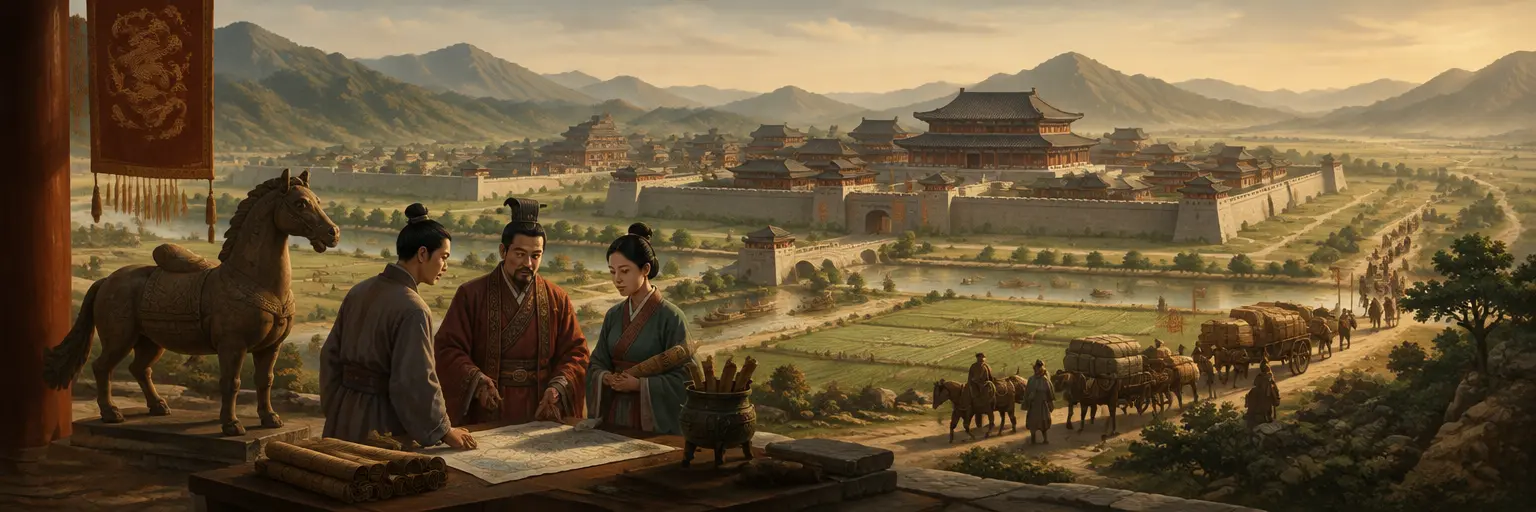
Archaeological insights from sites like the Mawangdui tombs reveal administrative documents and seals, illustrating daily governance. The famous Chang’an city grid, with its palace complexes and market wards, demonstrates planned urbanization. You’ll also learn about the “Great Peace” ideology, which legitimized Han rule through cosmic harmony, and how emperors used ancestral cults and court rituals to solidify authority. This section provides a foundational understanding of how a stable empire shaped East Asian political traditions.
💹 Economic Foundations: Agriculture, Taxation, and Trade
Dive into the Han economy’s backbone—subsistence agriculture enhanced by iron tools, crop rotation, and large-scale water conservancy projects like the Dujiangyan system. We’ll dissect the state’s salt and iron monopolies, implemented by Emperor Wu to fund military campaigns, and the equal-field system that redistributed land. Relevant keywords: Han taxation, granary system, and agricultural surplus. Understand how these policies fueled population growth and urban expansion.
The Silk Road emerges as a central theme, with artifacts like silk fragments, coins, and glassware proving long-distance trade. Excavations at Dunhuang and Loulan indicate caravanserais and frontier markets. The state’s commandery-based granaries stored grain for famine relief and price stabilization, while copper coinage, standardized by the “Wu Zhu” currency, facilitated commerce. You’ll also trace the shift from barter to monetized exchange, plus the role of private entrepreneurs and merchant guilds, offering a nuanced economic history backed by material culture.
👥 Social Hierarchy and Family Life
This section unpacks Han society’s stratified nature, from the imperial clan and landed gentry to peasants, artisans, and slaves. You’ll explore the key concept of “four occupations” (scholar, farmer, artisan, merchant) and how Confucian ethics dictated filial piety, gender roles, and ancestor worship. Archaeological evidence, such as tomb figurines and household models, reveals daily routines, clothing, and cuisine across classes. Keywords include Han social classes, patriarchal family, and clan kinship.
Detailed studies of burial practices—like the lavish tombs of nobles versus simple pit graves for commoners—provide insights into status and belief systems. The famous “Six Arts” education for elites contrasted with local village schools. Women’s roles, though largely domestic, included managing households and, rarely, wielding political influence, as seen in Empress Lü’s regency. Legal documents, notably from the Qinian site, show laws governing marriage, inheritance, and criminal justice, painting a vivid picture of social reproduction and mobility limits.
🛠️ Technology and Material Culture
Examine Han innovations that transformed society: papermaking, the wheelbarrow, seismographs, and advanced metallurgy for steel production. We’ll cover archaeological discoveries like the bianzhong bells, bronze mirrors, and lacquerware that showcase craftsmanship. Keywords: Han inventions, engineering marvels, and artifact analysis. Understand how these technologies influenced military power, agricultural productivity, and everyday comfort, including heating and lighting systems.
Material evidence from workshops, such as kiln sites and foundry complexes, illustrate mass production techniques for pottery and iron. The famous “Horse DNA” studies on Han cavalry mounts reveal breeding programs. You’ll also investigate the astronomical equipment used for calendars, which guided farming. The interplay between innovation and state support, plus private artisanship, is explored through excavated tools and unfinished products, offering a tactile connection to ancient ingenuity and its societal impact.
🌐 Regional Interactions and Cultural Exchange
Focus on the Han’s external relations with the Xiongnu, Yuezhi, and neighboring states, including military campaigns, tribute systems, and diplomatic missions like Zhang Qian’s travels. This segment highlights cultural diffusion of Buddhism, Hellenistic art, and Persian goods into Central Asia via the Silk Road. Keywords: Han diplomacy, frontier warfare, and cross-cultural contact. Unearth how the Great Wall’s extension and garrison towns shaped regional identities.
Archaeological finds, such as Hellenistic glass in Chinese tombs and Han bronze in Togolok, confirm bidirectional exchanges. The “Hexi Corridor”’s murals at Maijishan depict foreign musicians and traders. This subcategory also covers the Han’s impact on Korea and Vietnam, with administrative centers and local adaptations. By analyzing sentry sites and cargo wrecks, you’ll grasp how the Han’s outward push not only secured borders but also created a cosmopolitan era, laying groundwork for the laterTang dynasty’s globalism.
📜 Written Records and Epigraphy
Here, we interpret the wealth of Han documents—from bamboo slips, silk manuscripts, and stone steles—that offer direct voices from the past. You’ll learn about paleography and textual analysis, deciphering legal codes, medical recipes, and philosophical debates from sites like Ju Yan. Keywords: oracle bones transition, Han script evolution, and archival records. These primary sources illuminate statecraft, taxation, and private life, complementing archaeological artifacts.
Inscriptions on bronze vessels and grave tablets provide genealogies and commemorations, revealing ancestral veneration. The discovery of the “Yinqueshan Han Slips” includes military treaties and almanacs. This section guides you through methods for dating, authenticating, and contextualizing these texts, plus how digital humanities tools now enable broader access. By integrating epigraphy with material remains, you’ll see how the Han self-represented and how modern scholars reconstruct a nuanced history of this pivotal epoch.
Frequently Asked Questions
What was the primary economic driver of the Han Dynasty?
Agriculture, particularly grain cultivation using advanced iron tools and irrigation, was the core. The state’s granary system and land redistribution, alongside monopolies on salt and iron, supported surplus and trade, fueling urban growth and population expansion.
How did the Han Dynasty consolidate political power?
Through centralization of bureaucracy under Confucian-legalist ideology, civil service exams, and a commandery system. Emperors balanced local elites with royal appointments, while state rituals and legal codes reinforced imperial authority and cosmic legitimacy.
What archaeological evidence reveals Han social hierarchy?
Tombs show stark contrasts: lavish complexes with jade suits for nobles versus simple pit graves for commoners. Figurines, household models, and documentary slips from sites like Mawangdui depict clothing, tools, and legal statutes, clarifying class roles and family structures.
How did the Silk Road influence Han economy and society?
It facilitated trade in silk, spices, and glass, bringing foreign goods and ideas. This stimulated monetization, introduced new crops like grapes, and fostered cultural exchanges, though central Asian disruptions occasionally threatened stability, prompting military responses.
What are key Han inventions and why are they significant?
Paper, the wheelbarrow, seismoscope, and steel production are notable. Paper revolutionized record-keeping; the wheelbarrow improved transport; the seismoscope detected earthquakes; and steel enhanced tools and weapons, collectively boosting productivity and administrative efficiency.