The Role and Status of Women in Ur III Sumer: Evidence from Legal and Economic Texts
🌟 Explore the intriguing role of women in Ur III Sumer through legal and economic texts, shedding light on their societal status…
Read article
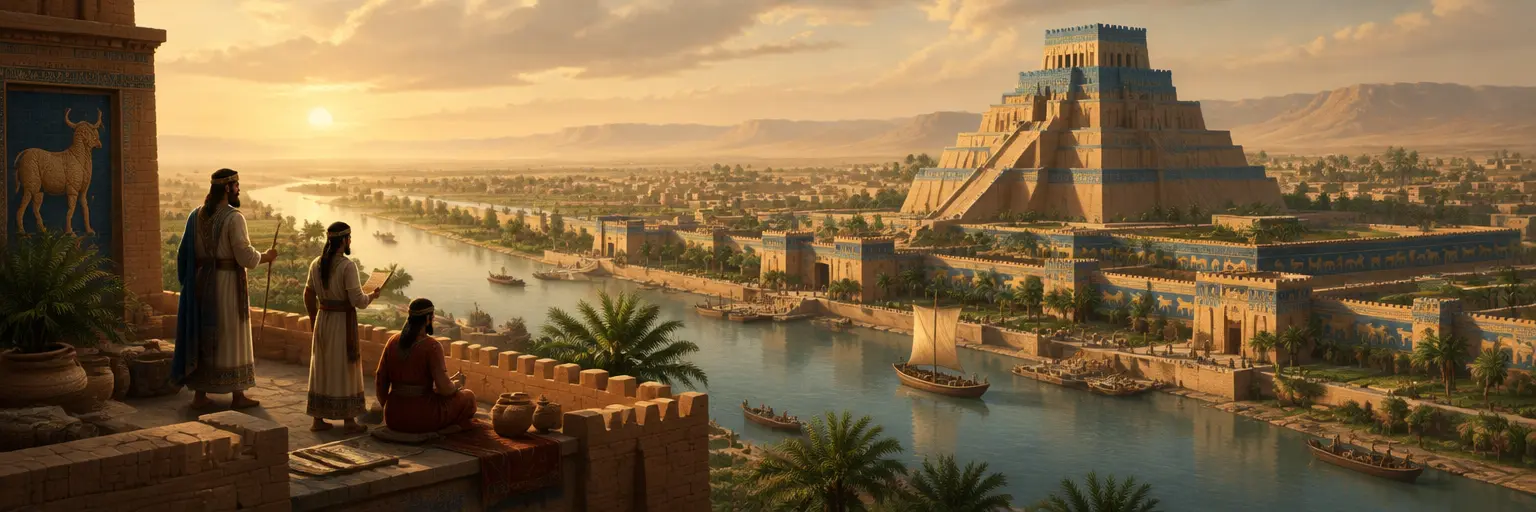
Explore the remarkable world of the Ur III period, often hailed as the Neo-Sumerian Empire—a golden age of political unity, bureaucratic innovation, and cultural renaissance in ancient Mesopotamia. This detailed study delves into the Third Dynasty of Ur, where kings like Ur-Nammu and Shulgi transformed a war-torn region into a centralized state famed for its monumental ziggurats, administrative cuneiform tablets, and the earliest known legal code. Uncover the legacy of Sumerian civilization that survived its fall, influencing Babylonian law, literature, and religious practices for millennia. From the thriving city of Ur to the intricate temple economies that managed vast resources, this subcategory illuminates how Sumerian culture—its language, myths, and social structures—became the bedrock of Near Eastern heritage. Perfect for enthusiasts of ancient history, archaeology, and the enduring impact of early urban societies, this content enriches your understanding of humanity’s first great empires.
🌟 Explore the intriguing role of women in Ur III Sumer through legal and economic texts, shedding light on their societal status…
Read article
🌟 Explore how the Ur III standardization impact shaped Mesopotamian culture, influencing administrative practices, art, and society for centuries. This analysis highlights…
Read articleWelcome to ArchaeologyHub.org’s deep dive into the Ancient Near East, focusing on the Ur III Civilization—often called the Neo-Sumerian Empire. This subcategory unpacks the final great flowering of Sumerian culture, from its administrative genius to its artistic revival. Here, you’ll uncover how Ur, a city-state, became the center of a vast territorial state that influenced Mesopotamian governance, religion, and daily life for centuries. Through artifact profiles, excavation insights, and timeline analyses, this section reveals the Ur III dynasty’s role as a bridge between the legendary Akkadian Empire and the later Babylonian world.
After the fall of the Akkadian Empire, the Ur III state emerged under King Ur-Nammu (c. 2112–2095 BCE), reuniting Sumer and Akkad. This section explores how the dynasty established one of history’s first highly centralized bureaucracies, with provincial governors, standardized weights, and a complex taxation system. You’ll learn about the Code of Ur-Nammu, the earliest known law code, predating Hammurabi by three centuries, which set precedents for justice and social order.
Archaeological evidence from Tell Drehem and Puzrish-Dagan reveals a massive redistribution economy, where livestock and goods flowed into the temple and palace complexes. This administrative precision, documented on tens of thousands of cuneiform tablets, makes the Ur III period a goldmine for economic historians. By understanding this political machinery, you’ll see how Ur III created a model for imperial rule that echoed through Mesopotamian history, blending Sumerian traditions with new managerial practices.
The Ur III culture was a renaissance of Sumerian identity, reviving ancient hymns, literature, and religious ceremonies. Central to this was the Great Ziggurat of Ur, a monumental step pyramid dedicated to the moon god Nanna, showcasing advanced mud-brick engineering and spiritual devotion. This section details how kings were deified in their lifetimes—a radical innovation—claiming divine status to legitimize their rule and unify diverse populations under a sacred mandate.
You’ll explore temple archives that list offerings, festivals, and priestly duties, revealing a rich liturgical calendar. The famous Royal Tombs of Ur (predating Ur III but culturally foundational) and the exquisite Standard of Ur artifacts are contextualized here, showing how Sumerian artistic motifs—like banquet scenes and animal symbolism—persisted into Ur III art. This cultural efflorescence influenced subsequent Babylonian and Assyrian religious iconography, making it a crucial chapter in ancient Near Eastern heritage.
Ur III society was highly stratified, with a free class, dependent workers (including guruš laborers), and a significant number of slaves. This section examines household economies, where large state-run workshops (called agrig) produced textiles, metals, and pottery. You’ll analyze labor records from Umma and Lagash, which document daily wages, rations, and worker assignments, providing a granular view of ancient social structures and gender roles—women often worked in weaving and textile production.
Trade networks extended from the Persian Gulf to Anatolia, importing copper, timber, and semi-precious stones. The state controlled foreign commerce through merchant agents, ensuring a steady supply of luxury goods for temples and palaces. By studying these economic texts, you’ll appreciate how sustainability relied on irrigation management and grain surplus, and how fiscal policies affected everything from land ownership to military conscription. This economic backbone enabled Ur III’s military campaigns and monumental construction projects, leaving a tangible legacy in settlement patterns.
The material culture of Ur III includes cylinder seals, clay tablets, bronze tools, and votive statues, many of which have been unearthed in modern excavations at Tell el-Muqayyar (ancient Ur). This subcategory profiles signature artifacts, such as the Ur-Nammu Stele, depicting the king receiving divine orders, and the kešdú ceremony texts that detail ritual kingship. You’ll discover how cuneiform palaeography helps date tablets and trace scribal traditions.
Excavation techniques, from stratigraphic digging to remote sensing, are highlighted to show how archaeologists reconstruct Ur III life at sites like Eshnunna and Nippur. The Nippur archives have yielded letters, legal documents, and literary compositions, enriching our understanding of everyday problems and intellectual pursuits. By cataloging these finds, ArchaeologyHub provides a virtual museum experience, connecting artifacts to their historical contexts—essential for researchers and enthusiasts seeking primary-source insights into Sumerian civilization.
The Ur III dynasty collapsed around 2004 BCE due to internal revolts and Elamite invasions, yet its legacy was profound. Subsequent rulers, including the Old Babylonian kings, invoked Ur III laws and administrative reforms as golden-age precedents. This section traces how Sumerian language survived as a liturgical and scholarly tongue, with Ur III literature (e.g., the Lamentation over Ur) inspiring later Mesopotamian grief and renewal narratives.
Beyond its immediate successors, Ur III shaped concepts of kingship, law, and urban planning that permeated the entire ancient Near East—from Hittites to Persians. Modern scholars view this period as a pivotal test-case for state formation theories, due to its rich documentary evidence. You’ll also explore how digital humanities projects, like the Cuneiform Digital Library Initiative, are transforming research on Ur III tablets, making this ancient civilization accessible to global audiences. This legacy underscores why Ur III remains a vital key to understanding the deep roots of civilization.
The Ur III period (c. 2112–2004 BCE) marks the final major Sumerian dynasty, centered at the city of Ur. It was a time of political unification, bureaucratic innovation, and cultural revival after the Akkadian Empire’s collapse. Its rulers, like Ur-Nammu and Shulgi, established a centralized state, codified laws, and built monumental ziggurats, leaving a rich textual and archaeological record.
The Code of Ur-Nammu is the earliest known written law code, predating Hammurabi’s by centuries. It established principles of justice, fixed penalties for crimes, and protected vulnerable groups like widows and orphans. Its prologue and casuistic laws set legal precedents that influenced Mesopotamian jurisprudence and provide invaluable insight into social norms and royal ideology.
The Ur III economy was highly centralized, with a vast redistribution system managed by temples and palaces. These institutions collected agricultural surpluses, livestock, and craft goods through taxes and tribute, then redistributed rations and raw materials to workers. Cuneiform tablets document labor, trade, and accounting, showing a complex bureaucracy that controlled most resources and trade networks across Mesopotamia and beyond.
Key sites include Tell el-Muqayyar (ancient Ur), famous for the Great Ziggurat and royal tombs; Nippur with its extensive temple archives; and Umma and Lagash, which yielded administrative tablets. Excavations at these locations have uncovered palaces, residential districts, and thousands of cuneiform documents, providing comprehensive data on daily life, economy, and religion during the Ur III era.
Ur III established administrative templates, legal traditions, and literary styles that echoed in Babylonian, Assyrian, and even Persian cultures. Its concept of divine kingship, standardized weights, and provincial governance were adopted and adapted by subsequent empires. Sumerian language and literary works from Ur III persisted in scribal schools for centuries, making it a foundational cultural repository for the entire ancient Near East.







