Explore the Neo-Assyrian Empire: Expansion and Military Mastery
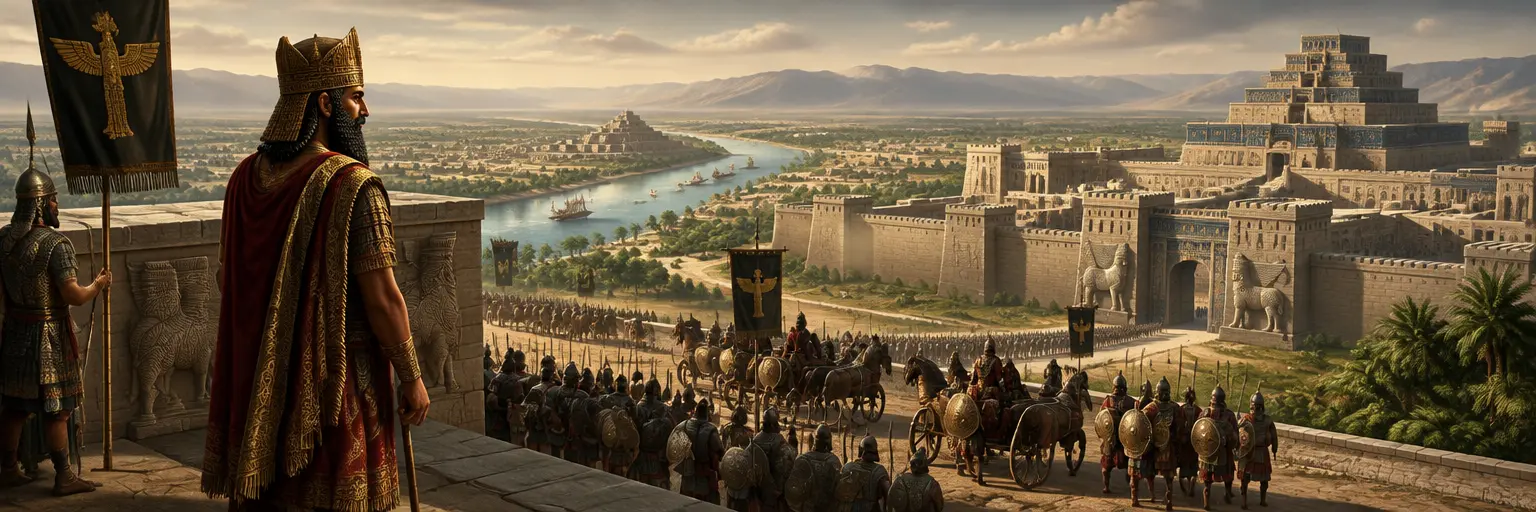
Delve into the formidable world of the Neo-Assyrian Empire (c. 911–609 BCE), a civilization that redefined ancient warfare and imperial governance. This subcategory on ArchaeologyHub.org offers a focused lens on the empire’s relentless territorial expansion, innovative military engineering, and the administrative machinery that sustained its dominance across the Ancient Near East. From the iron-clad chariots of Ashurnasirpal II to the siege engines of Sennacherib, you will uncover how Assyrian kings forged the largest empire the world had yet seen, leaving a lasting archaeological and historical legacy.
🛡️ The Drivers of Territorial Expansion: From Heartland to Hegemony
Here, you will trace the strategic phases of Assyrian growth, beginning with the recuperative campaigns of Adad-nirari II and culminating in the sweeping conquests of Tiglath-Pileser III and his successors. The subcategory details how the empire systematically absorbed neighboring states—from Aramaean city-states to the Kingdom of Urartu—using a blend of diplomacy, punitive raids, and mass deportations. Expect to find interactive maps showing the shifting borders, plus analyses of economic motivations, such as controlling trade routes and agricultural surplus, which fueled the imperial engine.
You will also explore the ideological underpinnings of expansion, where kings framed conquest as a divine mandate from Ashur. This section highlights archaeological evidence from royal annals, stelae, and palace reliefs that depict campaigns with propagandistic flair. By examining these sources, you gain insight into how military success was not just a political necessity but a religious and cultural imperative, shaping the very identity of the Assyrian state and its subjects.
⚔️ Revolutionary Military Tactics and Organization
This facet focuses on the Neo-Assyrian army as a professional, standing force—an unprecedented innovation in its time. You will learn about the corps structure: elite royal guards, heavy and light infantry, cavalry archers, and chariot units, each with specialized roles. The subcategory breaks down battlefield tactics, including coordinated flanking maneuvers, the use of terror as a psychological weapon, and logistical planning for supply lines across vast distances. Discover how the Assyrians pioneered the effective use of iron weaponry, giving them a decisive edge over bronze-armed foes.
Furthermore, you will examine the evolution of fortification and siegecraft, from simple ramps to complex battering rams and tunnels. Detailed case studies of sieges at Lachish and Jerusalem reveal the meticulous preparation and engineering skill involved. Through reconstructed diagrams and artifact profiles (like scale armor and helmets), you will understand how a highly disciplined and technologically superior army enabled the empire to project power from the Mediterranean coast to the Persian Gulf, setting a template for later imperial militaries.
🏛️ Administrative Genius: Governing a Vast and Diverse Realm
Expansion was only sustainable through effective governance, and this section explains the Neo-Assyrian administrative system. You will explore the provincial model, where conquered territories were divided into provinces governed by loyal officials, replacing local client kings. Learn about the sophisticated communication network using royal roads and relay stations, which allowed rapid dispatch of orders and intelligence. The subcategory also covers the census, taxation systems, and forced resettlement programs, which aimed to break local identities and integrate diverse populations into a unified imperial fabric.
You will also encounter the role of the king as both supreme commander and chief administrator, supported by a bureaucracy of scribes, eunuchs, and military commanders. Primary sources like the Nimrud Wine Lists and administrative tablets provide a intimate look at daily governance, resource allocation, and even palace intrigues. This archaeological depth reveals how the empire managed its multicultural subjects, balancing coercion with incentives, and why its administrative innovations were copied by successor states like the Babylonian and Persian empires.
🏺 Archaeological Evidence: From Nimrud to Nineveh
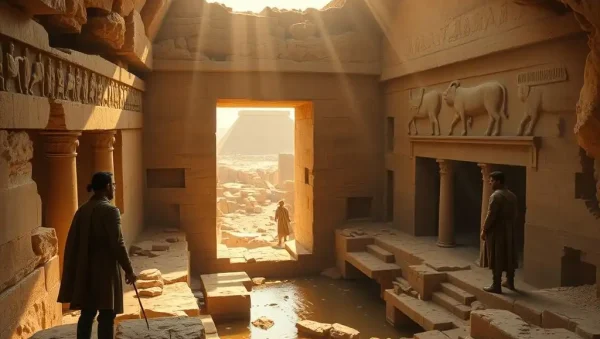
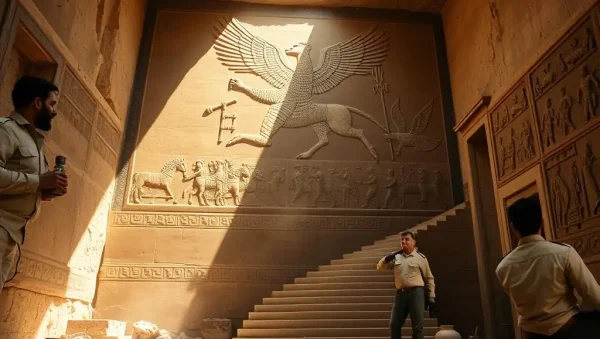
This part showcases the rich material culture that illuminates Assyrian military and expansionist activities. You will explore major excavation sites—Kalhu (Nimrud), Dur-Sharrukin (Khorsabad), and Nineveh—with their colossal winged bull guardians, intricate wall reliefs, and royal libraries. The subcategory offers artifact profiles on weapons, armor, and military standards, but also on the administrative tablets and commemorative inscriptions that document campaigns. Through high-resolution images and 3D models, you can virtually inspect the famous Lachish Reliefs that vividly portray a siege in astonishing detail.
Moreover, you will learn about recent archaeological discoveries, such as the ongoing excavations at Nineveh’s military quarters and the analysis of skeletal remains from battlefields, which provide forensic insights into ancient warfare. These findings help historians cross-reference textual accounts with physical evidence, resolving debates about siege tactics, casualty numbers, and the true scale of deportations. This section emphasizes how modern technology, like LIDAR and ground-penetrating radar, is revealing hidden fortifications and palatial complexes, continually reshaping our understanding of the Neo-Assyrian military machine.
📜 Legacy: How Assyrian Expansion Shaped the Ancient World
Finally, you will examine the enduring impact of Neo-Assyrian expansion beyond the empire’s fall in 609 BCE. The subcategory discusses how Assyrian military tactics, administrative practices, and imperial ideology were inherited by the Neo-Babylonians, Medes, and ultimately the Achaemenid Persians. You will explore cultural transfers in art, architecture, and religion, as seen in the spread of Aramaic as a lingua franca and the use of Assyrian-style royal imagery in later empires. This legacy extends to biblical texts, which reference Assyrian campaigns, and classical Greek histories that remembered the empire as a byword for cruelty and might.
Additionally, you will discover how this period informs modern discussions on empire-building, counterinsurgency, and the ethics of cultural heritage. The subcategory provides comparative analyses with other ancient imperial powers, such as Rome and Han China, highlighting unique aspects of Assyrian statecraft. By viewing the Neo-Assyrian Empire through its military and expansionary lens, you gain a nuanced perspective on how ancient societies managed power, diversity, and conflict—lessons that still resonate in today’s geopolitical landscape. This holistic view ensures that your exploration is both academically rigorous and broadly thought-provoking.
Frequently Asked Questions
What made the Neo-Assyrian army so formidable compared to its neighbors?
The Neo-Assyrian army was a professional, standing force with standardized equipment, such as iron weapons and scale armor, and a structured hierarchy. It excelled in combined-arms tactics, integrating infantry, cavalry, and chariots. Its siege expertise, including advanced ramps and battering rams, allowed it to take fortified cities that others could not. Logistical planning, using supply depots and fortified routes, enabled sustained campaigns far from home.
How did the Assyrians administer their conquered territories?
Assyrians replaced local rulers with provincial governors loyal to the king, dividing the empire into manageable provinces. They implemented a uniform tax system and conscription, while also building a network of roads and relay stations for swift communication. Mass deportations broke resistance but also redistributed skilled labor, integrating diverse communities into a cohesive imperial system under Assyrian law and culture.
What are the most iconic archaeological sites for studying Assyrian military history?
Key sites include Nimrud (ancient Kalhu), with its palace reliefs depicting battles and tribute; Nineveh, home to Sennacherib’s “Palace Without Rival” and the Lachish Reliefs; and Khorsabad (Dur-Sharrukin), Sargon II’s new capital. These sites yield royal inscriptions, weapon caches, and administrative texts that together offer a rich, multi-layered picture of military organization and expansion.
Did the Neo-Assyrian military innovations influence later empires?
Absolutely. The archaeological record shows that the Neo-Babylonians and Persians adopted Assyrian siege techniques, administrative provinces, and royal propaganda motifs. The use of Aramaic as an administrative language spread via Assyrian practice, becoming a lingua franca. Persian imperial roads and courier systems echo Assyrian logistics, while Hellenistic and Roman armies continued similar tactical combinations, showing a lasting military legacy.
How reliable are the Assyrian royal annals as historical sources for military campaigns?
Royal annals are highly biased, exaggerating victories, enemy casualties, and tribute. They omit defeats and often use formulaic boasts to legitimize the king’s rule. However, when cross-referenced with archaeological evidence, such as destruction layers, artifacts, and non-Assyrian texts (like Babylonian chronicles), they provide valuable but partial insights. Scholars treat them as propaganda that still helps establish chronological frameworks and campaign sequences.