Exploring the Akkadian Empire: Society and Expansion
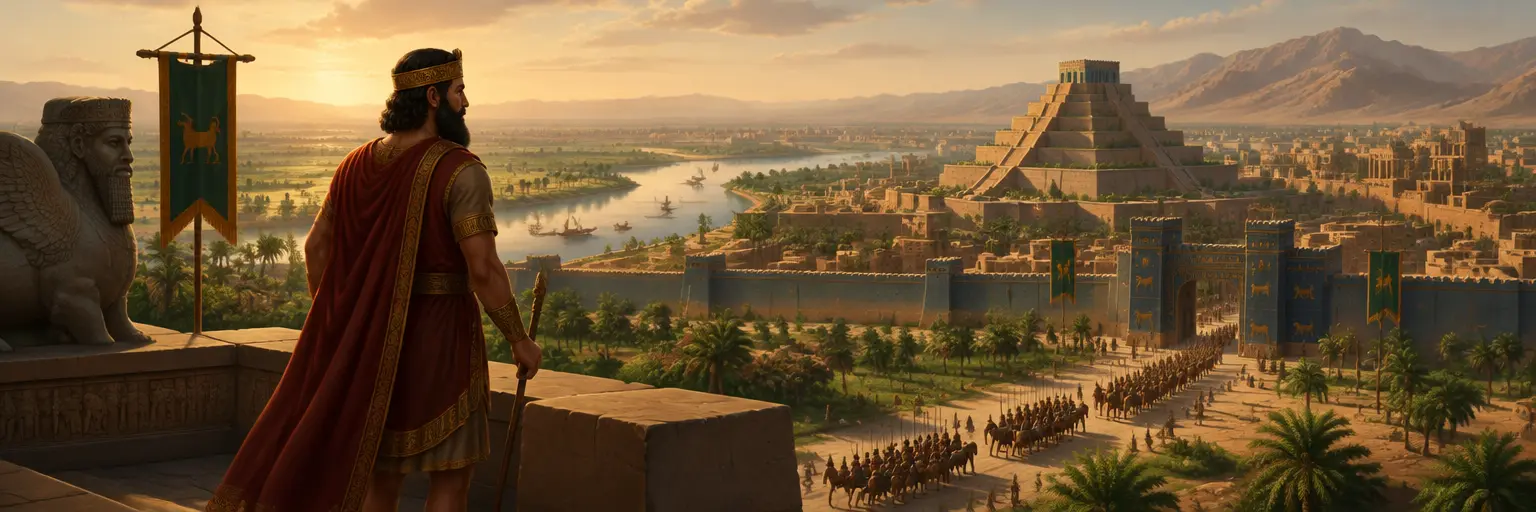
Welcome to ArchaeologyHub.org’s detailed study of the Akkadian Empire, the world’s first true empire, which forged a new paradigm of political and social organization in the Ancient Near East. This subcategory focuses on the internal mechanics of Akkadian society and the aggressive territorial expansion that defined its rise under Sargon of Akkad and his successors. Here, you will unearth how administrative innovations, military strategies, and cultural assimilation created a lasting legacy for Mesopotamian civilization.
🏛️ The Foundations of Akkadian Social Structure
Under Sargon (c. 2334–2279 BCE), the Akkadian Empire synthesized Sumerian city-states into a centralized, hierarchical society. The ruler was deemed divine, a "King of the Universe," supported by a class of elite scribes and military officers who controlled a redistributive economy. This system relied heavily on the standardization of weights, measures, and scribal practices to ensure efficient tax collection and labor mobilization.
Below the elite, free citizens included farmers, artisans, and merchants who operated within state-run estates or private enterprises. The social ladder also included a significant population of slaves, often prisoners of war, who worked in temple complexes or on large agricultural lands. Archaeological evidence from settlements like Tell Leilan reveals that Akkadian administrators meticulously managed land allotments and irrigation, demonstrating a sophisticated but rigid stratification that fueled productivity and loyalty to the crown.
⚔️ Military Campaigns and Tactical Innovation
The expansion of the Akkadian Empire was not accidental but propelled by a professional standing army, a revolutionary idea at the time. Unlike earlier Sumerian conscripted levies, Akkadian soldiers fought year-round, equipped with composite bows, copper-tipped spears, and advanced siege engines. This standing force enabled Sargon to launch rapid campaigns against rival powers like Elam, Mari, and Ebla, creating a territorial control that stretched from the Persian Gulf to the Mediterranean Sea.
Strategically, the Akkadians utilized a network of fortified outposts and supply depots to maintain logistics over vast distances. They also adopted psychological warfare, as inscriptions from the period boast of burning cities and deporting rebellious populations to break local resistance. The military’s efficiency, combined with the establishment of governors loyal to the emperor, ensured that conquered regions could be integrated swiftly, turning temporary raids into permanent provinces and setting a template for future imperial conquests.
🌾 Economic Networks and Trade Routes
Akkadian prosperity depended on its ability to control and reshape trade networks across the Near East. Conquests secured access to vital raw materials—cedar from Lebanon, copper from Oman, and lapis lazuli from Afghanistan—which were funneled through imperial depots and distributed to artisan workshops. This trade surplus enabled the empire to mint silver as a standardized currency, facilitating commercial exchanges across cultural boundaries.
The expansion also created a "globalized" economy where Akkadian merchants, protected by military patrols, could operate in distant ports and cities. Administrative tablets from Gasur (modern Nuzi) show complex credit arrangements and joint-stock enterprises, indicating a market economy that ran parallel to state redistribution. However, this economic integration also created vulnerabilities; over-reliance on long-distance routes made the empire susceptible to raiders and climate-induced famines, which later contributed to its collapse during the reign of Naram-Sin’s successors.
📜 Cultural Assimilation and Bureaucratic Art
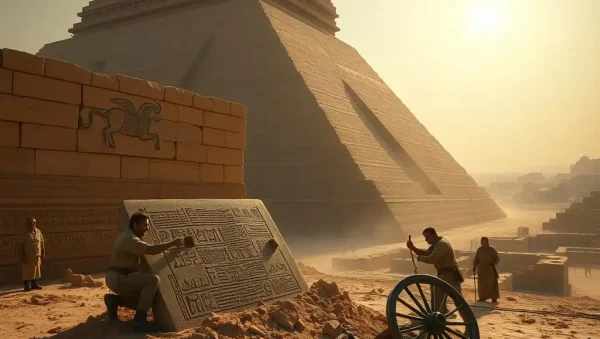
While the Akkadian Empire is famous for military might, its cultural policy was equally transformative. The Akkadians adopted Sumerian cuneiform but wrote their own Semitic language, promoting it as the official tongue of administration and royal decrees. This linguistic shift standardized legal codes and diplomatic correspondence, making Akkadian a lingua franca for centuries after the empire fell. Moreover, royal inscriptions and monumental art, such as the Stele of Naram-Sin, celebrated conquest but also depicted the king as a shepherd of his people.
Religious integration was key to social cohesion. The imperial court elevated the goddess Ishtar and the god Enlil to supreme positions, building temples in conquered territories to promote common worship. Local deities were not suppressed but incorporated into an imperial pantheon, easing cultural friction. This blend of coercion and co-option meant that Akkadian material culture—cylinder seals, pottery styles, and architectural forms—spread widely, enabling archaeologists to trace the empire’s influence across hundreds of sites, including excavation hubs like Ur and Kish.
🏺 The Legacy of Imperial Decline and Successor States
The decline of the Akkadian Empire (c. 2154 BCE) is a critical case study in social and environmental vulnerability. Evidence from sediment cores and archaeological strata suggests a severe megadrought that disrupted agriculture, undermining the empire’s economic base. Simultaneously, internal revolts by Gutian invaders and competing city-states fractured central authority, leading to a period of fragmentation known as the "Dark Age" before the rise of the Third Dynasty of Ur.
However, the Akkadian social model was not erased. Successor states adopted its administrative structure, divine kingship, and standardized legal practices. The empire’s memory persisted in Mesopotamian literature as a golden era, with later kings like Hammurabi invoking Sargon’s precedent. For modern archaeologists, the Akkadian episode offers profound insights into how early states manage diversity, resource scarcity, and military outreach—lessons that resonate in the study of other ancient imperial systems across the globe.
Frequently Asked Questions
What made the Akkadian Empire the first true empire?
The Akkadian Empire qualifies as the first imperial state because it established a centralized government that controlled diverse ethnic groups and territories beyond the traditional city-state borders. It implemented a standing army, standardized administration, and a unified legal and tax system, which were unprecedented for its time and differed from earlier loose confederations of Sumerian cities.
How did Sargon of Akkad manage to conquer such a large territory?
Sargon combined military innovations, such as the professional, year-round army with advanced composite bows and siege equipment, with diplomatic strategies like appointing loyal governors and marrying his daughters to regional rulers. He also leveraged local trade grievances to gain support from conquered elites, ensuring faster integration of territories under his supreme command.
What was the role of women in Akkadian society?
Women in Akkadian society held limited but notable roles, particularly in religious and royal contexts. Priestesses like Enheduanna, Sargon’s daughter, wielded influence over temples and education, composing hymns. However, most women managed households, produced textiles, or were enslaved. Legal codes, such as those from the reign of Naram-Sin, granted women some property rights but often placed them under male guardianship.
What evidence do archaeologists use to study Akkadian expansion?
Archaeologists rely on a combination of royal inscriptions, administrative cuneiform tablets, and settlement pattern surveys. Excavations at sites like Tell Leilan and Tell Mozan reveal destruction layers from military campaigns, while stable isotope analysis of human remains and animal bones helps reconstruct diet and climate, confirming environmental factors behind expansion and collapse.
Why did the Akkadian Empire collapse so quickly, and what followed?
The collapse was triggered by a multi-century drought, likely coupled with internal rebellions and external Gutian invasions. The resulting famine and political fragmentation made the empire unsustainable. After several decades of instability, the Neo-Sumerian Ur III dynasty emerged, reviving many Akkadian administrative practices, which continued to influence Mesopotamian governance for centuries.