Unlocking the Hellenistic World: Alexander's Legacy & Successor Kingdoms
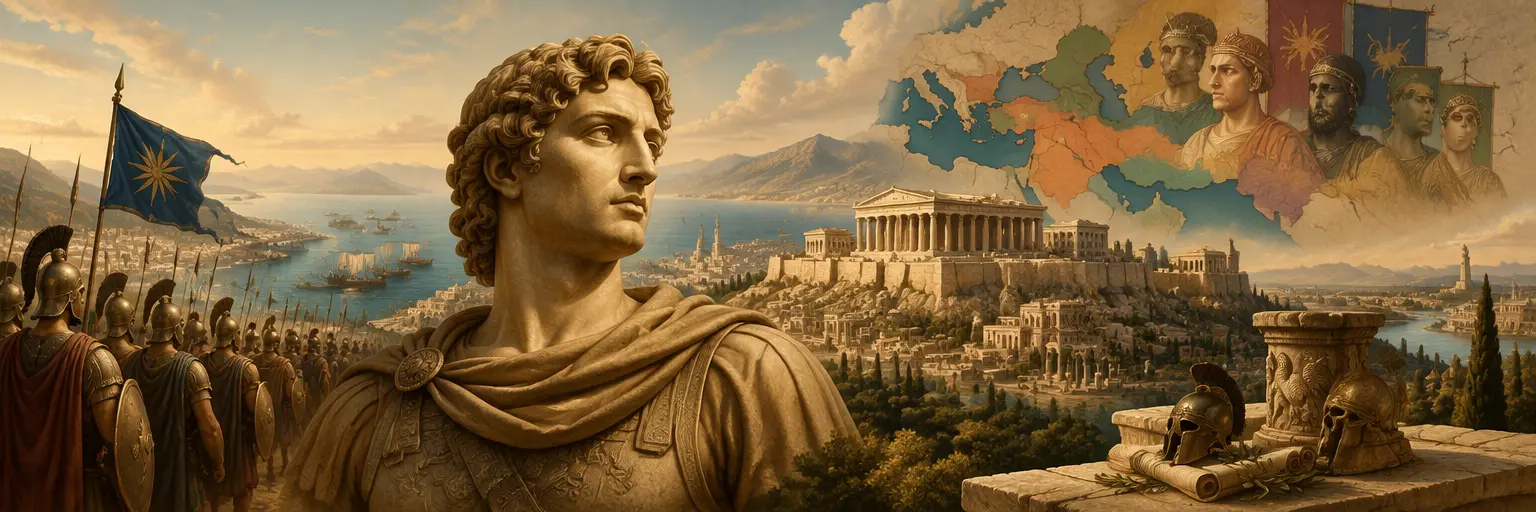
Welcome to ArchaeologyHub.org’s detailed study of the Ancient Mediterranean: Hellenistic World. This subcategory dives deep into the transformative three centuries following Alexander the Great’s death in 323 BCE, a period when Greek culture fused with Near Eastern traditions to create a dynamic, cosmopolitan era. From the glittering Ptolemaic court to the Seleucid military juggernauts, explore the archaeological evidence, political intrigues, and cultural innovations that defined the Successor Kingdoms. Our curated artifacts, site profiles, and timelines will help you trace the Diadochi wars, the rise of Alexandria, and the gradual Roman encroachment that ultimately ended this fascinating epoch.
🏺 The Fragmentation of Empire: From Hephaestion’s Death to the Battle of Ipsus
Here, you’ll uncover the chaotic power vacuum left by Alexander. Archaeological finds like the Babylon Chronicles and numismatic hoards reveal how his generals—Antigonus, Ptolemy, Seleucus, and Lysimachus—carved out territories. Expect detailed analysis of the Wars of the Diadochi, including the pivotal Battle of Ipsus in 301 BCE, which cemented the division of the empire into major Hellenistic states. We examine fortification ruins and frontier garrison sites that reflect the military-driven diplomacy of this turbulent period.
Our interpretive articles break down how these conflicts transformed landscapes. Urban planning shifted from Greek polis to royal capitals, as evidenced at sites like Pergamon and Dura-Europos. You’ll learn how boundary stelae and administrative papyri document the forced migrations and land redistribution that fueled demographic change, setting the stage for the cultural syncretism that followed.
�learn The Ptolemaic Kingdom: Alexandria’s Lighthouse, Serapeum, and the Nile Frontier
This section focuses on Egypt under the Ptolemaic dynasty, founded by Alexander’s general Ptolemy I Soter. Explore the archaeology of Alexandria, from the submerged royal quarters to the ancient harbor’s lighthouse—one of the Seven Wonders. You’ll encounter the Serapeum complex, dedicated to the hybrid god Serapis, illustrating the deliberate fusion of Greek and Egyptian religion. Our artifact profiles include Fayum mummy portraits and bilingual decrees, such as the Rosetta Stone, showing how the dynasty legitimized rule through both Hellenistic and pharaonic imagery.
Expect deep dives into frontier outposts like Syene (Aswan) and Koptos, where excavations reveal trade networks stretching to the Red Sea and sub-Saharan Africa. Nile-level records on temple walls provide direct testimony on agricultural management. You’ll also see how priestly synods at Memphis, recorded on stelae, created a political theology that blended Macedonian kingship with native Egyptian traditions, a key survival strategy until the Roman annexation in 30 BCE.
⚔️ The Seleucid Empire: Military Colonies, Hellenic Urbanism, and Eastern Trade Routes
Spanning from the Aegean to the Indus, the Seleucid realm was the largest successor state. This section details archaeological surveys of its strategic katokia (military colonies) and new foundations like Antioch and Apamea. We analyze city layouts that combined Greek grid plans with Persian palace traditions, as seen at Ai-Khanoum in Bactria. Discover how royal road systems and seal impressions from Seleucia-on-the-Tigris reveal an efficient bureaucracy managing far-flung satrapies.
From a content standpoint, expect monographs on Hellenistic ceramics and terracotta figurines that trace cultural interaction along the Silk Road precursors. Our coin catalogs show how Seleucid kings used minted images to project authority, from Apollo’s anchor to elephants. You’ll also explore frontier warfare against the Parthians, using rock carvings at Behistun and military fortifications that marked the empire’s shifting eastern boundary, culminating in the loss of Iran after the mid-second century BCE.
🏛️ The Antigonid Kingdom and Greece: Macedonia’s Revival, League Politics, and the Macedonian Tombs
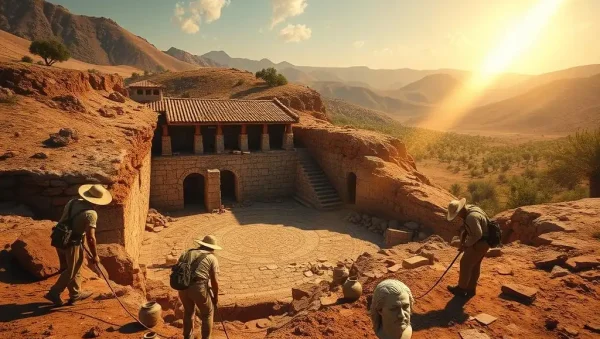
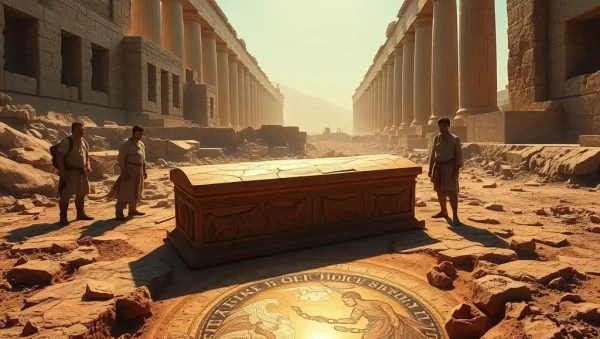
Focus here is on mainland Greece and Macedonia under the Antigonid dynasty. We examine the archaeological remains ofPella, the royal capital, with its stunning pebble mosaics and grand civic buildings. The Great Tumulus of Vergina (Aigai) provides iconic evidence of funerary practices, including the presumed tomb of Philip II. Expect in-depth guide to military equipment, sarissa spearheads, and fortification walls that show how Macedonian phalanxes dominated Greek warfare.
This section also unpacks the rise of federal leagues, such as the Achaean and Aetolian Leagues, through epigraphic finds like the Manumission inscriptions at Delphi. Our sanctuary analyses at Delos and Olympia highlight how Greek city-states navigated autonomy under royal overlords. Additionally, we cover Epidaurus’ theater and Larisa’s bouleuterion to illustrate ongoing cultural vitality. You will also see how Roman intervention in the Second Macedonian War ultimately dissolved Antigonid power after the Battle of Pydna in 168 BCE.
🌍 Cultural Fusion & Daily Life: Koine Greek, Material Culture, and Cosmopolitan Identities
Beyond politics, this subcategory explores the everyday lived experience across the Hellenistic world. Our articles analyze domestic architecture at houses in Delos and Priene, incorporating household artifacts such as loom weights, cooking pots, and lamps. We investigate Koine Greek as the lingua franca, evidenced from papyri in Egypt to inscriptions in Afghanistan. Expect visual guides to terracotta figurines of deities, actors, and everyday people, revealing popular piety and social norms.
Additionally, we cover the economy through amphora stamping and coin circulation, showing how trade networks knit the Mediterranean together. Jewish and Egyptian diaspora communities in Alexandria, as well as Indian Buddhist influences in Bactria, illustrate profound cultural exchanges. Our interpretive essays use multidisciplinary archaeology, from zooarchaeology to residue analysis, to reconstruct diets and health. This section underscores how individuals navigated hybrid identities, making the Hellenistic period a laboratory for multiculturalism.
Frequently Asked Questions
What exactly were the “Successor Kingdoms” after Alexander?
They were the major territorial states formed by Alexander’s generals after his death in 323 BCE. The most prominent were the Ptolemaic Kingdom (Egypt), the Seleucid Empire (Asia Minor to Central Asia), the Antigonid Kingdom (Macedonia/Greece), and the Attalid dynasty (Pergamon). Smaller kingdoms, like Bithynia or Cappadocia, also emerged. These states blended Macedonian institutions with local traditions, and lasted until the Roman conquest around 30 BCE.
How did archaeological discoveries prove the existence of these kingdoms?
Excavations at royal capitals like Alexandria, Seleucia, and Pella have unearthed palaces, temples, and fortifications. Inscribed texts—including royal decrees, boundary stones, and papyri—document administrative systems and royal titles. Numismatic defects with royal portraits and legends securely identify rulers. Artifactual assemblages, such as mold-made pottery and stamped amphora handles, verify trade networks. Together, these finds provide tangible evidence of the kingdoms’ organization, economy, and culture.
Why is the Battle of Ipsus (301 BCE) so important in this context?
The Battle of Ipsus was the decisive conflict among the Diadochi. The allied forces of Seleucus and Lysimachus defeated Antigonus I Monophthalmus, who was killed in the fray. This victory allowed Seleucus to claim Syria and Anatolia, establishing the Seleucid Empire’s core territory. It also confirmed Ptolemy’s control of Egypt, effectively finalizing the three main Successor Kingdoms’ borders for the next century. Thus, Ipsus marks the formal end of Alexander’s unified empire.
What is the best-known archaeological site from the Hellenistic period?
There’s no single “best,” but Alexandria stands out due to its lighthouse, library, and mixed heritage. Pergamon offers the magnificent Altar of Zeus and a steep theater. Ai-Khanoum in Afghanistan reveals Greco-Bactrian urbanism with a gymnasium, theatre, and Hellenistic houses. The Tomb of Philip II at Vergina also reaches iconic status for its riches. Each site uniquely illustrates different facets of Hellenistic culture.
How did the Hellenistic kingdoms influence Rome’s rise?
Rome’s expansion into the eastern Mediterranean directly resulted from conflicts with these kingdoms. The Macedonian Wars and the Seleucid War (against Antiochus III) brought Roman armies into Greece and Asia. Roman generals adopted Hellenistic military tactics, artistic styles, and intellectual traditions. Through diplomatic annexation and client states, Rome integrated Hellenistic administrative models, which shaped its imperial governance. The Mediterranean’s Hellenistic cosmopolitan culture thus became the basis of the Roman world. This transition is well-documented at sites like Corinth’s destruction and Pergamon’s bequest to Rome.