Unveiling the Etruscan Legacy: Art, Religion & Society in Ancient Italy
Before Rome rose to dominate the Mediterranean, a sophisticated and enigmatic civilization flourished in the heart of Italy—the Etruscans. Their influence on Roman culture, from architectural engineering to religious rituals, was profound, yet much of their own story remains a fascinating puzzle. This detailed subcategory guide from ArchaeologyHub.org offers an in-depth exploration of Etruscan civilization, focusing specifically on their artistic achievements, deeply spiritual worldview, and complex social structures. Delve into the world of tombs, terracotta warriors, and intricate bronze work to understand a people whose legacy is carved into the very foundations of Western civilization.
🏺 The Masterpieces of Etruscan Art: A Window to the Afterlife
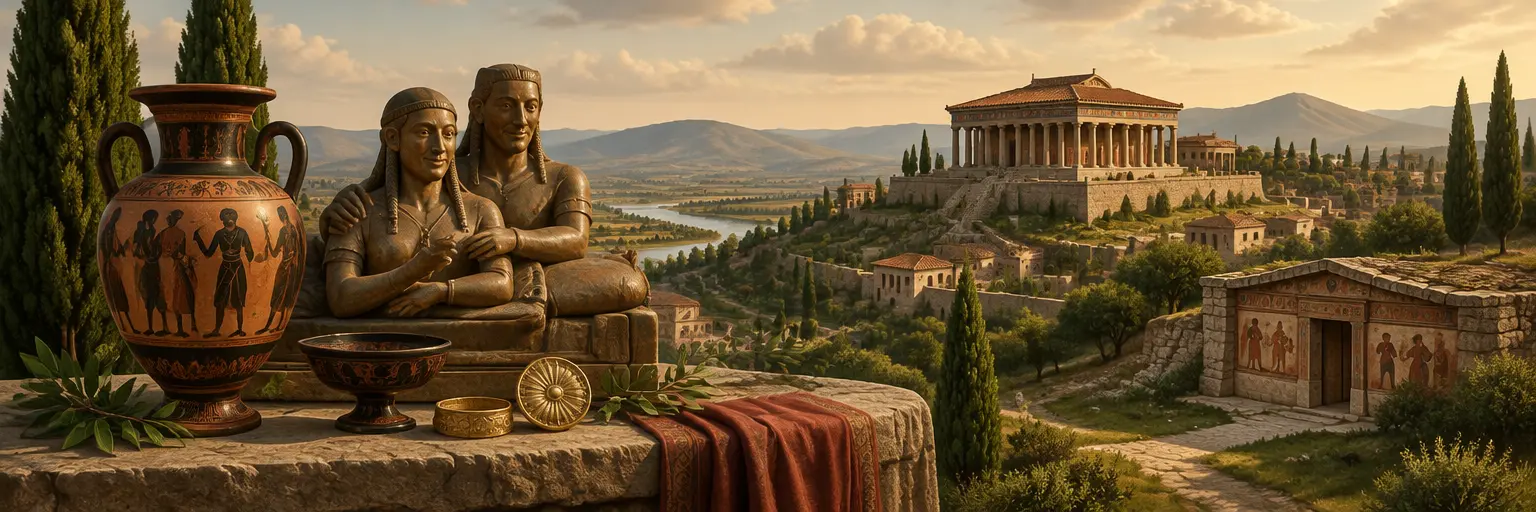
Etruscan art is strikingly original, blending influences from Greek and Near Eastern cultures while maintaining a distinctly indigenous character. The most spectacular surviving artworks were created for tombs, reflecting a profound preoccupation with the afterlife. Visitors to this subcategory will discover vivid frescoes, such as those at the Tomb of the Leopards in Tarquinia, which depict lively banquets, dancers, and musicians—offering a joyful, rather than somber, vision of death. Alongside these murals, the Etruscans produced masterful bucchero pottery (a unique black ceramic), intricate gold jewelry, and large-scale terracotta sculptures like the famous Sarcophagus of the Spouses.
This section provides artifact profiles and high-resolution imagery that highlight the technical skill and aesthetic sensibilities of Etruscan artisans. You will learn how their art evolved from the abstract geometric designs of the Villanovan period to the naturalistic, Hellenistic-style expressions of their later centuries. We also analyze the iconography of their art, revealing how everyday objects and funerary monuments served as powerful symbols of status, identity, and spiritual belief. For archaeology enthusiasts and art historians alike, this deep dive reveals the truly independent and creative spirit of Etruscan visual culture, placing it as a foundational pillar in the story of ancient Mediterranean art.
⛩️ Decoding Etruscan Religion: Divination and the Divine
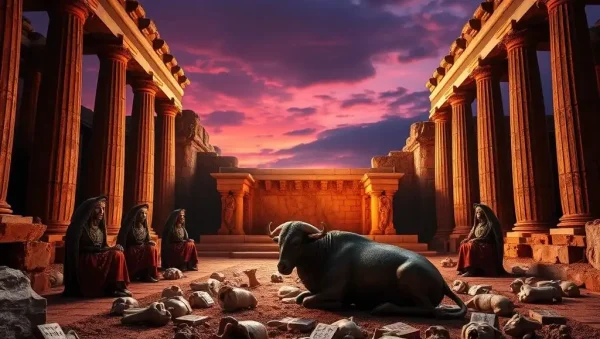
The Etruscan religion was a complex system of ritual and belief, famously characterized by its doctrine of divination—the practice of interpreting the will of the gods. Unlike the myth-centric religions of the Greeks, the Etruscans placed immense importance on a set of sacred books, now lost, known as the Etrusca Disciplina. These texts prescribed methods for reading the entrails of sacrificed animals (haruspicy) and interpreting lightning strikes (fulguralia). The elite priests, known as haruspices, held immense political power, as no significant public or private action was taken without their counsel. This guide explains the roles of major deities, such as Tinia (the supreme god, equivalent to Zeus), Uni (Juno), and Menrva (Minerva).
Through interpretive analyses of temple layouts and votive offerings, we reconstruct the sacred landscapes of the Etruscans. Temples, as described by the Roman architect Vitruvius, were the central loci of worship and were adorned with elaborate, painted terracotta statues on their rooflines. This section also explores the fascinating concept of the afterlife—the idea that the soul journeyed to the underworld via specific gateways. By examining excavated sanctuaries and grave goods, this content illuminates how religious practices governed Etruscan life and death, impacting everything from civic governance to personal daily routines, and demonstrates the enduring influence of this belief system on the later Roman state religion.
👥 Etruscan Society: Women, Class, and Daily Life
Contemporary Greek and Roman authors often expressed scandalized fascination with the elevated status of Etruscan women. Unlike their Greek counterparts, who were largely confined to the home, Etruscan women enjoyed significant freedoms. Attending banquets, owning property, and receiving formal education, they were educated and influential figures within elite households. Tomb inscriptions frequently commemorate women in their own right, and sarcophagi depict husbands and wives reclining together as equals. This section provides a deep analysis of these social dynamics, exploring the roles of aristocratic elites—the lucumones—who ruled over independent city-states, and the growing class of artisans and merchants that supported the palatial economies.
Daily life for the average Etruscan was centered around agriculture (wheat, olives, and vines) and thriving trade networks. New archaeological methods, including analysis of skeletal remains, allow us to piece together their diets and health. The layout of Etruscan cities, though often lost to later Roman structures, reveals advanced urban planning, including sophisticated drainage systems and grid-based street layouts. Delve into this section to understand the social stratigraphy of the Etruscan world—the roles of slaves, freedmen, and the rigidly stratified nobility—offering a nuanced corrective to ancient Roman propaganda that painted Etruscans as decadent or secretive. Here, you'll uncover a society that was vibrantly cosmopolitan and remarkably progressive for its time.
⚱️ Tombs and Burial Rites: The Archaeology of the Necropolis
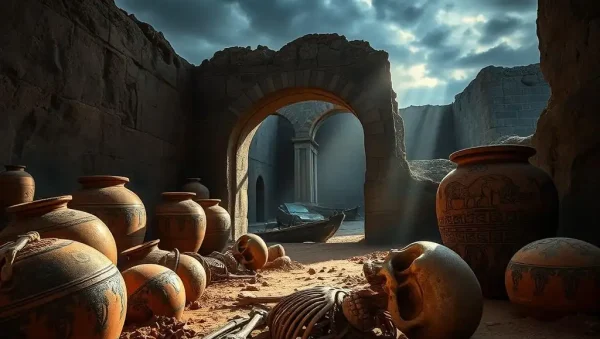
For the Etruscans, the city of the living was mirrored by the city of the dead. They built enormous necropolises ("cities of the dead") that have become the most impressive relics of their culture. Sites like Cerveteri and Tarquinia feature thousands of tombs carved into bedrock or structured as tumulus mounds, creating entire underground neighborhoods of the departed. Excavation techniques—from classic methodology to modern LiDAR scanning—have allowed us to map these vast sites in intricate detail, revealing architectural layouts that replicate the interior of Etruscan houses, complete with carved beds, doorways, and ceiling beams. This tradition demonstrates a belief that the tomb was a permanent dwelling for the deceased, meant to offer comfort and status for eternity.
In this subcategory, you can explore the evolution of burial practices, from early cremation urns shaped like huts to the elaborate chamber tombs of the Orientalizing and Archaic periods filled with imported Greek ceramics and luxurious bronze goods. We provide tentative timelines and contextual background on the social implications of funerary deposits; the wealth of goods found in elite tombs starkly contrasts with humbler burials, highlighting social stratification. You will learn how the meticulous documentation of grave goods allows archaeologists to reconstruct trade routes, political alliances, and even individual identity. These sacred landscapes are not just repositories of artifacts, but active texts that narrate the daily lives, belief systems, and social hierarchies of this influential ancient people.
🏛️ The Etruscan Legacy: Engineering, Rome, and Influence
While the Etruscan civilization was eventually absorbed by the expanding Roman Republic, their technological and cultural impact remained indelible. Roman architecture is profoundly indebted to Etruscan engineering, especially the development of the true arch and the vault, which allowed for the monumental structures—aqueducts, bridges, and colosseums—that defined Roman power. Beyond engineering, Rome adopted significant religious rituals, including the use of haruspicy by official priests, gladiatorial combat (originally a funerary blood rite), and the triumphal procession. The very insignia of Roman authority—the curule chair, the fasces (bundle of rods and axe), and the toga—all trace their origins to Etruscan regal symbols.
This section traces the decline of Etruscan political independence, marked by the fall of Veii in 396 BC and the eventual Roman colonization of Etruria. Yet, this was not a wholesale eradication but a gradual process of assimilation. Etruscan nobles continued to hold regional influence for centuries, and their language persisted in inscriptions. In viewing the archaeological evidence—from mining operations to hydraulic engineering projects like the Ponte Sodo tunnel—we see a civilization that was the primary conduit for Greek culture to Rome. This guide will demonstrate how understanding the Etruscans is crucial to understanding the origins of Rome, proving that the "mysterious Etruscans" are, in fact, the silent architects of the classical world we know today.
Frequently Asked Questions
What is the difference between Etruscan and Roman art?
Etruscan art is more focused on funerary and religious themes with a lively, naturalistic style, often depicted in frescoes and terracotta. Roman art, while heavily influenced by Etruscan and Greek traditions, expanded into political propaganda, realistic portraiture, and massive public monuments like triumphal arches and columns.
How did Etruscan religion influence Roman culture?
The Etruscan practice of divination, particularly reading animal entrails and interpreting lightning, was adopted by Rome. The Romans incorporated Etruscan rituals into state ceremonies and even kept Etruscan soothsayers. Much of Roman temple architecture, like the high podium and deep porch, also derives from Etruscan designs.
Why are Etruscan tombs so richly decorated?
The Etruscans believed the afterlife was a continuation of earthly life, so tombs were designed as permanent homes for the deceased. Rich grave goods and vibrant wall paintings were meant to provide comfort, pleasure, and demonstrate the deceased's social status, ensuring they lived on in honor and happiness.
Did the Etruscans have a written language that we can read?
Yes, the Etruscan language used a Greek-derived alphabet and can be read phonetically. However, it is not fully understood because it is a non-Indo-European language isolate, not closely related to Latin. We can read inscriptions for names and ritual phrases, but much of their literature is lost, keeping parts of the language mysterious.
What is the best site to see Etruscan remains for myself?
The most spectacular sites include Cerveteri (Banditaccia Necropolis) and Tarquinia (Monterozzi Necropolis), featuring thousands of painted tombs and tumulus mounds. The Archaeological Museum in Florence holds a vast collection of artifacts, including the Chimera of Arezzo and the bronze statue of the Orator, offering a comprehensive view of Etruscan artistry.