Ancient Egypt: Predynastic & Early Dynastic Periods – Unearthing the Dawn of the Pharaohs
Welcome to ArchaeologyHub.org’s deep dive into the formative eras of one of history’s most iconic civilizations. This subcategory focuses on the Predynastic Period (c. 6000–3100 BCE) and the Early Dynastic Period (c. 3100–2686 BCE), the crucial centuries when scattered Neolithic communities coalesced into a unified state under the first pharaohs. Here, you will explore excavation evidence from Naqada, Abydos, and Hierakonpolis, analyze ceremonial artifacts, and trace the origins of hieroglyphic writing and monumental architecture. Whether you are a student, enthusiast, or professional archaeologist, this section provides a scholarly yet accessible resource on the birth of Egyptian kingship, religion, and social complexity.
🏺 The Naqada Culture: From Villages to Chiefdoms
The Naqada culture (c. 4400–3000 BCE) represents the heart of the Predynastic sequence, divided into Naqada I, II, and III phases. During this time, agricultural settlements along the Nile evolved into stratified societies with craft specialization, long-distance trade in obsidian, gold, and turquoise, and emerging elite burials. Excavations at sites like Naqada and El-Amra reveal distinctive black-topped red pottery, palettes, and figurines that signal growing artistic and political sophistication.
For readers, expect detailed artifact analyses—such as the famous Narmer Palette—that illustrate the shift from local chieftains to regional warlords. We also examine burial practices, including the first mastabas at Hierakonpolis, which prefigure royal tombs. The Naqada culture’s role in unifying Upper and Lower Egypt is pivotal; our content clarifies the archaeological evidence behind this merger, debunking myths and highlighting the gradual, often competitive process of state formation. This is essential for understanding the foundation upon which pharaonic power was built.
📜 The Birth of Hieroglyphic Writing and Administration
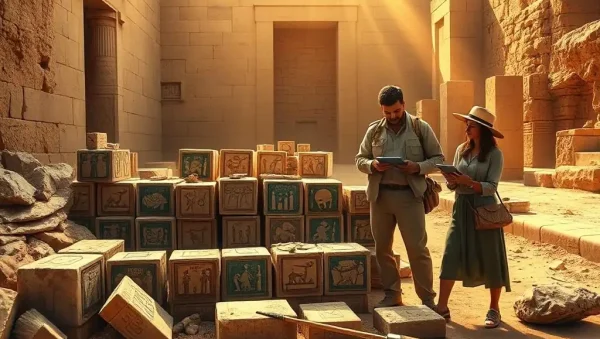
Writing emerged in Egypt not as a sudden invention but as a bureaucratic necessity. The earliest known hieroglyphic inscriptions date to c. 3200 BCE at Abydos and Hierakonpolis, appearing on labels, pottery, and ivory tags. These symbols recorded royal names, goods, and events, enabling centralized control over resources and labor. The U-j tomb at Abydos, with its 700 inscribed tags, offers a treasure trove for deciphering early administrative practices.
Here, you will find a linguistic breakdown of sign development—from pictographs to phonograms—and how it compares to contemporary Mesopotamian scripts. We explore the social context: scribes were elite specialists, and writing reinforced royal ideology. Articles also discuss the practical challenges of excavating and dating these fragile materials. By understanding early writing, you grasp how the state managed surplus, taxes, and military campaigns, a leap from tribal memory to historical record. This subcategory ensures you see writing not as art but as the engine of Egypt’s imperial ambition.
👑 Kingship and Royal Tombs at Abydos and Saqqara
The Early Dynastic period saw the consolidation of divine kingship, with pharaohs claiming Horus as their patron. The royal necropolises at Abydos (Umm el-Qa'ab) and Saqqara provide direct evidence of this ideology. Tombs of Dynasty 0 and Dynasty 1 rulers—like Narmer, Hor-Aha, and Djer—feature mudbrick chambers, grave goods of gold, lapis lazuli, and carved ivory, plus subsidiary burials of retainers, suggesting a belief in an afterlife court. The tomb of Qa'a includes a boat pit, symbolizing solar travel.
Expect comparative analyses of the two necropolises: Abydos is symbolic, linking to Osiris cult, while Saqqara shows architectural experimentation, like stepped facades. We examine recent excavations, including the Kaiser excavation reports, that refine tomb sequences and radiocarbon dates. Readers learn about mortuary rituals, such as the “soul house” models, and the concept of ka. This material is crucial for reconstructing royal power’s visual and spatial expression—how tombs functioned as eternal palaces, and how their layout influenced later pyramids.
🔨 Material Culture: Pottery, Stone Vessels, and Metallurgy
Predynastic and Early Dynastic artisans mastered diverse materials, from hand-shaped clay pots to exquisitely carved stone vessels made of diorite, alabaster, and basalt. The Naqada II “wavy-handled” jars evolved into cylindrical stone prototypes, indicating technological transfer and elite demand. Copper tools and decorative items appear from c. 3500 BCE, mined in Sinai and the Eastern Desert, while gold leaf and faience beads showcase craft specialization.
This section offers illustrated catalogues of artifact types, sourcing analyses via petrography and neutron activation, and reconstruction of workshops at sites like Hierakonpolis’s “cattle burial” area. You’ll understand how trade networks supplied raw materials, and how symbolism—such as the falcon motif—permeated objects. We also discuss conservation challenges for these millennia-old finds. By examining material culture, readers see daily life, status differentiation, and technological innovation. It’s a hands-on guide for artifact identification, ideal for collectors, students, or museum goers seeking deeper context.
🌾 Economy, Settlements, and the Nile Environment
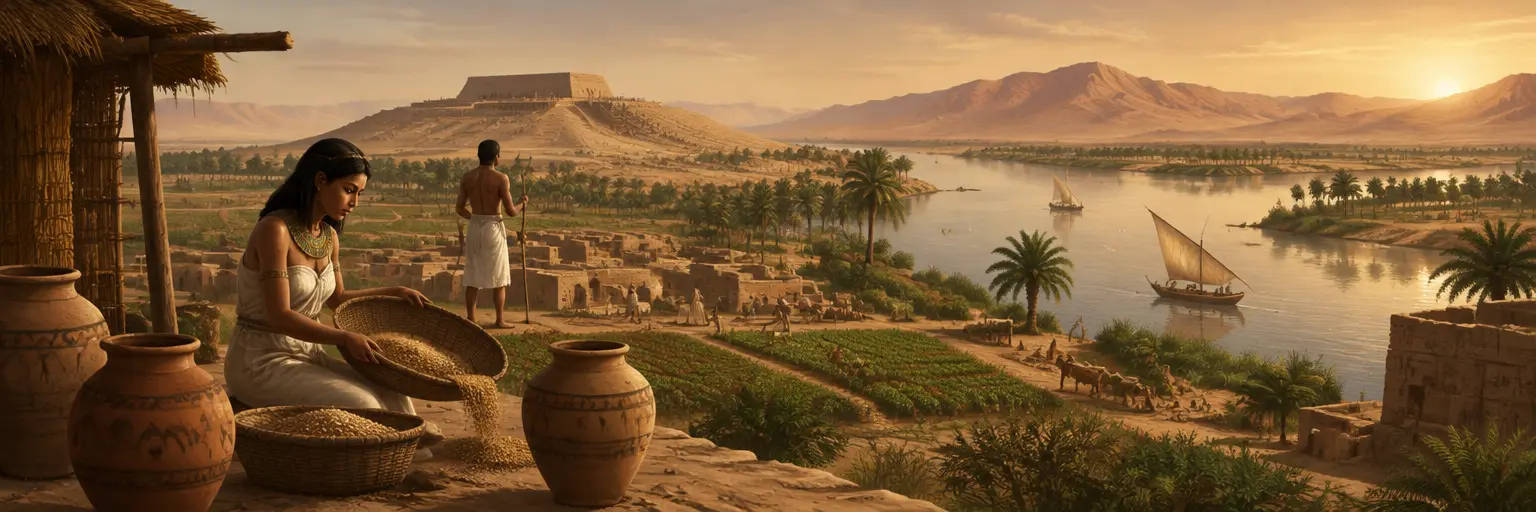
Survival and state formation hinged on agriculture, exploiting the Nile’s annual floods. Settlement archaeology at sites like Merimde Beni Salama and El-Omari reveals rectangular houses, silos, and hearths, indicating sedentary farming of emmer wheat and barley, plus herding of cattle, sheep, and goats. The Predynastic saw intensification, with irrigation canals appearing by Naqada III. Fishing, fowling, and hunting supplemented diets, as shown by bone assemblages and fishhooks.
Our content analyzes settlement patterns, population growth, and environmental shifts, including the Sahara’s desiccation driving people into the Nile Valley. You’ll learn about archaeological survey techniques, geomorphology, and paleoclimatology. We discuss how resources were taxed, stored, and redistributed by emerging elites, leading to labor mobilization for monumental projects. This economic foundation is often overlooked but vital for understanding why Egypt unified—not just through conquest but through shared infrastructure. Expect data-rich articles with maps, stratigraphic sections, and zooarchaeological charts, providing a holistic view of the subsistence base that enabled pharaonic civilization.
Frequently Asked Questions
What is the exact timeline difference between Predynastic and Early Dynastic?
The Predynastic Period spans roughly from c. 6000 BCE (earliest Neolithic) to c. 3100 BCE (just before unification). The Early Dynastic Period, which includes Dynasties 1 and 2, dates from c. 3100 BCE to 2686 BCE. The transition is marked by historical records of a unified kingdom under Narmer, though debates exist on whether unification was rapid or gradual.
Why is the Narmer Palette so important for understanding this era?
The Narmer Palette (c. 3100 BCE) is a ceremonial cosmetic slab showing King Narmer wearing both White (Upper Egypt) and Red (Lower Egypt) crowns, symbolizing unification. It also features early hieroglyphs and iconography, such as a falcon-god Horus. It’s not a literal historical document, but it encapsulates political ideology, artistic conventions, and the power of kingship, making it a focal artifact for scholars.
Were there any significant female rulers or leaders in the Predynastic period?
Evidence is scarce, but inscriptions and graves suggest some elite women held high status. For example, Neithhotep (c. 3050 BCE) may have been a queen or regent, as her massive mastaba tomb at Naqada rivals royal burials. Her name appears on labels, indicating possible political power. However, no undeniably female pharaoh is known until Sobekneferu in the Middle Kingdom, so female leadership was likely ancillary, not supreme.
How do archaeologists distinguish between Upper and Lower Egyptian artifacts?
Distinctions are based on pottery styles, burial types, and iconography. Upper Egyptian Naqada II pottery often features distinctive white cross-lined and decorated wares, while Lower Egypt (e.g., Maadi culture) used simpler, undecorated vessels. Burial customs differ—Upper Egypt favored contracted, side-fetal positions with grave goods, while Lower Egypt used extended burials. Stone palettes and figurines are more common in Upper Egypt, helping map cultural and political boundaries.
What recent discoveries have changed our view of the Early Dynastic period?
Recent excavations, such as those by Abydos’s Umm el-Qa’ab and Wadi of the Horus Qa-a, have uncovered new elite tombs and inscriptions. Radiocarbon dating campaigns in the 2010s refined chronology, pushing back beginnings of Dynasty 0. Also, geophysical surveys at Saqqara found a massive enclosure wall, suggesting earlier monumental architecture. Residue analysis on jars identified imported wine from the Levant, confirming extensive trade networks earlier than previously thought.