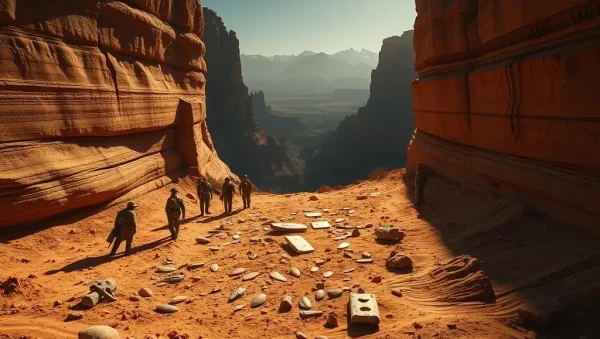
Reconstructing Clovis Mobility Patterns: Territoriality and Movement
🌍 Explore how Clovis tool use mobility patterns reveal ancient territorial behaviors, shedding light on early human movement and adaptation. This study…
Read article
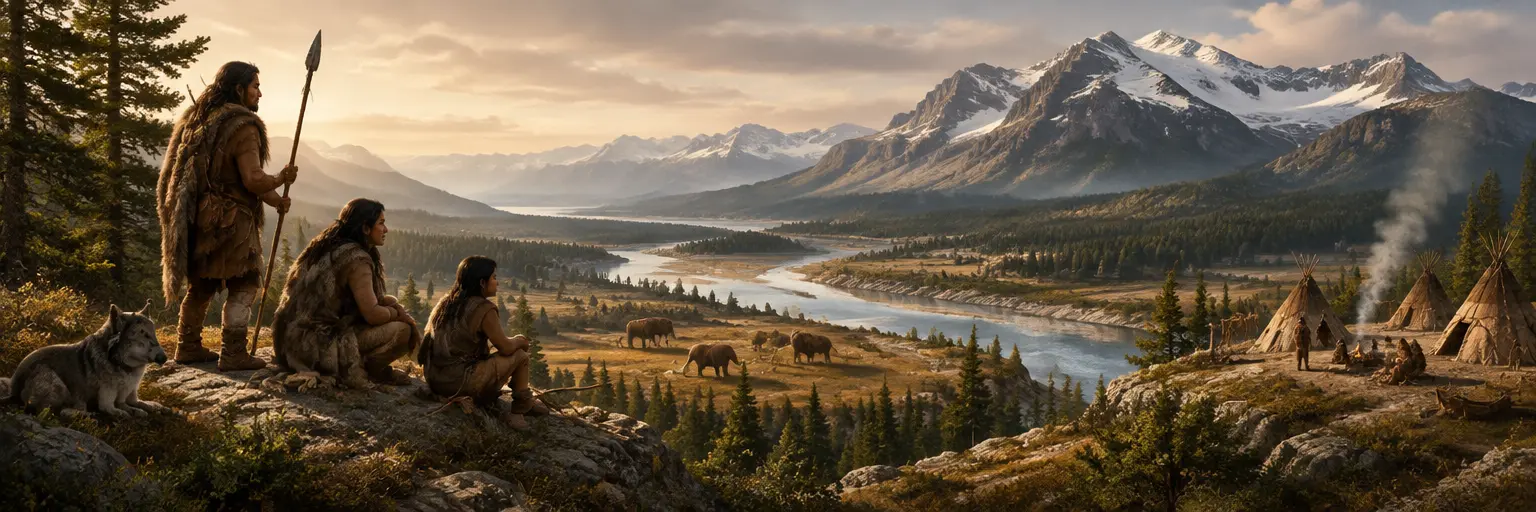
Discover the deepest roots of human history in North America through our focused exploration of the Paleo-Indian and Archaic periods—the foundational eras that shaped the continent long before written records. From the first nomadic hunters who crossed Beringia and followed megafauna like mammoths and bison, to the innovative Archaic peoples who adapted to changing climates by developing diverse toolkits, seasonal foraging, and early horticulture, this subcategory offers a detailed archaeological lens into survival, migration, and cultural evolution. Uncover Clovis spear points, Folsom kill sites, and Archaic ground stone technologies through artifact profiles, site analyses, and interpretive timelines. Perfect for students, researchers, and history enthusiasts, these studies connect raw material sourcing, settlement patterns, and social organization across thousands of years—revealing how environmental change drove human innovation. Dive into excavation techniques and regional syntheses that illuminate the transition from nomadic bands to semi-sedentary communities, bridging the gap between the last Ice Age and the rise of pottery-bearing cultures.
Welcome to ArchaeologyHub.org’s deep dive into the earliest chapters of human history in the Americas. This subcategory focuses on the Paleo-Indian (circa 13,500–8,000 BCE) and Archaic (circa 8,000–1,000 BCE) periods across North America. Here, we unravel the migration routes, stone tool technologies, subsistence strategies, and environmental adaptations that shaped the first nations. Whether you are a student, enthusiast, or researcher, this page offers a synthesis of archaeological evidence, site-specific discoveries, and chronological frameworks, positioning these eras within the broader narrative of pre-Columbian civilizations.
The Paleo-Indian period marks the arrival and spread of the earliest humans across North America, characterized by highly mobile hunter-gatherer bands. Central to this era are the Clovis points (fluted projectile points) and later Folsom points, which reveal sophisticated flintknapping skills and a primary reliance on megafauna like mammoths and ancient bison. Archaeological sites such as Blackwater Draw (New Mexico) and Murray Springs (Arizona) provide stratified evidence of kill sites, tool caches, and camp remnants.
From this subcategory, you’ll gain insight into how these groups navigated glacial landscapes, used quarrying and caching strategies, and coped with climatic shifts at the end of the Pleistocene. Expect detailed artifact profiles, radiocarbon dating discussions, and interpretive debates on whether human overhunting or climate change drove megafaunal extinctions—a pivotal question in American archaeology.
Following the megafauna collapse, the Archaic period witnessed a dramatic diversification of subsistence practices. People began exploiting a broader range of plant foods, small game, fish, and shellfish, leading to seasonal settlement patterns and the development of ground stone tools (mortars, pestles, and manos). This era saw the rise of regional traditions like the Desert Archaic in the Great Basin, Maritime Archaic along the Atlantic coast, and Poverty Point culture in the Lower Mississippi Valley, which created massive earthworks.
Here, you’ll explore how environmental warming and population growth prompted innovations in storage (pits, baskets) and social organization. We analyze shell middens, plant macrofossils, and lithic assemblages to reconstruct daily life. This subcategory also highlights the emergence of long-distance trade networks, foreshadowing the complex societies of the Woodland and Mississippian periods.
To ground your understanding, we’ve curated in-depth profiles of iconic sites. For the Paleo-Indian era, examine the Gault Site (Texas), which offers a rare pre-Clovis component, and the Daisy Cave (California), preserving perishable artifacts. For Archaic times, the Indian Knoll (Kentucky) provides a vast burial and occupation sequence, while Horn Shelter (Texas) reveals mortuary practices with red ochre and antler tools.
Each case study includes excavation histories, stratigraphic profiles, and artifact lists, demonstrating field methods like flotation, microwear analysis, and geoarchaeology. You’ll learn how archaeologists differentiate natural formations from cultural layers and use experimental replication to test tool efficiency. This practical focus bridges the gap between theoretical models and tangible evidence.
Accurate dating is the backbone of this subcategory. We break down the conventions of pre-Clovis, Clovis, and post-Clovis chronologies, emphasizing the transition from the Pleistocene to the Holocene boundary (~11,700 years ago). You’ll encounter radiocarbon dating of charcoal and bone collagen, Optically Stimulated Luminescence (OSL) for sediment layers, and obsidian hydration for volcanic glass tools. The famous Monte Verde (Chile) debate is also referenced to contextualize North American timelines.
Here, we explain calibration curves, reservoir effects, and Bayesian modeling, which refine dating precision. For students, we simplify complex isotopic terminology and provide a comparative chart of major sites by age, region, and diagnostic artifacts. This section ensures you can critically assess claims about “earliest” occupations and evaluate the reliability of published dates.
The Paleo-Indian and Archaic periods unfolded amid drastic environmental changes—from glaciers retreating to aridification and forest expansion. This subcategory integrates pollen analysis, faunal remains, and sediment cores to reconstruct ancient landscapes. For instance, the Great Plains transformed from steppe-tundra to prairies, influencing bison migration routes and human foraging radii. Coastal areas witnessed sea-level rise, submerging many early sites—now studied via underwater archaeology.
Expect to see how archaeologists use isotopic signatures (e.g., carbon, nitrogen) in bones to infer diet and migration. We also discuss plant domestication precursors, such as the early cultivation of squash and sunflowers in eastern North America, blurring the line between foraging and farming. This holistic perspective highlights human resilience and innovation in the face of volatile climates.
Our subcategory doesn’t just present facts—it engages with active scholarly controversies. You’ll explore the Solutrean hypothesis (possible European origins for Clovis), the role of dog domestication in hunting, and the complex relationships between Archaic populations and early plant cultivation. We also address Indigenous archaeologies, emphasizing collaborative research with Native American tribes for ethical stewardship of ancestral sites.
Current studies using ancient DNA (aDNA) from human remains have revolutionised our understanding of migration patterns, revealing multiple founding populations. We’ll examine peer-reviewed case studies, such as the Anzick child (Montana) which links Clovis to modern Native Americans. By highlighting preliminary findings and ongoing excavations, this section positions readers at the cutting edge of archaeological science, encouraging critical thinking about how knowledge evolves.
The Paleo-Indian period (circa 13,500–8,000 BCE) is defined by highly mobile hunter-gatherers using fluted projectile points and hunting megafauna like mammoths and bison. In contrast, the Archaic period (8,000–1,000 BCE) features broader diets, smaller-game hunting, plant processing, and more settled seasonal camps, alongside ground stone tools and regional cultural variations.
Clovis (New Mexico) provided the first stratigraphic evidence in the 1920s that humans coexisted with extinct Pleistocene animals, definitively proving an ancient peopling of the Americas. Its distinctive fluted points became a temporal marker, and subsequent finds across North America helped establish a continent-wide, early human culture.
When charcoal or bones are absent, they use luminescence dating (OSL or TL) on sediments or burnt stone, along with obsidian hydration on volcanic glass. Stratigraphic correlation with known volcanic ash layers (tephrochronology) and geomorphic context also provide relative ages, while amino acid racemization on shells can offer broad estimates.
Evidence from sites like Monte Verde (Chile) and Meadowcroft (Pennsylvania) suggests pre-Clovis occupations dating to 16,000 years ago or earlier, which predate Clovis. Coastal migration routes along the Pacific and interior corridors are debated, but most scholars agree that humans arrived before Clovis, just in smaller, less visible numbers.
Coastal Archaic groups relied heavily on marine resources: fish (e.g., cod, salmon), shellfish (oysters, clams), marine mammals (seals, otters), and waterfowl. They also fished using nets, hooks, and weirs, and processed plants like acorns and roots. Large shell middens at sites like Chumash areas highlight intensive, year-round habitation.







