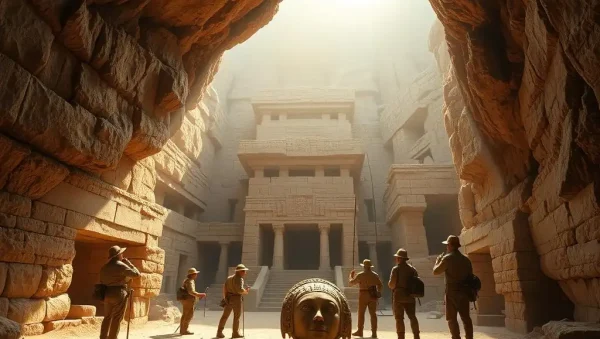
Chavín de Huántar: Architectural Marvels of a PreInca Religious Center
🌟 Discover the awe-inspiring Chavín de Huántar, a pre-Inca religious center renowned for its architectural marvels. Explore the Chavín de Huántar excavation…
Read article
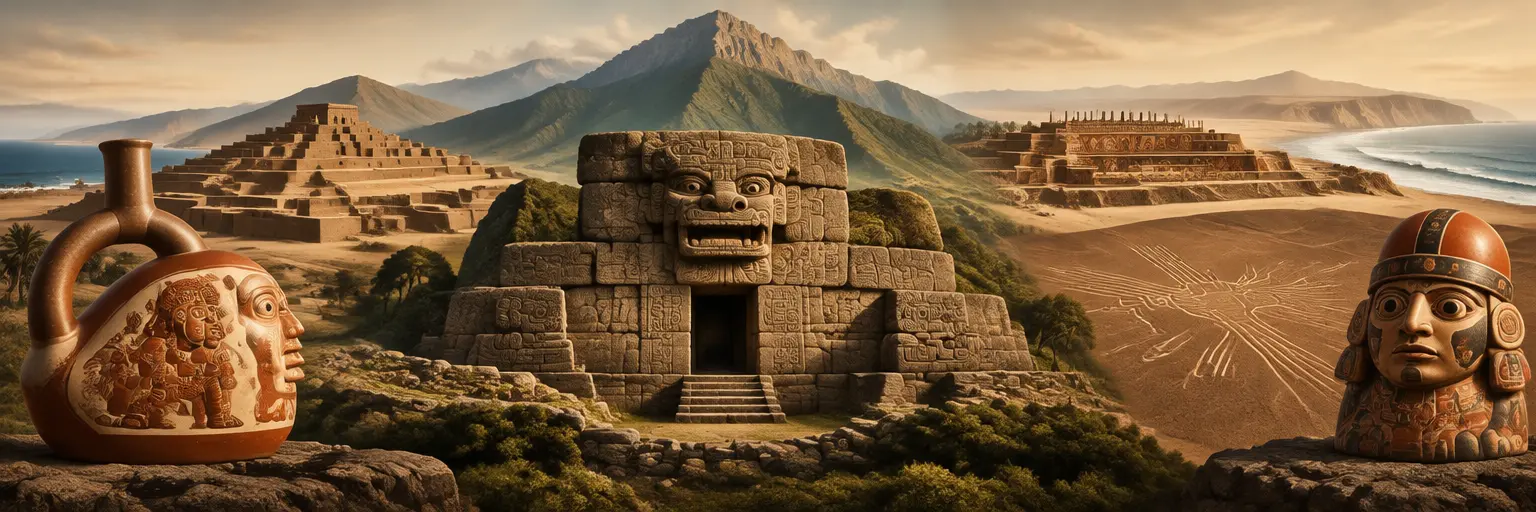
Delve into the enigmatic world of the Andean Civilizations with our detailed studies on the Chavín, Moche, and Nazca cultures—a cornerstone of Pre-Columbian Americas. These societies, flourishing long before the Inca, left behind a profound archaeological legacy from intricate textiles and monumental adobe pyramids to the famous geoglyphs etched into the Peruvian desert. Our interpretive analyses decode their ceremonial practices, advanced irrigation systems, and masterful ceramics, offering a vivid window into their spiritual and daily life. Uncover how the Chavín’s religious iconography influenced later cultures, how Moche rulers blended warfare with ritual, and how the Nazca engineered subterranean aqueducts in one of the driest places on Earth. Perfect for enthusiasts of ancient history, this content-rich taxonomy connects you to artifact profiles, excavation insights, and chronological timelines that illuminate the region’s pivotal role in human civilization. Explore, learn, and trace the cultural threads that define these Andean pioneers.
Welcome to ArchaeologyHub.org’s detailed study of the Pre-Columbian Americas, focusing on the remarkable Andean civilizations of Chavin, Moche, and Nazca. These societies flourished in Peru long before the Inca Empire, leaving behind monumental architecture, exquisite ceramics, and enigmatic geoglyphs that continue to puzzle archaeologists. This subcategory provides a deep dive into their origins, cultural practices, technological innovations, and eventual decline, offering a comprehensive resource for students, enthusiasts, and researchers. Explore our curated timelines, artifact profiles, and interpretive analyses to understand how these ancient peoples shaped the Andean world and influenced subsequent cultures.
The Chavin civilization, which thrived from approximately 900 to 200 BCE, is renowned for its role as a religious and cultural hub, centered on the temple complex of Chavín de Huántar. This site features intricate stone carvings, underground galleries, and the iconic Lanzón monolith, believed to be a central deity. The Chavin art style, characterized by anthropomorphic and zoomorphic motifs like jaguars, eagles, and serpents, spread across the northern Andes, indicating a powerful ideological influence that unified diverse communities through shared religious practices.
In this subcategory, you will uncover how Chavin’s architectural engineering, including sophisticated drainage systems and acoustic manipulation, demonstrated advanced knowledge of hydraulics and sound. We also analyze the role of psychoactive substances, such as the San Pedro cactus, in rituals, suggesting a shamanic tradition that legitimized political authority. By examining ceramic vessels, textiles, and shell ornaments from coastal and highland contexts, you’ll see how Chavin’s iconography served as a lingua franca for trade and pilgrimage, laying cultural groundwork for later Andean societies.
The Moche civilization (100–800 CE) dominated the northern coast of Peru, thriving in arid valleys through advanced irrigation agriculture. Known as the “perfect potters,” Moche artisans created stunningly realistic ceramic vessels depicting human faces, animals, and elaborate scenes of warfare, sexuality, and myth. These pots weren’t merely decorative; they served as narrative documents, offering vivid insights into Moche daily life, elite rituals, and belief systems. The famous burial site of the Lord of Sipán revealed a wealth of gold, silver, and copper ornaments, confirming a highly stratified society ruled by warrior-priests.
Dive into our detailed artifact profiles to understand Moche political organization, which likely comprised independent valley kingdoms rather than a unified empire. We explore recent excavations of huacas (pyramids) such as Huaca del Sol and Huaca de la Luna, where ceremonial sacrifices took place. Through iconographic analysis, you’ll learn about the significance of the “Revolt of the Objects” narrative, a mythological tale of inanimate items turning against humans. This subcategory also addresses the Moche’s complex metallurgy, including gilding techniques, and their eventual decline due to severe El Niño floods, offering a nuanced view of environmental vulnerabilities.
The Nazca civilization (200 BCE–600 CE) inhabited the southern coastal desert, best known for the enigmatic Nazca Lines—massive geoglyphs of animals, plants, and geometric shapes etched into the desert floor. Stretching over 450 square kilometers, these figures are best seen from the air, leading to theories ranging from astronomical calendars to ritual pathways. Recent studies using drone imaging have revealed new glyphs, including humanoid figures, suggesting their purpose may relate to water rituals and fertility, as the region is one of the driest on Earth.
Beyond the lines, Nazca excelled in hydraulic engineering, constructing subterranean aqueducts called puquios to channel groundwater for agriculture—a feat still functional today. In this section, you’ll explore their exceptional textile production, preserved by arid conditions, featuring over 150 vibrant colors and complex weaving patterns that rival modern standards. We also discuss Nazca ceramics, which evolved from naturalistic motifs to abstract symbols, reflecting shifts in cultural priorities. By combining archaeological evidence with ethno-historical records, you’ll gain a holistic understanding of how Nazca adapted to extreme environments and left a lasting legacy of artistic and engineering innovation.
While Chavin, Moche, and Nazca developed in distinct ecological zones—highlands, north coast, and south coast—they were interconnected through extensive trade networks. Chavin’s religious iconography influenced early Moche pottery, while Moche imported obsidian from the highlands for tools. Nazca’s coastal resources, such as spondylus shells from Ecuador, were highly valued inland, illustrating long-distance exchange. Our comparative analyses highlight shared traits, like the use of platforms and courtyard complexes, alongside unique adaptations to local conditions.
This subcategory offers thematic articles on how these civilizations interacted with other Andean groups, including the Paracas and Wari. You’ll discover evidence for cultural diffusion versus independent development, using radiocarbon dating and stylistic seriation to track changes. Additionally, we examine the role of warfare—depicted in Moche iconography but less evident in Nazca—and how environmental pressures influenced social complexity. By juxtaposing these three societies, you’ll appreciate the diversity of Pre-Columbian Andean achievements and their collective impact on later cultures like the Inca.
Our coverage extends to cutting-edge research methods that have revolutionized understanding of these civilizations. Learn how lidar (Light Detection and Ranging) has uncovered hidden Nazca lines and lost Moche settlements beneath vegetation, while isotopic analysis of human remains reveals diet and migration patterns. We discuss DNA studies of ancient Moche individuals, which disproved earlier assumptions about lineage and social mobility. Geospatial mapping and 3D modeling allow virtual reconstructions of Chavin’s galleries, providing new insights into ritual acoustics.
In this section, you’ll find interviews with lead archaeologists from ongoing projects, such as the excavation of the Moche site of Pañamarca, where vivid murals depict mythological figures. We also address ethical challenges, including looting and the repatriation of artifacts. By presenting both established and emerging data, we aim to keep you updated on how technology is reshaping our narrative of these cultures. Whether you’re a student seeking primary sources or a traveler planning a site visit, our resources offer practical guidance on accessing archaeological parks and museums, enhancing your personal exploration.
The imprint of Chavin, Moche, and Nazca extends far beyond their chronological periods. Chavin’s religious concepts, such as the feline deity, reappeared in later cultures like the Wari and Inca. Moche’s metallurgical skills and ceramic realism were unmatched until the Chimú Empire, which absorbed many of their technologies. Nazca’s aqueduct systems continued to be used for centuries, and their textile motifs influenced coastal traditions up to the Inca conquest. This section traces these lineages, showing how cultural memory persisted despite political fragmentation.
We also explore intangible legacies, such as oral traditions and ritual calendars that survived Spanish colonization. For instance, the Andean concept of reciprocity, or ayni, may have roots in Chavin-era economic practices. Modern Andean communities still perform rituals reminiscent of Moche ceremonies, highlighting cultural continuity. Our articles include ethnographic comparisons, noting how contemporary weavers in Cusco echo Nazca techniques. By understanding these enduring influences, you’ll see how these ancient civilizations are not just relics but living traditions that resonate today, offering profound lessons in resilience and innovation.
Chavin art is highly symbolic and religious, featuring abstract composite beings like felines and serpents, often carved in stone or on pottery. Nazca art is more naturalistic and colorful, especially on ceramics and textiles, depicting plants, animals, and human figures with fine brushes. Chavin aimed to convey spiritual authority, while Nazca emphasized vibrant realism and visual storytelling.
Yes, recent drone surveys and AI analysis have identified hundreds of new geoglyphs, including small human-like figures and animals. These discoveries challenge earlier theories, suggesting the lines evolved over centuries. Some were likely used for ritual walking paths, as they connect to ancient settlements, while others align with water sources, indicating a ceremonial purpose.
Moche engineers built extensive canal networks, some up to 40 kilometers long, diverting river water to arid fields. They used aqueducts, reservoirs, and gate systems to manage seasonal floods. This allowed multiple cropping cycles, supporting dense urban centers like Cerro Blanco. However, extreme El Niño events sometimes destroyed these works, causing societal stress.
Chavin’s influence gradually declined around 200 BCE, likely due to internal political shifts and the rise of regional cultures. The temple was not destroyed but abandoned as rituals changed. Environmental factors, such as drought, may have weakened its religious authority. Its legacy persisted through iconography, but the civilization fragmented into smaller groups.
Absolutely. Chavín de Huántar in the Ancash region is a UNESCO site with guided tours. Moche sites like Huaca del Sol and Huaca de la Luna are easily accessible near Trujillo, with on-site museums. Nazca’s famous lines are best viewed by light aircraft from Nazca city, and the Puquios are also visitable. Always check current regulations for preservation.







