Explore the Archaeology of West African Empires: Ghana, Mali, and Songhai
Welcome to ArchaeologyHub.org’s deep-dive into the archaeological record of the great West African empires of Ghana, Mali, and Songhai. This subcategory focuses on the material remains—from urban centers and trade routes to everyday artifacts and royal tombs—that reveal how these medieval powers flourished between roughly 800 and 1600 CE. Here, you’ll move beyond legends of gold and salt to uncover the latest excavation findings, settlement patterns, and the sophisticated infrastructure that connected the Sahara to the forests of the south. Whether you are a student, researcher, or history enthusiast, this detailed taxonomy brings you evidence-based insights into one of Africa’s most influential historical regions.
🏺 Urban Centers and Capital Cities: Excavating Power
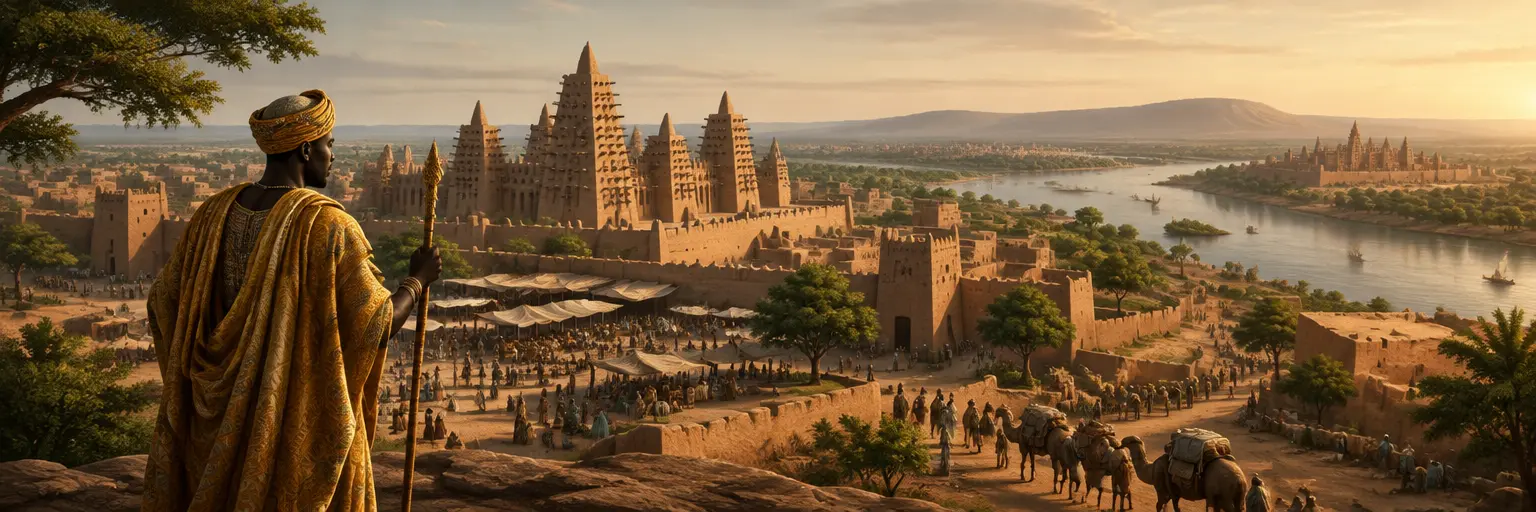
Archaeological work at sites like Koumbi Saleh (ancient Ghana), Niani (Mali), and Gao (Songhai) has transformed our understanding of these empires’ urban sophistication. Excavations reveal large stone-built quarters, mosques, and palatial compounds, alongside humble residential zones, indicating complex social stratification. At Koumbi Saleh, for instance, twin towns—one royal, one commercial—show how political and mercantile powers coexisted, while radiocarbon dating helps refine the chronology of each empire’s rise and fall.
You will learn how urban planning reflected central authority, water management systems, and the presence of foreign merchants, including North African traders. Recent ground-penetrating radar surveys have uncovered buried streets and marketplaces, offering clues about daily life. For SEO-focused readers, expect keywords like “Koumbi Saleh archaeology,” “Gao excavation,” and “Malian royal palace remains.” These findings collectively challenge older narratives of African cities as merely trade hubs, revealing them instead as vibrant, enduring centers of culture and governance.
🛕 Trade Networks and the Trans-Saharan Exchange: Material Traces
Trade was the economic engine of Ghana, Mali, and Songhai, and archaeology provides hard evidence of this exchange. Excavated caravanserais, weighing scales, and coin hoards, along with imported glass beads, ceramics, and copper from the Mediterranean and Middle East, map out a dense network. At sites like Tegdaoust and Awdaghust, archaeologists have found workshops for processing gold and salt, the two most prized commodities, alongside imported luxury goods that indicate a wealthy elite.
By analyzing soil samples and botanical remains, you’ll see how camel caravans shaped settlement patterns and even local agriculture. The discovery of West African gold currency and weights in the form of geometric shapes reveals standardized trade practices. This subcategory also touches on the environmental impact—overgrazing and deforestation—evident in pollen records. For those researching Ghana Empire gold trade or Songhai salt routes, this section offers primary archaeological data and comparative timelines, connecting site finds to broader Islamic world history.
⚱️ Funerary Practices and Royal Burial Sites
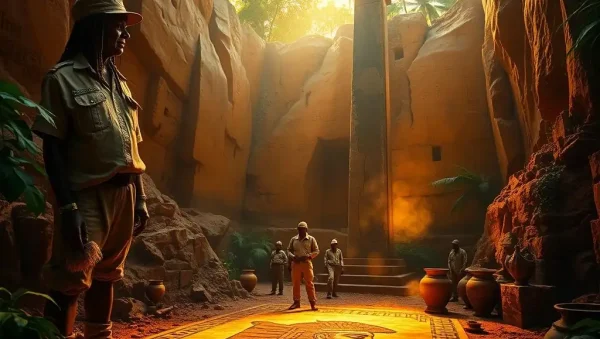
Tombs and burial grounds provide intimate windows into religious beliefs, social hierarchies, and royal ideology. Excavations at the royal necropolis of El-Oualata (related to Ghana) and the grave of Askia Muhammad (Songhai) in Gao reveal elaborate grave goods—jewelry, weapons, and imported ceramics—suggesting belief in an afterlife and the status of rulers. In Mali, the archaeological investigation of tumuli (burial mounds) has uncovered mass graves with sacrificial offerings, pointing to pre-Islamic traditions persisting alongside Islam.
You’ll explore how skeletal analysis provides data on diet, health, and migration, with stable isotope studies tracing individuals’ origins across the Sahara. Pottery typology from graves helps date layers, while the presence of Quranic inscriptions on tombstones indicates the gradual Islamization of elites. This section is vital for understanding the syncretic nature of these empires, where traditional African beliefs merged with Islamic practices. Expect discussions on grave disturbance and looting, plus conservation efforts to protect these fragile sites from modern encroachment.
🏛️ Architecture and Construction Techniques: Mudbrick, Stone, and Mosques
The archaeological study of built structures reveals engineering ingenuity without heavy timber. At the great mosque of Djenné (Mali) and the Songhai capital’s palace remains, researchers have documented the use of banco (adobe), a sun-dried mudbrick, and fired brick for elite buildings. Excavations show walls up to two meters thick, with internal wooden beams for reinforcement—a technique still used today. Islamic influences are evident in qibla orientations and mihrab niches, while pre-Islamic pillar shrines persist in lower layers.
Laser scanning and photogrammetry have created 3D models of crumbling walls, allowing virtual reconstructions of settlement plans. You’ll learn how archaeomagnetic dating of baked clay and thermoluminescence of potsherds help establish building phases. Comparative analysis with architecture from Timbuktu’s madrasas shows regional styles. This section is perfect for those interested in vernacular architecture, urban resilience, and the challenges of preserving UNESCO World Heritage sites like Timbuktu, where climate and conflict threaten remaining structures.
📜 Artifacts and Everyday Life: Tools, Pottery, and Glass
Beyond grand monuments, mundane artifacts tell the story of common people. Excavations at household middens have yielded grinding stones, iron hoes, spindle whorls, and cooking pots, illustrating daily activities like food preparation and textile weaving. Imports—such as glazed ceramics from Egypt and Syria—were status markers, while locally made terracotta figurines and carved ivory suggest vibrant artistic traditions. Archaeobotanical remains include millet, sorghum, and rice, indicating a diverse agricultural base.
This section highlights how refit pottery analysis and use-wear studies on stone tools reveal specific craft practices, including goldsmithing and leatherworking. Glass bead chemical compositions show trade links to India and China, proving the breadth of these global connections. For hobbyists and educators, you’ll find comparative artifact catalogs and replicable excavation methods. Emphasizing West African artifact typologies and everyday life archaeology, this material culture approach humanizes the empires beyond royal chronicles, offering a grassroots perspective on sustainability and local innovation.
Frequently Asked Questions
What is the best archaeological site to see evidence of the Ghana Empire today?
Koumbi Saleh, in southeastern Mauritania, is the most significant and accessible site, with surviving stone foundations and a large mosque complex. However, due to desertification, many structures are buried. Visitor access is limited, so virtual tours and excavation reports are your best resources for study.
How do archaeologists distinguish between Ghana, Mali, and Songhai layers at the same site?
They rely on stratigraphy, dating artifacts by context, and comparing pottery styles, radiocarbon dates, and imported goods. For example, Songhai-era layers often contain distinctive “bisque” ceramics, while Ghanaian layers yield copper discs. Historical texts, such as Arabic chronicles, are cross-referenced with the material record.
Were all royal burials Islamic in these empires?
No—many royal tombs show mixed traditions. Some burial pits contain bodies in Islamic orientation but with grave goods like jewelry, which Islam discourages. This suggests a gradual adaptation where local beliefs persisted, as seen at Mali’s El-Oualata necropolis, where pre-Islamic tumuli exist alongside later Muslim graves.
What role did salt play in the archaeology of Songhai and Mali?
Salt from Taghaza and Taoudenni was mined and traded; archaeological finds include salt blocks, chopping tools, and caravan staging areas. It was so valuable it was traded ounce-for-ounce for gold. Sites near salt mines show heavy industrial activity, with evidence of mining shafts and temporary worker camps.
Can I see actual artifacts from these empires in museums?
Yes. Key collections are at the National Museum of Mali (Bamako), the Musée de l’Homme (Paris), and the British Museum (London), featuring terracotta figurines, gold weights, and pottery. Online databases like the AFRICAN-ARCH project provide 3D scans of selected objects for detailed study.