The Kunala Stupa and Monastery: Legend and Archaeology in Taxila
🌟 Discover the Kunala Stupa and Monastery in Taxila, blending legend with archaeology. Explore Kunala Stupa archaeological excavation details, revealing insights into…
Read article
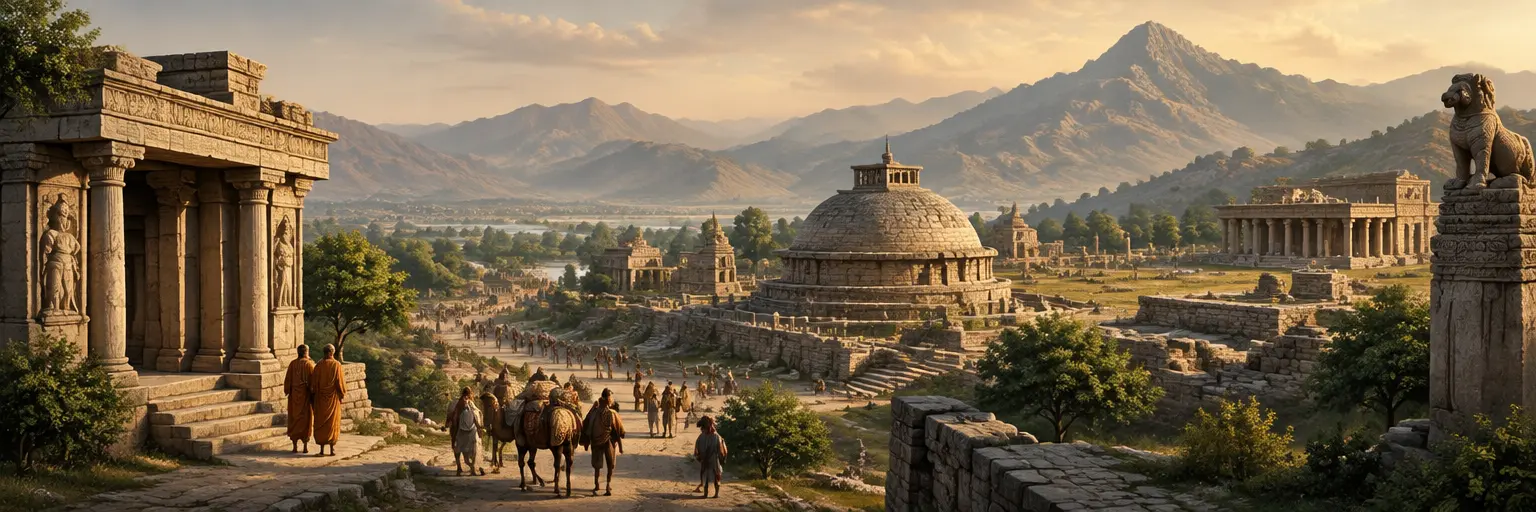
Explore the ancient heartbeat of the subcontinent at Taxila, a UNESCO World Heritage gem that once stood as the vibrant crossroads of civilizations. Nestled in modern-day Pakistan, this archaeological treasure reveals a mesmerizing blend of Persian, Greek, Buddhist, and Hindu influences spanning over 1,000 years. From the majestic stupas of Dharmarajika to the meticulously planned streets of Sirkap, each ruin whispers tales of trade caravans, scholarly monks, and imperial ambitions along the legendary Silk Road. Discover how Alexander’s successors merged with local traditions, giving rise to Gandharan art—a fusion that redefined Buddhist iconography. Imagine wandering the halls of ancient universities where philosophers debated alongside merchants, making Taxila a true melting pot of ideas and cultures. For archaeology enthusiasts, this site offers a rare window into urban evolution, religious syncretism, and cross-cultural exchange. Whether you are tracing the footsteps of conquerors or unraveling layers of mud-brick settlements, Taxila’s excavated relics—coins, jewelry, and sculpted friezes—provide tangible proof of a thriving globalized past.
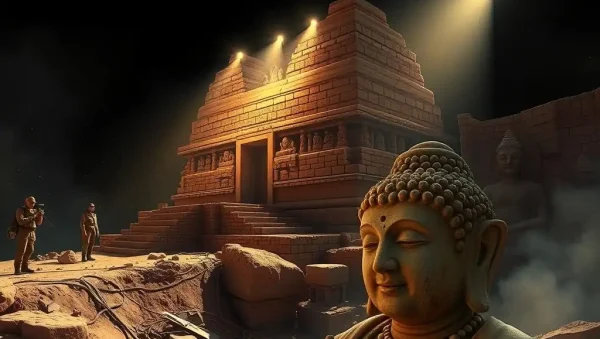
🌟 Discover the Kunala Stupa and Monastery in Taxila, blending legend with archaeology. Explore Kunala Stupa archaeological excavation details, revealing insights into…
Read article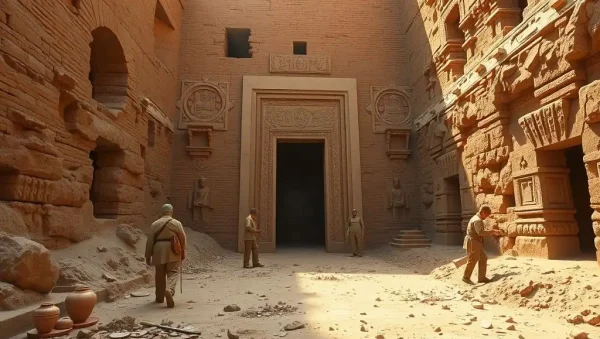
🌍 Explore Taxila's rich history through detailed insights into Taxila archaeological excavation techniques, uncovering millennia of South Asian civilization. This digital encyclopedia…
Read articleWelcome to ArchaeologyHub.org’s deep dive into Taxila – Crossroads of Cultures, a UNESCO World Heritage site in modern-day Pakistan that served as a melting pot of Greek, Persian, Indian, and Buddhist traditions for over a thousand years. This subcategory within our Archaeological Sites (Global Coverage) taxonomy unpacks the city’s layered urban history, monumental stupas, and cosmopolitan trade networks, offering both enthusiasts and researchers a structured reference to one of South Asia’s most significant archaeological treasures.
Taxila is not a single site but a sequence of three distinct urban settlements—Bhir Mound, Sirkap, and Sirsukh—each revealing a different era of occupation, from the 6th century BCE Achaemenid period to the 2nd century CE Kushan rule. Bhir Mound showcases irregular, organic street layouts characteristic of early Indian city planning, while Sirkap introduces a grid-like Hellenistic design influenced by Greek colonists after Alexander the Great’s campaigns. Sirsukh, the last city, reflects Central Asian nomadic building styles under the Kushans, with massive defensive walls and watchtowers.
For visitors and scholars, this subcategory provides stratigraphic timelines, excavation photographs, and artifact comparisons that illustrate how political shifts reshaped urban morphology. Expect detailed analyses of drainage systems, residential quarters, and market areas that reveal daily life, from pottery workshops to coin minting activities. The content also highlights how each city’s layout impacted trade efficiency, religious practices, and social stratification, offering a nuanced view of ancient urbanism in South Asia.
Taxila’s most iconic archaeological remains are its Buddhist stupas and monasteries, particularly the Dharmarajika Stupa, the Julian Monastery, and the Mohra Moradu complex. These structures were centers of learning and pilgrimage, attracting monks from China, Central Asia, and India, as documented by the travels of Xuanzang and Fa-hien. The art found here—distinctive Gandharan sculptures blending Greco-Roman realism with Indian iconography—represents a unique artistic synthesis that flourished from the 1st to 5th centuries CE.
This subcategory offers close-up galleries of carved Buddha figures, relief panels, and decorative friezes, alongside interpretive essays on how Buddhist narratives were adapted to local tastes. You’ll also find architectural reconstructions showing stupa elevations, relic chambers, and courtyard layouts. For those interested in iconography, we provide comparative analyses with contemporaneous sites like Hadda and Swat, helping you understand regional variations in style and patronage. The emphasis on monastic economy—through inscriptions and excavated tools—adds a practical layer to spiritual history.
Taxila’s geopolitical position made it a vital node on the Silk Road, connecting the Mediterranean world with the Indian subcontinent. Evidence from coins, seals, and pottery fragments demonstrates sustained contact with Achaemenid Persia, Hellenistic kingdoms, the Mauryan Empire, and later Indo-Greek rulers like Menander. The famous “Taxila silver scroll” inscription and Greek-style coin hoards provide textual and numismatic clues to political alliances, tribute systems, and mercantile exchanges.
In this section, we break down these interactions through chronologically organized case studies, exploring how artistic motifs migrated, how administrative languages evolved (from Aramaic to Greek to Kharosthi), and how religious ideas intermingled. Expect interactive maps showing trade routes, artifact provenance charts, and expert commentary on famous discoveries like the “Taxila copper plate.” The content also addresses scholarly debates—such as the extent of Greek influence on local governance—providing balanced perspectives, making this a rich resource for comparative civilization studies.
Modern archaeological exploration of Taxila began in the 19th century with British surveyors, but systematic excavations were conducted by Sir John Marshall from 1913 to 1934. Marshall’s meticulous methods laid the foundation for South Asian archaeology, though later critiques highlight his selective conservation practices. More recent Pakistani and international teams have used geophysical surveys, drone imaging, and chemical analysis to uncover unexcavated areas and stabilize deteriorating structures. However, urban encroachment, illegal digging, and climate change pose ongoing threats.
This subcategory provides a behind-the-scenes look at excavation diaries, archival photographs from Marshall’s era, and modern 3D models of reconstructed buildings. We also include policy discussions on heritage management, community engagement programs, and UNESCO’s conservation recommendations. For students of archaeological methodology, you’ll find comparative stratigraphic logs, dating techniques (radiocarbon, thermoluminescence), and conservation ethics case studies, making this a practical guide to both the science and politics of preserving a multicivilizational site.
To enhance learning, our Taxila subcategory offers downloadable educational kits, including timeline posters, glossary cards for Gandharan terms, and lesson plans for middle and high school teachers. We feature 360-degree virtual tours of key monuments like the Jaulian Monastery and the Taxila Museum, which houses over 4,000 artifacts, from Buddhist reliquaries to Greek-style intaglios. For researchers, we provide links to open-access journals, excavation reports, and high-resolution artifact scans.
Additionally, we curate a section on “Taxila in Popular Culture,” showing how films, novels, and video games depict this ancient city, and we fact-check these portrayals against archaeological evidence. Interactive quizzes and discussion forums allow users to test their knowledge and share questions with experts. This resource is designed to support self-paced study, classroom activities, or virtual field trips, ensuring that the crossroads of cultures remains accessible to a global audience.
The ideal period is from October to March, when temperatures are mild (15–25°C) and rainfall is low. Summers can exceed 40°C, making outdoor exploration uncomfortable. Monsoon season (July–August) may cause site closures due to flooding. Check ArchaeologyHub.org’s seasonal guide for current conditions.
Yes, the “Taxila silver scroll” (a Buddhist reliquary inscription), the “Dharmarajika casket” with Greek-style engravings, and the “Menander coin” are among the most distinctive. The Taxila Museum holds the largest collection, but some artifacts are now in the British Museum or the Victoria and Albert Museum in London.
A thorough visit requires 6–8 hours, covering Bhir Mound, Sirkap, Sirsukh, and the major monasteries. If you’re short on time, focus on Dharmarajika Stupa and Jaulian, which offer the most intact ruins and interpretive signage. Guided tours are recommended for deeper context.
Gandharan art represents the earliest anthropomorphic depictions of the Buddha, blending Greco-Roman realism with Indian spiritual symbolism. This fusion emerged due to centuries of cross-cultural trade and patronage, influencing later Buddhist art across Asia. Taxila is a key site for studying this stylistic evolution.
Partially. The Taxila Museum is wheelchair accessible, and the main stupa at Dharmarajika has a paved path. However, Sirkap’s uneven terrain and Jaulian’s steep staircases may pose difficulties. Download our accessibility guide for detailed route options and alternative viewing points.







