
Taxila: Tracing Millennia of History at a South Asian Nexus

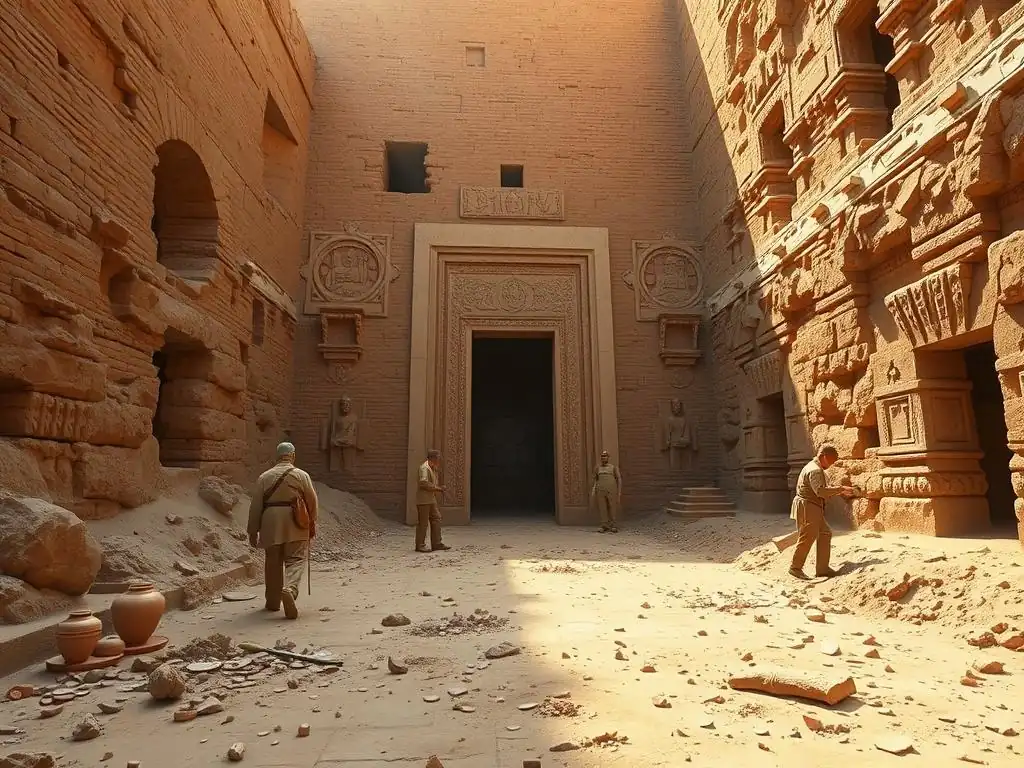
Welcome to ArchaeologyHub.org, your portal to the past! Ever wondered how archaeologists painstakingly unveil the secrets of ancient cities? Dive into our comprehensive exploration of Taxila archaeological excavation techniques and discover the meticulous processes used to unearth the rich history of this pivotal South Asian nexus. Join us as we trace millennia of civilization, piece by piece, and uncover the stories etched in the very soil of Taxila. What secrets will we uncover next?
- Introduction to Taxila: A Historical Crossroads
- Unveiling Taxila's Archaeological Layers: A Chronological Exploration
- Taxila Archaeological Excavation Techniques: Methods and Discoveries
- Key Archaeological Discoveries at Taxila
- The Material Culture of Taxila: Artifacts and Their Stories
- Taxila's Role as a Center of Learning and Religion
- Conservation and Preservation Efforts at Taxila
- Taxila: A Legacy of Cultural Exchange and Historical Significance
-
Frequently Asked Questions
- What makes Taxila a significant archaeological site?
- What archaeological excavation techniques have been employed at Taxila?
- How does the site of Taxila contribute to our understanding of ancient urban planning?
- What types of artifacts have been discovered at Taxila, and what do they tell us about daily life?
- How does ArchaeologyHub.org organize and present information about sites like Taxila?
- Final Reflection: Unearthing Legacies, Shaping Futures
- Unearth Your Next Adventure: Explore Taxila's Ancient Secrets!
Introduction to Taxila: A Historical Crossroads
The Strategic Location of Taxila in Ancient South Asia
Taxila, situated in the modern-day Punjab province of Pakistan, occupies a remarkably strategic position at the confluence of three major ancient trade routes. It lay at the crossroads of the Grand Trunk Road, connecting the Indian subcontinent to Central Asia, and routes leading to Western Asia and the Mediterranean. This geographical advantage made it an indispensable gateway for commerce, cultural exchange, and military control over centuries. Its location within the fertile Gandhara region further enhanced its appeal, providing abundant resources for sustained urban development.
This pivotal location ensured Taxila's continuous prominence across millennia, attracting a succession of powerful empires and diverse communities. From the Achaemenids to the Mauryans, Indo-Greeks, Scythians, Parthians, and Kushans, each ruler recognized and exploited Taxila's strategic importance, contributing to its layered history and making it a focal point for trans-regional interactions. The city served not just as a trading post but also as a crucial administrative and military outpost for various empires seeking to extend their influence across South Asia.
Taxila's Significance as a Melting Pot of Cultures
Taxila's strategic position naturally fostered an unparalleled cultural syncretism, transforming it into a vibrant melting pot where diverse traditions converged and intermingled. The successive waves of foreign rulers and traders brought with them distinct architectural styles, artistic forms, religious beliefs, and administrative practices, which were then assimilated and adapted within the local milieu. This constant influx of new ideas led to a unique cultural synthesis, particularly evident in its art and architecture.
Perhaps the most striking manifestation of this cultural fusion is Gandharan art, which flourished in Taxila and the surrounding region. This distinctive style seamlessly blended Hellenistic artistic techniques, such as realistic human portrayal and drapery, with Buddhist iconography and narratives. The result was a revolutionary depiction of the Buddha in human form, often adorned with Greek features, profoundly influencing Buddhist art across Asia. Beyond art, Taxila witnessed the co-existence of various religions, including Buddhism, Hinduism, Jainism, and possibly Zoroastrianism, reflecting its remarkable openness to diverse spiritual traditions.
Unveiling Taxila's Archaeological Layers: A Chronological Exploration
Early Settlements and Protohistoric Traces at Taxila
Archaeological investigations at Taxila have revealed evidence of human occupation dating back to the protohistoric period, long before the arrival of major empires. The earliest traces, primarily found at the Bhir Mound site, suggest settlements from as early as the 3rd millennium BCE, possibly associated with the Gandhara Grave Culture. These initial findings indicate rudimentary agricultural communities and early forms of pottery, providing a glimpse into the region's prehistoric past.
Excavations in the deepest strata of Bhir Mound have uncovered simple dwellings and handmade pottery, distinct from later, more sophisticated wares. While precise population figures are elusive for these early periods, the continuity of occupation suggests a gradual evolution from small hamlets to more organized settlements. The challenges inherent in excavating these lower, often waterlogged, levels mean that much about Taxila's earliest inhabitants remains an area of ongoing research, offering potential for future discoveries.
Taxila Under the Mauryan Empire: Ashoka's Influence
Taxila gained significant prominence under the Mauryan Empire, particularly during the reign of Emperor Ashoka (c. 268 to 232 BCE). It served as a vital provincial capital and a major administrative center, reflecting its strategic importance to the vast Mauryan domain. Ashoka, a fervent patron of Buddhism, is credited with significantly enhancing Taxila's role as a Buddhist hub.
Under Ashoka's patronage, the foundations of the monumental Dharmarajika Stupa, one of Taxila's most significant Buddhist monuments, were likely laid. This period saw a substantial growth in Buddhist monastic establishments and the propagation of Buddhist teachings throughout the region. Ashokan edicts found in the vicinity, though not directly within the main city sites, underscore the imperial attention and the spread of Mauryan governance and religious influence across Taxila.
The Indo-Greek Period: Hellenistic Influences in Taxila's Architecture and Art
Following the decline of the Mauryan Empire, Taxila came under the sway of the Indo-Greeks, who established a significant presence in the region around the 2nd century BCE. This period marked the construction of the meticulously planned city of Sirkap, characterized by its Hellenistic-style grid plan, fortified walls, and well-defined streets. The city's layout, complete with residential blocks, public buildings, and temples, reflects Greek urban planning principles adapted to the local environment.
The Indo-Greek presence profoundly influenced Taxila's cultural landscape, leading to a remarkable fusion of Hellenistic and Indian artistic traditions. This syncretism is vividly expressed in the sculptures and architectural elements unearthed at Sirkap, where classical Greek forms and techniques were applied to depict Buddhist themes. The coinage of this era, featuring bilingual inscriptions and Hellenistic portraiture alongside Indian symbols, further attests to the deep cultural intermingling that defined Taxila during the Indo-Greek rule.
Taxila Under the Kushan Empire: A Flourishing Buddhist Center
The Kushan Empire, rising to prominence in the 1st century CE, ushered in a golden age for Taxila, establishing it as a preeminent center of Buddhism and learning. Under rulers like Kanishka, who was a great patron of the faith, numerous stupas, monasteries, and shrines were constructed or significantly expanded across the Taxila valley. The city of Sirsukh, the third major urban center at Taxila, was founded during this period, possibly with a more irregular, oval plan, reflecting evolving urban defense strategies.
During Kushan rule, Gandharan art reached its zenith, with workshops in Taxila producing a vast array of Buddhist sculptures in schist and stucco, depicting the life of the Buddha and various Bodhisattvas. The city attracted scholars, monks, and pilgrims from across Asia, solidifying its reputation as a major intellectual and religious hub. The economic prosperity brought by the Kushans, who controlled key segments of the Silk Road, further fueled Taxila's growth and cultural vibrancy, making it a pivotal point for the transmission of Buddhist ideas and art.
The Later History of Taxila: Decline and Abandonment
Taxila's long and illustrious history began to wane with the decline of the Kushan Empire and the subsequent invasions of the Hephthalites, or White Huns, in the 5th century CE. These nomadic incursions were particularly destructive, leading to widespread devastation of Buddhist monasteries and urban centers. The violence and instability profoundly disrupted the trade routes that had sustained Taxila's economy for centuries, leading to a significant loss of its economic vitality.
Compounded by shifts in regional power dynamics and the rise of new political and commercial centers, Taxila gradually lost its preeminence. The city was eventually abandoned, its once-thriving urban areas and magnificent religious complexes falling into ruin and becoming covered by earth over time. By the time of the Chinese pilgrim Xuanzang's visit in the 7th century CE, Taxila was already described as largely desolate, a testament to its eventual decline from a bustling metropolis to a forgotten archaeological site.
Taxila Archaeological Excavation Techniques: Methods and Discoveries
Overview of Archaeological Excavation Techniques Employed at Taxila
The unearthing of Taxila's layered history has relied on a range of sophisticated Taxila archaeological excavation techniques, evolving significantly since the site's systematic exploration began in the early 20th century. Sir John Marshall, the pioneering archaeologist, initiated large-scale, systematic excavations from 1913 to 1934, employing methods that were cutting-edge for his time. His approach involved extensive trenching and area excavation, aimed at uncovering the vast structural remains of the three major city sites—Bhir Mound, Sirkap, and Sirsukh—and numerous monastic complexes.
Over the decades, subsequent archaeological missions have refined these Taxila archaeological excavation techniques, incorporating more precise stratigraphic recording, grid systems, and single-context planning. This evolution allowed for a more nuanced understanding of the relationships between artifacts, structures, and their chronological layers. For instance, the meticulous uncovering of distinct building phases at Sirkap, revealing Indo-Greek foundations beneath later Scytho-Parthian and Kushan modifications, is a direct result of these careful excavation methodologies.
Stratigraphic Analysis: Deciphering Taxila's Layered History
Stratigraphic analysis has been a cornerstone of Taxila archaeological excavation techniques, allowing archaeologists to decipher the site's complex, multi-layered history. By carefully observing and recording the different geological and cultural layers (strata), archaeologists apply the principle of superposition, where older layers are generally found beneath newer ones. This method has been crucial for establishing the relative chronology of Taxila's successive urban centers and their associated finds.
A prime example of this technique in action is the excavation of Sirkap, where distinct layers representing Indo-Greek, Scytho-Parthian, and early Kushan occupations were identified. Beneath Sirkap, earlier Mauryan period remains were located at Bhir Mound. This meticulous layering of cities, each built upon the ruins of the last, provides a tangible timeline of Taxila's evolution. The careful documentation of these strata has allowed researchers to reconstruct the sequence of occupations, architectural styles, and cultural shifts over more than a millennium, showcasing the power of stratigraphic analysis in understanding Taxila's profound depth of history.
Artifact Recovery and Documentation: Preserving Taxila's Material Culture
The recovery and documentation of artifacts are critical components of Taxila archaeological excavation techniques, ensuring that the material culture of this ancient city is preserved and understood. Every object, from a shard of pottery to a complete sculpture, is meticulously recorded in situ before removal. This involves documenting its exact location, depth, orientation, and association with other finds or architectural features, often through detailed field notes, photographs, and scaled drawings. This rigorous contextual recording is paramount, as an artifact loses much of its archaeological value if its precise finding spot is not known.
Once recovered, artifacts undergo careful cleaning, conservation, and initial cataloging, assigning unique identification numbers. This systematic approach ensures that the thousands of objects unearthed from Taxila, including coins, pottery, sculptures, jewelry, and tools, contribute meaningfully to our understanding of daily life, economic systems, religious practices, and artistic achievements. For instance, the discovery of specific coin hoards within particular stratigraphic layers at Sirkap helped to firmly date the Indo-Greek and Scytho-Parthian occupations, illustrating the direct link between careful recovery and historical interpretation.
Dating Methods Used at Taxila: Carbon-14 and Other Techniques
To establish an absolute chronology for Taxila's extensive timeline, archaeologists have employed various dating methods alongside relative stratigraphic analysis. Radiocarbon dating (Carbon-14), a key among modern Taxila archaeological excavation techniques, has been used on organic materials such as charcoal, bone, or seeds found in specific archaeological contexts. This method provides a calibrated date range, offering precise chronological anchors for the different occupational phases at sites like Bhir Mound, Sirkap, and the various monastic complexes.
Beyond scientific dating, numismatics has played an exceptionally significant role in dating the various strata at Taxila. The sheer volume of coins discovered, representing Achaemenid, Mauryan, Indo-Greek, Scythian, Parthian, and Kushan rulers, allows archaeologists to assign specific dates to the layers in which they are found. For example, the presence of coins from Demetrius I or Menander at Sirkap provides strong evidence for the Indo-Greek occupation of that city. Stylistic analysis of pottery and sculpture, comparing them to known typologies from securely dated sites, also complements these methods, contributing to a robust chronological framework for Taxila's intricate history.
Key Archaeological Discoveries at Taxila
The Dharmarajika Stupa: A Major Buddhist Monument
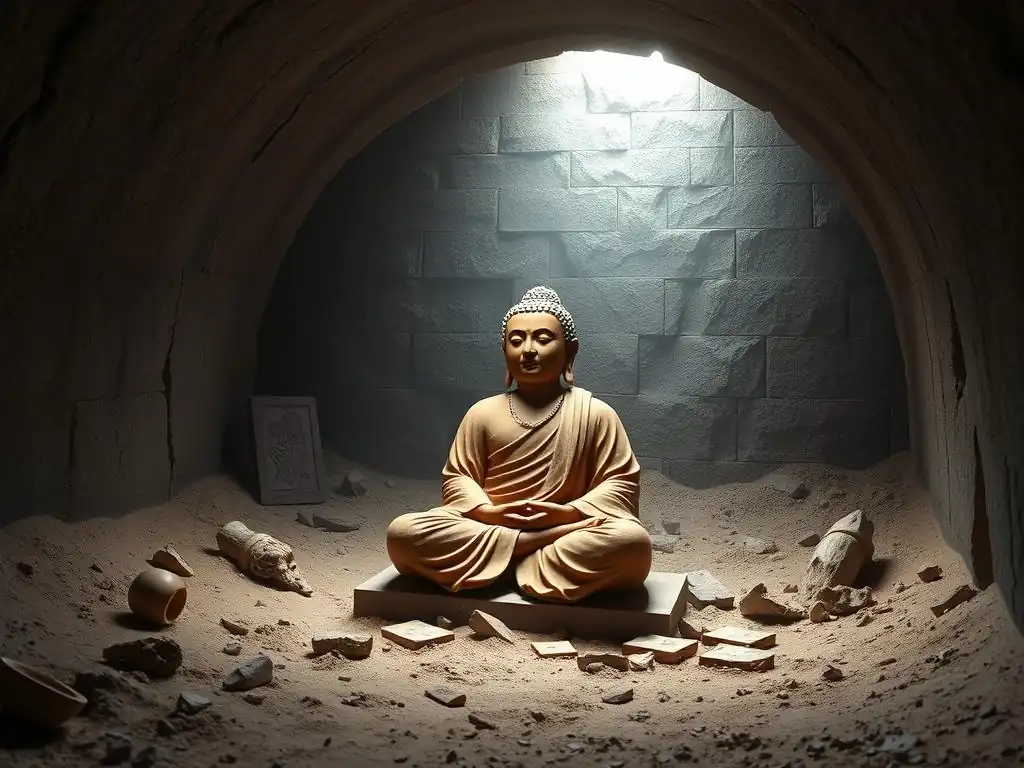
The Dharmarajika Stupa stands as one of Taxila's most significant and enduring Buddhist monuments, believed to have been founded by Emperor Ashoka in the 3rd century BCE, making it one of the oldest stupas in the region. Its massive circular plan, surrounded by a circumambulatory path and numerous smaller votive stupas and chapels, reflects its importance as a major pilgrimage site. The stupa underwent several phases of enlargement and renovation under subsequent rulers, particularly the Kushans, who added further embellishments and shrines.
During excavations, relic caskets containing bone fragments, possibly of the Buddha himself, were discovered within the stupa, reinforcing its sacred status. The surrounding monastic complex housed hundreds of monks and served as a center for Buddhist learning and meditation. The architectural grandeur and the spiritual significance of the Dharmarajika Stupa underscore Taxila's pivotal role in the early spread and development of Buddhism in South Asia, drawing devotees and scholars from across the ancient world.
Sirkap: Exploring the Indo-Greek City Plan
Sirkap represents the Indo-Greek city of Taxila, established in the 2nd century BCE and later occupied by the Scytho-Parthians. Archaeological excavations have revealed a meticulously planned urban center, laid out on a grid system, characteristic of Hellenistic city planning. The city was enclosed by a massive defensive wall, approximately 5-6 meters thick, built of rubble masonry. Within its walls, Sirkap featured a well-defined street network, with a broad main street running north-south, intersected by narrower cross-streets, dividing the city into regular residential and public blocks.
Key discoveries at Sirkap include the Apsidal Temple, a unique structure combining a Hellenistic plan with Buddhist elements, and the Sun Temple, believed to be dedicated to a solar deity. Numerous private dwellings, shops, and workshops were also uncovered, providing insights into the daily life of its inhabitants. The architecture and artifacts from Sirkap, such as Greek-style sculptures and bilingual coins, vividly illustrate the profound cultural fusion that defined Taxila during the Indo-Greek and Scytho-Parthian periods, showcasing a blend of Western and Eastern influences.
Sirsukh: Uncovering the Kushan City of Taxila
Sirsukh is the third major city site at Taxila, constructed by the Kushan rulers, likely in the 1st century CE, after the earlier cities of Bhir Mound and Sirkap. Unlike the strict grid plan of Sirkap, Sirsukh appears to have an irregular or possibly oval layout, designed to adapt to the terrain and enhance defensive capabilities against nomadic incursions. The city was surrounded by a massive stone wall, approximately 5 meters thick, reinforced with rectangular bastions at regular intervals, indicating a strong emphasis on military defense.
While extensive excavations at Sirsukh have been limited compared to Sirkap, preliminary findings suggest a continuation of the urban development and religious patronage seen in earlier periods. Remains of Buddhist monasteries and residential areas have been identified, reflecting Taxila's continued prosperity and its role as a flourishing Buddhist center under the Kushans. The structures unearthed provide valuable insights into Kushan architectural styles and urban planning, showcasing the evolution of city design in response to changing geopolitical realities.
Jandial Temple: Traces of Zoroastrian Influence
The Jandial Temple, located near Taxila, stands out as a unique architectural discovery, distinct from the predominant Buddhist structures found across the site. Dated to the 2nd-1st century BCE, its design strongly suggests a Hellenistic-style temple, possibly dedicated to a Greek deity or, more intriguingly, a Zoroastrian fire temple. The temple's layout includes a pronaos, cella, and opisthodomos, reminiscent of classical Greek temples, but with an unusual rear chamber that could have housed a sacred fire.
The presence of such a temple provides compelling evidence for the religious diversity and cosmopolitan nature of ancient Taxila. While definitive proof of its dedication remains debated, the architectural form points towards non-Buddhist and non-Hindu religious practices. This discovery highlights the extensive cultural exchange that characterized Taxila, where various religious traditions, including those from Persia and the Hellenistic world, found a foothold alongside indigenous beliefs.
The Material Culture of Taxila: Artifacts and Their Stories
Pottery and Ceramics: Insights into Daily Life in Ancient Taxila
The vast quantities of pottery and ceramics unearthed during excavations at Taxila offer invaluable insights into the daily lives, domestic practices, and technological capabilities of its ancient inhabitants. Archaeologists have recovered a wide range of wares, from utilitarian cooking pots, storage jars, and water vessels to finer, decorated ceramics. The types of clay, firing techniques, and decorative motifs vary significantly across the different chronological layers, allowing researchers to trace changes in cultural influences and trade patterns over time.
For instance, early levels at Bhir Mound yield simpler, often handmade, grey ware, while later levels at Sirkap and Sirsukh reveal more sophisticated wheel-made pottery, including red ware and black-slipped ware. The presence of imported pottery, such as amphorae fragments, indicates Taxila's extensive trade networks with distant regions. Studying these ceramic assemblages provides a detailed picture of ancient Taxila's culinary habits, storage solutions, and the evolution of ceramic technology, painting a vivid portrait of everyday existence.
Coins and Currency: Economic and Political History Revealed
Coins represent one of the most prolific and informative classes of artifacts recovered from Taxila, offering unparalleled insights into the economic and political history of the region across millennia. Thousands of coins, spanning from punch-marked issues of the Mauryan Empire (c. 3rd century BCE) to the diverse coinages of the Indo-Greeks, Scythians, Parthians, and Kushans (c. 2nd century BCE to 3rd century CE), have been found. Each coin is a miniature historical document, providing crucial data on rulers, their dates, and their political affiliations.
The numismatic evidence from Taxila is instrumental in establishing precise chronologies for the various occupational layers and confirming the succession of empires that controlled the city. For example, the discovery of specific Indo-Greek coin types in certain strata at Sirkap helped to firmly date the city's construction and occupation by Hellenistic rulers. Beyond dating, the coins reveal economic systems (e.g., bimetallic currency), trade networks (through the circulation of foreign coins), and religious iconography, showcasing the evolving cultural and political landscape of Taxila.
Sculptures and Reliefs: Depicting Religious and Cultural Beliefs
The sculptures and reliefs from Taxila are globally renowned, primarily for their embodiment of Gandharan art, a distinctive Greco-Buddhist style that flourished from the 1st to 5th centuries CE. Crafted predominantly from schist and stucco, these artworks uniquely blend Hellenistic artistic conventions, such as realistic human anatomy, drapery, and chiaroscuro, with Buddhist iconography and narratives. This fusion led to the iconic representation of the Buddha in human form, often with classical features, profoundly influencing Buddhist art across Asia.
The sculptures depict a wide array of themes, including scenes from the life of the Buddha (e.g., his birth, enlightenment, first sermon), Jataka tales (stories of the Buddha's previous lives), and figures of Bodhisattvas. Beyond Buddhist subjects, some reliefs portray secular scenes, mythological figures, and patrons. These artistic expressions not only convey the dominant religious beliefs of the time but also reflect the cosmopolitan nature of Taxila, where artistic ideas from diverse cultures converged to create a truly unique and influential art form.
The discovery of a rich array of jewelry and personal ornaments at Taxila provides fascinating insights into the aesthetic tastes, craftsmanship, and social stratification of its ancient inhabitants. Excavations have yielded necklaces, earrings, bangles, rings, and pendants made from various materials, including gold, silver, copper, bronze, semi-precious stones (such as garnets, amethysts, and lapis lazuli), and glass. The intricate designs often reflect a blend of local traditions with influences from Hellenistic, Persian, and Central Asian styles, mirroring the broader cultural synthesis of Taxila.
These ornaments were not merely decorative; they often served as markers of wealth, social status, and religious affiliation. For instance, the discovery of elaborate gold jewelry in higher-status dwellings suggests the presence of an affluent elite. The craftsmanship evident in the filigree work, granulation, and stone setting techniques speaks to the advanced metallurgical and artistic skills of Taxila's artisans. Studying these personal adornments allows archaeologists to reconstruct aspects of ancient fashion, trade routes for exotic materials, and the social dynamics within Taxila's diverse population.
Taxila's Role as a Center of Learning and Religion
The Ancient University of Taxila: A Hub of Intellectual Activity
Taxila was not merely a commercial and political hub; it was also renowned as an ancient center of learning, often referred to as one of the world's earliest universities, predating famous institutions like Nalanda. For centuries, it attracted students and scholars from across the Indian subcontinent, Central Asia, and beyond, eager to acquire knowledge from its esteemed teachers. Unlike modern universities, Taxila was more of a loose association of renowned scholars, each specializing in a particular field and attracting students to their individual schools.
The curriculum at Taxila was remarkably diverse, encompassing a wide array of subjects crucial for ancient society. Students could pursue studies in medicine, law, military science, astronomy, mathematics, philosophy, various arts, and even specialized crafts. Legendary figures like the grammarian Panini, the astute statesman Chanakya (Kautilya), and the physician Charaka are traditionally associated with Taxila, either as students or teachers, underscoring its immense intellectual prestige and its profound influence on ancient Indian thought and knowledge systems.
Buddhism in Taxila: Monasteries and Religious Practices
Buddhism flourished in Taxila for several centuries, transforming the region into a major center for monastic life, pilgrimage, and the dissemination of Buddhist teachings. The valley is dotted with numerous Buddhist monastic complexes, including the monumental Dharmarajika Stupa, and the well-preserved sites of Mohra Moradu and Jaulian. These complexes typically comprised a main stupa, surrounded by viharas (monastic cells), assembly halls, and refectories, accommodating hundreds of monks and providing facilities for lay worshippers.
The patronage of rulers, particularly Ashoka and the Kushan emperors like Kanishka, significantly boosted the development of Buddhism in Taxila. Monks engaged in meditation, study of scriptures, and the creation of the distinctive Gandharan art, which played a crucial role in visualizing Buddhist narratives. Taxila's monasteries served as vibrant centers of religious practice, scholarship, and artistic innovation, contributing immensely to the spread of Buddhism across Central Asia and beyond.
Influence of Hinduism and Jainism in Taxila
While Taxila is overwhelmingly associated with Buddhism due to the extensive monastic complexes and Gandharan art, archaeological evidence suggests the co-existence and influence of other major Indian religions, including Hinduism and Jainism. Inscriptions and a few isolated shrines indicate the presence of Hindu deities and worshippers. For example, some sculptures and artifacts bear iconography associated with Hindu gods, pointing towards a diverse religious landscape.
Similarly, while less pronounced than Buddhism or Hinduism, there are indications of a Jain presence in Taxila. Historical texts and some archaeological finds hint at the possibility of Jain communities or ascetics residing in the city. The multi-religious character of Taxila underscores its role as a true crossroads of cultures and beliefs, where different spiritual traditions interacted and often co-existed, reflecting the broader religious pluralism of ancient South Asia.
Conservation and Preservation Efforts at Taxila
Challenges in Preserving Taxila's Archaeological Heritage
Preserving Taxila's vast and complex archaeological heritage presents numerous significant challenges. Natural factors such as weather erosion, particularly from heavy monsoon rains, and seismic activity pose constant threats to the exposed structures and delicate artifacts. The growth of vegetation, including tree roots, can cause considerable damage to ancient masonry and buried remains. Human-induced challenges are equally pressing, encompassing urban encroachment on archaeological zones, illicit digging and looting, and the impact of pollution from nearby industrial activities or traffic.
The sheer scale of the site, covering multiple cities and numerous monastic complexes spread across a wide valley, necessitates immense resources for ongoing maintenance, security, and scientific preservation. Managing visitor impact while ensuring protection, and balancing development needs with archaeological integrity, are perpetual concerns for authorities responsible for this invaluable UNESCO World Heritage site.
UNESCO World Heritage Status: Recognizing Taxila's Importance
Recognizing its outstanding universal value, Taxila was inscribed as a UNESCO World Heritage site in 1980. This prestigious designation acknowledges Taxila's exceptional importance as a serial site that embodies a millennium of cultural evolution, showcasing the convergence of diverse civilizations, particularly the unique blend of Hellenistic and Indian influences in Gandharan art and urban planning. The UNESCO status provides international recognition and underscores the global responsibility for its preservation.
The World Heritage listing has brought increased international attention and, importantly, support for conservation efforts at Taxila. It encourages international cooperation in terms of funding, expertise, and technical assistance for archaeological research, site management, and capacity building. This recognition is crucial for mobilizing resources and fostering a global commitment to safeguarding Taxila for future generations.
Ongoing Conservation Projects and Future Research Directions
Ongoing conservation projects at Taxila focus on a multi-pronged approach to safeguard its archaeological integrity. These efforts include the structural stabilization of ancient ruins, particularly at Sirkap and the Dharmarajika Stupa, using traditional materials and methods to ensure authenticity. Regular site maintenance, including vegetation control, drainage improvement, and visitor pathway management, is crucial for mitigating environmental damage and enhancing accessibility. Public awareness campaigns and educational programs are also vital for fostering local community engagement in heritage protection.
Future research directions at Taxila aim to leverage advanced archaeological techniques to uncover more of its hidden history. This includes the application of non-invasive methods such as Ground Penetrating Radar (GPR) and LIDAR to map subsurface features without extensive excavation. There is also a growing emphasis on interdisciplinary studies, combining archaeology with environmental science, digital humanities, and material analysis, to gain a more holistic understanding of ancient Taxila's climate, economy, and social structures.
Taxila: A Legacy of Cultural Exchange and Historical Significance
Taxila's Enduring Impact on South Asian History
Taxila's enduring impact on South Asian history is profound and multifaceted. For over a millennium, it served as an unparalleled crucible where diverse cultures, religions, and ideas converged, creating a unique synthesis that shaped the region's trajectory. Its strategic position facilitated not only extensive trade but also the exchange of intellectual and artistic traditions, making it a pivotal node in the ancient world's network of communication and interaction. The rise of Gandharan art, a direct product of this cultural confluence, left an indelible mark on Buddhist aesthetics across Asia.
Beyond its artistic contributions, Taxila's role as a renowned center of learning significantly influenced the intellectual landscape of ancient India. Its ancient university, attracting scholars and students from distant lands, fostered advancements in various fields, from medicine to philosophy. The city's continuous occupation by successive empires, each leaving its distinct imprint, provides a unique chronological record of political and social evolution in South Asia, making Taxila an indispensable site for understanding the region's rich historical tapestry.
Lessons from Taxila: Understanding Ancient Urban Development
Taxila offers invaluable lessons for understanding ancient urban development, particularly how cities adapted and evolved over extended periods in response to changing political, economic, and environmental conditions. The archaeological sequence of its three major urban centers—Bhir Mound, Sirkap, and Sirsukh—provides a unique case study of urban planning and resilience. From the organic growth of Bhir Mound to the meticulously planned grid of Sirkap and the fortified layout of Sirsukh, Taxila demonstrates varied approaches to urban design and defense strategies across different epochs.
The city's ability to reinvent itself under successive rulers, incorporating new architectural styles and urban layouts while maintaining its strategic importance, highlights the adaptability of ancient urban centers. Studying Taxila's infrastructure, its water management systems, and its residential and public spaces offers critical insights into the daily lives of its inhabitants and the challenges faced by ancient metropolises. Its eventual decline also serves as a poignant reminder of the fragility of urban centers in the face of external pressures and shifting geopolitical landscapes.
Future Perspectives on Taxila Research and Interpretation
The vastness and complexity of Taxila ensure that it remains a fertile ground for future archaeological research and interpretation. Despite over a century of extensive excavation, significant portions of the site remain unexplored, particularly deeper protohistoric layers and peripheral areas. The application of new Taxila archaeological excavation techniques, such as remote sensing, geophysical surveys, and advanced material analysis, holds immense potential for uncovering previously unknown structures, settlement patterns, and artifacts without destructive digging.
Future research will likely focus on refining the chronological sequence, understanding the environmental context of the ancient city, and exploring the socio-economic interactions between Taxila and its surrounding rural hinterland. Interdisciplinary approaches, combining archaeology with history, art history, numismatics, and environmental studies, will enrich our understanding of Taxila's intricate past. Continued interpretation and dissemination of these findings are crucial to ensure that Taxila's unparalleled narrative of cultural exchange and historical significance continues to inform and inspire future generations.
Frequently Asked Questions
What makes Taxila a significant archaeological site?
Taxila is significant because it served as a crucial nexus of trade, culture, and religion for millennia, showcasing a blend of influences from Greek, Central Asian, and Indian civilizations. Its strategic location made it a melting pot.
What archaeological excavation techniques have been employed at Taxila?
Excavations at Taxila have utilized a range of techniques including stratigraphic excavation to understand the layers of occupation, grid-based surveying for accurate mapping, and careful artifact documentation to preserve the context of finds.
How does the site of Taxila contribute to our understanding of ancient urban planning?
Taxila reveals sophisticated urban planning with its well-defined city layouts, organized residential areas, and public structures, showcasing the advanced engineering and administrative capabilities of the past civilizations that thrived there.
What types of artifacts have been discovered at Taxila, and what do they tell us about daily life?
Artifacts discovered at Taxila include pottery, coins, jewelry, and religious objects, providing insights into the daily lives, economic activities, and religious beliefs of the people who inhabited the region over centuries.
How does ArchaeologyHub.org organize and present information about sites like Taxila?
ArchaeologyHub.org organizes information about sites like Taxila using geographic regions, time periods, and artifact profiles, creating a vast taxonomy of in-depth historical content to facilitate research and understanding of ancient civilizations.
Okay, here's a final reflection designed to close your article "Taxila: Tracing Millennia of History at a South Asian Nexus," optimized for the keyword "Taxila archaeological excavation techniques" and following your specified structure:
Final Reflection: Unearthing Legacies, Shaping Futures
The journey through Taxila's past, as revealed by meticulous Taxila archaeological excavation techniques, isn't merely a historical exercise; it's a vital connection to our shared human story. The careful unearthing of its layers, from Gandharan stupas to Hellenistic influences, offers invaluable insights into the complexities of cultural exchange and the enduring power of human ingenuity, resonating profoundly in our increasingly interconnected world.
This exploration of Taxila's rich heritage underscores the profound responsibility we have to preserve and understand our collective past. The delicate process of archaeological excavation, with its painstaking attention to detail, serves as a powerful metaphor for how we should approach understanding different cultures and perspectives. The past is never dead. It's not even past.
- William Faulkner. This quote encapsulates the enduring relevance of Taxila, reminding us that the echoes of its history continue to shape our present.
As we conclude this exploration of Taxila, consider how the lessons learned from its unearthed history can inform your own understanding of the world. Let the meticulousness of Taxila archaeological excavation techniques inspire you to approach challenges with patience, precision, and a deep respect for the layers of complexity that shape our lives and the world around us. Embrace the opportunity to become a steward of history, ensuring that the stories of the past continue to illuminate the path toward a more informed and connected future.
Unearth Your Next Adventure: Explore Taxila's Ancient Secrets!
Thank you for delving into the fascinating history of Taxila. We hope you've found inspiration in its rich cultural tapestry and the echoes of empires past. Now, it's time to bring that inspiration to life!
Here are a few ways to continue your journey:
- Plan a virtual excavation! Deepen your knowledge by exploring online resources, documentaries, and virtual tours of Taxila's key sites.
- Share this article to social media, and invite fellow history enthusiasts to discover Taxila's hidden treasures.
- Research nearby archaeological sites, expanding your focus to the surrounding historical landscape.
What intriguing aspect of Taxila's history inspires you to learn more, and how will you share that knowledge with others?