Life in the Imperial Court: Daily Routines on the Palatine Hill
😊 Discover the fascinating Palatine Hill daily life routines, revealing the intricate routines and social customs of ancient Rome's elite. This exploration…
Read article
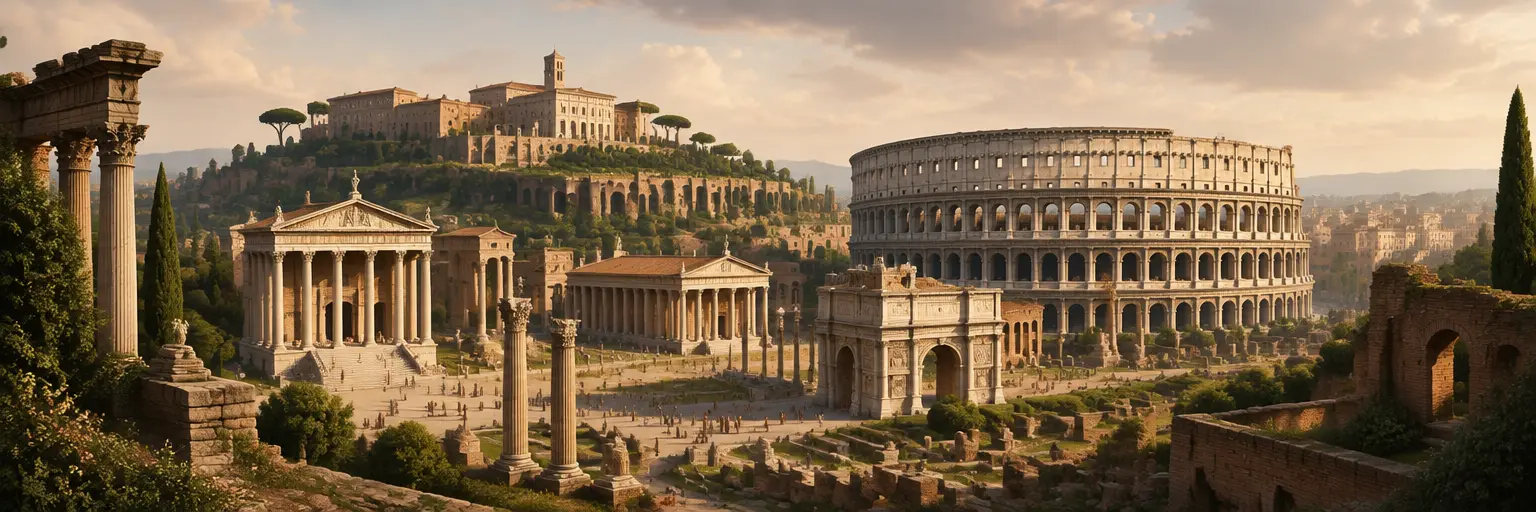
Discover the eternal heart of ancient Rome, where the Forum, Colosseum, and Palatine Hill converge to tell the story of an empire’s rise and fall. This trio of iconic Roman sites offers an unparalleled glimpse into daily life, political power, and spectacular entertainment—from the Senate’s debates amid ruined temples to gladiatorial combat echoing through the amphitheater’s arches. Uncover layered archaeological evidence spanning over a millennium, with each stone revealing imperial triumphs, social hierarchies, and engineering genius. Perfect for history buffs and travelers alike, this exploration highlights key excavation finds and interpretive insights that connect the monumental past to modern understanding. Walk the same paths as emperors on Palatine Hill, where Rome’s legendary founding unfolded, and trace the vibrant marketplace and civic heart of the Forum. Whether you’re planning a visit or deepening your knowledge, these sites deliver a rich, immersive narrative of urban development and cultural evolution—essential reading for anyone passionate about ancient civilizations.
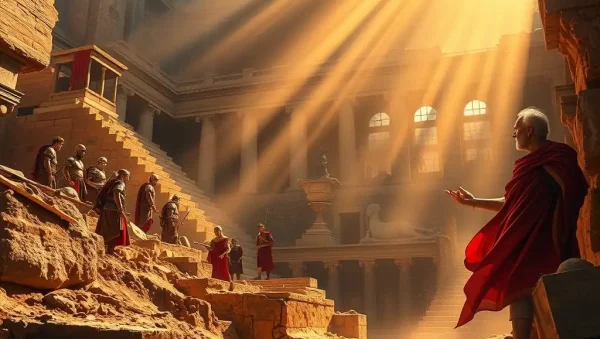
😊 Discover the fascinating Palatine Hill daily life routines, revealing the intricate routines and social customs of ancient Rome's elite. This exploration…
Read article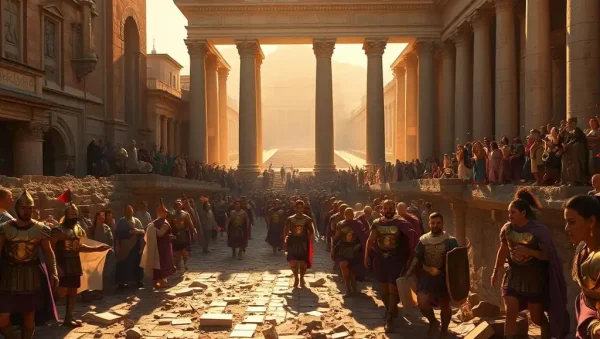
🎉 Explore the grandeur of Roman Forum procession routes, detailing their significance in ancient rituals and public celebrations. This article uncovers the…
Read articleWelcome to ArchaeologyHub.org’s dedicated guide to the Roman Sites of Rome—the Forum, Colosseum, and Palatine Hill. This subcategory serves as your digital gateway to the epicenter of the Roman Empire, where politics, spectacle, and imperial power converged. Dive into layered histories, cutting-edge excavation findings, and practical visitor insights that connect you to the stones that shaped Western civilization. From gladiatorial combat to senatorial debates, here you’ll uncover how these monuments remain living laboratories for archaeologists.
Beneath the shadow of the Palatine, the Roman Forum (Forum Romanum) was the pulsating heart of public life for over a millennium. Expect detailed reconstructions of the Via Sacra, the Rostra, and temples like Saturn and Vesta. Our content highlights recent geophysical surveys that reveal buried shops and administrative buildings beneath the current ground level. As a reader, you’ll gain clarity on how the Forum evolved from a marshy valley into a marble-clad civic center, with layers of reuse from the Republic through the Byzantine era.
For travelers and scholars alike, this section offers chronological timelines and 3D interactive maps, enabling you to visualize the space as ancient Romans did. We include expert commentary on ongoing conservation projects and controversies, such as drainage systems that threaten the ancient basalt paving. Through artifact profiles—like the Lapis Niger altar and the Column of Phocas—you’ll appreciate the Forum as a dynamic archive of public memory and imperial propaganda, not merely a ruin field.
Known as the Flavian Amphitheatre, the Colosseum remains the quintessential symbol of Roman engineering. Here, explore the hypogeum’s underground tunnels, where elevators and pulleys lifted wild beasts and gladiators to the arena floor. Our analysis discusses recent 3D laser scanning that has documented every crack and restoration phase, offering unprecedented data on seating capacity (up to 50,000) and crowd flow dynamics. Expect to learn about the velarium, the massive retractable awning, and its complex rigging systems—a feat of ancient logistics.
Beyond the spectacle, this subcategory examines the Colosseum’s afterlife as a quarry for Renaissance palaces and a sanctuary for flora. We provide archaeobotanical studies showing over 300 plant species have colonized its walls, some unique to this microclimate. You’ll also find practical visitor FAQs about ticketing, accessibility, and thrilling night tours that illuminate the hypogeum. Whether you’re a history buff or an engineer, this section decodes the Colosseum’s dual identity as both an icon of imperial cruelty and a testament to structural ingenuity.
The Palatine Hill is where Rome began—legendarily home to Romulus’s shepherds’ huts and later the sprawling Domus Augustana and Domus Flavia. Our content covers the stratigraphy of this 70-meter-high plateau, revealing Iron Age remains beneath the Flavian palaces. Expect detailed profiles of the House of Augustus with its frescoed rooms and the Stadium of Domitian, now a tranquil garden. We use drone imagery and ground-penetrating radar to show unexcavated terraces that may hold libraries or temples, making it a frontier for future discovery.
For those planning a visit, we explain the Farnese Gardens’ Renaissance overlay and how to trace the Scribonia’s steps down to the Forum. This section also addresses the ongoing debate over the Aula Isiaca and whether it was a sanctuary or private residence. With our postgraduate-level yet accessible articles, you’ll understand Palatine’s role as the wealthiest real estate in antiquity, showcasing concrete domes and marble veneers that inspired later imperial architecture. It’s a must-read for understanding elite Roman domestic life.
Here, we focus on the methodologies transforming our knowledge of these sites: from micro-stratigraphic sampling in the Forum to robotic cameras inside the Colosseum’s sewer. Learn how archaeologists use photogrammetry to create 3D models of the Palatine’s peristyles, and how petrographic analysis identifies the quarry origins of travertine and tuff. Recent finds include a first-century tavern near the Arch of Titus and a possible imperial schoolroom on the Palatine, described in our field reports.
We also detail the ethical challenges of excavating under a living city, including public-private partnerships and the use of non-invasive lidar scans to map subterranean voids. Expect interviews with superintendency archaeologists and summaries from conference proceedings. This H3 is ideal for students or enthusiasts seeking technical insight, as we translate complex scientific papers into engaging narratives without oversimplifying. Each discovery is contextualized within broader Roman trade routes, slave economies, and building practices.
Planning a pilgrimage to these ruins? This section is your logistical companion. We cover the combined ticket for the Colosseum, Forum, and Palatine (valid 24 hours), booking strategies for the Underground Tour of the Colosseum, and skip-the-line tips. Learn the best times to avoid crowds—early mornings for the Forum, late afternoons for the Palatine’s quieter paths. We highlight hidden gems like the Clivus Palatinus ramp and the small but evocative Sanctuary of Vesta precinct.
Accessibility updates are crucial: we detail wheelchair routes, elevators, and sensory-friendly resources. We also recommend audio guides and official apps that enhance your understanding of each stone. For the adventurous, we suggest after-hours “Night at the Forum” events and the archaeological walk from the Capitoline Hill to Circus Maximus. With our insider advice, you’ll avoid common tourist traps—such as unauthorized guides—and savor a richer, more informed visit. This guide updates seasonally to reflect new closures or openings.
Ideally, allocate at least 4–5 hours total. A typical itinerary: 2 hours for the Colosseum (including the arena floor), 1.5–2 hours for the Forum’s full circuit, and 1–1.5 hours for Palatine Hill. If you book the Underground Tour, add another hour. To avoid fatigue, schedule a break for a gelato near the Arch of Constantine.
No, they share a single combined ticket that includes all three sites, plus the Second Floor of the Colosseum and the Palatine Museum. The ticket is valid for 24 hours from the first entry. Booking online is mandatory for the Colosseum arena but optional for the others. Children under 18 enter free with a paying adult.
For the Colosseum, book the first admission slot at 8:30 AM. For the Forum, arrive just before sunset (1–2 hours before closing) when groups dissipate. Palatine Hill’s upper terraces are quietest after 3 PM. Weekdays in November or February are vastly less crowded than summer Saturdays.
No, the hypogeum is only accessible via the official “Underground and Third Ring” tour, which is limited to small groups and requires advance booking. The tour also includes the arena floor and upper tiers. Tickets sell out days ahead, so plan at least two weeks in advance, especially during peak season.
Photography is allowed for personal use without flash or tripods. Drones are strictly prohibited due to safety and archaeological preservation. Selfie sticks are banned inside the Colosseum’s underground. For professional or commercial shoots, special permits from the Parco Archeologico del Colosseo are required, with fees and usage agreements.







