Explore the Magnificent Near East Sites: Nineveh & Assyrian Capitals
Dive into the heart of the ancient Assyrian Empire with our curated coverage of Nineveh and other royal capitals, such as Nimrud, Khorsabad, and Ashur. This subcategory on ArchaeologyHub.org offers a comprehensive digital encyclopedia of Mesopotamian archaeology, focusing on the monumental architecture, innovative water systems, and imperial art that defined one of history’s most powerful civilizations. Discover how these Near East archaeological sites reveal the political, religious, and daily life of Assyrian kings and their subjects, all organized for both casual learners and serious researchers.
🏛️ The Rise and Layout of Nineveh: An Imperial Metropolis
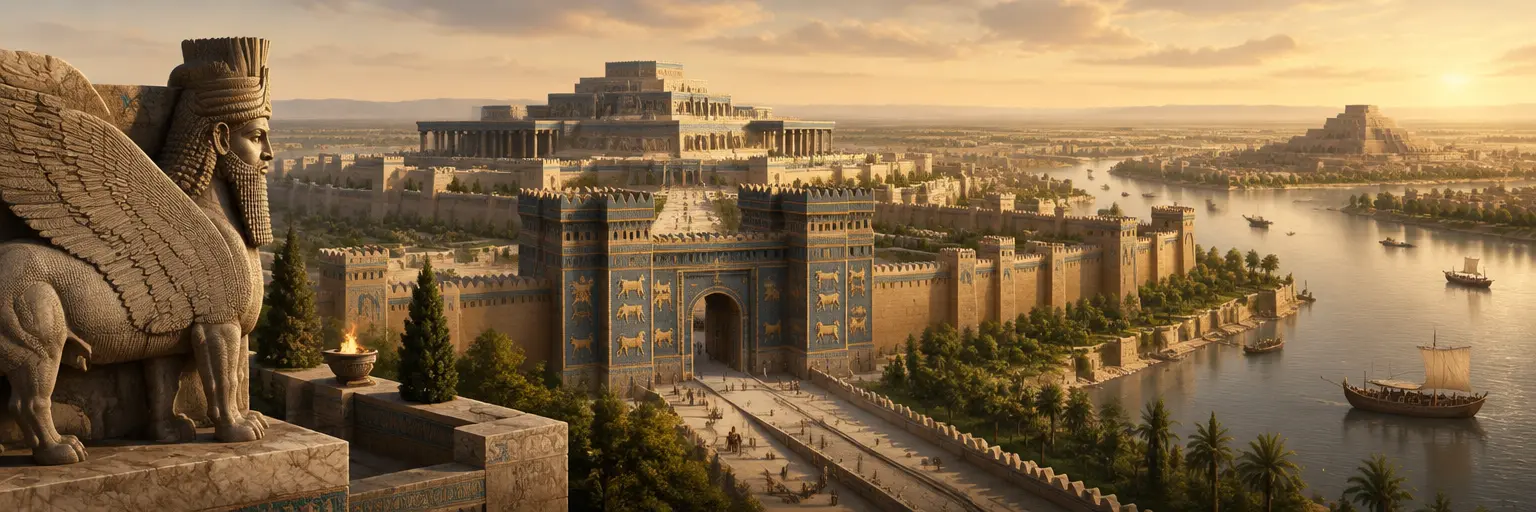
Here, you’ll explore the urban planning and strategic significance of Nineveh, which became the largest city in the world around 700 BCE under King Sennacherib. Expect detailed breakdowns of its massive walls, gates, and the famed Kuyunjik mound, where the Library of Ashurbanipal was unearthed. Our artifact profiles and site maps help you visualize how the capital functioned as a political and religious hub, with palatial complexes and temples dedicated to Ishtar and Nabu.
By examining excavation records and recent geophysical surveys, you’ll learn how the city’s canals and aqueducts supported a population of over 100,000. This section provides interpretive analyses of royal inscriptions and reliefs, showing how Nineveh’s layout reinforced Assyrian ideology. For students of ancient engineering, the Jerwan Aqueduct is highlighted as a marvel of hydraulic technology, making this a rich resource for understanding imperial logistics and daily life in a Near Eastern capital.
⚔️ Nimrud (Kalhu): Military Might and Palatial Splendor
Nimrud, the earlier Assyrian capital, offers a fascinating contrast with its sprawling Northwest Palace of Ashurnasirpal II. This section details the intricate bas-reliefs depicting lion hunts, tribute scenes, and military campaigns, which are among the finest examples of Assyrian art. You’ll find precise timelines linking the city’s construction in the 9th century BCE to its later destruction, providing a clear chronological framework for your research.
Expect in-depth coverage of the royal tombs discovered in the 1980s, which yielded golden jewelry and inscriptions that reshaped our understanding of Assyrian queens. We also discuss the tragic modern history of the site’s destruction by ISIS in 2015, followed by digital reconstruction efforts and conservation challenges. This balanced approach combines archaeological evidence with contemporary heritage protection, making it a valuable case study for students of conflict archaeology and cultural preservation.
🏺 Khorsabad (Dur-Sharrukin): Sargon II’s Visionary City
Khorsabad was built as a brand-new capital by Sargon II, though it was abandoned after his death. Here, you’ll examine the city’s carefully planned rectangular layout, including the massive citadel with its seven-tiered ziggurat. Our guides break down the gate reliefs and colossal lamassu (human-headed winged bulls) that guarded the entrances, explaining their symbolic role in warding off evil and demonstrating royal power to visitors.
This subcategory also addresses the site’s pioneering excavations by Paul-Émile Botta in the 1840s, which marked the birth of Assyriology as a scientific field. Through interpretive essays, we connect the architectural innovations of Khorsabad to broader Mesopotamian traditions, while noting how its short-lived occupation offers a unique snapshot of imperial ambition. You’ll gain clarity on why Sargon’s project failed and what that reveals about Assyrian administrative practices and resource management.
💧 Water Engineering and Agricultural Sustenance
One of the most impressive aspects of Assyrian capitals was their sophisticated water management, crucial for sustaining large populations in arid lands. This section explores the canal systems that fed Nineveh’s royal gardens, the aqueduct at Jerwan, and the rock-cut channels around Khorsabad. You’ll learn how kings like Sennacherib boasted of providing abundant water to their cities, linking technological prowess with divine favor and political legitimacy.
We also cover the palace gardens that may have inspired the mythical Hanging Gardens of Babylon, based on recent archaeological evidence and cuneiform texts. Detailed timelines show how these projects evolved across reigns, reflecting changing environmental conditions and administrative priorities. By examining sediment cores and Paleobotanical data, researchers can reconstruct ancient climate and diet, offering a comprehensive view of how Assyrians adapted to and modified their landscape for urban stability.
📜 Artifact Treasures and the Library of Ashurbanipal
This segment focuses on the material culture recovered from these capitals, from cuneiform tablets to carved ivories and bronze furniture fittings. The Library of Ashurbanipal at Nineveh is highlighted as a cornerstone of our knowledge of ancient Mesopotamian literature, including the Epic of Gilgamesh and astronomical texts. Expect curated artifact profiles with high-resolution images, provenance histories, and interpretive notes on their functions in royal and religious ceremonies.
We also discuss the looting and recovery of artifacts, both in antiquity and modern times, examining how museum collections worldwide have shaped scholarship. Our comparative analyses link Assyrian luxury goods with contemporary Phoenician and Egyptian crafts, illustrating trade networks and cross-cultural exchange. Whether you’re interested in ancient writing systems or art history, this section provides a detailed, accessible overview of the treasures that define Assyrian capitals as global heritage sites.
Frequently Asked Questions
What is the significance of Nineveh in Assyrian history?
Nineveh served as the final capital of the Neo-Assyrian Empire, becoming its largest and most influential city under King Sennacherib (705–681 BCE). It was a political, religious, and commercial center, housing the royal palaces and the Library of Ashurbanipal. Its fall in 612 BCE marked the empire’s collapse.
Are the Assyrian capitals open to tourists today?
Yes, parts of Nineveh, Nimrud, and Khorsabad are accessible, but access can be restricted due to political instability or ongoing conservation. Visitors should check local advisories and travel agencies. Some sites have visitor centers and guided tours, offering insights into recent excavations and reconstruction efforts.
How were the massive lamassu sculptures created?
Lamassu were carved from single blocks of stone, often limestone or alabaster, using copper and iron tools. Sculptors worked from the top down, first shaping the head and then the body, leaving the back attached to the wall for support. They typically had five legs to appear static from the front and walking from the side.
What caused the destruction of these ancient capitals?
Nineveh and Nimrud were destroyed by a coalition of Babylonians, Medes, and Scythians in 612–609 BCE, likely through fires and deliberate demolition of walls. In modern times, Nimrud and parts of Nineveh suffered damage from ISIS in 2014–2016, including explosives and bulldozing.
Where can I see artifacts from these sites today?
Major collections are held at the British Museum (London), the Louvre (Paris), the Iraq Museum (Baghdad), and the Vorderasiatisches Museum (Berlin). Many reliefs and tablets from Nineveh and Khorsabad are displayed in these institutions, with digitized catalogs available online for research.