
The Significance of DurSharrukin's Location: Strategic and Symbolic Choices

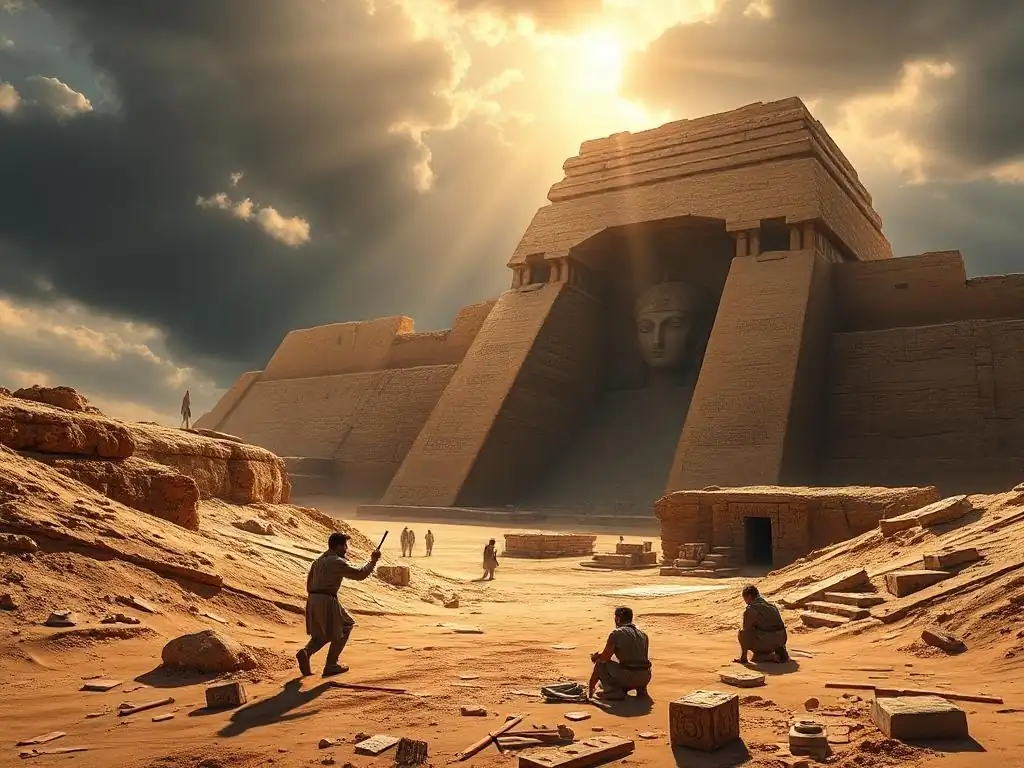
Welcome to ArchaeologyHub.org, your portal to uncovering the past!
Ever wondered why ancient cities were built where they were? Dive into our exploration of the Dur-Sharrukin archaeological site location and discover the fascinating strategic and symbolic choices that shaped this Neo-Assyrian capital. Unearth the secrets hidden within its foundations and learn how its placement reveals insights into the empire's power and beliefs. Intrigued? The adventure begins now!
- Introduction: Unveiling the Strategic Importance of Dur-Sharrukin's Location
-
Strategic Considerations in Choosing Dur-Sharrukin as a Capital
- Proximity to Resources: Assessing the Availability of Timber and Stone Near Dur-Sharrukin
- Defensive Advantages of the Dur-Sharrukin Archaeological Site Location: The Case of the Northern Approach
- The Role of Trade Routes in Dur-Sharrukin's Strategic Placement: Access to Anatolia and the Mediterranean
-
Symbolic Significance Embedded in Dur-Sharrukin's Geographical Position
- Dur-Sharrukin's Alignment with Assyrian Cosmological Beliefs: The Cardinal Directions and Royal Power
- Landscape as Propaganda: Projecting Power Through Dur-Sharrukin's Elevated Position Over the Plain
- The Psychological Impact of Dur-Sharrukin's Location on Subject Populations: Imposing Assyrian Presence
-
Comparing Dur-Sharrukin's Location with Other Assyrian Capitals
- Nineveh vs. Dur-Sharrukin: A Comparative Analysis of Site Selection: Tradition vs. Innovation
- Kalhu (Nimrud) vs. Dur-Sharrukin: Contrasting Strategic and Symbolic Priorities: Established Power vs. Newly Asserted Authority
- The Evolution of Assyrian Capital Locations and Dur-Sharrukin's Place Within It: Shifting Political Landscapes
-
Challenges and Limitations of Dur-Sharrukin's Location
- Environmental Factors Affecting Dur-Sharrukin's Sustainability: Water Supply and Agricultural Potential
- The Short Reign and Abandonment: Did Location Play a Role? The Burden of Construction and Logistical Demands
- Overcoming Logistical Hurdles in Building and Maintaining Dur-Sharrukin: The Use of Corvée Labor and Resource Management
-
Archaeological Evidence Supporting the Strategic and Symbolic Significance
- Excavations at Dur-Sharrukin: Revealing Clues to Site Selection: The Layout of the Royal Palace and Temples
- Analyzing Artifact Distribution: Understanding the Use of Space and Resources: Residential Areas vs. Administrative Centers
- Inscriptions and Texts: Shedding Light on Sargon II's Intentions: Royal Decrees and Building Inscriptions
-
The Legacy of Dur-Sharrukin's Location: Lessons for Understanding Assyrian Kingship
- How Dur-Sharrukin's Placement Influenced Later Assyrian Urban Planning: The Grid Pattern and Monumental Architecture
- The Enduring Symbolism of Dur-Sharrukin's Location in Assyrian Identity: A Monument to Royal Ambition and Divine Favor
- Unresolved Questions: The Precise Reasons for Abandonment and the Full Extent of the Planned City
- Conclusion: Dur-Sharrukin's Location as a Reflection of Assyrian Power and Ideology
-
Frequently Asked Questions
- ### Where exactly is the Dur-Sharrukin archaeological site located?
- ### Why was the location of Dur-Sharrukin considered strategically important?
- ### What symbolic significance did the location of Dur-Sharrukin hold for Sargon II?
- ### How does the location of Dur-Sharrukin compare to other major Assyrian cities like Nineveh or Assur?
- ### What are some of the challenges archaeologists face when excavating and studying the Dur-Sharrukin site's location?
- Final Reflection: Echoes of Power in the Sands
- Unearth Your Own Archaeological Insights!
Introduction: Unveiling the Strategic Importance of Dur-Sharrukin's Location
Dur-Sharrukin: A Brief Overview of Sargon II's Assyrian Capital
Dur-Sharrukin, known today as Khorsabad, was the ambitious new capital city founded by the Neo-Assyrian king Sargon II. Constructed rapidly between approximately 717 and 706 BCE, it served as the royal residence and administrative heart of the empire for a mere decade before Sargon's unexpected death. This colossal undertaking was not merely an architectural feat but a deliberate statement of Sargon's power and legitimacy, as he was a usurper who sought to establish his reign on a new, unblemished foundation, distinct from previous royal centers.
The city itself was a monumental testament to Assyrian engineering and artistic prowess, encompassing a vast area of approximately 3 square kilometers, enclosed by formidable walls that stretched for nearly 7 kilometers. Within these walls lay a meticulously planned urban center, dominated by a massive citadel housing Sargon's sprawling palace, numerous temples, and administrative buildings. The very act of creating such a city from scratch, complete with its strategic Dur-Sharrukin archaeological site location, underscored the king's absolute authority and the empire's immense resources.
Why Dur-Sharrukin's Location Matters in Assyrian History
The selection of a capital city in the ancient world, especially for an empire as dominant as Assyria, was never a casual decision. It was a deeply considered act reflecting a complex interplay of military strategy, economic considerations, and profound ideological symbolism. For Dur-Sharrukin, the specific geographic Dur-Sharrukin archaeological site location chosen by Sargon II offers invaluable insights into his particular vision for the empire and his personal need to solidify his rule.
Unlike previous Assyrian capitals that often evolved organically over centuries, Dur-Sharrukin was a singular, purpose-built imperial center. Its unique placement, distinct from the long-established religious heart of Assur or the administrative hub of Kalhu (Nimrud), speaks volumes about Sargon's desire to forge a new identity for his reign. Understanding why this particular Dur-Sharrukin archaeological site location was selected is crucial for grasping the political climate, strategic priorities, and ideological underpinnings of the late Neo-Assyrian Empire.
Strategic Considerations in Choosing Dur-Sharrukin as a Capital
Proximity to Resources: Assessing the Availability of Timber and Stone Near Dur-Sharrukin
The construction of a city on the scale of Dur-Sharrukin demanded immense quantities of raw materials, particularly stone for its massive walls, palace foundations, and sculpted orthostats, and timber for roofs and internal structures. The chosen Dur-Sharrukin archaeological site location, nestled at the foothills of the Zagros Mountains, offered a distinct advantage in this regard. The immediate vicinity provided abundant access to limestone and gypsum, which were extensively quarried for the city's construction. This proximity significantly reduced the logistical challenges and costs associated with transporting such heavy materials over long distances.
While dense forests were not directly adjacent, the location facilitated easier access to timber resources compared to more southerly plains. Wood, crucial for roofing, scaffolding, and fuel, could be more readily brought from the timber-rich mountainous regions to the north and east, either via shorter overland routes or by river transport down seasonal streams into the main water systems that fed the plains. This strategic placement ensured a more efficient supply chain for the monumental building efforts at the Dur-Sharrukin archaeological site location.
Defensive Advantages of the Dur-Sharrukin Archaeological Site Location: The Case of the Northern Approach
The Dur-Sharrukin archaeological site location was not merely chosen for convenience; it possessed inherent defensive strengths that were critical for an imperial capital. Situated on a slightly elevated plain, approximately 15 kilometers northeast of modern Mosul, the city commanded a clear view of the surrounding landscape. This elevated position provided a natural vantage point, allowing for early detection of any approaching forces, particularly from the mountainous northern and northeastern borders, which were often contested by rival powers like Urartu.
The city's massive defensive walls, reaching heights of up to 24 meters in places and fortified with over 150 towers, were built upon this natural elevation, making direct assault exceedingly difficult. The strategic placement of gates, such as the northern gate facing the mountains, was carefully considered to optimize defense. This combination of natural topography and robust fortifications made the Dur-Sharrukin archaeological site location a formidable stronghold, enhancing the security of the royal court and the imperial treasury it housed.
The Role of Trade Routes in Dur-Sharrukin's Strategic Placement: Access to Anatolia and the Mediterranean
Beyond its defensive and resource-related advantages, the Dur-Sharrukin archaeological site location also held significant strategic value concerning regional trade routes. While not directly on the Tigris River, the city was positioned to monitor and control overland routes that connected Mesopotamia with the resource-rich regions of Anatolia to the northwest and the Levant, providing access to the Mediterranean coast. These routes were vital for the flow of tribute, luxury goods, and essential raw materials into the Assyrian heartland.
By establishing his capital at this particular Dur-Sharrukin archaeological site location, Sargon II could effectively assert imperial control over these economic arteries. This ensured a steady supply of exotic goods—such as metals from Anatolia, timber from Lebanon, and precious stones from distant lands—which adorned the royal palace and fueled the Assyrian economy. The city's placement thus served both military and economic objectives, consolidating the empire's grip on its vast network of trade and tribute.
Symbolic Significance Embedded in Dur-Sharrukin's Geographical Position
Dur-Sharrukin's Alignment with Assyrian Cosmological Beliefs: The Cardinal Directions and Royal Power
In ancient Mesopotamia, the orientation of cities and monumental structures was often imbued with deep cosmological meaning, reflecting a desire to align earthly creations with divine order. Dur-Sharrukin was no exception; its meticulously planned layout, particularly the citadel and the royal palace, exhibited a precise orthogonal orientation. This alignment with the cardinal directions (north, south, east, west) was not merely for practical purposes but symbolized the king's universal dominion and his role as a divinely appointed ruler who maintained cosmic harmony.
By founding a new capital that perfectly mirrored the celestial order, Sargon II sought to reinforce his legitimacy and portray his reign as one of order and prosperity, sanctioned by the gods. The very act of creating such a perfectly aligned city at the chosen Dur-Sharrukin archaeological site location was a powerful statement of royal power, suggesting that Sargon's authority extended not only over his earthly realm but also resonated with the divine forces that governed the cosmos. It was an embodiment of the king's connection to the heavens and his role as the shepherd of his people.
Landscape as Propaganda: Projecting Power Through Dur-Sharrukin's Elevated Position Over the Plain
The visual impact of Dur-Sharrukin was a critical component of Sargon II's propaganda. While the city itself was built on a slightly raised plateau, the royal palace, known as the Palace of Sargon, was further elevated on a massive artificial platform, standing approximately 14 meters above the city level and dominating the entire landscape. This towering structure was visible for miles across the flat Mesopotamian plain, acting as a constant, undeniable symbol of Assyrian might and royal authority.
This elevated position was a deliberate choice to project an image of overwhelming power and majesty. To visitors, envoys, and subject populations approaching the city, the sight of the colossal palace rising above its surroundings would have been awe-inspiring and intimidating. The Dur-Sharrukin archaeological site location, crowned by this monumental edifice, became a physical manifestation of Sargon's absolute rule and the unchallengeable dominance of the Assyrian Empire, serving as a powerful tool for psychological control.
The Psychological Impact of Dur-Sharrukin's Location on Subject Populations: Imposing Assyrian Presence
The strategic and symbolic placement of Dur-Sharrukin had a profound psychological impact on both the Assyrian populace and, crucially, the subject peoples of the empire. For those forced to travel to the capital for tribute or administrative purposes, the sheer scale and visibility of the city, particularly the towering palace, would have underscored the futility of resistance and the omnipresence of Assyrian authority. It was a tangible representation of the centralized power that governed their lives.
This imposing presence, emanating from the chosen Dur-Sharrukin archaeological site location, served as a constant reminder of Assyrian hegemony. The city was not just a place of residence for the king; it was a grand stage for the display of imperial wealth, military strength, and divine favor. Its very existence, built with the labor and resources of conquered lands, was a silent yet powerful message, designed to instill both respect and fear, thereby consolidating control over a vast and diverse empire.
Comparing Dur-Sharrukin's Location with Other Assyrian Capitals
Nineveh vs. Dur-Sharrukin: A Comparative Analysis of Site Selection: Tradition vs. Innovation
Nineveh, a city with a long and storied history, served as a significant administrative and religious center for centuries before becoming the primary capital under Sennacherib, Sargon II's successor. Its strategic advantages were undeniable: situated on the east bank of the Tigris River, it had immediate access to a major waterway for transport and trade, and its fertile hinterland provided ample agricultural resources. Nineveh also benefited from its ancient sanctity and established infrastructure, representing continuity and tradition within the Assyrian state.
In stark contrast, Sargon II's choice of the Dur-Sharrukin archaeological site location represented a radical departure from tradition. By founding an entirely new capital, Sargon aimed to create a city untainted by previous political intrigues or the influence of established factions within Nineveh. This innovative approach symbolized his personal break from the past and his intention to establish a new order under his direct, unchallenged authority. The new Dur-Sharrukin archaeological site location was a statement of fresh beginnings rather than an adaptation of an existing power base.
Kalhu, known today as Nimrud, was another prominent Neo-Assyrian capital, founded by Ashurnasirpal II in the 9th century BCE. Like Nineveh, Kalhu was strategically located on the Tigris River, providing excellent riverine access and facilitating military campaigns and trade. It became a well-established center of imperial power, renowned for its military barracks, extensive palace complexes, and impressive public works, embodying the might of a mature and stable empire.
Dur-Sharrukin, however, served a different symbolic purpose. While Kalhu represented an established and enduring seat of power, the Dur-Sharrukin archaeological site location was chosen by Sargon II, a king who had seized the throne, to assert his newly established authority. He needed a capital that was uniquely his, a monumental project that would unequivocally demonstrate his divine mandate and personal strength. Thus, Dur-Sharrukin was less about consolidating existing power and more about proclaiming a new era under a new ruler, making its specific location a personal declaration rather than an incremental shift.
The Evolution of Assyrian Capital Locations and Dur-Sharrukin's Place Within It: Shifting Political Landscapes
The history of Assyrian capitals illustrates a fascinating evolution in imperial strategy. Assur, the ancient religious capital, remained symbolically important but gave way to more strategically located administrative and military centers like Kalhu, reflecting the empire's expansionist ambitions. Dur-Sharrukin's brief tenure then marks a unique, albeit temporary, deviation in this pattern. It shows a moment where personal royal ambition potentially outweighed long-term logistical convenience.
Following Dur-Sharrukin, Sennacherib moved the capital back to Nineveh, investing heavily in its monumentalization. This suggests that while Sargon's chosen Dur-Sharrukin archaeological site location served his immediate political and symbolic needs, the advantages of an established city on a major river, like Nineveh, ultimately proved more sustainable for the long-term administration of a vast empire. Dur-Sharrukin, therefore, stands as a singular, grand experiment in imperial urban planning, reflecting a specific phase of intense royal assertion and shifting political landscapes within the Neo-Assyrian Empire.
Challenges and Limitations of Dur-Sharrukin's Location
Environmental Factors Affecting Dur-Sharrukin's Sustainability: Water Supply and Agricultural Potential
Despite its strategic advantages, the Dur-Sharrukin archaeological site location presented certain environmental challenges, particularly concerning water supply. Unlike Nineveh or Kalhu, which directly bordered the Tigris River, Dur-Sharrukin was situated several kilometers away from a major perennial water source. This necessitated the construction of an elaborate and extensive irrigation system to provide sufficient water for the city's large population, its extensive gardens, and the agricultural fields in its immediate hinterland.
Sargon II addressed this by commissioning a new canal, the Pishra-naru, which diverted water from the nearby Khosr River. While impressive, such a system required constant maintenance and significant labor, potentially posing a long-term sustainability challenge. Furthermore, the agricultural potential of the immediate plain around the Dur-Sharrukin archaeological site location, while arable, might not have been as consistently fertile or easily irrigated as the more expansive plains directly adjacent to the Tigris, potentially requiring greater effort to sustain the capital's food needs.
The Short Reign and Abandonment: Did Location Play a Role? The Burden of Construction and Logistical Demands
Dur-Sharrukin's operational life as a capital was remarkably short, lasting only from its completion around 706 BCE until Sargon II's death in 705 BCE, when his successor, Sennacherib, immediately moved the capital to Nineveh. This abrupt abandonment raises questions about the long-term viability of the chosen Dur-Sharrukin archaeological site location. While Sennacherib's personal preference for Nineveh and his desire to create his own monumental legacy are often cited, practical considerations may also have played a role.
The immense burden of constructing an entirely new city from scratch at this specific Dur-Sharrukin archaeological site location, far from established infrastructure, was enormous. The constant logistical demands of quarrying, transporting materials, and maintaining a massive workforce, largely composed of deported populations, might have been deemed unsustainable or simply less efficient than developing an existing, well-placed urban center like Nineveh. The colossal investment might not have yielded the desired long-term returns in the eyes of the new king.
Overcoming Logistical Hurdles in Building and Maintaining Dur-Sharrukin: The Use of Corvée Labor and Resource Management
To overcome the inherent logistical hurdles of building a capital at the Dur-Sharrukin archaeological site location, the Assyrian Empire leveraged its formidable administrative and coercive power. Vast numbers of individuals, including deported populations from conquered territories, were conscripted into corvée labor, providing the immense workforce necessary for quarrying stone, digging canals, and constructing the city's monumental structures. This human resource was effectively limitless under the Assyrian system.
Furthermore, Sargon's administration employed sophisticated resource management techniques. Detailed records of tribute and resource allocation, though often incomplete, indicate a meticulous planning process for the procurement and distribution of building materials, including timber from distant forests and metals for tools. The ability to mobilize such vast resources and coordinate complex logistical operations across the empire, despite the challenges of the Dur-Sharrukin archaeological site location, underscores the unparalleled organizational capacity of the Neo-Assyrian state.
Archaeological Evidence Supporting the Strategic and Symbolic Significance
Excavations at Dur-Sharrukin: Revealing Clues to Site Selection: The Layout of the Royal Palace and Temples
Early excavations at Dur-Sharrukin, notably by Paul-Émile Botta in the 1840s and Victor Place in the 1850s, followed by later Iraqi and American expeditions, have provided invaluable archaeological evidence supporting the strategic and symbolic intentions behind its Dur-Sharrukin archaeological site location. The city's remarkably regular, orthogonal grid plan, particularly within the citadel, speaks to a highly organized and deliberate act of foundation. The royal palace, situated on its massive elevated platform, is centrally positioned within the citadel, visually dominating the entire urban landscape.
The meticulous layout of the palace complex itself, including the placement of its main audience chambers, administrative wings, and private quarters, reflects a carefully planned hierarchy of space designed to facilitate royal functions and impress visitors. Similarly, the strategic placement of key temples—such as those dedicated to Nabu, Sin, and Shamash—within the citadel, often in close proximity to the palace, underscores the intertwining of royal and divine authority, reinforcing the symbolic power radiating from this central Dur-Sharrukin archaeological site location.
Analyzing Artifact Distribution: Understanding the Use of Space and Resources: Residential Areas vs. Administrative Centers
The analysis of artifact distribution across the Dur-Sharrukin archaeological site location has further illuminated the city's functional zoning and the management of its vast resources. Excavations have revealed distinct areas for residential dwellings, workshops, storage facilities, and administrative buildings, each characterized by specific types of artifacts. For instance, the discovery of numerous cuneiform tablets in certain areas indicates administrative functions, while concentrations of specific pottery or tools point to industrial activities.
The presence of luxury items, exotic materials like ivory, and precious metals primarily within the palace and elite residential areas highlights the city's role as a center for the accumulation and redistribution of imperial wealth and tribute. Conversely, more utilitarian objects found in the lower city provide insights into the daily lives of the general populace. This spatial differentiation in artifact distribution confirms that the Dur-Sharrukin archaeological site location was meticulously planned to serve as an efficient administrative and economic hub, strategically positioned to process and control the empire's vast resources.
Inscriptions and Texts: Shedding Light on Sargon II's Intentions: Royal Decrees and Building Inscriptions
Perhaps the most direct evidence for Sargon II's motivations in choosing and developing the Dur-Sharrukin archaeological site location comes from his own royal inscriptions. These texts, inscribed on foundation deposits, monumental stelae, and the very walls of his palace, explicitly articulate his intentions for the new capital. Sargon proudly proclaimed that he built the city "for my royal residence, for the dwelling of my lordship," and as a testament to his divine favor and unparalleled power.
These building inscriptions often detail the immense resources expended and the vast numbers of deported peoples employed in the city's construction, emphasizing the scale of his ambition. They also invoke divine sanction for his rule, further cementing the symbolic importance of the new capital. By studying these primary textual sources, archaeologists and historians can gain a clearer understanding of the ideological underpinnings that drove the selection of the Dur-Sharrukin archaeological site location and the monumental effort invested in its creation.
The Legacy of Dur-Sharrukin's Location: Lessons for Understanding Assyrian Kingship
How Dur-Sharrukin's Placement Influenced Later Assyrian Urban Planning: The Grid Pattern and Monumental Architecture
Despite its brief tenure as capital, Dur-Sharrukin left an indelible mark on Assyrian urban planning and monumental architecture. The city's highly organized, orthogonal grid plan, a hallmark of planned cities, likely served as a significant precedent for later imperial building projects. While Nineveh, under Sennacherib, saw extensive development, some scholars suggest that the ambitious scale and systematic layout of Dur-Sharrukin may have influenced subsequent large-scale urban renovations, even if not directly copied.
More concretely, the architectural innovations and monumental scale achieved at the Dur-Sharrukin archaeological site location became characteristic features of Neo-Assyrian royal architecture. The colossal lamassu (winged human-headed bulls) guarding the palace gates, the extensive use of carved stone orthostats depicting royal triumphs, and the sheer grandeur of the palace complex became iconic elements of Assyrian imperial display. Dur-Sharrukin stands as a prime example of this architectural vocabulary, partly enabled by its chosen location facilitating access to massive stone quarries.
The Enduring Symbolism of Dur-Sharrukin's Location in Assyrian Identity: A Monument to Royal Ambition and Divine Favor
Even after its abandonment, Dur-Sharrukin continued to resonate as a powerful symbol within the broader narrative of Assyrian kingship. It represented the ultimate expression of royal ambition and the capacity of an Assyrian monarch to create a magnificent new city ex nihilo through sheer will and divine backing. The concept of a king founding his own capital, strategically placed and imbued with profound symbolism, underscored the dynamic and often highly personal nature of Assyrian rule.
The very idea of the Dur-Sharrukin archaeological site location, built to commemorate Sargon II's reign and to legitimize his rule, speaks volumes about the ideological foundations of the empire. It served as a testament to the belief that the king, chosen by the gods, had the power to reshape the landscape and establish new centers of cosmic order. This enduring symbolism highlights how integral the choice of location was to projecting and maintaining Assyrian identity and imperial ideology.
Unresolved Questions: The Precise Reasons for Abandonment and the Full Extent of the Planned City
Despite extensive archaeological work, certain questions regarding Dur-Sharrukin's location and its legacy remain unresolved. While Sennacherib's immediate move to Nineveh upon Sargon's death is well-documented, the precise reasons for the complete abandonment of the Dur-Sharrukin archaeological site location are still debated. Was it purely a political decision by a new king asserting his own vision, or did the logistical challenges of maintaining such a massive, newly built city away from a major river play a more significant role in its short life?
Furthermore, archaeological evidence suggests that while the citadel and palace were largely completed, parts of the lower city, particularly outside the inner walls, may not have been fully realized according to Sargon's ambitious plans. This raises questions about the long-term feasibility and sustainability of the project at this specific Dur-Sharrukin archaeological site location. The full extent to which the city was populated and fully functional before its abandonment continues to be a subject of ongoing research and discussion among scholars.
Conclusion: Dur-Sharrukin's Location as a Reflection of Assyrian Power and Ideology
Summarizing the Interplay of Strategy and Symbolism at Dur-Sharrukin
The choice of the Dur-Sharrukin archaeological site location was a profoundly deliberate act, representing a complex interplay of strategic considerations and deep symbolic aspirations. Strategically, its placement near mountain foothills provided crucial access to building materials like stone, while its elevated position offered significant defensive advantages against northern incursions. Furthermore, its proximity to vital overland trade routes ensured economic control and facilitated the flow of resources into the heart of the empire.
Beyond practicalities, the Dur-Sharrukin archaeological site location was laden with symbolism. Its precise cosmological alignment, its towering palace designed to dominate the landscape, and its very existence as a new, unblemished capital served as powerful propaganda for Sargon II. It was a physical manifestation of his divinely sanctioned rule, his immense power, and his ambition to forge a new order. Thus, the city was not merely a physical place but a grand statement of imperial might and ideology.
The Enduring Importance of Understanding Dur-Sharrukin's Archaeological Site Location.
Understanding the Dur-Sharrukin archaeological site location remains critically important for deciphering the complexities of Neo-Assyrian kingship and urban planning. This unique capital, though short-lived, offers a concentrated case study of how ancient empires leveraged geography, resources, and human labor to project power and legitimize authority. Its particular challenges, such as water supply, and the immense logistical efforts required for its construction, highlight the formidable capabilities of the Assyrian state.
The archaeological remains at the Dur-Sharrukin archaeological site location continue to provide invaluable data, allowing researchers to piece together the intricate motivations behind one of the most ambitious building projects of the ancient world. It stands as a powerful testament to Sargon II's vision and the enduring significance of site selection in reflecting the strategic priorities and ideological underpinnings of a dominant empire.
Frequently Asked Questions
### Where exactly is the Dur-Sharrukin archaeological site located?
The Dur-Sharrukin site is located in modern-day northern Iraq, near the village of Khorsabad. Its precise location was chosen by King Sargon II.
### Why was the location of Dur-Sharrukin considered strategically important?
The location provided control over key trade routes and access to resources. It also allowed for easier military control of the surrounding region.
### What symbolic significance did the location of Dur-Sharrukin hold for Sargon II?
The location was likely chosen to project royal power and legitimacy. Its placement was also believed to be aligned with astrological beliefs.
### How does the location of Dur-Sharrukin compare to other major Assyrian cities like Nineveh or Assur?
Unlike Nineveh and Assur, Dur-Sharrukin was a completely new city built by Sargon II. This allowed him to choose a strategic location without existing constraints.
### What are some of the challenges archaeologists face when excavating and studying the Dur-Sharrukin site's location?
The region's political instability and the site's exposure to the elements pose significant challenges. Also, looting has damaged parts of the site.
Final Reflection: Echoes of Power in the Sands
The exploration of DurSharrukin's location, as we've seen, isn't merely an academic exercise in geography; it's a vital key to understanding the complex interplay of strategic necessity and symbolic ambition that defined the reign of Sargon II. The choices made in situating this grand city continue to resonate today, reminding us that even the most ambitious projects are rooted in tangible realities and powerful ideologies.
The enduring fascination with DurSharrukin underscores how deeply the past informs our present. The very act of studying its location allows us to connect with the aspirations and anxieties of a civilization long gone, reminding us that power, in all its forms, leaves indelible marks on the landscape. Architecture should speak of its time and place, but yearn for timelessness.
- Frank Gehry. This quote, though modern, perfectly encapsulates the spirit of DurSharrukin: a city designed to both dominate its present and endure for eternity.
Now, consider the lessons of DurSharrukin's location in your own life. Where do you choose to build your foundations, both literally and figuratively? Are your choices driven by strategic advantage, symbolic meaning, or a blend of both? Let the story of Sargon II's city inspire you to be deliberate and thoughtful in your own endeavors, ensuring that your actions leave a lasting and meaningful legacy.
Unearth Your Own Archaeological Insights!
Thank you for exploring the strategic and symbolic significance of Dur-Sharrukin's location with us. We hope you found fresh perspectives on Assyrian history and urban planning. Now, let's take this exploration further and turn your newfound knowledge into action!
Here are some ways to deepen your understanding and contribute to the field:
- Analyze a lesser-known archaeological site: Choose a location whose positioning has never been questioned.
- Share this article with other history enthusiasts and ignite a discussion about the importance of location in understanding ancient civilizations.
- Visit a local museum with Assyrian artifacts and reflect on how their placement within the exhibit enhances or diminishes their historical context.
What overlooked aspect of ancient city planning do you think deserves more archaeological attention?