The Temple of Victory at Himera: Commemorating a Decisive Conflict
🌟 Explore the Himera Temple Victory History, a monumental testament to ancient triumphs. This site commemorates a decisive battle, revealing insights into…
Read article
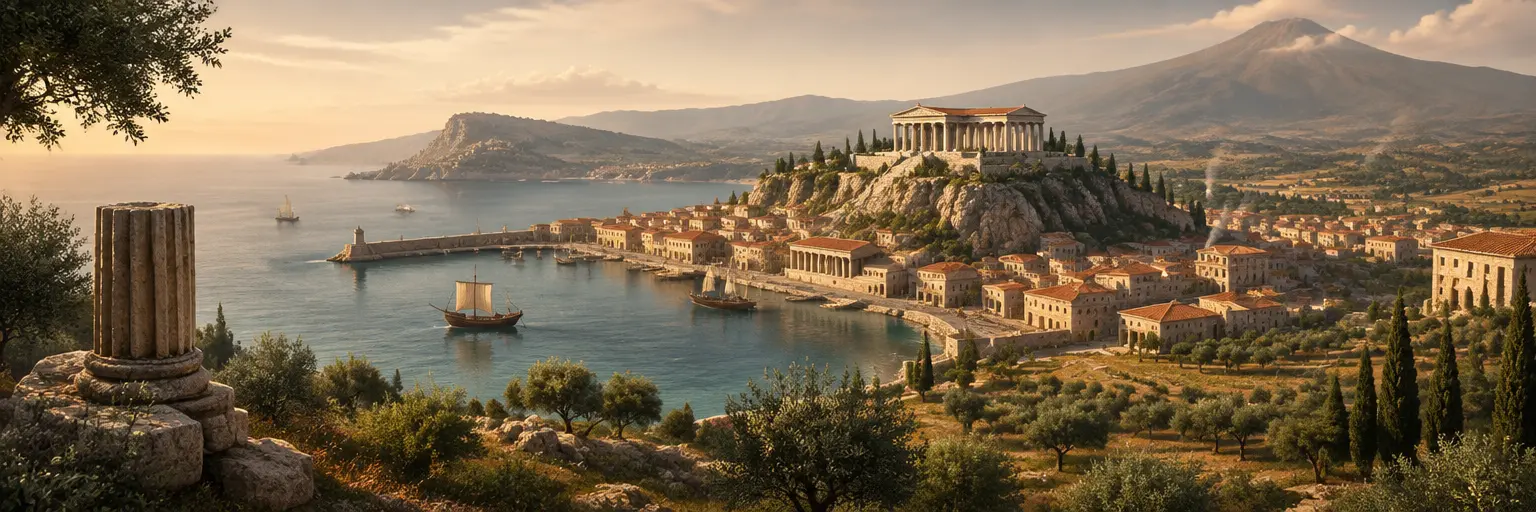
Explore the fusion of Greek and indigenous cultures at the archaeological wonders of Sicily and Southern Italy—where ancient Magna Graecia flourished. From the Doric temples of Agrigento to the amphitheaters of Syracuse, these Mediterranean sites reveal colonization’s transformative impact on art, trade, and daily life. Delve into excavation records, artifact timelines, and interpretive studies that uncover how settlers adapted Hellenic traditions to new landscapes, creating hybrid identities still visible in ruins, pottery, and urban planning. Whether you’re a student or enthusiast, this digital encyclopedia brings you closer to Greek colonies’ enduring legacy—bridging archaeology, history, and regional geography across a vast, searchable taxonomy. Perfect for deepening your knowledge of ancient civilizations and their maritime networks in the central Mediterranean.
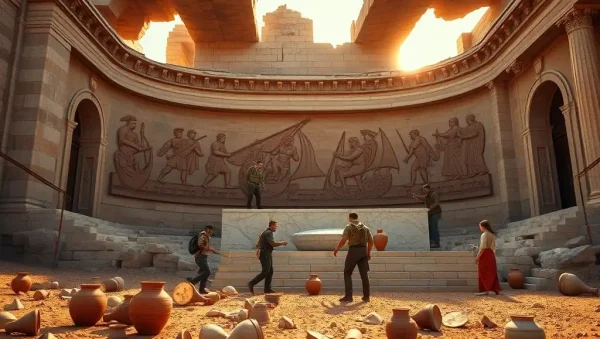
🌟 Explore the Himera Temple Victory History, a monumental testament to ancient triumphs. This site commemorates a decisive battle, revealing insights into…
Read article
🌊 Explore the navigational challenges faced by Greek colonists on their west maritime routes, revealing how these ancient explorers overcame obstacles to…
Read articleExplore the vibrant world of ancient Greek expansion through the monumental archaeological treasures of Sicily and Southern Italy, known in antiquity as Magna Graecia. This subcategory of ArchaeologyHub.org focuses on the cities founded between the 8th and 5th centuries BCE—from Syracuse to Paestum—where Greek culture fused with indigenous Italic traditions. Here, you’ll discover Doric temples, theatrical acoustics, defensive walls, and urban grids that reveal colonial life, trade networks, and artistic innovation. Ideal for students, travelers, and history enthusiasts, this page offers deep interpretive analyses tied to broader Mediterranean timelines and artifact profiles.
Expect to uncover how Greek colonists adapted their architectural canon to new landscapes, producing some of the best-preserved temples outside mainland Greece. Sites like Paestum’s Temple of Hera and Agrigento’s Valley of the Temples showcase massive Doric columns and refined proportions that influenced later Roman design. You’ll also examine grid-based city planning (Hippodamian systems) at Neapolis (Naples) that balanced public spaces with residential quarters.
Each excavation report here explains not just the stones, but the cultural logic behind them—how sacred precincts were oriented toward the sea, how theaters were carved into hillsides for acoustics, and how fortifications reflected colonial defense strategies. Through detailed artifact profiles, you’ll see votive offerings and ceramic styles that mark distinct workshop traditions. The synergy between Greek aesthetics and local materials (limestone, tufa) becomes a lens for understanding colonial identity.
Delve into the strategic engineering that allowed these colonies to thrive amid rivalries with Carthage and native Sicels. At sites like Syracuse’s Epipolae plateau and Gela’s acropolis, you’ll explore circuit walls, double gates, and hidden sally ports. Interpretive analyses reveal how topography dictated defense—steep cliffs on one side, artificial moats on another.
Expect to learn about naval infrastructure, including ship sheds (neosoikoi) at Motya and fortified harbors at Taras (Taranto). These features not only protected trade but also projected power. Comparative studies with mainland Greek fortifications show regional innovations, such as the use of ashlar masonry in polygonal patterns that resisted earthquake damage. Artifact evidence—from arrowheads to siege machinery fragments—helps reconstruct daily military life.
This section highlights how Greek colonies became melting pots of theater, cultic practice, and domestic customs. The Greek theaters of Syracuse and Taormina are prime examples, where dramatic performances merged with local fertility rites. Excavated altars, votive deposits, and sanctuary plans at Selinus and Locri reveal syncretic deities (e.g., Demeter fused with Sicilian earth goddesses).
You’ll also find artifact profiles of everyday items—loom weights, cooking pots, and graffiti—that demonstrate how Greek settlers adapted their foodways and clothing to Italian climates. Household shrines, necropolis paintings, and inscribed curses offer intimate glimpses into family life. This cultural fusion is key to understanding why Magna Graecia produced philosophers like Pythagoras and Archimedes, whose ideas were shaped by this bicultural environment.
Explore how colonies served as commercial hubs bridging Greek, Etruscan, and Phoenician worlds. Coinage from Metapontum and Sybaris features wheat ears, indicating agricultural exports; pottery workshops at Himera show mass-produced tableware for export. Expect analyses of amphora types and shipwreck cargoes that map maritime routes across the Ionian and Tyrrhenian seas.
You’ll also learn about the redistribution of raw materials—copper from Etruria, amber from the Baltic—through colonial ports. Interactive timelines trace changes in trade volume after the rise of Roman power. Artifact profiles include anchors, lead weights, and imported Athenian pottery, proving that these colonies were far from isolated. Economic models derived from excavation data help quantify wealth accumulation and social stratification.
Understand how the Roman annexation of Sicily (241 BCE) and Southern Italy altered these Greek sites, leading to abandonment, transformation, or reuse. At Paestum, temples were converted into Christian churches; at Syracuse, Roman amphitheaters were built over Greek quarters. This section provides stratigraphic analyses of destruction layers and urban re-planning under Roman rule.
You’ll also see how modern conservation efforts—like those at Velia and Agrigento—balance restoration with visitor accessibility. Challenges include erosion, looting, and tourism pressure. Case studies of UNESCO World Heritage listings and archaeological parks illustrate best practices. This legacy matters because it shaped Western ideas of Greco-Roman heritage, influencing Renaissance architects and 19th-century classicists. End with reflections on how these sites remain living classrooms for archaeology.
Magna Graecia refers to all Greek colonies in Southern Italy and Sicily, while Greek Sicily specifically means the island’s Greek cities like Syracuse and Agrigento. Both share cultural traits but differ in geography and history, with Sicily often under Carthaginian threat and Southern Italy more integrated with Etruscan trade.
Paestum’s Temple of Hera I (c. 550 BCE) is exceptionally well-preserved, with nearly all columns and entablature intact. Unlike many others, it retains its original pronaos and cella walls, allowing visitors to experience the original spatial proportions without later Roman additions.
Yes, they were politically independent city-states (poleis), though they maintained cultural, religious, and trade ties with their mother cities (e.g., Corinth to Syracuse). They minted their own coins, waged wars, and formed alliances, as seen in the Sicilian League against Athens in 415 BCE.
Founding dates come from ancient literary sources (Thucydides, Eusebius) cross-checked with ceramics—especially Late Geometric and Early Corinthian pottery. Radiocarbon dating of charcoal from destruction layers and dendrochronology of ship timbers also refine these dates, though accuracy remains within decades.
Yes, most are open as archaeological parks. Paestum, Agrigento, and Syracuse have visitor centers, paved paths, and audio guides. However, some sites like Motya require a boat, and terrains can be uneven. Check local accessibility for wheelchair users, as some Doric temples have limited step-free access.







