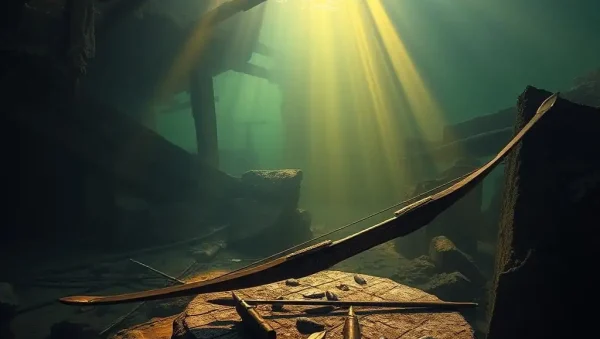
Comparative Analysis of Arrow Types and Archery Equipment Found on the Mary Rose
🔍 The Mary Rose archery equipment analysis reveals diverse arrow types and gear, shedding light on medieval warfare and craftsmanship. This comparative…
Read article
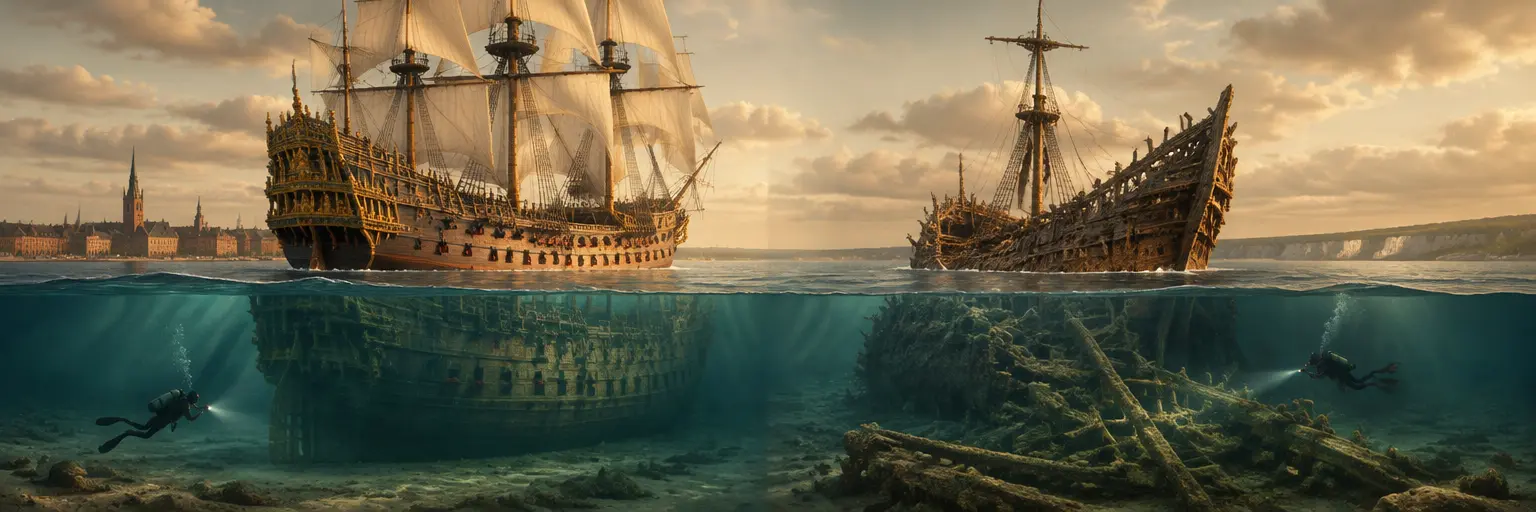
Dive into the world of underwater archaeology with our in-depth profiles of the Vasa and the Mary Rose, two of history’s most spectacular maritime time capsules. These famous shipwrecks offer an unrivaled glimpse into 17th-century naval engineering, daily life, and tragic disaster. From the Vasa’s ornate, capsized grandeur in Stockholm to the Mary Rose’s Tudor-era artifact haul in Portsmouth, explore how modern conservation techniques have resurrected these legendary vessels. Uncover the meticulous excavation methods that salvaged thousands of artifacts, and discover why these sites are cornerstones of global archaeological heritage. Perfect for history buffs and explorers, our coverage highlights the best-preserved wooden warships ever recovered, blending marine archaeology with captivating human stories.
Welcome to ArchaeologyHub.org’s dedicated subcategory on two of the world’s most celebrated shipwrecks: the Swedish warship Vasa and the English Tudor carrack Mary Rose. These vessels, raised from the depths centuries after their catastrophic sinkings, offer extraordinary windows into naval engineering, daily life, and maritime warfare of the 17th and 16th centuries. Here, we delve into their discovery, meticulous excavation, and the pioneering conservation science that preserves them for future generations.
The Vasa, built for King Gustavus Adolphus of Sweden, capsized in Stockholm harbor in 1628—just minutes into her maiden voyage—due to severe instability from an overloaded upper gun deck. The Mary Rose, King Henry VIII’s flagship, sank in the Solent in 1545 during an engagement with the French fleet, likely from a combination of poor ballasting and open gunports. Both disasters resulted in significant loss of life but remarkably preserved organic materials in cold, low-oxygen waters.
These sinkings are not just tales of naval failure; they are pivotal moments in maritime history. For archaeology, they offer time capsules of everyday artifacts—from barrels of butter to backgammon boards—that rarely survive on land. Understanding why they sank helps researchers interpret stability flaws, crew training, and even political pressures that contributed to these tragedies, enriching our broader knowledge of early modern seafaring.
The recovery of both ships stands as a triumph of underwater archaeology. The Mary Rose was rediscovered in 1971 and raised in 1982, using a specially designed lifting frame and a 60-day recovery operation watched by millions. The Vasa was located in 1956 and raised in 1961, preserved in the cold Baltic mud that had shielded her hull from decay. These efforts were unprecedented in scale, involving divers, engineers, and archaeologists working in murky, hazardous conditions.
Excavation of each hull revealed thousands of artifacts in situ—the Mary Rose yielded over 19,000 objects, including longbows, surgical tools, and the remains of crewmen and even a dog. The Vasa produced around 14,000 items, from cannon and sails to personal chests and clothing. These meticulous digs, conducted layer by layer, allowed researchers to map where sailors slept, ate, and fought, providing an intimate portrait of shipboard life that no written record can match.
After decades underwater, both ships’ timbers had absorbed vast quantities of water, leaving them weak and prone to collapse if dried naturally. The Vasa underwent a 17-year treatment with polyethylene glycol (PEG), which replaced water in cell walls, followed by controlled drying. The Mary Rose is currently in the final phase of similar conservation, spritzing with PEG and then slowly air-drying in a specially designed Hall, with robots monitoring humidity and temperature.
This conservation is not just about preserving wood; it also protects the intricate carvings, textiles, and metal artifacts found aboard. The Vasa’s ornate gun deck and lion figurehead required careful stabilization, while the Mary Rose’s unique collection of leather books and silk ribbons demanded bespoke treatments. These efforts have pushed the boundaries of material science, with researchers sharing techniques globally to save other waterlogged archaeological sites from Italy to the Antarctic.
Both ships are now the centerpieces of world-class museums: the Vasa Museum in Stockholm, which houses the ship in its entirety, and the Mary Rose Museum in Portsmouth, designed as a ship-shaped building surrounding the hull. Visitors can walk galleries that offer split-level views of the towering stems, smell the oak and tar, and see life-sized reconstructions of crewmen based on skeletal remains. These immersive environments transform a static display into a dynamic educational experience.
Beyond the hulls, each museum showcases thousands of artifacts in themed zones—the Vasa’s high-tech interactive displays map the sinking animation, while the Mary Rose’s exhibits include a 3D virtual dive experience. Both institutions prioritize accessibility, with tactile models for visually impaired visitors and audio guides in multiple languages. These museums do not merely display objects; they tell personal stories, from a sailor’s last meal to a captain’s doomed final order, making history tangible for all ages.
Artifacts from both wrecks offer unmatched insights into daily routines. The Vasa yielded a wooden backgammon board, tiny clay pipes, and a barrel of salted butter, while the Mary Rose produced a surgeon’s chest with his instruments, a cooper’s wooden mallet, and a pea coat woven for a boy. These personal items show that ships were not just war machines but floating communities, with hierarchies, hobbies, and even superstitions—like the cat found on the Mary Rose as a ships’ pet.
Analysis of skeletal remains has also been transformative. Study of Vasa skeletons revealed men aged 20 to 60 with evidence of heavy labor, healed fractures, and even genetic traits from northern Sweden. On the Mary Rose, examination of teeth and bones indicated high-protein diets and vitamin D deficiencies, suggesting long periods at sea. Such bioarchaeological data personalizes these tragically lost crews, showing their humanity and resilience, and connects us across centuries to their maritime world.
The Vasa and Mary Rose have reshaped maritime archaeology’s methodology and public appeal. Their raised hulls are now benchmarks for underwater conservation, and their artifact collections are models for studying micro-histories. Researchers continue to analyze wood degradation, new 3D scanning is creating digital twins for online access, and ongoing environmental monitoring ensures these treasures survive climate change. Their stories also highlight the fragility of cultural heritage, influencing UNESCO conventions on underwater cultural heritage protection.
Internationally, these shipwrecks are now icons in heritage tourism, attracting over a million visitors annually combined. They inspire new technologies like robotics for deep-sea exploration and forensic archaeology for historical conflicts. For global audiences, they symbolize humanity’s capacity to learn from disaster, making them essential case studies in archaeology textbooks. At ArchaeologyHub.org, we connect these global threads, offering timelines, artifact galleries, and interpretive essays to deepen your appreciation of these submerged treasures.
The Vasa capsized in 1628 in Stockholm harbor due to instability, less than a mile from shore, while the Mary Rose sank in 1545 during battle off Portsmouth. The Vasa is intact and upright, preserving 98% of her timbers, while the Mary Rose was discovered lying on her side, with only the port half surviving, making her a partial but equally rich excavation.
The Vasa was raised in 1961 by tunneling six tunnels under the hull and threading steel cables, then lifting with pontoons and winches. The Mary Rose was raised in 1982 using a stiffened lifting frame with 450 steel bolts placed by divers, attached to a floating crane called Tog Mor, which successfully lifted the 280-ton hull.
Both wrecks sank in brackish or anaerobic waters with low oxygen, preventing wood-boring shipworm (Teredo navalis) infestation. The Vasa’s Baltic environment is especially cold and brackish, while the Mary Rose was quickly buried in mud, sealing her from bacteria. This created ideal conditions for preserving organic materials like wool, leather, and wood.
The Vasa boasts a 1,500-piece wooden sculpture set, a working cannon still loaded with round shot, and a sailor’s chest with clothing. The Mary Rose is famous for its longbows (many still usable), a surgeon’s wooden chest with instruments, and a leather jerkin belonging to an officer, plus a preserved dog skeleton.
Yes. The Vasa is displayed fully intact in the purpose-built Vasa Museum in Stockholm, Sweden, viewed from six levels. The Mary Rose is housed in the Mary Rose Museum at Portsmouth Historic Dockyard, England, where her hull is visible from multiple galleries. Both are climate-controlled with public viewing of ongoing conservation works.







