
Comparative Analysis of Arrow Types and Archery Equipment Found on the Mary Rose


Welcome to ArchaeologyHub.org, your gateway to unlocking the secrets of the past!
Delve into a world where every artifact tells a story, every dig unearths a new perspective on civilizations long gone. Are you ready to uncover the fascinating details hidden within history's layers? Our digital encyclopedia awaits, and today, we begin with a deep dive into the Mary Rose – specifically, a compelling analysis of the archery equipment recovered from this iconic vessel.
What can these bows and arrows reveal about 16th-century warfare and the lives of the sailors who wielded them? Join us as we explore the diverse types of arrows and what their construction tells us about their intended purpose.
- Introduction to Mary Rose Archery Equipment and its Archaeological Significance
- Overview of Archery Equipment Recovered from the Mary Rose
- Detailed Comparative Analysis of Arrow Types from the Mary Rose
- Comparison of Archery Equipment with Contemporary Accounts and Illustrations
- The Role of Archery in Naval Battles: Mary Rose Archery Equipment Analysis
- Conservation and Preservation of Mary Rose Archery Artifacts
- Conclusion: Significance of the Mary Rose Archery Equipment Analysis for Understanding Tudor Warfare
-
Frequently Asked Questions
- What types of arrows were discovered on the Mary Rose, and what can their material composition tell us?
- How does the Mary Rose archery equipment compare to other examples of 16th-century English archery?
- What insights does the analysis of the bows from the Mary Rose provide about English longbow construction techniques?
- Can the archery equipment analysis from the Mary Rose help us understand the role of archers in naval warfare during the Tudor period?
- What are some of the limitations of relying solely on the Mary Rose finds for understanding 16th-century English archery?
- Final Reflection: Echoes of Skill and Strategy
- Unearth Your Inner Archer: Take Aim at History!
Introduction to Mary Rose Archery Equipment and its Archaeological Significance
The Mary Rose, a carrack of the English Tudor navy, served as a prominent warship for 34 years before her sinking in 1545 during the Battle of the Solent. Commissioned by King Henry VIII, she was a symbol of England's burgeoning naval power. Her tragic loss, however, inadvertently created one of the most significant archaeological sites in maritime history, preserving an unparalleled collection of 16th-century artifacts.
Discovered in 1971 and successfully raised in 1982, the Mary Rose provided an extraordinary snapshot of Tudor life and warfare. The anaerobic conditions of the seabed meant that organic materials, which rarely survive on land, were remarkably preserved. This preservation extended to a vast array of military equipment, tools, and personal effects, offering a unique window into the daily lives of her crew and the naval technology of the period.
Despite the advent of firearms, the longbow remained a crucial weapon in the Tudor military arsenal, including on naval vessels. The recovery of over 3,500 arrows and 137 complete longbows from the Mary Rose represents the largest single collection of Tudor archery equipment ever found. This unique assemblage provides unparalleled insights into the design, manufacture, and deployment of archery technology in the 16th century.
The comprehensive Mary Rose archery equipment analysis allows archaeologists and historians to understand the logistical demands of equipping a warship with archers, the types of arrows deemed necessary for naval combat, and the continued training and skill required to wield these formidable weapons. It underscores the strategic importance of archers in close-quarters naval engagements, complementing the emerging use of gunpowder weapons.
Scope of this Analysis: Arrow Types and Associated Gear
This article provides a detailed comparative analysis of the various arrow types recovered from the Mary Rose, alongside other associated archery equipment. The examination will delve into their distinct characteristics, intended purposes, and the materials and construction techniques employed. By comparing war arrows, target arrows, and sheaf arrows, we aim to delineate their functional distinctions and tactical roles.
Furthermore, this Mary Rose archery equipment analysis extends to the longbows themselves, as well as protective gear such as bracers and gloves, and methods of arrow storage. This holistic approach allows for a comprehensive understanding of Tudor naval archery, shedding light on a period where traditional weapons still held significant sway in military strategy.
Overview of Archery Equipment Recovered from the Mary Rose
Categorization of Arrow Types Found on the Mary Rose
The extensive collection of arrows from the Mary Rose has been meticulously categorized based on their construction, features, and presumed function. While the exact terminology used by Tudor archers for every variant is not fully known, archaeological interpretation has largely grouped them into three primary types: war arrows, target arrows, and sheaf arrows. Each category exhibits distinct characteristics tailored to specific tactical applications.
This categorization is crucial for understanding the strategic deployment of archers on board the warship. The sheer volume of arrows, particularly war arrows, indicates a clear emphasis on combat readiness, while the presence of other types suggests broader applications within the naval context, from training to specific combat scenarios.
War Arrows: Characteristics and Purpose
War arrows constitute the vast majority of the arrows recovered from the Mary Rose, numbering over 2,000 examples. These were designed for maximum penetration against armored opponents or ship timbers. Typically, they feature robust, heavy shafts, often measuring around 76 to 81 centimeters (30-32 inches) in length and weighing between 60 and 90 grams. Their defining feature is the 'bodkin' arrowhead, characterized by a narrow, often square-sectioned or pyramidal iron point, specifically engineered to pierce plate armor, chainmail, or wooden structures.
The fletching on war arrows, usually made from goose primary feathers, was trimmed for stability and durability rather than extreme accuracy over long distances, reflecting their purpose in powerful, close-range volleys. These arrows were the primary offensive projectile for the archers, intended to disable enemy crew and damage enemy vessels during engagements.
Target Arrows: Identifying Features and Potential Use
In contrast to the formidable war arrows, a smaller number of arrows identified as 'target arrows' were also found. These arrows generally exhibit a lighter construction, with slightly thinner shafts and broader arrowheads, such as leaf-shaped or barbed designs. While less numerous, their distinct characteristics suggest a different intended purpose, likely for practice, hunting, or potentially for use against unarmored targets where a larger wound channel was desired over armor penetration.
The presence of target arrows on a warship indicates that archery practice might have been conducted on board or that these arrows were kept for non-combat related activities. Their design prioritizes a balance of flight stability and impact, differing from the pure penetration focus of war arrows.
Sheaf Arrows: Distinctive Traits and Tactical Role
The term 'sheaf' refers to a bundle of 24 arrows, and the Mary Rose archery equipment analysis reveals that many arrows were likely stored and deployed in these standardized bundles. While not a distinct arrow type in terms of individual construction, 'sheaf arrows' generally refer to the common, mass-produced war arrows that formed the bulk of an archer's ammunition. Their distinctive trait was their quantity and uniformity, facilitating rapid loading and mass volley fire.
Tactically, sheaf arrows were crucial for creating an overwhelming 'arrow storm' to suppress enemy fire, clear decks, and sow chaos among opposing crews. Their effectiveness lay in volume and density, rather than the precision of individual shots. The standardized nature of these arrows ensured that large quantities could be quickly produced and deployed during naval engagements.
Beyond the arrows themselves, the Mary Rose yielded a remarkable collection of other archery-related artifacts, providing a holistic view of Tudor archery. These items range from the primary weapon, the longbow, to essential protective gear and storage solutions. The sheer volume and state of preservation of these artifacts are unparalleled globally.
This comprehensive collection allows researchers to reconstruct not only the form but also the function and usage of Tudor archery equipment. It offers direct archaeological evidence that complements historical texts and contemporary illustrations, providing a tangible link to the practices of 16th-century archers.
Longbow Construction and Materials
The 137 longbows recovered from the Mary Rose are predominantly made from yew wood (Taxus baccata), specifically incorporating both the sapwood (outer layer) and heartwood (inner core) of the tree. This composite structure, with the sapwood on the back (facing the target) providing elasticity and the heartwood on the belly (facing the archer) providing compression strength, was crucial for the bow's power and durability. Most bows measured between 1.8 and 2.1 meters (approximately 6 to 7 feet) in length.
Estimates of their draw weights are exceptionally high, ranging from 100 to 180 pounds (approximately 45-82 kg), with some expert estimates reaching over 200 pounds for the heaviest examples. Such immense draw weights indicate that the archers on the Mary Rose were highly trained, physically powerful individuals, capable of delivering devastating force with each shot.
Bracers, Gloves, and Other Protective Gear
Several pieces of protective gear essential for archers were also discovered. Bracers, typically made of leather, were worn on the forearm to protect it from the sting of the bowstring after release. Their presence indicates the practical realities of shooting such powerful bows and the need to prevent injury during rapid firing.
Evidence of leather finger tabs or shooting gloves was also found, designed to protect the archer's fingers from the considerable pressure exerted by the bowstring. These seemingly minor artifacts underscore the professional nature of the archers on board and the specialized equipment required for their role. The meticulous conservation of these leather items has allowed for detailed study of their construction and wear patterns.
Quivers and Arrow Storage Methods
While traditional quivers, as often depicted in popular culture, were not extensively found in a preserved state, the Mary Rose archery equipment analysis indicates that arrows were primarily stored in bundles known as 'sheaves.' Each sheaf typically contained 24 arrows, tied together for easy transport and rapid access. This method of storage was practical for naval combat, allowing large quantities of arrows to be quickly brought to the archers.
Archaeological evidence suggests that these sheaves might have been kept in designated racks or chests on deck, or below deck in armories, to ensure they remained dry and readily available. The design of the ship would have incorporated specific provisions for the storage and efficient distribution of these vital projectiles during battle.
Detailed Comparative Analysis of Arrow Types from the Mary Rose
Comparing War Arrows vs. Target Arrows: A Functional Distinction
The primary distinction between war arrows and target arrows found on the Mary Rose lies in their functional design, dictated by their intended use. This difference is most evident in their arrowhead design, shaft materials, fletching techniques, and the resulting considerations for range and accuracy. The archaeological record provides clear evidence of this specialized manufacturing.
This comparative study is vital for understanding the tactical versatility of the Tudor archer. It shows that while the longbow was a singular weapon, the ammunition it fired was highly specialized to meet different combat and training requirements, optimizing performance for specific scenarios.
Arrowhead Design and Penetration Capabilities
War arrows were overwhelmingly fitted with bodkin points, made from forged iron. These were typically small, robust, and designed to concentrate kinetic energy into a narrow tip, maximizing penetration against hardened targets such as plate armor, chainmail, or the wooden hulls and rigging of enemy ships. The effectiveness of these bodkin points in piercing armor was well-documented in contemporary accounts and is supported by modern ballistic tests.
In contrast, target arrows often featured broader, sometimes barbed or leaf-shaped, iron arrowheads. These designs were less about armor penetration and more about creating a larger wound channel in softer targets, or for ease of retrieval from practice butts. Their wider profile would have also contributed to greater air resistance, affecting their flight characteristics differently than the sleek bodkins.
Shaft Materials and Fletching Techniques
The shafts of war arrows were frequently made from dense, strong woods like ash (Fraxinus excelsior), chosen for its durability and ability to withstand the immense force of the longbow. These shafts were often thicker to prevent breakage upon impact. Fletching for war arrows typically consisted of three goose feathers, carefully trimmed and glued, then often whipped with silk thread, to provide stable flight without excessive drag, crucial for maintaining trajectory over combat distances.
Target arrows might have used lighter woods for their shafts, potentially hazel (Corylus avellana) or other readily available species, optimizing for a lighter overall weight for practice. Their fletching might have been slightly larger or shaped differently to enhance accuracy at shorter ranges, where the emphasis was on hitting a specific point rather than delivering maximum penetration.
Range and Accuracy Considerations
War arrows, due to their weight and the high draw weight of the bows, were designed for powerful, penetrating shots. While capable of reaching considerable distances (potentially up to 250 yards in a high trajectory), their primary combat effectiveness was within shorter, more direct ranges where penetration was paramount. Accuracy in a mass volley was more about saturation than individual precision, though skilled archers could certainly aim.
Target arrows, being lighter, might have offered a flatter trajectory and potentially greater precision at shorter, defined ranges, making them ideal for training and honing individual marksmanship. The Mary Rose archery equipment analysis suggests that while both types were effective, they were optimized for different aspects of archery performance.
Analysis of Sheaf Arrows and Their Unique Properties
The concept of 'sheaf arrows' highlights a crucial aspect of Tudor military logistics and tactical deployment: the emphasis on mass production and volume fire. These arrows, while fundamentally war arrows in design, were distinguished by their standardized form and the way they were bundled and deployed in large quantities. This standardization was key to their tactical role in naval engagements.
The recovery of so many identical or near-identical arrows from the Mary Rose underscores the industrial scale of arrow production required to sustain a large military force in the 16th century. This logistical capability was as important as the individual skill of the archer.
Mass Volley Fire Tactics and Sheaf Arrow Design
Sheaf arrows were inherently designed for mass volley fire, where hundreds or even thousands of arrows could be loosed simultaneously or in rapid succession. Their construction was robust enough to withstand the forces of a powerful longbow but also simple enough to be mass-produced efficiently. While not necessarily different in individual design from other war arrows, their tactical impact came from their collective deployment.
This tactic aimed to create a dense 'arrow storm' that could suppress enemy movement, clear decks before boarding, or inflict significant casualties on unarmored crews and exposed personnel. The sheer volume of incoming projectiles was intended to overwhelm and demoralize the enemy, making it difficult for them to return fire effectively or maneuver.
Comparative Assessment of Sheaf Arrow Effectiveness
The effectiveness of sheaf arrows was not measured by the penetration of a single arrow, but by the cumulative effect of a continuous barrage. In a naval context, this meant disrupting enemy formations, forcing crew members to seek cover, and inflicting a high rate of casualties over a wide area. Compared to single, precision shots, sheaf arrows provided a broad, area-denial capability.
This approach was particularly devastating against crowded enemy decks or during boarding actions. The Mary Rose archery equipment analysis confirms that the English military relied heavily on this tactic, stockpiling vast quantities of these standardized arrows to ensure a continuous supply during prolonged engagements.
Examining the Materials and Construction Techniques Across Different Arrow Types
The meticulous craftsmanship evident in the Mary Rose archery artifacts speaks volumes about the material science and engineering skills of the Tudor period. The selection of specific woods, the preparation of fletching materials, and the forging of arrowheads all required specialized knowledge and skilled labor, reflecting a sophisticated manufacturing process.
Understanding these techniques provides insight into the supply chains, artisanal trades, and overall technological capabilities that supported the English military. It demonstrates a practical understanding of aerodynamics, material properties, and weapon effectiveness.
Wood Selection for Arrow Shafts: Ash, Hazel, and Other Species
The primary wood identified for the shafts of war arrows from the Mary Rose is ash (Fraxinus excelsior). Ash was prized for its combination of strength, flexibility, and relative lightness, making it ideal for shafts that needed to withstand the immense forces generated by high-draw weight longbows and maintain integrity upon impact. The wood would have been carefully selected, seasoned, and straightened to ensure optimal flight characteristics.
While ash dominated for war arrows, other woods such as hazel (Corylus avellana) or poplar (Populus spp.) may have been used for lighter arrows, practice arrows, or for less critical applications. The consistent quality of the ash shafts for war arrows points to a standardized procurement and manufacturing process, vital for military supply.
Fletching Materials: Goose Feathers and Their Aerodynamic Impact
The fletching on the Mary Rose arrows was predominantly made from the primary wing feathers of geese. Goose feathers were preferred due to their strength, flexibility, and availability in sufficient quantities. Typically, three feathers were used per arrow, carefully split, shaped, and then attached to the shaft using animal glue and often reinforced with fine silk thread whipping at the ends.
The precise trimming and attachment of the fletching were crucial for stabilizing the arrow in flight, ensuring a true and consistent trajectory. Different fletching shapes or sizes could influence an arrow's flight path, affecting its range and accuracy. The consistency in fletching techniques across the vast collection highlights a standardized approach to arrow production, ensuring reliable performance.
Arrowhead Manufacturing: Ironworking Skills of the Tudor Period
The iron arrowheads recovered from the Mary Rose showcase the advanced ironworking skills of Tudor blacksmiths. These arrowheads were forged from high-quality iron, demonstrating a sophisticated understanding of metallurgy. The predominant bodkin points were designed with specific cross-sections (e.g., square, diamond, or round) to maximize armor penetration.
The manufacturing process involved heating, hammering, and shaping the iron, followed by tempering to achieve the desired hardness and durability. The sheer number of arrowheads found indicates a significant industrial capacity for their production, likely involving specialized workshops or armories dedicated to military supply. This Mary Rose archery equipment analysis reveals a highly organized system of weapon procurement.
Comparison of Archery Equipment with Contemporary Accounts and Illustrations
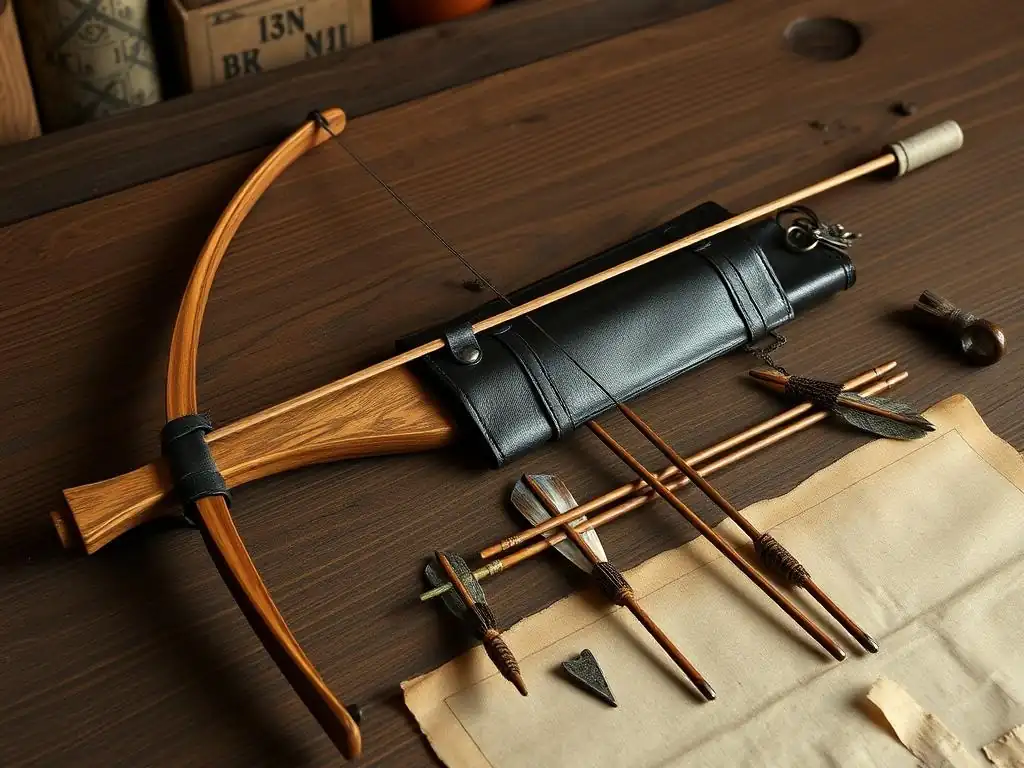
Cross-Referencing Archaeological Findings with Historical Records
The rich archaeological evidence from the Mary Rose provides a tangible counterpart to historical texts and visual depictions of Tudor archery. By cross-referencing the recovered artifacts with contemporary accounts, manuals, and illustrations, researchers can gain a more complete and nuanced understanding of 16th-century archery practices, confirming or challenging prevailing historical interpretations.
This interdisciplinary approach is vital for reconstructing the full context of the Mary Rose archery equipment. It allows for a dynamic dialogue between the material culture and the historical narrative, enriching our knowledge of Tudor military life and technology.
Archery Manuals and Training Guides of the 16th Century
One of the most significant contemporary accounts is Roger Ascham's "Toxophilus," published in 1545 – the very year the Mary Rose sank. This treatise on the art of archery provides detailed insights into bow and arrow construction, shooting techniques, and the importance of practice. The descriptions of arrow types, shaft materials, and fletching methods in "Toxophilus" largely align with the archaeological findings from the Mary Rose, reinforcing the accuracy of Ascham's observations.
For example, Ascham's emphasis on ash for war arrow shafts and specific fletching techniques finds direct corroboration in the preserved artifacts. Such cross-referencing allows historians to move beyond theoretical descriptions to a concrete understanding of the equipment in use, forming a critical part of the Mary Rose archery equipment analysis.
Visual Depictions of Archery in Tudor Art and Illustrations
Tudor art, including paintings, tapestries, and woodcuts, frequently depicts archers in various settings, from battlefields to hunting grounds. While artistic license must be considered, these visual sources offer valuable context for the archaeological finds. Illustrations of soldiers, including archers, on land and sea often show the longbow and arrow types consistent with those recovered from the Mary Rose.
Examples include depictions of naval battles where archers are prominently featured on ship decks, often with sheaves of arrows at their feet. These visual records help to contextualize how the equipment was carried, used, and integrated into military formations, providing a complementary perspective to the physical artifacts.
Insights into Archery Practices and Training on Board the Mary Rose
The sheer volume of archery equipment found on the Mary Rose, combined with historical records, offers remarkable insights into the role of archers and their training regimen aboard a Tudor warship. It demonstrates that archery was not a mere afterthought but an integral component of naval combat strategy, demanding dedicated personnel and regular practice.
This evidence paints a picture of a well-organized military system that prioritized the maintenance of traditional skills alongside the adoption of new technologies. The Mary Rose archery equipment analysis shows that archers were a specialized and highly valued part of the crew.
Crew Roles and Responsibilities Related to Archery
The Mary Rose likely carried a significant contingent of professional archers, possibly numbering between 100 and 150 men out of a total complement of 400-500. These archers were distinct from general mariners or soldiers and were likely highly trained specialists. Their primary role was to deliver devastating arrow volleys during engagements, targeting enemy crews and rigging.
Historical records indicate that English archers were renowned for their skill and power, a reputation undoubtedly maintained through rigorous training. The presence of such a large number of archers on a warship underscores their strategic importance in naval doctrine of the time.
Evidence of Archery Practice and Maintenance
The vast quantity of arrows, including some identified as target arrows, suggests that regular archery practice was likely conducted on board the Mary Rose, or at least that provisions were made for archers to maintain their skills. While direct evidence of a dedicated firing range on the ship is scarce, the constant need for readiness would have necessitated ongoing training.
Furthermore, the presence of repair tools or components could indicate that arrows were maintained and fletched on the ship. The sheer logistical challenge of supplying and maintaining thousands of arrows would have required dedicated personnel and a system for repair and replenishment, ensuring the archers were always combat-ready.
The continued prominence of the longbow on the Mary Rose, even as gunpowder weapons were becoming more common, highlights its unique strategic advantages in naval warfare. Its high rate of fire and the psychological impact of arrow volleys made it a formidable weapon for close-quarters engagements, complementing rather than being entirely superseded by early firearms.
The longbow's utility in naval combat lay in its ability to deliver continuous, suppressive fire, which was crucial for gaining tactical superiority during ship-to-ship battles and boarding actions. This aspect is a key finding of the Mary Rose archery equipment analysis.
Effective Range and Rate of Fire in Combat Scenarios
While cannons provided long-range destructive power, and handguns offered piercing capability at very close range, the longbow excelled in its sustained rate of fire. An experienced archer could loose 6 to 10 arrows per minute, a significantly higher rate than the 1-2 shots per minute typically achieved by early matchlock handguns of the era. This rapid succession of projectiles could maintain constant pressure on an enemy vessel.
The effective combat range of the longbow, while less than that of artillery, was well-suited for the relatively close distances typical of 16th-century naval engagements, often within 100-200 yards. This allowed archers to deliver accurate and powerful volleys against enemy decks and rigging.
Psychological Impact of Arrow Volleys on Enemy Ships
The psychological effect of a concentrated arrow volley was immense. The sight and sound of hundreds of arrows descending simultaneously, creating a 'whistling cloud' of death, could be terrifying for enemy crews. This barrage could pin down personnel, preventing them from manning their own weapons or performing critical tasks.
The sheer volume of arrows, potentially tens of thousands fired during a significant engagement, could overwhelm an enemy ship, clear its decks of personnel, and create widespread casualties among unarmored targets. This psychological warfare was a critical component of the longbow's strategic value in naval battles.
The specific design features of the different arrow types found on the Mary Rose reveal their specialized roles in naval combat. Each type was optimized for distinct tactical applications, demonstrating a nuanced understanding of projectile effectiveness against various targets in a dynamic maritime environment.
This detailed examination of arrow types, a core component of the Mary Rose archery equipment analysis, underscores the sophisticated planning behind the arming of Tudor warships. It shows that ammunition was not generic but tailored for specific combat situations.
War Arrows vs. Target Arrows in Close-Quarters Combat
In close-quarters naval combat, war arrows, with their armor-piercing bodkin points, were indispensable. They were designed to penetrate the relatively thin armor of enemy combatants, pierce through rigging ropes, and even embed themselves in the wooden structures of an opposing ship. Their robust construction ensured maximum kinetic energy transfer upon impact, making them highly effective against protected targets.
While target arrows were less numerous, their broader heads might have been used in specific scenarios where a wider impact or greater tissue damage on unarmored crew was desired, rather than deep penetration. However, the predominance of war arrows clearly indicates their primary role in direct ship-to-ship engagements.
The Role of Sheaf Arrows in Disrupting Enemy Formations
Sheaf arrows, characterized by their quantity and standardized nature, were primarily employed for mass volley fire. Their purpose was not precision, but rather to saturate an area with projectiles, creating a dense barrage. This tactic was invaluable for disrupting enemy formations, preventing enemy crews from boarding, or providing suppressive fire to cover friendly boarding parties.
The ability to rapidly loose hundreds of these arrows in a short period could effectively clear an enemy ship's deck, making it vulnerable to subsequent boarding actions. This strategy of overwhelming the enemy with a continuous stream of projectiles was a defining feature of English naval archery, as revealed by the Mary Rose archery equipment analysis.
Conservation and Preservation of Mary Rose Archery Artifacts
Challenges in Preserving Waterlogged Wooden and Iron Objects
The preservation of the Mary Rose archery artifacts posed immense challenges due to their waterlogged state. Organic materials like wood, leather, and feathers, when submerged in an anaerobic marine environment for centuries, become saturated with water, causing their cellular structures to weaken. Upon exposure to air, the rapid evaporation of water leads to cellular collapse, resulting in severe shrinkage, warping, and cracking.
Iron objects, such as arrowheads, also faced significant threats. While stable in the oxygen-deprived seabed, they underwent rapid and aggressive corrosion upon recovery due to exposure to oxygen and chlorides absorbed from seawater. These complex degradation processes required innovative and long-term conservation strategies to prevent irreversible damage.
Conservation Techniques Applied to Archery Equipment
To counteract these challenges, pioneering conservation techniques were developed and applied to the Mary Rose archery equipment. Wooden artifacts, including the longbows and arrow shafts, underwent extensive polyethylene glycol (PEG) treatment. This process involves immersing the artifacts in tanks of PEG, a water-soluble polymer, which gradually penetrates the wood cells and replaces the water, preventing collapse upon drying. This treatment often took many years, sometimes decades, for larger objects.
Delicate organic materials like fletching feathers and leather items were often preserved using freeze-drying, where water is sublimated from the frozen state, minimizing structural damage. Iron arrowheads were subjected to electrochemical reduction or other stabilization methods to remove corrosive chlorides and inhibit further decay, a critical step in the Mary Rose archery equipment analysis process.
Ongoing Research and Analysis of Preserved Artifacts
Despite decades of conservation, the Mary Rose archery collection remains a subject of ongoing research and analysis. Advanced scientific techniques continue to reveal new information about these remarkable artifacts. For instance, dendrochronology (tree-ring dating) applied to the longbows and arrow shafts provides precise dating and insights into the timber sources. Material analysis techniques, such as X-ray fluorescence, can identify the elemental composition of arrowheads, revealing details about Tudor ironworking.
Researchers are also studying microscopic wear patterns on the bows and arrows to understand their use, maintenance, and the skills of the archers. This continuous scientific investigation ensures that the Mary Rose collection remains a living archive, constantly yielding new discoveries and deepening our understanding of 16th-century military technology and the people who wielded it.
Conclusion: Significance of the Mary Rose Archery Equipment Analysis for Understanding Tudor Warfare
Key Findings from the Comparative Analysis of Arrow Types
The comprehensive Mary Rose archery equipment analysis has yielded several key findings that significantly enhance our understanding of Tudor warfare. Firstly, it has confirmed the sophisticated specialization of arrow types: robust bodkin-tipped war arrows for penetration, lighter target arrows for practice or specific engagements, and standardized sheaf arrows for mass volley fire. This diversity underscores a deliberate tactical approach rather than a one-size-fits-all solution.
Secondly, the sheer quantity and remarkable preservation of the longbows and arrows underscore the continued strategic importance of the longbow in the 16th century, even amidst the rise of gunpowder weapons. The collection demonstrates a highly organized system of production, supply, and training necessary to maintain a formidable archer force on a major warship.
Future Research Directions: Unanswered Questions and Potential Discoveries
Despite the extensive research conducted, the Mary Rose archery collection still holds potential for future discoveries and answers to lingering questions. Further material analysis could provide more precise data on the geographical origins of the wood and iron, shedding light on Tudor supply chains. More detailed studies of individual archer 'toolkits' (bows, arrows, protective gear) could reveal variations in personal preference or specialization.
Moreover, the application of new non-invasive imaging techniques might uncover previously unseen details of construction or repair. Continued experimental archaeology, using replicas of the Mary Rose equipment, could also offer deeper insights into the practicalities of shooting these powerful bows and the true effectiveness of different arrow types in simulated naval combat scenarios.
The Mary Rose Archery Collection as a Valuable Resource for Archaeological Study
The Mary Rose archery collection stands as an unparalleled archaeological resource, offering a unique and tangible window into Tudor military history. It provides a level of detail about 16th-century archery that cannot be gleaned from historical texts or illustrations alone, making it invaluable for scholars of military technology, social history, and material culture.
The ongoing conservation and research efforts ensure that this extraordinary collection will continue to inform and inspire future generations of archaeologists, historians, and the public. The Mary Rose archery equipment analysis is not merely a study of weapons; it is a profound exploration of human ingenuity, logistical organization, and the realities of warfare in a pivotal period of history.
Frequently Asked Questions
What types of arrows were discovered on the Mary Rose, and what can their material composition tell us?
Different arrow types were found, categorized primarily by their fletching and arrowhead designs. The material composition reveals information about the wood species used and potential trade routes.
How does the Mary Rose archery equipment compare to other examples of 16th-century English archery?
The Mary Rose provides a unique, well-preserved snapshot. Comparisons show similarities in draw weight and arrow length, but also reveal regional variations and specialized equipment.
What insights does the analysis of the bows from the Mary Rose provide about English longbow construction techniques?
The bows reveal meticulous craftsmanship using yew wood, demonstrating advanced understanding of wood selection and bow design for maximum power and durability.
Yes, the quantity and types of arrows suggest a significant role for archers in close-quarters combat and ship-to-ship engagements. The study also highlights the logistical support required.
What are some of the limitations of relying solely on the Mary Rose finds for understanding 16th-century English archery?
The Mary Rose represents a single point in time and may not reflect the full spectrum of archery practices. Geographical biases and preservation factors must also be considered.
Okay, here's a final reflection section, designed to close your article on the comparative analysis of archery equipment found on the Mary Rose, optimized for the keyword "Mary Rose archery equipment analysis" and following the structure you provided:
Final Reflection: Echoes of Skill and Strategy
The preceding Mary Rose archery equipment analysis has illuminated not just the tools themselves, but also the strategic thinking and remarkable skill embedded within each arrow type and piece of equipment. The meticulous craftsmanship and diverse designs speak volumes about the archers who wielded them, offering a tangible connection to the lives and battles fought aboard this iconic vessel. Understanding these details allows us to move beyond simple historical accounts and truly appreciate the sophistication of Tudor warfare.
This exploration of the Mary Rose's archery arsenal underscores the enduring power of material culture to connect us to the past. The opportunity to analyze these artifacts, to imagine the archers drawing back their bows, has been a profoundly moving experience, highlighting the human element often lost in grand historical narratives. Archaeology is the only way to understand the past in a way that is not filtered through the lens of written records.
- Ivor Noël Hume. The Mary Rose, through its preserved artifacts, offers a unique and unfiltered glimpse into the realities of Tudor naval life.
As we conclude this journey into the world of Mary Rose archery equipment, let us consider the lessons these artifacts impart. Let us reflect on the ingenuity, dedication, and ultimately, the human cost of conflict. How can we, in our own lives, strive for the same level of skill and strategic thinking, not in the context of war, but in the pursuit of knowledge, understanding, and a more peaceful future? Let the echoes of the Mary Rose inspire us to appreciate the past, learn from its lessons, and build a better tomorrow.
Unearth Your Inner Archer: Take Aim at History!
Thanks for exploring the fascinating world of archery aboard the Mary Rose! We hope you’ve enjoyed uncovering the secrets of these ancient weapons and learning about the archers who wielded them. Now it's time to channel that knowledge into action.
Here are a few ways to continue your archery journey:
- Visit a local archery range and try your hand at recreating the skills of a Tudor archer. Feel the weight of the bow and the thrill of the draw – it’s a surprisingly powerful connection to history!
- Delve deeper into maritime archaeology by researching other shipwrecks and the stories they hold. What other treasures and tales are waiting to be discovered?
- Share this article with fellow history buffs or archery enthusiasts. Spread the knowledge and spark their curiosity!
Ready to pick up a bow, or perhaps just another book on maritime history?