Exploring European Iron Age Sites: Hallstatt & La Tène Centers
Welcome to ArchaeologyHub.org’s deep-dive into the transformative epochs of the European Iron Age, focusing on the iconic Hallstatt and La Tène cultural centers. These sites are not just archaeological treasures; they are the crucibles where Celtic identity, advanced metallurgy, and complex social hierarchies were forged. Our curated content here offers a journey from the salt-rich Alpine valleys of Hallstatt to the sprawling oppida of the La Tène era, revealing how these centers shaped continental history, trade networks, and artistic expression. Explore artifact profiles, settlement layouts, and interpretive analyses designed for both enthusiasts and scholars.
🏔️ Hallstatt Culture: The Salt-Mining Pioneers
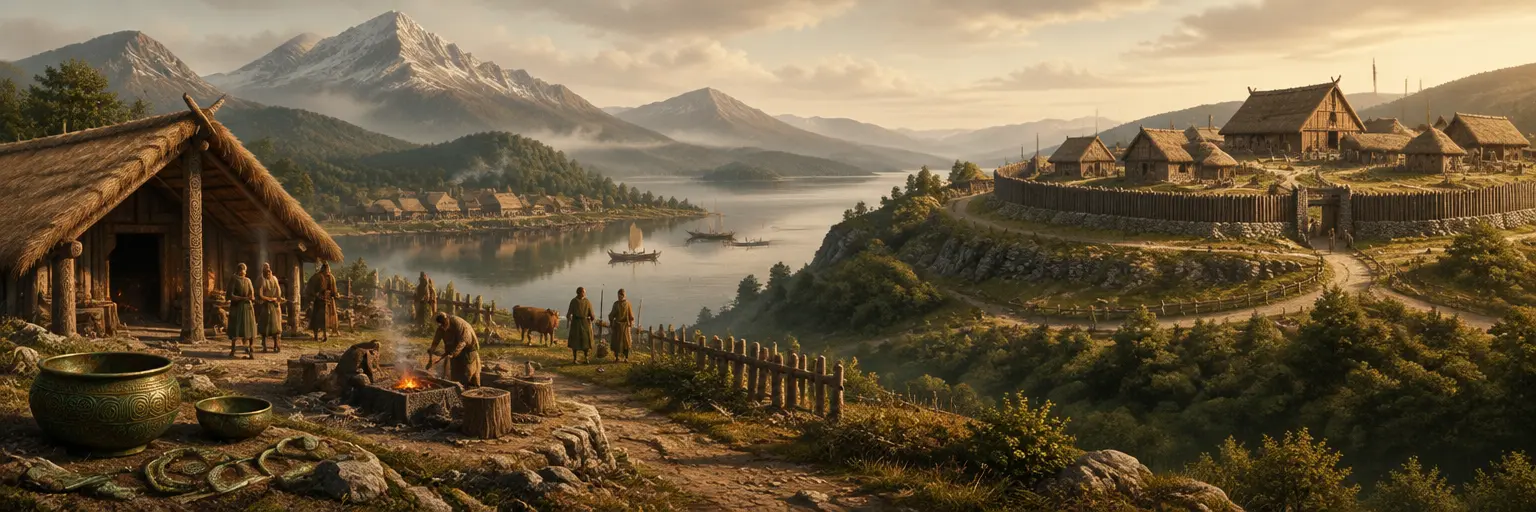
The Hallstatt culture (c. 800–450 BCE) represents the earliest phase of the European Iron Age, named after the lakeside village in Austria’s Salzkammergut. Excavations here have unearthed a vast prehistoric salt mine, preserving organic materials like leather, wood, and textiles that rarely survive elsewhere. The site’s elite burial mounds, such as those at the nearby cemetery, contain rich grave goods—bronze vessels, gold ornaments, and iron swords—indicating a powerful aristocratic class controlling salt trade routes. This era marks the transition from bronze to iron, with distinctive pottery styles and a shift toward fortified hilltop settlements that foreshadow later Celtic strongholds.
For visitors and readers, these pages detail the stratigraphy of the mines, the labor organization behind salt extraction, and the symbolic role of salt as “white gold” in prehistoric economies. You will also find comparative analyses of Hallstatt’s regional variants across Central Europe, from Bohemia to Slovenia. Expect high-resolution imagery of artifacts, 3D reconstructions of timber structures, and discussions on how climate shifts and resource competition triggered the cultural evolution toward the La Tène period. Key insight: salt mining here was not just survival—it was the economic engine that funded monumental art and long-distance exchange.
⚔️ La Tène Culture: The Celtic Artistic Explosion
Emerging around 450 BCE, the La Tène culture, named after the shallow lake site in Switzerland, marks a bold departure in style and social complexity. This era is celebrated for its intricate, curvilinear art—swirling spirals, animal motifs, and human faces—embossed on metalwork, weaponry, and ceremonial objects. Unlike Hallstatt’s rigid geometric patterns, La Tène art shows fluidity and abstraction, reflecting influences from Etruscan, Greek, and even Scythian traditions. Key centers like the oppidum at Bibracte (France) and Manching (Germany) were sprawling urbanized settlements, often with ramparts of wood and stone, housing thousands and serving as political, religious, and industrial hubs.
Our subcategory content focuses on settlement archaeology, including the layout of workshops, granaries, and shrines. You’ll learn about the rise of Celtic coinage, the role of druids as record-keepers (though largely an oral society), and the impact of Roman expansion on these centers. The La Tène period also witnessed significant migration, with Celtic groups moving into Italy, the Balkans, and even Anatolia. Emphasis: these sites challenge the stereotype of “barbarian” Celts, showing a highly sophisticated, creative, and interconnected civilization that innovated in ironworking, wheeled vehicles, and even glassmaking.
🏺 Hallstatt & La Tène Artifact Profiles
Within this subsection, we catalog and analyze signature artifacts—from Hallstatt’s bronze situlae (decorated buckets) and fluted pottery to La Tène’s ornate torcs, scabbards, and mirror surfaces. Each profile includes provenance, dating methods (radiocarbon, dendrochronology), material composition, and stylistic comparisons. For example, the famous Warrior of Hirschlanden (Germany) is a life-sized sandstone statue from the Hallstatt era, while the Agris Helmet (France) showcases intricate gold and coral work, epitomizing La Tène craftsmanship. These objects are not just aesthetic—they reveal social status, religious beliefs, and technological prowess.
Our interpretive analyses examine how artifacts were used in daily life, warfare, and ritual deposition. Many precious items were intentionally broken or thrown into rivers or bogs, suggesting votive offerings. We also explore trade links—amber from the Baltic, coral from the Mediterranean, and tin from Cornwall—visible in these artifacts. For collectors or students, this page serves as a visual and scholarly guide to identifying regional styles and chronological markers. Pro tip: use our side-by-side comparison charts to trace how Hallstatt’s geometric motifs gradually morph into La Tène’s flowing, organic designs.
🏰 Settlement Layouts & Fortification Techniques
This section breaks down the urban planning of key sites, comparing the early hillforts (like Heuneburg in Germany) with later oppida (like the Závist in Czech Republic). Heuneburg famously featured a mud-brick wall on stone foundations—likely inspired by Mediterranean architecture—while later La Tène forts employed the murus gallicus, a timber and stone rampart described by Julius Caesar. We provide reconstructed site plans, showing internal zoning: residential quarters, metalworking areas, storage pits, and ceremonial enclosures. Understand how population density, water sources, and defensive geography influenced settlement placement.
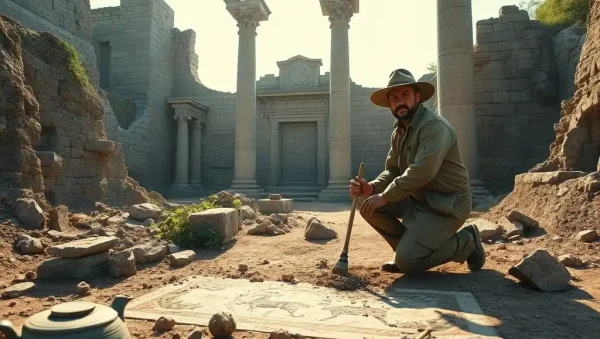
Expect deep dives into the social hierarchy reflected in housing—large, rectangular “chieftain” halls versus smaller roundhouses. Ritual spaces often included “viereckschanzen” (rectangular enclosures) thought to be temples or gathering sites. We also discuss the role of these centers as nodes in transcontinental exchange, linking the Atlantic coast to the Black Sea. For field archaeologists, our content covers the latest geophysical survey techniques, such as magnetometry and ground-penetrating radar, used to map hidden structures without excavation. Takeaway: European Iron Age urbanism was far more advanced than once assumed, with grid-like street layouts in some cases.
🌍 Regional Variations & Cultural Interactions
No single story defines the Iron Age—this subsection highlights how Hallstatt and La Tène phenomena differed across regions. From the western Iberian Peninsula’s castros (fortified villages) to the eastern Pannonian Basin’s rich tumuli, we trace local adaptations and hybridizations. Special attention is given to interactions with Mediterranean civilizations: Greek colonists at Massalia (Marseille) traded wine and pottery for slaves and metals, while Etruscan merchants influenced banquet customs. We also examine the “Celticization” of non-Celtic groups, such as the Thracians, who adopted La Tène weaponry but maintained their own traditions.
In this area, you’ll find comparative studies on burial rites—inhumation versus cremation—and the rise of warrior aristocracies. The Hallstatt culture’s wagon burials (e.g., at Vix, France) contrast with La Tène’s often simpler graves, suggesting shifting ideologies. We also explore the impact of climate cooling in the 5th century BCE, which may have triggered migrations and the breakdown of long-distance trade networks. For context: these interactions set the stage for the Roman conquest, and many La Tène centers were later transformed into Roman towns, leaving rich multi-layered stratigraphy.
Frequently Asked Questions
What is the main difference between Hallstatt and La Tène cultures?
The Hallstatt culture (c. 800–450 BCE) is earlier, known for salt mining, fortified hillforts, and geometric art, with a strong Mediterranean trade influence. The La Tène culture (c. 450 BCE–Roman conquest) is later, characterized by elaborate curvilinear Celtic art, larger urban oppida, and more extensive migration. Hallstatt emphasizes elite burials with abundant grave goods, while La Tène often shows more egalitarian burial practices but richer artistic expression on weapons and jewelry.
Why is the Hallstatt salt mine so significant for archaeology?
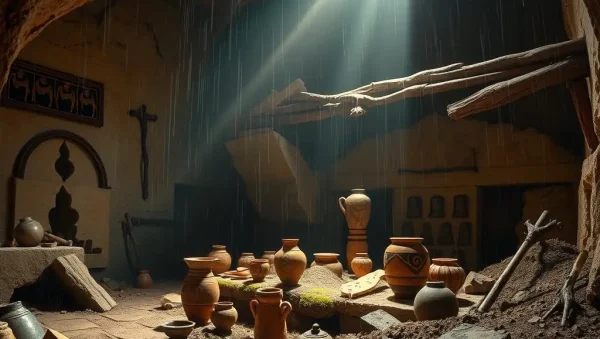
The salt mine in Hallstatt, Austria, preserved organic materials that normally decay—like leather shoes, wool clothing, and wooden tools—due to salt’s desiccant properties. This offers an unprecedented snapshot of everyday Iron Age life, from mining techniques to clothing styles. The site also provides a continuous chronological sequence from the Bronze Age through Roman times, making it a critical reference for dating and understanding early European economies and social structures.
Were the Celts the same people as those who built La Tène sites?
Yes, modern scholars use “La Tène culture” as a term for the late Iron Age Celts who inhabited much of Central and Western Europe, though not all groups were ethnically “Celtic” as ancient writers used the term. La Tène culture is defined by shared artistic styles, language (Celtic language family), and social practices, but regional variations existed. The Hallstatt culture is considered its immediate predecessor, with continuity in many areas, despite changes in art and settlement form.
What is a “murus gallicus” and why was it important?
A murus gallicus is a type of defensive rampart used in Gaulish oppida, described by Julius Caesar in his Gallic Wars. It consisted of a wall of earth and rubble faced with large stones, reinforced horizontally with timber beams nailed together. This design provided both stability and flexibility, resisting battering rams and fire. It allowed Celts to create massive fortifications like those at Bibracte and Alesia, which were central to their military defense and symbolic of urban scale.
How do archaeologists date sites from the Hallstatt and La Tène periods?
Archaeologists use multiple methods: typological dating of pottery and metal objects, radiocarbon dating of organic remains, dendrochronology (tree-ring dating) for wooden structures, and stratigraphic analysis of soil layers. For imported Mediterranean goods, historical dates from Greek and Roman records provide anchors. More recently, Bayesian statistical modeling combines these dates to refine chronologies. At Hallstatt, dendrochronology from mine timbers has produced extremely precise dates, helping calibrate the entire European Iron Age timeline.