
Hallstatt Art: Geometric Styles and Symbolic Motifs on Artifacts

Welcome to ArchaeologyHub.org, your gateway to unraveling the mysteries of the past! Delve into a world of ancient civilizations, groundbreaking excavations, and historical sites across the globe. Ever wondered about the stories etched into the very fabric of ancient artifacts? This article explores the fascinating world of Hallstatt Art, with a particular focus on the intriguing geometric patterns adorning their pottery. What secrets do these designs hold, and what can they tell us about the lives and beliefs of the people who created them? Prepare to embark on a journey of discovery!
- Introduction to Hallstatt Art and its Significance
-
Frequently Asked Questions
- What is Hallstatt art, and what role did geometric patterns play?
- Where was Hallstatt culture centered, and how did this influence the motifs found on their pottery?
- Besides pottery, on what other types of artifacts were Hallstatt geometric patterns commonly found?
- What are some common examples of the geometric designs found on Hallstatt pottery?
- What is the significance of studying Hallstatt pottery geometric patterns for understanding the culture?
- Final Reflection: Echoes of Hallstatt Geometry
- Unveil Hallstatt's Artistic Secrets!
Introduction to Hallstatt Art and its Significance
Hallstatt Culture: An Overview of the European Iron Age
The Hallstatt culture represents a pivotal period in the European Iron Age, flourishing from approximately 800 to 450 BCE. Named after the rich archaeological site in Hallstatt, Austria, this culture extended across a vast geographical area, encompassing parts of Central Europe, including Austria, Bavaria, Slovenia, and parts of France and Italy.
It is characterized by its distinctive burial practices, which often included rich grave goods, and its sophisticated mastery of ironworking, marking a significant technological leap from the preceding Bronze Age. This period also saw the development of extensive trade networks, particularly for salt, which was a valuable commodity and fueled much of the culture's economic prosperity.
The Hallstatt period is broadly divided into two main phases: Hallstatt A-B (Late Bronze Age to Early Iron Age transition) and Hallstatt C-D (Early to Late Iron Age). While the earlier phases show continuity with Bronze Age traditions, Hallstatt C and D witness the full blossoming of Iron Age characteristics, including the widespread adoption of iron for tools and weaponry, and the emergence of elite burials with four-wheeled wagons.
The artistic expressions of this era, particularly the Hallstatt pottery geometric patterns, provide invaluable insights into the daily lives, social structures, and worldview of these early Iron Age communities, serving as a rich archaeological record preceding the later La Tène culture.
The Role of Art in Understanding Hallstatt Society
Art in the Hallstatt culture was not merely decorative; it served as a powerful medium for conveying social status, religious beliefs, and cultural identity. The intricate designs found on various artifacts, from weaponry to domestic items, speak volumes about the craftsmanship and aesthetic sensibilities of the time.
By analyzing the recurring motifs and styles, archaeologists can infer information about the prevailing social hierarchies, as evidenced by the elaborate grave goods found in princely burials, which often include highly decorated objects. For instance, the presence of specific artistic elements on elite pottery or bronze vessels suggests their use in ceremonial contexts or as symbols of power.
Furthermore, the materials used in Hallstatt art, such as bronze, iron, and clay, reveal the technological capabilities and resourcefulness of the communities. The production of fine Hallstatt pottery geometric patterns required skill in clay preparation, firing techniques, and the application of pigments.
The distribution of certain artistic styles or artifact types across different regions also sheds light on trade routes and cultural exchange networks that connected distant communities. This artistic record, therefore, acts as a non-textual historical archive, allowing researchers to reconstruct aspects of Hallstatt society that might otherwise remain unknown, offering a tangible connection to their beliefs, daily rituals, and interactions.
Focus: Geometric Patterns and Symbolic Motifs
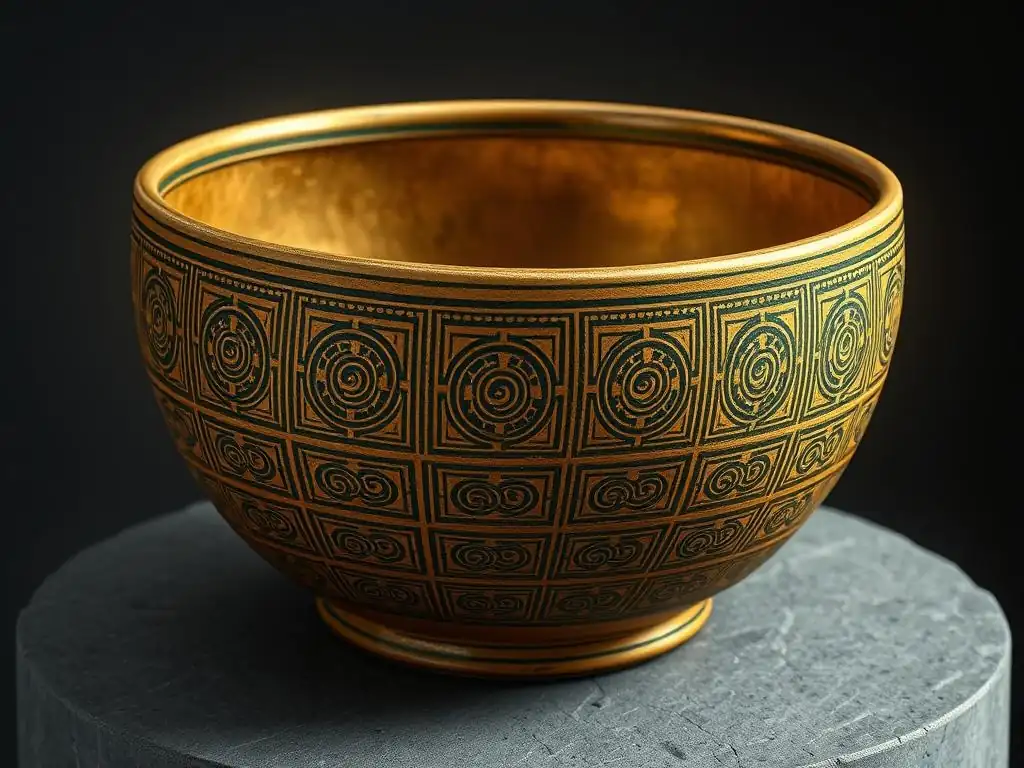
A defining characteristic of Hallstatt art is its pervasive use of geometric patterns and symbolic motifs, which appear on a wide array of artifacts. These designs are not random but follow established conventions, reflecting a shared artistic language across the Hallstatt cultural sphere. While figurative representations of animals and humans exist, particularly on high-status objects, the dominant aesthetic leans towards abstract geometric compositions. This artistic preference is particularly evident in Hallstatt pottery geometric patterns, where concentric circles, triangles, meanders, and linear arrangements form the basis of much of the decoration.
These geometric forms are often combined with more explicitly symbolic motifs, such as sun symbols, bird figures, or stylized human representations, which are thought to carry deeper meanings related to cosmology, fertility, or ancestor worship. The repetition and variation of these patterns across different media—from the painted designs on ceramic vessels to incised decorations on bronze situlae and pins—underscore their importance within the culture.
Understanding these Hallstatt pottery geometric patterns and other decorative elements is crucial for interpreting the spiritual and social dimensions of the Hallstatt people, providing a unique window into their worldview and the abstract concepts they sought to express through their material culture.
Frequently Asked Questions
What is Hallstatt art, and what role did geometric patterns play?
Hallstatt art refers to the artistic style prevalent during the Hallstatt culture (c. 800-450 BC) in Central Europe. Geometric patterns were a dominant feature, adorning pottery, metalwork, and other artifacts.
Where was Hallstatt culture centered, and how did this influence the motifs found on their pottery?
The Hallstatt culture flourished in present-day Austria, Germany, Switzerland, and surrounding regions. Its central location facilitated cultural exchange, influencing the adoption and adaptation of various symbolic motifs that were then incorporated into their distinct geometric style.
Besides pottery, on what other types of artifacts were Hallstatt geometric patterns commonly found?
Hallstatt geometric patterns were not limited to pottery; they also appeared prominently on metalwork (especially bronze and iron items), such as weapons, jewelry, and ritual objects, showcasing a unified artistic vision across different mediums.
What are some common examples of the geometric designs found on Hallstatt pottery?
Common examples include linear bands, zigzags, chevrons, concentric circles, and meanders. These designs were often meticulously applied, reflecting a sophisticated understanding of aesthetics and possibly holding symbolic meaning.
What is the significance of studying Hallstatt pottery geometric patterns for understanding the culture?
Analyzing Hallstatt pottery geometric patterns provides valuable insights into their belief systems, social structures, and artistic capabilities. The patterns may have served as identifiers, status symbols, or held spiritual significance, offering a window into their worldview.
Okay, here's a final reflection designed to close your article "Hallstatt Art: Geometric Styles and Symbolic Motifs on Artifacts," optimized for the keyword "Hallstatt pottery geometric patterns" and following the structure you provided:
Final Reflection: Echoes of Hallstatt Geometry
The intricate geometric patterns adorning Hallstatt pottery, as we've explored, are not merely decorative; they are powerful expressions of a culture's worldview, beliefs, and artistic ingenuity. Today, in a world saturated with digital imagery, these ancient designs remind us of the enduring human capacity to create meaning through simple, yet profound, visual language. The legacy of Hallstatt art continues to resonate, offering a tangible connection to our shared past.
The study of Hallstatt pottery geometric patterns has profoundly influenced my understanding of how art functions as a cultural mirror. It's fascinating to consider how these seemingly abstract shapes communicated complex ideas and social structures within their society. Art washes away from the soul the dust of everyday life.
- Pablo Picasso. This quote encapsulates the transformative power of art, and the Hallstatt artisans, through their meticulous geometric designs, undoubtedly offered their community a similar escape and a deeper understanding of their place in the world.
As we conclude our exploration of Hallstatt art, I invite you to consider the geometric patterns that surround you in your own life. What stories do they tell? What meanings do they convey? Let the enduring legacy of Hallstatt pottery inspire you to appreciate the beauty and significance of design, and to recognize the profound connection between art, culture, and the human spirit.
Unveil Hallstatt's Artistic Secrets!
Thank you for delving into the captivating world of Hallstatt art! We hope this exploration has sparked a deeper appreciation for the ingenuity and symbolism of this ancient culture. Now, it’s your turn to connect with Hallstatt’s artistic legacy.
Here's how you can take the next step:
- Recreate a Hallstatt-inspired design: Choose a geometric motif from the article and try your hand at replicating it using modern art supplies. Share your creation online with the hashtag #HallstattArt!
- Explore the Hallstatt culture further: Research the burial rituals and social structures of the Hallstatt period to gain deeper knowledge of the artists' lives.
- Visit a museum or archaeological site with Hallstatt artifacts: Seek out opportunities to view original pieces and connect with this historical period firsthand.
What specific Hallstatt motif will you attempt to recreate, and how will you adapt it to fit a modern aesthetic?