Discovering Tell el-Amarna: The Heart of Akhenaten's Revolutionary City
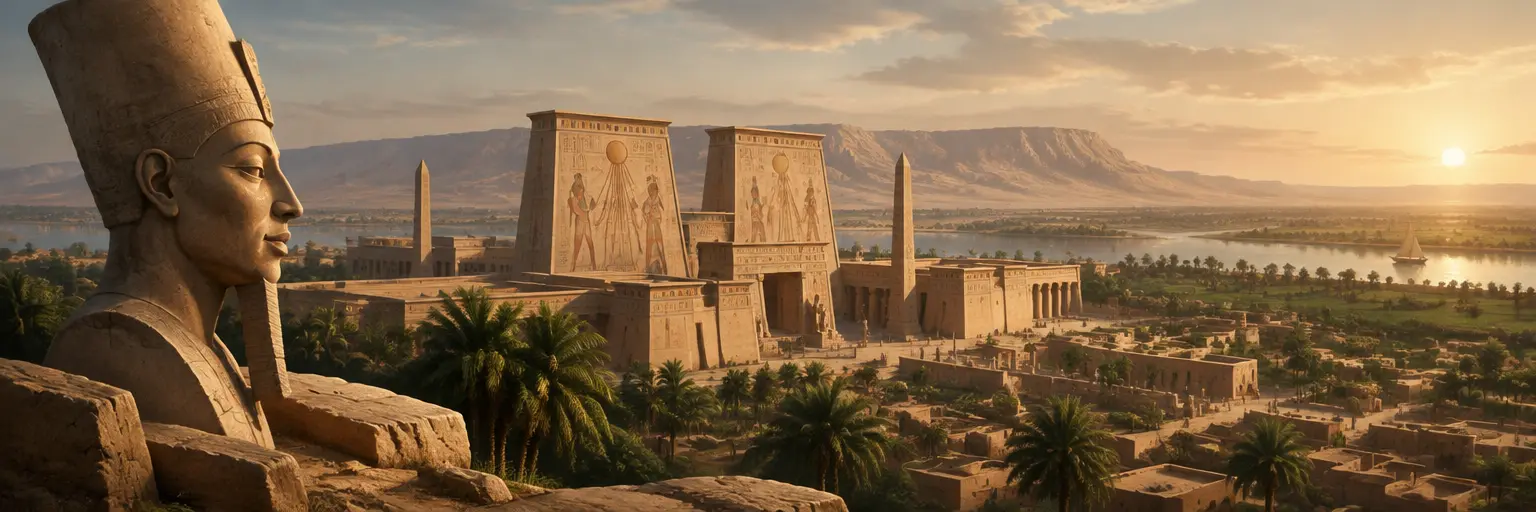
Welcome to ArchaeologyHub.org's dedicated guide to Tell el-Amarna, the ephemeral capital built by the heretic pharaoh Akhenaten in the 14th century BCE. This subcategory offers a deep dive into one of ancient Egypt's most fascinating and controversial urban experiments. Here, you'll uncover the archaeology of a city designed for the worship of the sun disk Aten, exploring its palaces, temples, and residential quarters that provide an unparalleled snapshot of daily life, religious upheaval, and artistic transformation. Our content is crafted to help you navigate the site’s layout, understand its key artifacts, and appreciate its global significance within the broader tapestry of ancient civilizations.
🗺️ The Urban Blueprint: Amarna’s Planned Sacred and Secular Spaces
When you explore this subcategory, expect detailed breakdowns of Amarna’s deliberate city planning, which was radically different from traditional Egyptian urban centers. We dissect the Central City, home to the Great Aten Temple and the King’s House, contrasting it with the sprawling suburban villas of officials like the vizier Nakht. Our guides use interactive maps and excavation plans to show how the city’s north-south "Royal Road" facilitated processions and how boundary stelae demarcated the sacred Aten territory. You’ll learn about the workmen’s village, the desert altars, and the unique "South Suburb," providing a holistic view of a metropolis built from scratch and abandoned within two decades.
Understanding this layout is key to grasping Akhenaten’s ideological control. Our articles emphasize how the city’s orientation toward the east and the open-air courts were not accidental but designed to capture the sun’s rays for the Aten. We cover the latest archaeological surveys from the Amarna Project, including recent geophysical work that reveals unexcavated streets and structures. This section ensures you can visualize the daily movement of priests, charioteers, and laborers within a city that was both a political statement and a living community, setting the stage for interpreting its material culture.
🛕 Religious Revolution and the Great Aten Temple
Here, we focus exclusively on the architectural and ritual heart of Akhenaten’s religious experiment. Expect a thorough analysis of the Great Aten Temple (the "House of the Aten"), which, unlike traditional temples, lacked a dark, enclosed sanctuary and instead featured a series of open-air courts filled with hundreds of offering tables. Our content explains the significance of the Gempaaten (the "Sun Disk is Found") and the smaller "Hwt Aten" complex, using relief fragments and foundation deposits to reconstruct the colossal mudbrick pylons and the sheer scale of solar worship. We also delve into the role of Queen Nefertiti and royal daughters in the cult, as depicted in talatat blocks.
For SEO-rich depth, this guide covers the theology of the Aten as a single, sole deity whose rays ended in hands offering the ankh (life) to the royal family alone. We compare this to the traditional pantheon worship at Karnak, highlighting the political and social ruptures. You will find artifact profiles of the revolutionary carved reliefs and statues, including the distinctive "Amarna style" with its elongated heads and protruding bellies. This subcategory helps you parse the evidence of iconoclasm after Akhenaten’s death, showing how later pharaohs dismantled this sacred space, making it a rich case study for religious transition and archaeological detective work.
🎨 Artistic Revolution: The Amarna Style in Sculpture and Relief
This section is your gateway to understanding the dramatic shift in Egyptian art that Akhenaten commanded. We showcase the famous Nefertiti bust, discovered in the workshop of the sculptor Thutmose, alongside the unfinished statues and plaster casts that reveal the experimental nature of the period. Expect to read comparisons between the traditional idealized, rigid forms of the Old and Middle Kingdoms and the new, naturalistic, and often exaggerated portrayals of the royal family in intimate, domestic scenes. Our articles analyze the use of talatat blocks—small, standardized stone bricks—that allowed for rapid construction and later easy reuse, providing a unique archaeological puzzle for reconstruction.
We go beyond the iconic bust to explore less-known artifacts, such as the boundary stelae, the painted pavements from the palace, and the reliefs showing the king with a drooping jaw and thin neck. Our goal is to help you understand how this style was not mere aesthetic preference but a deliberate theological statement that emphasized the king’s divine co-regency with the Aten. We also cover the legacy of this art, explaining how its fleeting existence influenced later "post-Amarna" art, including elements that resurfaced in Tutankhamun’s tomb. This ensures a rich, layered understanding of artistic change as a tool of power.
🏺 Daily Life and the Workmen’s Village
Dive into the human side of Amarna with our dedicated coverage of the Workmen’s Village at the eastern edge of the city, where the artisans and laborers who built the royal tombs lived. This subcategory provides a granular view of domestic archaeology, including house plans, ovens, grain silos, and water wells. We explain the evidence for ration distribution, animal husbandry, and craft production, using pottery shards and botanical remains to reconstruct meals, textiles, and tool-making. You’ll discover how the desert environment and the state’s provisioning system shaped lives, with issues of sanitation and health being analyzed through skeletal remains from the village’s cemetery.
Expect fascinating insights into non-elite life that contrasts with the royal hubris. We highlight the discovery of the Private Tombs of high officials like Huya and Meryra, whose decorated chapels offer biographical texts and depictions of temple festivals. However, our focus remains on the ground-level reality: the floor plans of houses with their central "living room" with a raised brick platform, the courtyards for baking, and the small shrines to the Aten within individual homes. This section uses ethnographic analogy and experimental archaeology to answer questions about how ordinary people adapted to Akhenaten’s new city, making the site feel alive and relatable to modern readers.
🔍 Excavation History and Modern Research Methods
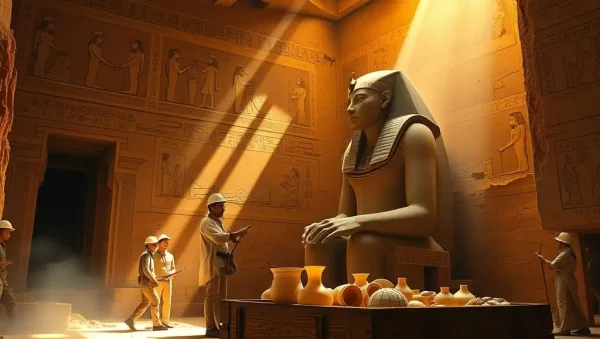
Finally, we provide a comprehensive timeline of archaeological investigation at Tell el-Amarna, from the early explorations of Petrie in the 1890s to the contemporary work of the Amarna Project led by Barry Kemp. Learn about the pioneering techniques used here, such as flotation for archaeobotany, micro-debitage analysis for activity areas, and the use of geophysical surveys (magnetometry and ground-penetrating radar) to map unexcavated areas non-invasively. We also discuss the conservation challenges facing the site, including wind erosion and salinity, and how modern digital documentation and 3D modeling are helping preserve it. This section emphasizes the scientific evolution of archaeology itself, using Amarna as a case study.
This historical and methodological lens is vital for SEO and educational depth because it connects the site’s rich past with the cutting-edge present. We cover the discovery and excavation of the Royal Tomb in the Eastern Cliffs, with its hypogeum plan and sarcophagus fragments, alongside the largely unexcavated "Main City" areas that hold promise for future research. You’ll read about how pottery seriation from the site’s many dumps has refined the dating of the Amarna Period. By showcasing both the history of discovery and the latest scientific tools, we empower you to understand how this subcategory contributes to global archaeological methodology and heritage management.
Frequently Asked Questions
Why was Tell el-Amarna built and then abandoned so quickly?
Akhenaten built Amarna as a new capital dedicated solely to the Aten, to escape the political influence of Thebes and its priesthood. The city was occupied for roughly 15 to 20 years. After Akhenaten’s death, his successors, especially Tutankhamun, restored the traditional gods, moved the capital back to Memphis and Thebes, and the city was systematically dismantled and its stone reused elsewhere, leaving it as a ghost town.
What is the most famous artifact found at Tell el-Amarna?
The most famous artifact is the painted bust of Queen Nefertiti, discovered in 1912 by Ludwig Borchardt in the workshop of the sculptor Thutmose. The bust is celebrated for its lifelike beauty and is considered a masterpiece of ancient art. It resides in the Neues Museum in Berlin and remains a major draw for scholars studying the Amarna period’s unique artistic style.
What are "talatat" blocks and why are they important?
Talatat are small, standardized sandstone blocks (about 1 cubit in length, roughly 50 cm) used in the construction of the Aten temples at Amarna. Their small size allowed for rapid assembly by a few workers and easy handling. After the city was abandoned, the blocks were reused as fill in later constructions at Hermopolis and Karnak, which preserved many of the reliefs for modern archaeologists.
Can I visit Tell el-Amarna today?
Yes, the site is open to visitors, though it is remote and less developed than major sites like Luxor. You can explore the Central City, the Great Aten Temple’s foundations, the North Palace, and the decorated tombs of officials in the eastern cliffs. Access requires a permit from the Egyptian Ministry of Tourism and Antiquities, so planning with a local guide is highly recommended.
What is the Amarna Art Style characterized by?
The Amarna style is known for its elongate bodies, narrow shoulders, protruding stomachs, and large, angular faces, particularly in depictions of the royal family. It often showed intimate scenes, like Akhenaten kissing his daughter, which were absent in earlier art. This style prioritized the sun’s rays and the god Aten, emphasizing naturalistic but exaggerated forms, and it was deliberately abandoned after the period ended.