
The Royal Tomb of Akhenaten (TA26) at Amarna: Architecture, Decoration, and Contents

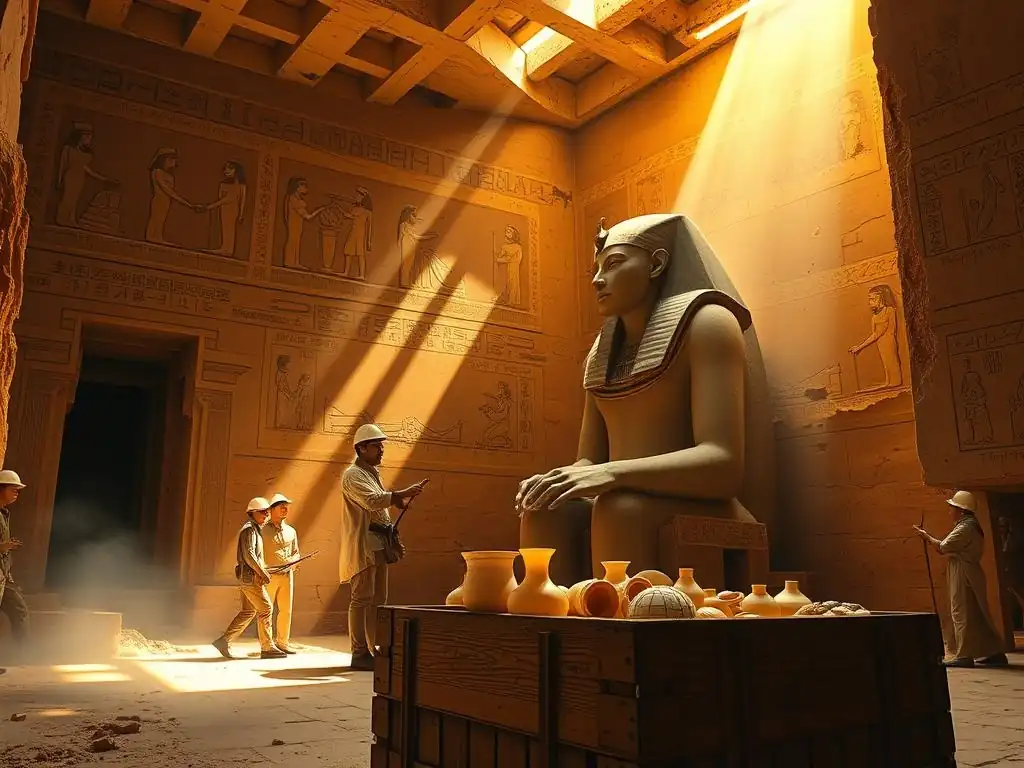
Welcome to ArchaeologyHub.org, your portal to unraveling the mysteries of the past. Ever wondered about the secrets hidden within the sands of time? Delve into the captivating world of ancient civilizations and groundbreaking discoveries. This exploration begins with a deep dive into Akhenaten's tomb architecture details, offering a rare glimpse into the innovative and often perplexing design of his royal burial site.
Prepare to uncover the architectural nuances, decorative motifs, and potential contents of the enigmatic Royal Tomb of Akhenaten (TA26) at Amarna, and discover what these details reveal about this revolutionary pharaoh. What secrets lie waiting to be unearthed? Let's begin.
- Introduction to Akhenaten's Royal Tomb (TA26): An Archaeological Overview
- Architectural Analysis of Akhenaten's Tomb: Design and Construction
- Decorative Program within the Royal Tomb: Iconography and Symbolism
- Contents of the Tomb: Burial Goods and Funerary Equipment
- The Unfinished Nature of TA26: Evidence and Interpretations
- The Aftermath: Vandalism and Later Use of the Tomb
- Akhenaten Tomb Architecture Details: A Summary of Key Features
- Preservation and Conservation Efforts at TA26
- Conclusion: The Enduring Legacy of Akhenaten's Royal Tomb
-
Frequently Asked Questions
- What is the significance of the Akhenaten tomb (TA26) at Amarna?
- How does the architecture of Akhenaten's tomb differ from that of other pharaohs?
- What types of decoration were found within Akhenaten's tomb (TA26)?
- What happened to the contents of Akhenaten's tomb, and where are they now?
- How does the study of Akhenaten's tomb contribute to our understanding of the Amarna Period?
- Final Reflection: Echoes in the Sand: Akhenaten's Architectural Legacy
- Unearth Your Inner Archaeologist!
Introduction to Akhenaten's Royal Tomb (TA26): An Archaeological Overview
Locating TA26: The Geographical Context of Akhetaten's Eastern Desert Necropolis
The Royal Tomb of Akhenaten, designated TA26, is situated in the remote Eastern Desert necropolis of Amarna, approximately 9 kilometers east of the ancient city of Akhetaten, the capital established by Pharaoh Akhenaten. This location, chosen specifically for its isolation and symbolic connection to the rising sun, differs significantly from the traditional royal burial grounds in the Valley of the Kings at Thebes. The necropolis itself is carved into a wadi known today as the Wadi Abu Hassah el-Bahari, a dry riverbed that cuts through the limestone cliffs.
The selection of this specific geographical context for Akhenaten's final resting place was deeply intertwined with his revolutionary religious reforms. Unlike the dense concentration of tombs in Thebes, the Amarna royal wadi offered a secluded and pristine environment, intended to reflect the purity and exclusivity of the Aten cult. This deliberate departure from established funerary traditions is a crucial aspect of understanding Akhenaten tomb architecture details and the broader ideological shift of the Amarna period.
The Historical Significance of Akhenaten and the Amarna Period
Akhenaten, originally Amenhotep IV, reigned during the mid-18th Dynasty (circa 1353–1336 BC) and is renowned for his radical religious transformation, elevating the sun-disk god Aten to a supreme, almost monotheistic, status. This period, known as the Amarna Age, saw a profound shift in Egyptian art, religion, and politics, marked by the construction of the new capital, Akhetaten, "Horizon of the Aten," specifically for the worship of this deity.
The Amarna period represents a singular moment in ancient Egyptian history, characterized by its distinctive artistic style, which broke from centuries of rigid conventions, and its unique theological focus. The royal tomb, TA26, serves as a primary archaeological testament to this era, encapsulating the ideological principles of Akhenaten's reign through its architectural design, decorative program, and intended contents, providing invaluable Akhenaten tomb architecture details that differentiate it from other royal burial sites.
Architectural Analysis of Akhenaten's Tomb: Design and Construction
The Overall Layout and Plan of Tomb TA26
The Akhenaten tomb architecture details reveal a distinctive and somewhat unconventional design for a royal burial of the New Kingdom. TA26 follows a generally linear plan, extending deep into the limestone bedrock, but incorporates unique elements that reflect the Amarna artistic and religious ideology. The tomb consists of a series of descending corridors and chambers, culminating in the burial chamber. Its total length from the entrance to the rear of the burial chamber is approximately 80 meters, with significant variations in width and height between sections.
The initial entrance leads to a long, sloping passage, which then opens into a series of antechambers and storage rooms. One notable feature is a side chamber, often identified as a potential burial place for Akhenaten's daughter Meketaten, which branches off the main axis. The main burial chamber itself is a large, rectangular room, designed to house the royal sarcophagus. The overall Akhenaten tomb architecture details suggest a rapid construction schedule, possibly interrupted, given the unfinished state of several areas.
Construction Techniques and Materials Used in TA26
The construction of TA26 primarily involved quarrying directly into the soft limestone cliffs of the Amarna necropolis. Work began with the careful surveying and marking of the tomb's axis, followed by the laborious process of cutting away rock using copper chisels and stone hammers. Evidence of these ancient tools and techniques can still be observed in the rough-hewn surfaces of some passages and chambers, particularly in areas where carving was not completed.
The primary material for the tomb's structure was the native limestone, which was then intended to be plastered and decorated. While much of the tomb remains undecorated, the preparation of surfaces for plastering and painting is evident in certain sections. The precision of some initial cuts indicates a skilled workforce, yet the overall impression of Akhenaten tomb architecture details suggests a project that, despite its royal patronage, might have faced time constraints or a sudden cessation of work, leading to its incomplete state.
Comparison with Other Royal Tombs of the 18th Dynasty
When examining Akhenaten tomb architecture details in comparison to other 18th Dynasty royal tombs, particularly those in the Valley of the Kings, significant divergences become apparent. Traditional royal tombs, such as that of Thutmose III (KV34) or Amenhotep III (KV22), typically feature a "bent axis" plan, designed to mimic the sun's journey through the underworld, and are often adorned with extensive funerary texts like the Amduat or Book of Gates. In contrast, TA26 exhibits a more linear axis, a departure that aligns with the direct, unmediated worship of the Aten.
Furthermore, the scale of TA26, while substantial, appears less grand in its finished decorative aspects compared to the lavishly decorated tombs of Akhenaten's predecessors and successors. The Akhenaten tomb architecture details, with its relatively simpler layout and focus on light and direct passages, seem to reflect a theological shift away from the complex underworld iconography of traditional Egyptian religion towards a more direct communion with the Aten. This architectural simplicity, coupled with the distinctive Amarna artistic style, sets TA26 apart as a unique monument of its era.
Decorative Program within the Royal Tomb: Iconography and Symbolism
Relief Carvings and Painted Decoration in the Tomb Chambers
The decorative program within Akhenaten's Royal Tomb (TA26), though largely unfinished, offers invaluable insights into Amarna art and ideology. The most complete and significant decorations are found in the side chamber, likely intended for Meketaten, and in the main burial chamber. These areas feature delicate sunk relief carvings, some of which retain traces of vibrant painted colors, executed in the distinctive Amarna style characterized by elongated figures, naturalistic poses, and intimate family scenes.
The artistry in TA26 departs significantly from traditional Egyptian funerary art. Instead of typical scenes of gods, funerary rituals, or the journey through the underworld, the emphasis is placed on the royal family's devotion to the Aten. The surfaces were prepared with a fine plaster layer, onto which scenes were drawn and then carved. The Akhenaten tomb architecture details are complemented by these decorative elements, which showcase the intended visual narrative of the royal family's unique relationship with their god.
Analysis of Religious Themes and Akhenaten's Theology Reflected in the Art
The iconography within TA26 is a direct visual manifestation of Akhenaten's Atenist theology. Unlike the polytheistic pantheon prevalent throughout Egyptian history, the tomb's decoration focuses almost exclusively on the Aten, depicted as a sun disk with radiating rays ending in hands, often offering ankh signs (symbols of life) to the king and queen. This singular focus underscores the monotheistic tendencies of Akhenaten's reign.
The scenes typically depict Akhenaten, Nefertiti, and their daughters interacting directly with the Aten, often in open-air settings, emphasizing light and life rather than the shadowy underworld. This theological shift is profoundly reflected in the absence of traditional funerary deities like Osiris or Anubis, and the complete lack of underworld texts. The decorative elements, intrinsically linked to the Akhenaten tomb architecture details, convey a revolutionary religious message, emphasizing a direct, personal relationship between the pharaoh and his sole deity.
Specific Decorative Elements: Depictions of Akhenaten, Nefertiti, and the Aten
Among the most poignant decorative elements are the depictions of the royal family mourning the death of Princess Meketaten. These scenes show Akhenaten and Nefertiti in poses of grief, with their remaining daughters also present, a remarkable display of human emotion rarely seen in earlier Egyptian art. The Aten's rays are shown extending over the scene, signifying its presence even in moments of sorrow.
Other significant elements include scenes of the royal family offering to the Aten, often beneath the sun disk, and less frequently, processions or daily life within Akhetaten. The characteristic Amarna style, with its exaggerated anatomical features—elongated heads, slender limbs, and prominent bellies—is evident in these portrayals. These specific decorative choices, integrated within the Akhenaten tomb architecture details, provide a unique visual record of the royal family's life and their devotion to the Aten, offering a glimpse into the intimate world of the Amarna court.
Contents of the Tomb: Burial Goods and Funerary Equipment
Overview of Artifacts Discovered Within TA26
Despite its unfinished state and subsequent history of disturbance, archaeological investigations in TA26 have yielded crucial insights into its intended contents. While no intact burial or complete collection of funerary goods was found, fragments of various objects provide strong evidence of the tomb's original purpose. Among the most significant finds were thousands of fragments of the royal sarcophagus, along with pieces of canopic jars, shabtis, and various items of funerary equipment.
These remnants, though incomplete, allow archaeologists to reconstruct aspects of the burial preparations. The presence of such items confirms that the tomb was indeed prepared for Akhenaten's interment, even if his body was later removed or never placed there permanently. The scattered nature of these finds points to extensive ancient looting and later disturbances, making a comprehensive inventory challenging, yet the Akhenaten tomb architecture details suggest the scale of funerary wealth originally intended.
Analysis of Royal Sarcophagus Fragments and Decoration
The most substantial discovery related to the tomb's contents was the thousands of fragments of Akhenaten's granite sarcophagus. Reconstructed from these pieces, the sarcophagus was originally a magnificent quartzite coffin, carved with scenes depicting the Aten and protective goddesses. Uniquely, instead of the traditional goddesses like Isis, Nephthys, Neith, and Selket, the Akhenaten sarcophagus featured four representations of the queen, Nefertiti, at the corners, protecting the king, a further deviation from established funerary norms.
The decorative scheme of the sarcophagus fragments also included extracts from the Hymn to the Aten and other Atenist prayers, carved in sunk relief. This choice of text, rather than traditional funerary spells from the Book of the Dead, reinforced the Atenist ideology even in death. The detailed carving and material quality of these fragments underscore the importance of the sarcophagus as the central piece of the burial, complementing the Akhenaten tomb architecture details with its own unique artistic and theological expressions.
Examination of Funerary Offerings and Their Significance
Beyond the sarcophagus, other fragments of funerary offerings and equipment were identified. These included pieces of canopic jars, designed to hold the pharaoh's mummified internal organs, which also featured Atenist iconography rather than traditional deities. Fragments of shabti figures, small servant statues intended to perform labor in the afterlife, were also recovered, though their numbers and specific forms are less clear due to the tomb's disturbed state.
The nature of these funerary offerings, though limited in scope due to looting, reinforces the singular focus of Akhenaten's religious reforms. Their design and inscriptions consistently eschew traditional Osiris cult beliefs, emphasizing instead the king's continued existence and communion with the Aten. The sparse but telling remnants within TA26 provide further evidence of how deeply Akhenaten's religious revolution impacted every aspect of royal funerary practice, including the Akhenaten tomb architecture details and its intended contents.
The Unfinished Nature of TA26: Evidence and Interpretations
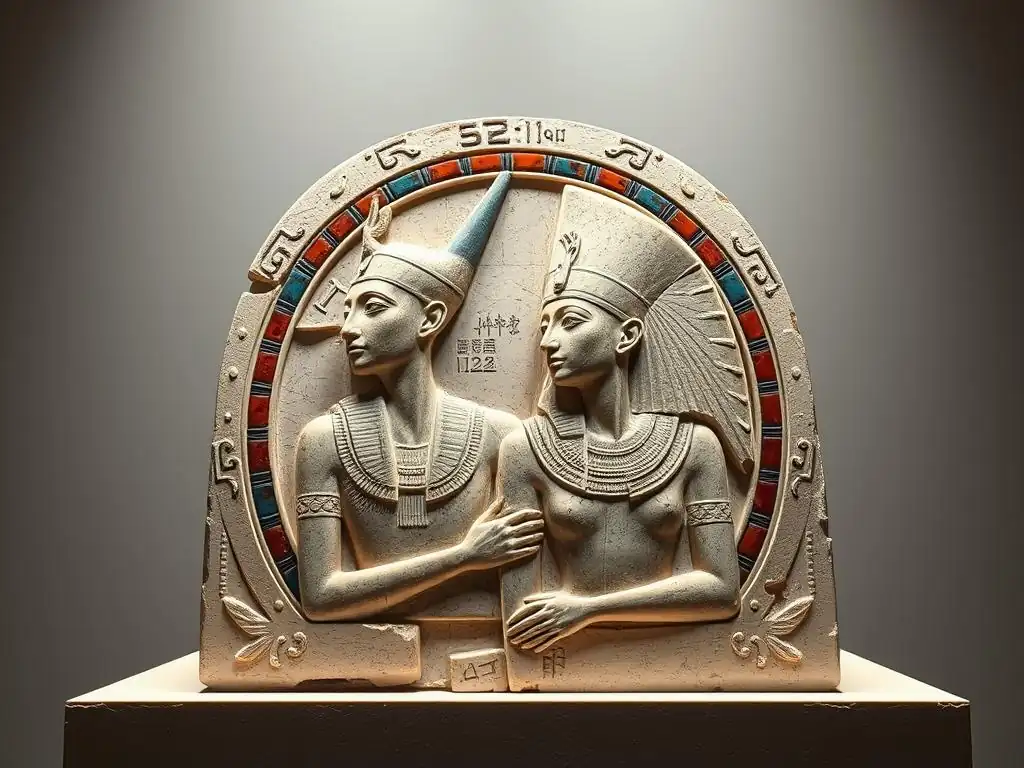
Signs of Incompletion in the Tomb's Architecture and Decoration
A striking characteristic of Akhenaten's Royal Tomb (TA26) is its unfinished state, evident in multiple aspects of its Akhenaten tomb architecture details and decorative program. Throughout various chambers and corridors, tool marks are visible on the walls and ceilings, indicating that the process of carving was abruptly halted. Some areas show only preliminary outlines for decoration, while others have been plastered but never painted. The main burial chamber itself, despite housing the sarcophagus fragments, shows signs of incomplete finishing.
For instance, the walls of the main burial chamber, while partially prepared for decoration, lack the extensive relief work seen in the side chamber attributed to Meketaten. In other sections, the floor is uneven, and passages are only roughly hewn, without the smooth finish expected of a royal tomb. This pervasive incompletion across the Akhenaten tomb architecture details suggests a sudden cessation of work, providing critical archaeological evidence for the turbulent end of the Amarna period.
Theories Regarding the Abandonment of the Royal Tomb
The abrupt abandonment of TA26 is widely theorized to be directly linked to the collapse of the Amarna experiment and the subsequent return to traditional religious practices after Akhenaten's death. One prominent theory suggests that work ceased shortly after Akhenaten's demise, possibly due to his son Tutankhamun's decision to abandon Akhetaten and restore the cult of Amun. With the capital shifting back to Thebes, the royal necropolis at Amarna would have lost its purpose.
Another theory posits that Akhenaten himself may have fallen ill or died unexpectedly, leaving insufficient time for the tomb to be fully completed. The hasty preparation for a burial, even if temporary, might have taken precedence over the meticulous completion of the tomb's architecture and decoration. Regardless of the precise trigger, the unfinished Akhenaten tomb architecture details serve as a powerful archaeological indicator of the dramatic political and religious upheaval at the end of the Amarna period.
Implications for Understanding Akhenaten's Reign and Legacy
The incomplete nature of TA26 provides profound implications for understanding Akhenaten's reign and his lasting legacy. It suggests a reign that ended abruptly or was subject to significant instability, preventing the full realization of his grand projects. The abandonment of his tomb mirrors the abandonment of Akhetaten itself, symbolizing the ultimate failure of his radical religious reforms to take permanent root in Egyptian society.
Furthermore, the state of the tomb highlights the swift and decisive reaction against the Atenist cult by succeeding pharaohs, particularly Horemheb, who actively sought to erase Akhenaten's name and monuments from history. The Akhenaten tomb architecture details, or rather their absence in terms of completion, thus become a tangible representation of the fragility of even royal power in the face of deeply entrenched traditions and the concerted efforts of subsequent rulers to restore order and orthodoxy.
The Aftermath: Vandalism and Later Use of the Tomb
Evidence of Damage and Defacement within TA26
The Royal Tomb of Akhenaten (TA26) bears extensive evidence of deliberate damage and defacement, indicating a concerted effort to erase or desecrate the memory of the pharaoh and his religious revolution. The most prominent signs include the systematic smashing of the royal sarcophagus into thousands of pieces, the defacement of royal cartouches and figures of Akhenaten and Nefertiti in the decorated areas, and the extensive scattering of funerary goods.
In many instances, carved images of the royal family have been chipped away or obliterated, particularly those depicting the Aten or the king's name. This destruction was not random looting but rather a targeted campaign against the symbols of the Amarna period. These acts of vandalism, which altered the original Akhenaten tomb architecture details, provide stark archaeological evidence of the damnatio memoriae (condemnation of memory) enacted against Akhenaten.
Theories on the Motivation Behind the Vandalism
The motivation behind the extensive vandalism within TA26 is widely attributed to the post-Amarna pharaohs, particularly Horemheb and the early Ramessides, who sought to restore traditional religious order and erase all traces of Akhenaten's "heresy." The systematic nature of the defacement suggests an official directive rather than simple grave robbing, which typically focuses on valuable objects rather than destruction of inscriptions and images.
The primary goal was to sever Akhenaten's connection to the divine and prevent his passage into the afterlife, a grave punishment in ancient Egyptian belief. By destroying his images and names, his very existence was intended to be annihilated from historical and religious memory. This deliberate campaign of destruction underscores the profound political and religious animosity directed towards Akhenaten's reign, impacting even the Akhenaten tomb architecture details.
Later Occupations or Uses of the Tomb Site
While primarily a royal burial site, there is some evidence to suggest limited later occupation or use of the tomb, though not for its original funerary purpose. Archaeological findings indicate that the tomb may have served as a temporary shelter or storage area for later inhabitants or even as a source of building material. Fragments of pottery from later periods have been found, suggesting occasional human presence.
However, the tomb was never re-purposed for a subsequent royal burial, nor did it become a place of veneration. Its remote location and association with a reviled pharaoh likely discouraged extensive reuse. The primary "use" after Akhenaten's time was its role as a target for destruction and a repository for the shattered remnants of his legacy, further complicating the study of the original Akhenaten tomb architecture details and contents.
Akhenaten Tomb Architecture Details: A Summary of Key Features
Synthesis of Architectural, Decorative, and Content Aspects
The Akhenaten tomb architecture details, when synthesized with its decorative program and intended contents, present a unique and compelling picture of an unprecedented era in Egyptian history. Architecturally, TA26 departs from traditional 18th Dynasty royal tombs with its linear axis and relatively simpler, though still grand, layout. The focus was less on complex underworld passages and more on direct accessibility, perhaps reflecting the direct worship of the Aten.
Decoratively, the tomb breaks entirely from established iconographic traditions, featuring intimate scenes of the royal family and singular devotion to the Aten, devoid of traditional funerary deities. The intended contents, exemplified by the fragments of the sarcophagus and canopic jars, also show a complete adherence to Atenist theology, replacing traditional protective deities and spells with Aten-centric iconography and texts. These Akhenaten tomb architecture details, combined with the artistic and religious elements, form a cohesive statement of Akhenaten's revolutionary vision.
The Uniqueness of TA26 within the Context of Amarna Tombs
Within the broader context of the Amarna necropolis, TA26 stands out as the sole royal tomb, designed for the pharaoh himself, distinct from the rock-cut tombs of the Amarna nobles. While the noble tombs also exhibit the characteristic Amarna artistic style and Atenist themes, TA26 was conceived on a grander scale, with more extensive passages and chambers, fitting for a pharaoh. The Akhenaten tomb architecture details reflect this royal ambition.
Moreover, its location in the isolated Eastern Desert wadi, specifically chosen for the royal family, further emphasizes its unique status. Unlike the noble tombs which are typically found in two main groups (North and South Tombs) closer to the city, the royal tomb's remote placement underscores its exclusivity and the sacred nature of the pharaoh's burial in relation to his new capital and deity. This singular architectural endeavor encapsulates the heart of the Amarna religious and artistic revolution.
Preservation and Conservation Efforts at TA26
Current Status of the Tomb Site
The Royal Tomb of Akhenaten (TA26) remains an active archaeological site, though its primary function today is one of research and preservation rather than public tourism due to its remote location and fragile condition. The tomb is generally closed to the public to protect its delicate surfaces and remaining integrity. The entrance is secured, and access is typically restricted to authorized researchers and conservationists.
Despite its historical significance, the tomb has suffered significantly from both ancient vandalism and natural deterioration, including erosion from flash floods common in desert wadis and the impact of human presence over millennia. The Akhenaten tomb architecture details, particularly the exposed rock surfaces and remaining plaster, are vulnerable to environmental factors, necessitating careful monitoring and intervention.
Ongoing Research and Documentation Projects
Several international archaeological missions and Egyptian Antiquities authorities have undertaken ongoing research and documentation projects at TA26. These efforts often involve detailed mapping of the tomb's layout, photographic documentation of its remaining decoration, and epigraphic work to record inscriptions. Advanced techniques, such as 3D scanning and photogrammetry, are increasingly employed to create precise digital models of the tomb, capturing its current state for future study and virtual preservation.
These projects aim to piece together a more comprehensive understanding of the tomb's original design, the sequence of its construction, and the extent of its decoration before its abandonment and subsequent defacement. The meticulous documentation of every Akhenaten tomb architecture detail, however minor, contributes to a richer understanding of this pivotal site and the Amarna period as a whole.
Challenges in Preserving Akhenaten's Royal Tomb
Preserving Akhenaten's Royal Tomb presents numerous challenges. The remote desert environment, characterized by extreme temperatures and occasional torrential rains, contributes to the natural decay of the limestone. The very act of archaeological investigation, while necessary, can also inadvertently accelerate deterioration if not carefully managed. Furthermore, the historical damage from ancient vandalism means that much of the original context is fragmented or lost.
Another significant challenge lies in balancing access for research with the need for protection. While crucial for scholarly understanding, human presence introduces humidity, dust, and potential physical damage. Securing the site against unauthorized access and further degradation requires continuous effort and resources. Ensuring the long-term preservation of the unique Akhenaten tomb architecture details and its fragile remnants is a complex, ongoing endeavor for heritage professionals.
Conclusion: The Enduring Legacy of Akhenaten's Royal Tomb
The Importance of TA26 for Understanding Amarna History
The Royal Tomb of Akhenaten (TA26) stands as an indispensable monument for understanding the revolutionary Amarna period. Despite its unfinished state and extensive damage, it offers unparalleled insights into Akhenaten's radical religious reforms, the distinctive Amarna artistic style, and the dramatic political upheavals that marked the end of his reign. The Akhenaten tomb architecture details, its unique decorative program, and the remnants of its contents collectively tell the story of a pharaoh who dared to challenge centuries of tradition.
TA26 serves as a tangible archaeological record of the Atenist cult's purest expression in a funerary context. It illustrates the profound ideological shift away from traditional Egyptian funerary beliefs towards a new, direct relationship with the Aten, even in death. Its very existence, and its subsequent defilement, encapsulate the ambition and ultimate fragility of Akhenaten's grand experiment, making it a critical source for historical and archaeological study.
Future Research Directions and Potential Discoveries
Future research directions at TA26 will likely continue to leverage advanced non-invasive technologies to further document and analyze the tomb's features without causing additional damage. This could include more extensive geophysical surveys to detect potential hidden chambers or passages, as well as refined analysis of the existing fragments to reconstruct more fully the tomb's original appearance and contents. Further study of the construction marks and unfinished areas could yield deeper insights into the labor organization and timeline of its creation.
Moreover, comparative studies with other Amarna sites and contemporary 18th Dynasty tombs will continue to refine our understanding of Akhenaten tomb architecture details within the broader context of Egyptian funerary practices. While major new discoveries of intact burials are unlikely given the tomb's history, every fragment and subtle feature holds the potential to unlock new interpretations about Akhenaten's reign, his family, and the enduring legacy of the Amarna revolution. The tomb remains a vital, albeit challenging, window into a transformative chapter of ancient Egyptian history.
Frequently Asked Questions
What is the significance of the Akhenaten tomb (TA26) at Amarna?
The tomb is significant because it provides valuable insights into the religious and artistic revolution of Akhenaten's reign. It offers a glimpse into the royal burial practices and beliefs of the Atenist period. Furthermore, its architecture represents a departure from traditional Egyptian tomb designs.
How does the architecture of Akhenaten's tomb differ from that of other pharaohs?
Akhenaten's tomb architecture displays a shift from the traditional, deeply subterranean tombs to a structure that, while still underground, featured wider, more accessible corridors and different decorative motifs. There's also evidence suggesting a focus on the Aten (sun disc) in its layout and design.
What types of decoration were found within Akhenaten's tomb (TA26)?
The decoration within TA26 included sunken relief carvings depicting Akhenaten, his family, and the Aten. Scenes of royal offerings and mourning rituals were also prevalent, though often damaged. The style reflects the Amarna art period, known for its naturalistic and elongated figures.
What happened to the contents of Akhenaten's tomb, and where are they now?
The contents of Akhenaten's tomb were likely looted in antiquity, and the remaining fragments were scattered and repurposed. Some fragments are now in various museum collections around the world, but a complete inventory is impossible due to the tomb's desecration.
How does the study of Akhenaten's tomb contribute to our understanding of the Amarna Period?
The study of TA26 offers primary source material for understanding the Amarna period's religious beliefs, artistic styles, and royal practices. It provides valuable context for other Amarna sites and helps archaeologists reconstruct the complex history of Akhenaten's reign and the subsequent dismantling of his religious reforms.
Final Reflection: Echoes in the Sand: Akhenaten's Architectural Legacy
The detailed examination of Akhenaten's tomb (TA26) at Amarna, as presented, reveals more than just architectural blueprints and decorative motifs; it unveils a profound statement about power, belief, and the ephemeral nature of earthly ambition. The meticulous analysis of its architecture and contents allows us to glimpse the revolutionary spirit of Akhenaten and the radical shift he attempted to impose on ancient Egyptian society. This tomb, though ultimately incomplete and perhaps never fully utilized as intended, stands as a powerful testament to his unique vision and the enduring fascination it holds for us today.
The impact of Akhenaten's reign, and by extension, the architectural details of his tomb, continues to ripple through the sands of time, influencing our understanding of ancient Egyptian art, religion, and political power. The very act of studying these remnants allows us to connect with the aspirations and anxieties of a pharaoh who dared to challenge the established order. The world is changed by your example, not by your opinion.
- Paulo Coelho. This quote resonates deeply when considering Akhenaten's legacy; his tomb, a physical manifestation of his beliefs, serves as a powerful example, regardless of its ultimate fate.
As we conclude this exploration of Akhenaten's tomb, I invite you to reflect on the lessons it offers. Consider the enduring power of architectural expression, the courage required to challenge conventions, and the lasting impact of individual vision. Let the intricate details of TA26 inspire you to examine the structures, both physical and metaphorical, that shape your own life, and to consider what legacy you wish to leave behind. What "tomb" of your own making will speak to future generations?
Unearth Your Inner Archaeologist!
Thank you for exploring the fascinating world of Akhenaten's royal tomb! We hope you’ve enjoyed this glimpse into its architecture, decoration, and the mysteries it holds. Now, let's take that curiosity a step further.
Here are a few ways you can continue your journey:
- Visit Amarna virtually: Dive into online resources to reconstruct a 3D model of TA26 and experience the tomb as Akhenaten might have envisioned it.
- Share this article with fellow history buffs or students to inspire their passion for ancient Egypt.
- Delve into the Amarna Letters online – what secrets might they hold about Akhenaten's reign?
What specific aspect of Akhenaten's tomb sparked your biggest question about his beliefs or ambitions?