The Terracotta Generals: Command, Authority, and Distinctive Features
🔍 Discover the fascinating world of the Terracotta army, exploring their command structure, authority, and the distinctive features that make these ancient…
Read article
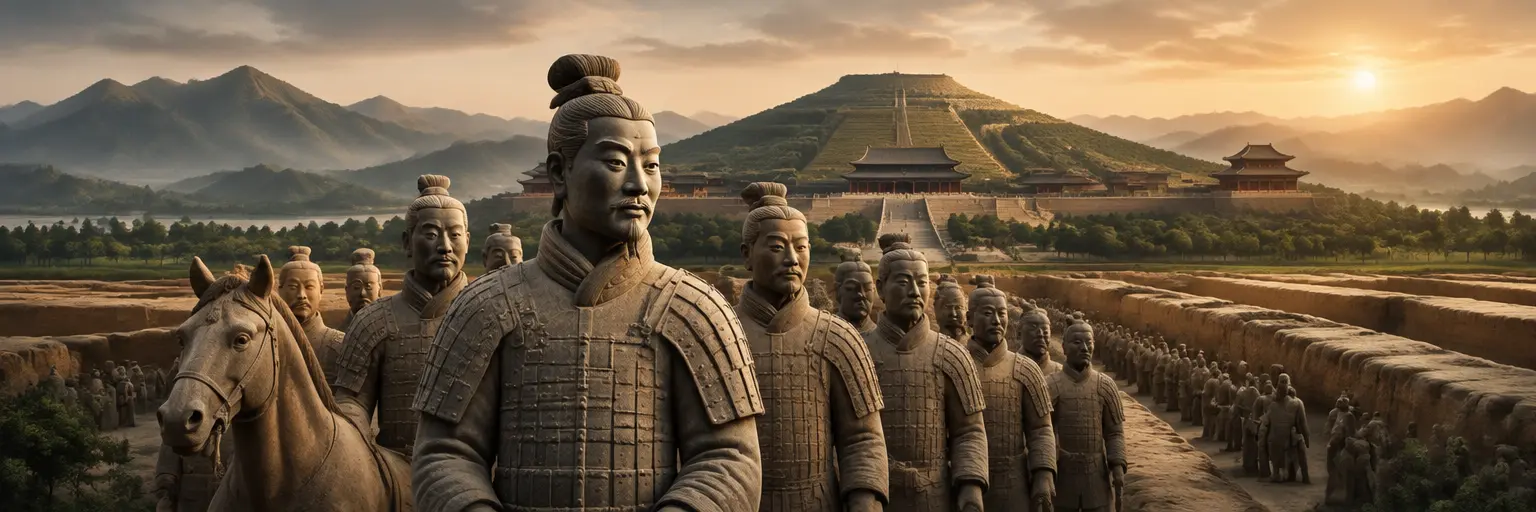
Explore the awe-inspiring Terracotta Army and the Mausoleum of Qin Shi Huang, an archaeological marvel that guards the tomb of China’s first emperor. Buried for over two millennia, this vast underground army—thousands of life-sized warriors, horses, and chariots—was discovered in 1974, rewriting our understanding of ancient Chinese imperial power, artistry, and belief in the afterlife. At ArchaeologyHub.org, we dive deep into the excavation history, the meticulous craftsmanship behind each unique soldier, and the ongoing conservation efforts protecting this UNESCO World Heritage Site. Journey beyond the pits to the unopened tomb mound, explore the emperor’s ambitious vision of cosmic rule, and unravel the mysteries of a necropolis that mirrors an entire empire, complete with bronze relics and intricate terracotta detailing. Perfect for history enthusiasts, travelers, and researchers, our global coverage connects this East Asian treasure to broader ancient patterns of monumental burial—from Egyptian pyramids to Mesopotamian royal tombs—offering comparative insights that enrich your digital exploration of human heritage.
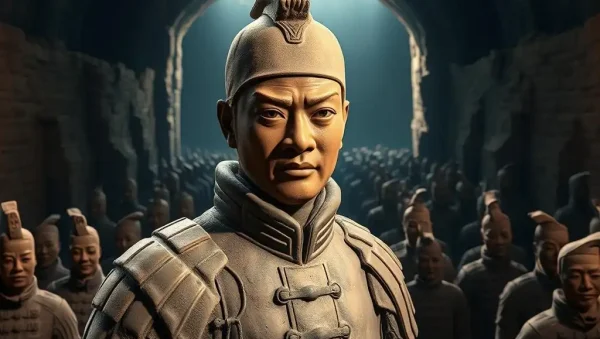
🔍 Discover the fascinating world of the Terracotta army, exploring their command structure, authority, and the distinctive features that make these ancient…
Read article
🌟 Explore the rich tapestry of Qin Dynasty art culture, delving beyond the famed Terracotta Army to uncover its intricate craftsmanship, innovative…
Read articleWelcome to ArchaeologyHub.org’s dedicated subcategory for one of the most extraordinary archaeological discoveries of the 20th century: the Terracotta Army and the Mausoleum of Qin Shi Huang. Located near Xi’an, China, this UNESCO World Heritage site offers an unparalleled glimpse into the ambition, artistry, and afterlife beliefs of China’s first emperor. Our curated content here focuses on the site’s historical context, excavation history, artifact detailing, and ongoing preservation efforts, making it a rich resource for students, travelers, and history enthusiasts alike. Explore expert analyses, high-resolution imagery, and interpretive guides that bring the buried legions to life.
Understanding the Terracotta Army begins with comprehending the unprecedented power of Qin Shi Huang, who unified China in 221 BCE. This section unpacks the political and philosophical underpinnings of his reign, including Legalist ideology, the standardization of writing and weights, and his obsessive quest for immortality. You’ll learn how the mausoleum complex—covering an estimated 56 square kilometers—was designed as a microcosm of his empire, complete with palaces, rivers of mercury, and celestial ceilings.
Our guides also analyze contemporary texts like the Records of the Grand Historian by Sima Qian, which describe the tomb’s construction involving over 700,000 workers. We bridge these historical records with modern archaeological evidence, offering a nuanced view of what the emperor intended to command in the afterlife. This foundational knowledge enhances your appreciation of every artifact you’ll encounter in subsequent sections.
This is the heart of our subcategory—detailed breakdowns of the three primary excavation pits. Pit 1, the largest, contains over 6,000 life-sized infantrymen arranged in battle formation, while Pit 2 offers a mixed array of cavalry, chariots, and archers, showcasing tactical diversity. Pit 3, often dubbed the “command post,” features high-ranking officers and a war chariot, hinting at the army’s organizational structure. Each pit’s layout, original wooden ceiling systems, and defensive installations are described with precision.
Beyond mere numbers, we dive into the individuality of each figure—no two faces are alike, suggesting a workforce of sculptors who used modular body parts but unique heads. We profile the bronze weapons found alongside the soldiers, including swords, spears, and crossbow triggers, many still sharp after 2,200 years due to chromium plating. This level of detail transforms your virtual tour into a forensic examination of ancient military engineering.
Here, we explore the semi-industrial manufacturing process behind the terracotta figures. Archaeologists have identified eight distinct face molds and ten body molds, yet each figurine was customized with clay details for hair, armor, and facial features. We break down the successive steps—from clay sourcing locally to shaping, assembling, drying, and firing in kilns at temperatures up to 1,000°C. The iconic polychrome paint layer, originally vibrant green, red, and purple, is examined in detail, including how lacquer and mineral pigments were applied.
Recent conservation breakthroughs are also highlighted, especially the development of polyethylene glycol (PEG) treatments to stabilize the fragile paint before exposure. You’ll read about the collaborative efforts between Chinese and international researchers to prevent color loss during excavation. This section is perfect for those interested in ancient technology, material science, or the preservation of complex archaeological surfaces.
Since local farmers stumbled upon broken pottery shards in 1974, the mausoleum has been an active archaeological site. This timeline traces the initial surveys, the naming of the “Vault of Terracotta Warriors,” and the phased excavation strategies that prioritize long-term preservation over rapid digging. We detail the 2009–2011 excavation of Pit 1’s central corridor, which yielded rare bronze swords and a shield painted in intricate patterns, plus the 2018 discovery of a golden camel and dancing figure in a nearby burial pit.
Our content also covers the controversial decision to delay opening the actual tomb chamber of Qin Shi Huang, where ancient mercury maps likely simulate rivers. We explain the geophysical surveys that detected high mercury concentrations, fueling public curiosity and academic debate. You’ll gain insight into how modern technology like LiDAR and ground-penetrating radar is mapping the mausoleum without disturbing its sealed interiors.
The Terracotta Army is more than a relic—it’s a global icon of Chinese civilization and a major tourist destination, drawing millions annually. This section contextualizes its UNESCO recognition in 1987 and its role in cultural diplomacy, such as traveling exhibitions to Europe and the Americas. We also provide practical visitor information for the site near Xi’an, including crowd management strategies, museum layout, and the modern protective hangar buildings that house the pits.
Beyond logistics, we discuss the ethical debates surrounding mass tourism versus conservation, plus the site’s economic impact on the Shaanxi province. Our interpretive analyses compare the Terracotta Army to other ancient military representations, like the Hellenistic sculptures of Pergamon, offering a cross-cultural perspective. Whether you’re planning a visit or researching for academic purposes, this subsection connects the ancient past to present-day stewardship.
The Terracotta Army was built to protect China’s first emperor, Qin Shi Huang, in the afterlife, serving as a symbolic military force to repel any spiritual threats. It mirrors his real army’s hierarchy and equipment, ensuring he could continue to rule and campaign beyond death. The figures were placed alongside chariots, weapons, and other military paraphernalia to recreate an imperial military guard.
As of the latest official counts, around 8,000 warriors, 130 chariots, and 670 horses have been unearthed across the three main pits. However, excavation is ongoing, and experts estimate that over 6,000 additional figures remain buried, based on ground-penetrating radar surveys. Only a fraction of the entire mausoleum complex, which spans many pits and tombs, has been fully exposed.
No, the central burial chamber has not been opened. Archaeologists and Chinese authorities have opted to delay excavation due to concerns about irreversible damage from oxygen exposure, potential collapse, and the risk of damaging treasures inside. High mercury levels detected in the soil further complicate safe access. The tomb remains sealed, with only its outer perimeter excavated.
The best time to visit is during spring (April to June) or autumn (September to October), when temperatures are mild and humidity is lower, which reduces crowd densities compared to summer. Weekdays are preferable to weekends, and early arrival at 8:30 a.m. allows you to view the pits with fewer people. Winter visits are also peaceful, but indoor heating can make glass cases fog slightly.
Yes, photography is generally permitted for personal use, but flash photography and tripods are strictly prohibited to protect the fragile pigments. Drones are not allowed, and commercial shoots require special permits. The museum encourages visitors to capture memories but asks that you respect barriers and follow signage to avoid accidental damage to the archaeological layers.







