
The Terracotta Generals: Command, Authority, and Distinctive Features

Welcome to ArchaeologyHub.org, your gateway to unlocking the secrets of the past. Ever wondered how the Terracotta Army, a silent legion guarding China's first emperor, achieved such striking realism? Dive in to explore the Terracotta Generals: Command, Authority, and Distinctive Features, uncovering the unique characteristics and hierarchical details that set these ancient warriors apart. Prepare to be amazed by the meticulous artistry and profound symbolism embedded within this iconic archaeological treasure. What secrets will you unearth?
- The Terracotta Army Generals: Command, Authority, and Distinctive Features
- Introduction to the Terracotta Army's Command Structure
- The Role of Generals in the Terracotta Army Hierarchy
- Terracotta Army Distinct Features: General-Specific Attributes
- Command and Control: Reconstructing Qin Dynasty Military Tactics
- Authority and Symbolism: Decoding the Power of the Terracotta Generals
- Comparison of Terracotta Generals with Other Ranks in the Army
- The Discovery and Preservation of Terracotta Generals
- The Legacy of the Terracotta Generals: Insights into Qin Dynasty Military Culture
- Conclusion: The Enduring Significance of the Terracotta Generals
-
Frequently Asked Questions
- What were the terracotta army distinct features*_ meant to represent?
- How does ArchaeologyHub.org categorize information about the terracotta army distinct features*_?
- What do experts, such as those featured on ArchaeologyHub.org, believe about the terracotta army distinct features*_?
- What are some examples of the terracotta army distinct features*_ that are highlighted on ArchaeologyHub.org?
- Why are the terracotta army distinct features*_ so important to archaeological study?
- Final Reflection: Echoes of Command in Clay
- Unearth Your Inner Archaeologist!
Introduction to the Terracotta Army's Command Structure
Archaeological Evidence: Leadership Roles within Qin Shi Huang's Terracotta Army
The discovery of the Terracotta Army near Xi'an, China, in 1974, unveiled an unparalleled archaeological marvel: an estimated 8,000 clay soldiers, chariots, and horses, meticulously arranged to guard the tomb of Qin Shi Huang, China's first emperor. Among this vast host, a distinct class of figures immediately stood out: the generals.
These high-ranking officers, fewer in number but commanding in presence, were identified through their elaborate armor, unique headwear, and strategic placement within the formations across Pit 1, Pit 2, and Pit 3. Their presence provided compelling archaeological evidence of a highly organized military command structure, directly mirroring the sophisticated hierarchy of the Qin dynasty's armed forces.
Initial excavations revealed approximately 10 to 12 distinct general figures, a relatively small fraction compared to the thousands of infantrymen, archers, and cavalry. This scarcity underscores their elite status and critical role within the army. For instance, in Pit 1, the largest and most significant pit, generals are often found positioned at the forefront or flanks of major formations, indicating their command over large units. Their existence and characteristics were pivotal in reconstructing the military organization of a dynasty that unified China, offering tangible proof of a disciplined and stratified army.
The Significance of Generals within the Mausoleum Complex's Military Strategy
The strategic placement of generals within the vast mausoleum complex speaks volumes about their significance in Qin Shi Huang's vision of an eternal empire. These figures were not merely decorative; they were integral to the conceptual military strategy intended to protect the emperor in the afterlife. Their positions within the pits — leading columns, overseeing cavalry, or standing guard near chariots — suggest active command roles, replicating real-world battlefield formations. This attention to detail implies that the generals were seen as vital components for maintaining order and effectiveness in any potential spiritual conflict.
The overall layout of the Terracotta Army, with its vanguard, main body, and flanks, is a testament to the sophisticated military thinking of the Qin era. The generals were the linchpins of this structure, embodying the emperor's authority and ensuring the cohesion of his formidable clay army. Their presence transformed a collection of individual statues into a unified, functional fighting force, ready to defend the emperor's immortal realm. This profound military strategy is one of the key "Terracotta army distinct features" that sets this archaeological site apart.
The Role of Generals in the Terracotta Army Hierarchy
Military Rank System Reflected in Terracotta Warriors: A Comparative Analysis
The Terracotta Army meticulously reflects the hierarchical military rank system of the Qin Dynasty, with generals occupying the apex of this detailed structure. This stratification is evident through distinct differences in attire, posture, and even facial expressions among the various warrior types.
While common soldiers wear simpler robes and light armor, and cavalrymen are depicted with specific riding gear, generals are consistently portrayed with the most elaborate and protective armor, signifying their elevated status. For example, some generals wear a heavy, multi-layered armor that covers their torso, shoulders, and even their upper arms, often with intricate lacing patterns that suggest layers of protection.
In contrast, lower-ranking officers might wear slightly less elaborate armor, and standard infantrymen often feature lighter, sleeveless vests or no armor at all, depending on their role (e.g., archers). This visual differentiation allowed archaeologists to clearly delineate the military structure, from the foot soldiers to the commanding officers. The presence of these distinct "Terracotta army distinct features" across ranks provides invaluable insights into Qin military discipline and organization, demonstrating a clear chain of command.
Identifying Officer Figures: Uniform Variations and Symbolic Ornamentation
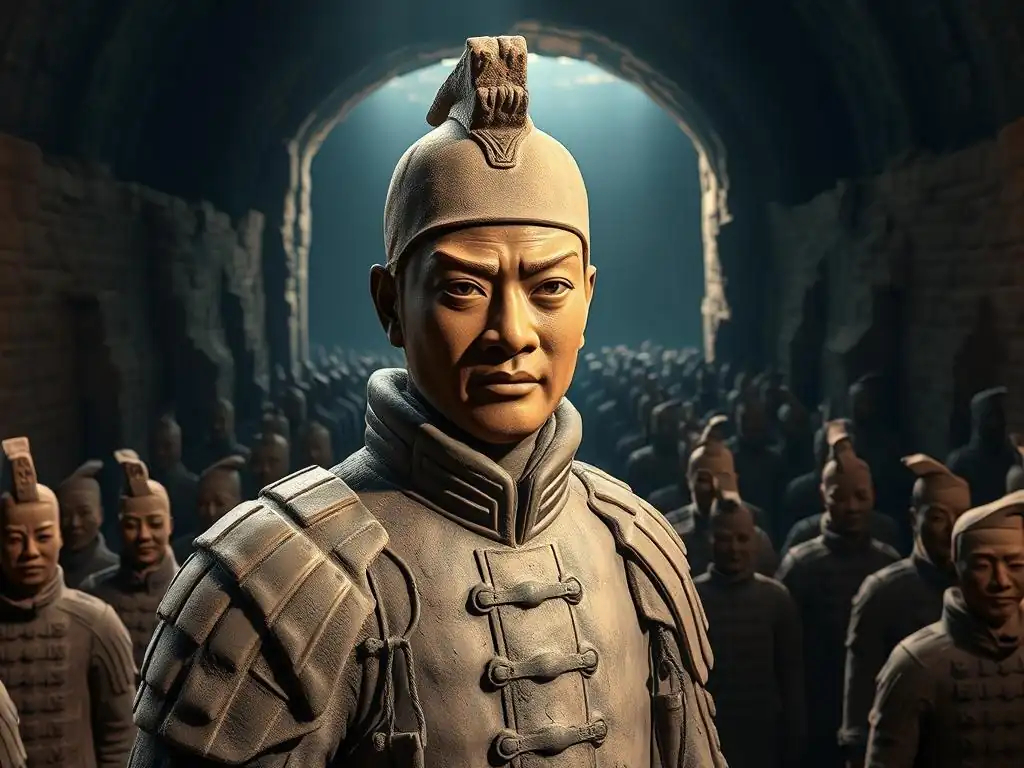
Identifying officer figures, particularly generals, relies heavily on their unique uniform variations and symbolic ornamentation. The most prominent distinguishing feature is their headwear. While common soldiers typically wear simple caps or have their hair tied in a bun, generals often sport a distinctive double-tailed pheasant feather cap or a unique, elaborate knot on the top of their head, sometimes adorned with ribbons or tassels. This headwear, far from purely functional, served as a clear indicator of their high rank and authority.
Furthermore, the generals' armor is often more ornate and detailed than that of lower ranks. It frequently features a distinctive "fish-scale" pattern, meticulously sculpted to appear both flexible and robust, suggesting a higher quality of craftsmanship and material for these elite figures. Some generals also display a unique chest plate or a more prominent belt buckle, further accentuating their elevated status. These intricate details are crucial "Terracotta army distinct features" that differentiate the generals from the vast majority of the army and underscore their significance within the imperial guard.
Terracotta Army Distinct Features: General-Specific Attributes
Facial Expressions and Individualized Traits: Analyzing Variations in General Sculptures
One of the most remarkable "Terracotta army distinct features" found in the general sculptures is the profound individuality evident in their facial expressions and traits. Unlike the more standardized features observed in the vast numbers of common soldiers, each general figure appears to possess a unique countenance. While not necessarily portraits of specific historical figures, these individualized faces suggest a deliberate artistic choice to imbue these high-ranking officers with a sense of distinct personality and authority. Some generals exhibit serene, contemplative expressions, others a stern determination, and a few even a hint of weariness.
This level of facial detail — including variations in beard styles, mustache shapes, and even the subtle lines around the eyes — sets the generals apart. It implies that the sculptors either had specific individuals in mind or were instructed to create a diverse array of commanding presences. This artistic approach not only adds to the aesthetic appeal but also provides a deeper understanding of the perceived importance and individuality of leadership within the Qin military.
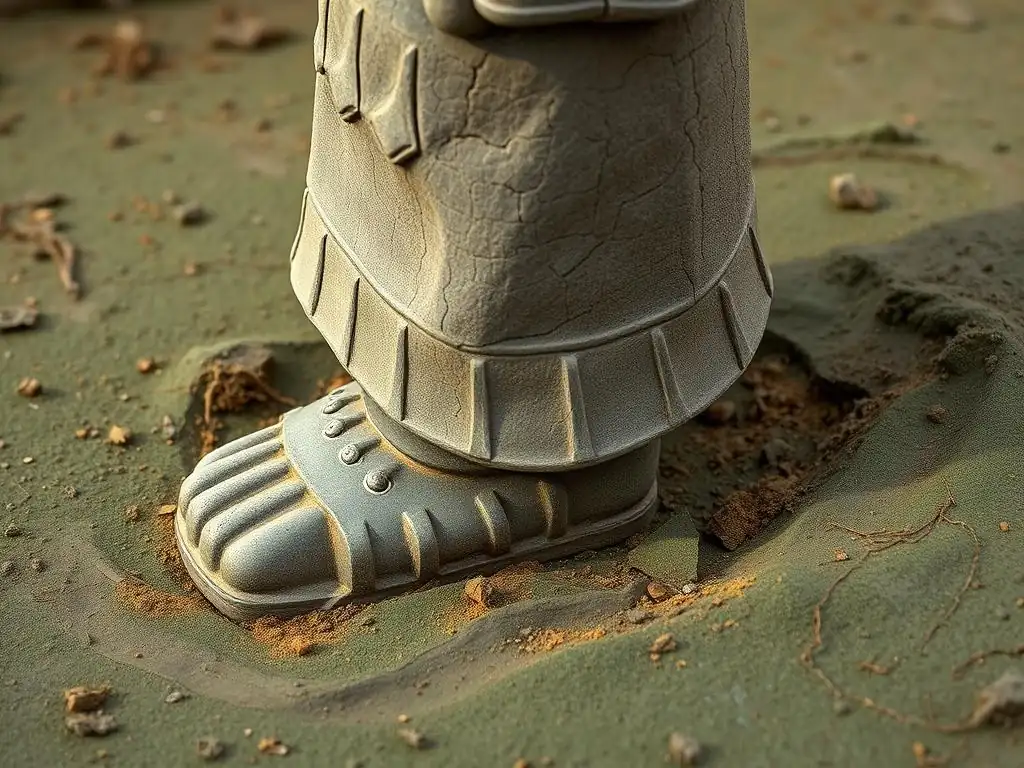
The armor details and implied weaponry of the Terracotta generals serve as powerful indicators of their status and command authority. Their heavy, layered armor, often featuring intricate lacing and decorative elements, contrasts sharply with the lighter or absent armor of common infantrymen. For instance, some generals are depicted with armor that extends down to their knees, providing maximum protection, a luxury not afforded to the lower ranks. The quality of the sculpted details, such as the rivets, clasps, and the meticulous rendering of the armor scales, suggests a superior grade of equipment consistent with their high position.
While most of the original wooden and bronze weapons have long since deteriorated, the generals' posture often suggests they would have carried more prominent or specialized armaments, such as longer swords or ceremonial halberds, rather than the standard spears or crossbows of the foot soldiers. The empty hands of many generals, poised as if holding a staff or a command baton, further emphasize their role as leaders rather than direct combatants. These specific "Terracotta army distinct features" underscore their function as strategic commanders rather than front-line warriors.
Command and Control: Reconstructing Qin Dynasty Military Tactics
Analyzing the Placement and Arrangement of Generals within the Army Formation
The strategic placement and arrangement of generals within the Terracotta Army formations offer invaluable insights into Qin Dynasty military tactics and command structures. In Pit 1, the largest pit, generals are typically positioned at critical junctures: at the head of a major column, overseeing a flank, or at the rear of the main infantry body.
For example, several general figures have been found overseeing the vanguard of archers and crossbowmen, indicating their role in directing long-range attacks. Their locations suggest a clear chain of command, where generals would have been able to survey significant portions of the battlefield and issue orders to subordinate officers and units.
This deliberate positioning is not random; it reflects the sophisticated understanding of battlefield dynamics prevalent in the Qin military. By placing generals at points of strategic oversight, the emperor ensured that his afterlife army would operate with the same efficiency and control as his living forces. This arrangement is a fundamental "Terracotta army distinct feature" that archaeologists study to understand ancient Chinese military strategy.
Strategic Positioning: Placement of Generals Relative to Infantry and Cavalry Units
The strategic positioning of generals relative to infantry and cavalry units further illuminates their command roles. In Pit 2, which features a more diverse array of units including cavalry and chariots, generals are often found in close proximity to these specialized forces. A general positioned near a chariot formation, for instance, would likely have commanded that specific unit, orchestrating its movements and engagement. Similarly, generals found near cavalry squadrons suggest their leadership over rapid deployment and flanking maneuvers.
This nuanced placement indicates that generals were not merely symbolic figures but active commanders responsible for distinct military branches. It paints a picture of a well-drilled army where each unit, from the massed infantry to the swift cavalry, operated under specific command. The detailed layout, with generals integrated into the functional elements of the army, provides a tangible representation of Qin military command and control doctrines.
Connection Between Terracotta General Statues and Real-Life Military Practices
The Terracotta general statues serve as a powerful archaeological link to real-life military practices of the Qin Dynasty. Historical texts, such as Sima Qian's Records of the Grand Historian, describe a highly disciplined and effective Qin military, renowned for its innovative tactics and strict command structure. The discovery of the Terracotta Army, particularly the distinct roles and appearances of its generals, provides tangible confirmation of these historical accounts. The generals' elaborate armor, specific weaponry (implied), and commanding postures align with the descriptions of high-ranking officers who led formidable armies to unify China.
Their presence in the mausoleum thus symbolizes the emperor's desire to extend his earthly authority and military might into the afterlife. The generals were not just statues; they were manifestations of the emperor's power, ensuring that his command would be absolute even beyond death. This profound connection between the sculpted figures and historical reality is a key "Terracotta army distinct feature" that enhances our understanding of ancient Chinese governance and warfare.
Artistic Representations of Leadership: Facial Expressions and Body Language
The sculptors of the Terracotta Army masterfully used artistic representations, particularly through facial expressions and body language, to convey the essence of leadership embodied by the generals. Unlike the more uniform and often neutral expressions of the common soldiers, the generals exhibit a range of dignified and authoritative countenances. Their faces often convey a sense of calm resolve, strategic thought, or quiet determination, reflecting the gravity of their command. The meticulous detailing of their features, from the furrows on their brows to the subtle set of their jaws, imbues them with a lifelike sense of gravitas.
Furthermore, their body language, though static, communicates authority. Generals often stand with a broader stance, shoulders slightly squared, and hands positioned as if holding a command staff or simply resting with deliberate weight. This posture exudes confidence and a readiness to direct, distinguishing them from the more dynamic or poised-for-action stances of the infantry or archers. These subtle yet powerful artistic choices are crucial "Terracotta army distinct features" that elevate the generals beyond mere statues to symbolic representations of power and command.
Comparison of Terracotta Generals with Other Ranks in the Army
Contrasting Generals' Armor and Weapons with Those of Foot Soldiers and Cavalry
A direct comparison of Terracotta generals' armor and implied weapons with those of foot soldiers and cavalry highlights the significant "Terracotta army distinct features" of their elite status. Generals wear the most comprehensive and ornate armor, typically consisting of heavy, layered plates that cover the torso, shoulders, and sometimes the upper arms and thighs. This armor often features intricate scale patterns, detailed lacing, and decorative elements, indicating superior craftsmanship and material. For instance, the general's armor often includes a distinct collar and shoulder guards that are far more pronounced and protective than those seen on lower-ranking warriors.
In stark contrast, foot soldiers, such as spearmen or archers, often wear lighter, sleeveless armor vests or no armor at all, providing greater mobility but less protection. Cavalry figures are depicted with lighter, more flexible tunics and minimal armor to facilitate riding. While most original weapons have disintegrated, the generals' poses suggest they wielded longer, more ceremonial swords or command staves, setting them apart from the standard spears, crossbows, or daggers of the common soldiers. This clear differentiation in equipment visually reinforces the hierarchy.
Differentiating Facial Features and Poses Among Various Ranks
The differentiation in facial features and poses among various ranks is another compelling aspect of the "Terracotta army distinct features," particularly when comparing generals to other warriors. Generals typically boast highly individualized and often serene yet firm facial expressions, with unique details in their beards, mustaches, and overall countenance. This level of personalization is largely absent in the common soldiers, who, while not identical, tend to share more generalized features, suggesting mass production rather than individual portraiture. Their expressions are often more neutral or determined, reflecting their role as part of a larger fighting force.
Moreover, the poses of generals convey a sense of command and oversight. They often stand erect, with a dignified posture, sometimes with hands clasped in front or resting confidently, implying a role of strategic direction rather than direct combat. Foot soldiers, conversely, are typically depicted in active stances, ready for battle: some are poised with crossbows, others holding spears, and cavalrymen are shown mounted, prepared for movement. These distinct poses and facial characteristics vividly communicate the different roles and statuses within the Qin military hierarchy.
The Discovery and Preservation of Terracotta Generals
Excavation Techniques and Challenges in Unearthing Terracotta Figures
The excavation of the Terracotta Army, including its precious general figures, has been a monumental archaeological undertaking, fraught with both triumphs and significant challenges. Upon discovery, many figures were found shattered into hundreds of pieces due to the collapse of the wooden roof structures and subsequent seismic activity or deliberate destruction. Archaeologists employed meticulous techniques, akin to forensic reconstruction, to unearth and reassemble these fragments. This often involved carefully sifting through tons of earth, identifying minute pieces, and then painstakingly gluing them back together, a process that can take years for a single figure.
One of the primary challenges was the preservation of the original vibrant polychrome paint that once adorned the warriors. Upon exposure to air and light after millennia underground, this paint rapidly oxidized and flaked away, often within minutes or hours. This necessitated rapid conservation measures and the development of specialized excavation protocols to minimize exposure and stabilize the pigments in situ. The unearthing of general figures, being fewer in number and often more complete, provided crucial insights into these initial artistic details, despite the challenges.
Conservation Efforts to Maintain Distinctive Features and Prevent Deterioration
Conservation efforts to maintain the "Terracotta army distinct features" of the generals and prevent their ongoing deterioration are continuous and highly sophisticated. The primary goal is to stabilize the figures and protect the remaining traces of original color and surface details from environmental degradation. Upon excavation, figures are often immediately treated with consolidants, such as polyethylene glycol (PEG), to strengthen the fragile clay and prevent moisture loss that could lead to cracking. In some cases, figures are moved to climate-controlled environments within the museum or specialized conservation labs.
Advanced techniques, including laser cleaning, precise humidity and temperature control, and the application of new protective coatings, are regularly employed. For example, archaeologists have developed specialized solutions to prevent the shrinking and flaking of the lacquer layer beneath the paint upon drying. These efforts are crucial not only for the long-term preservation of these invaluable artifacts but also for allowing researchers to continue studying the intricate details of the generals' armor, unique headwear, and individualized facial expressions, ensuring their distinctive features remain for future generations.
The Legacy of the Terracotta Generals: Insights into Qin Dynasty Military Culture
Qin Shi Huang's Vision: Immortality and Military Power in the Afterlife
The Terracotta generals stand as a profound testament to Qin Shi Huang's unparalleled vision of immortality and his desire to extend his military power into the afterlife. The emperor, consumed by the pursuit of eternal life and absolute rule, commissioned this vast subterranean army to protect him in the spiritual realm.
The generals, as the commanding elite, were central to this vision, embodying the very essence of his earthly authority and strategic might. Their presence ensured that even in death, the emperor would be surrounded by a disciplined and formidable force, capable of maintaining his imperial order against any perceived threat.
This grand funerary complex, with its meticulously organized army led by these imposing generals, reflects Qin Shi Huang's belief in a direct continuation of his earthly dominion. It highlights a unique blend of political ambition, military prowess, and spiritual conviction that characterized his reign. The generals, with their distinct features and commanding presence, are therefore not just archaeological finds but powerful symbols of an emperor's monumental quest for eternal power.
The Army's Impact on Understanding Ancient Chinese Military Structure and Logistics
The discovery of the Terracotta Army, particularly the detailed insights provided by the generals, has revolutionized our understanding of ancient Chinese military structure and logistics. Before this excavation, much of our knowledge about Qin military organization relied heavily on textual records, which could be vague or idealized. The physical evidence of the army, with its precise formations, varied weaponry, and clearly delineated ranks, offers an unprecedented three-dimensional "textbook" on Qin military science. The generals' positions confirm the existence of a sophisticated command and control system.
Furthermore, the sheer scale of the army and the logistical feat of its creation – involving standardized production, assembly, and transportation of millions of clay pieces – speaks volumes about the Qin dynasty's organizational capacity. The generals, as the conceptual leaders of this massive undertaking, reinforce the idea of a centralized, highly efficient state capable of mobilizing vast resources for imperial projects. The "Terracotta army distinct features" observed in these figures, from their armor to their strategic placement, provide invaluable data that continues to shape scholarly interpretations of ancient Chinese warfare and statecraft.
Conclusion: The Enduring Significance of the Terracotta Generals
Summarizing Distinctive Features, Command Roles, and Symbolic Importance
The Terracotta generals represent a pinnacle of ancient Chinese military and artistic achievement, embodying a crucial nexus of command, authority, and symbolic power within Qin Shi Huang's subterranean army. Their "Terracotta army distinct features" — including elaborate, layered armor, unique headwear, individualized facial expressions, and commanding postures — clearly differentiate them from the vast ranks of common soldiers and lower officers. These specific attributes not only signify their elevated status but also provide vital clues about the hierarchical structure and strategic deployment of the Qin military.
Their command roles are evident in their strategic placement within the army formations, overseeing various units and directing the flow of battle, mirroring real-life Qin Dynasty military practices. Symbolically, the generals served as the emperor's eternal lieutenants, ensuring his dominion in the afterlife and embodying the formidable power that unified ancient China. They are not merely statues but profound archaeological insights into the ambition, organization, and military prowess of the Qin Empire.
Future Research: Advanced Imaging Techniques and Material Analysis
The enduring significance of the Terracotta generals continues to inspire future research, with advanced imaging techniques and material analysis promising even deeper insights into their construction and historical context. Non-invasive methods such as 3D laser scanning and photogrammetry are creating highly detailed digital models, allowing for precise measurements and comparative analyses of their "Terracotta army distinct features" without risking damage. These models can reveal subtle variations in sculpting techniques, potential workshops, and even individual artistic "signatures."
Furthermore, advanced material analysis, including X-ray fluorescence (XRF) and scanning electron microscopy (SEM), is being used to study the composition of the clay, pigments, and lacquer layers. This research aims to understand the manufacturing processes, the provenance of materials, and the original vibrant appearance of the generals, much of which has deteriorated over millennia. These ongoing scientific investigations ensure that the Terracotta generals will continue to yield new knowledge, enriching our understanding of ancient Chinese history, military culture, and artistic mastery for generations to come.
Frequently Asked Questions
What were the terracotta army distinct features*_ meant to represent?
The terracotta army distinct features*_ were meant to represent the imperial guard of Emperor Qin Shi Huang in the afterlife. Each statue was uniquely crafted to reflect individual soldiers, officers, and even horses.
How does ArchaeologyHub.org categorize information about the terracotta army distinct features*_?
ArchaeologyHub.org categorizes information about the terracotta army distinct features*_ by geographic region (China), time period (Qin Dynasty), and themes such as military organization and artistic techniques. This allows for a structured approach to understanding its significance.
What do experts, such as those featured on ArchaeologyHub.org, believe about the terracotta army distinct features*_?
Experts, as highlighted on ArchaeologyHub.org, believe the terracotta army distinct features_ reveal a great deal about the Qin Dynasty's military structure_, artistic capabilities, and beliefs about the afterlife.
What are some examples of the terracotta army distinct features*_ that are highlighted on ArchaeologyHub.org?
Examples of terracotta army distinct features_ highlighted on ArchaeologyHub.org include the varied facial expressions, different ranks represented by clothing and armor, and the unique weaponry each figure held.
Why are the terracotta army distinct features*_ so important to archaeological study?
The terracotta army distinct features_ are crucial because they provide invaluable insights into the Qin Dynasty's society, military, and artistic achievements_. They offer a tangible connection to the past, allowing for detailed analysis and interpretation.
Final Reflection: Echoes of Command in Clay
The enduring fascination with the Terracotta Army speaks volumes about our enduring interest in leadership, authority, and the power of individuality, even in uniformity. The distinct features meticulously crafted into each warrior, as explored throughout this article, transcend mere artistry; they represent a profound statement about the human spirit and the complexities of command. This ancient army, frozen in time, continues to resonate because it mirrors our own struggles to balance collective purpose with individual expression, a tension that remains acutely relevant in today's world.
The impact of the Terracotta Army extends far beyond archaeological discovery; it has indelibly shaped our understanding of ancient China and the enduring power of legacy. Personally, I find the sheer scale and detail of the army deeply moving, a testament to the ambition and vision of Emperor Qin Shi Huang. The fact that each face is unique, a deliberate act of artistic expression, elevates the army from a mere military force to a powerful symbol of human potential. A leader is best when people barely know he exists, when his work is done, his aim fulfilled, they will say: we did it ourselves.
– Lao Tzu. This quote encapsulates the paradox of command, where true authority lies not in domination, but in empowering others to achieve a common goal, a lesson vividly illustrated by the Terracotta Army's enduring presence.
As we contemplate the Terracotta Army's distinct features and the command structure they represent, let us consider the lessons they offer us today. What kind of legacy are we building? How are we fostering individuality within our own communities and organizations? Let us strive to create environments where individual strengths are celebrated and harnessed for the greater good, ensuring that our own contributions, like those of the artisans who crafted the Terracotta Army, leave a lasting and meaningful impact on the world.
Unearth Your Inner Archaeologist!
Thank you for delving into the world of the Terracotta Generals! We hope you've gained a deeper appreciation for their command, authority, and distinctive features. Now, it's time to bring that knowledge to life.
- Visit your local museum to see if they have any artifacts or exhibits related to the Qin Dynasty or ancient Chinese military history. Imagine yourself as one of the Generals, surveying your troops!
- Share this article with a friend who shares your passion for history – spark a conversation about the Terracotta Army's enduring legacy.
- Research lesser-known aspects of Qin Dynasty military strategy and share your findings in the comments below.
Which General's unique feature impressed you the most, and why do you think it was important?